
How to Invest in Cryptocurrency for Beginners: A 2026 Guide
You've probably had the same experience as everyone who gets curious about crypto. You hear Bitcoin discussed like digital gold, Ethereum described as the operating system for Web3, and newer projects pitched as the next big thing. Then you open an exchange app, see a wall of tickers, order types, wallet prompts, and warnings about network compatibility, and the whole thing suddenly feels less like investing and more like navigating a new technical stack.
That feeling is normal. Crypto sits at the intersection of finance, software, and internet culture. If you approach it like a slot machine, it can punish you fast. If you approach it like a serious emerging technology, it becomes much easier to understand what to buy, how to store it, and why some assets keep attracting developers, capital, and users while others fade away.
That distinction matters. Since its market launch in 2015, Ethereum has appreciated by more than 92,000 percent, according to Coursera's guide to how cryptocurrency works. That number isn't a reason to chase candles. It's evidence that blockchain networks with real utility, smart contracts, and strong developer ecosystems can create massive long-term value.
This guide is for people who want more than a “click buy” tutorial. It's about how to invest in cryptocurrency for beginners in a way that builds judgment, not just exposure. You'll learn how to choose an exchange, decide where your coins should live, place a first order without making preventable mistakes, and build a strategy that survives volatility.
Table of Contents
- Welcome to the New Financial Frontier
- Choosing Your On-Ramp and Digital Vault
- Executing Your First Cryptocurrency Purchase
- Building Your Beginner Crypto Investment Strategy
- Managing Risk, Taxes, and Common Crypto Pitfalls
- Expanding Your Horizon to DeFi and Web3
Welcome to the New Financial Frontier
Crypto remains one of the few markets where a beginner can purchase an asset, study the underlying protocol, use the product directly, and watch the economics of a network play out in public. You can inspect wallets, follow on-chain activity, read governance proposals, and evaluate whether a blockchain has utility. That is a very different environment from traditional investing.

Why crypto still matters
The reason people keep coming back to this space isn't just price action. It's that blockchains introduced something new: programmable value. Bitcoin showed that digital scarcity could exist without a central issuer. Ethereum pushed the idea further by making blockchains programmable through smart contracts, which opened the door to DeFi, NFTs, tokenized assets, on-chain gaming, and broader Web3 infrastructure.
For beginners, that changes how you should evaluate a project. Don't start with hype. Start with function.
Ask basic but useful questions:
- What does the network do: Is it money, infrastructure, a developer platform, a payments rail, or a governance token?
- Who uses it: Traders, developers, institutions, gamers, stablecoin issuers, or no one meaningful at all?
- Why does the token exist: Does it secure the network, pay for transactions, coordinate governance, or market the project?
- What's the moat: Security, decentralization, liquidity, developer adoption, brand, or distribution?
Crypto rewards people who learn the system beneath the ticker.
What separates investing from speculating
A lot of beginners lose money because they don't know which game they're playing. If you're buying a token because a social post says it might pump, that's speculation. If you're buying an asset after studying the blockchain, its role in the ecosystem, and how it might matter over time, that's investing.
That doesn't mean long-term investing is risk-free. It means your decision has a framework behind it.
The practical mindset is simple:
- Treat crypto as high-risk capital: It's not where emergency savings belong.
- Study the chain before the chart: Price can tell you what traders are doing. Architecture tells you what the network can become.
- Expect volatility: Sharp drawdowns are part of the asset class.
- Stay curious about the tech: Web3, tokenomics, staking, Layer 2 scaling, and DeFi aren't side topics. They're part of the investment case.
Choosing Your On-Ramp and Digital Vault
Your first real crypto decision usually isn't what coin to buy. It's where you'll buy it and who will control the keys. That sounds technical, but it's the foundation of everything that follows.
According to eToro's beginner guide to crypto investing, the selection of a cryptocurrency exchange and custody solution is a critical decision. Beginners need to weigh centralized exchanges like Coinbase for convenience and institutional security against self-custody with hardware wallets, which removes counterparty risk but adds operational responsibility.
Centralized exchanges versus self-custody
A centralized exchange, or CEX, is the most common starting point. Platforms like Coinbase and Binance give you a familiar experience. You create an account, complete identity checks, fund it, and buy crypto through a dashboard that looks closer to a brokerage app than a command line.
That convenience is real. So is the trade-off. When your assets sit on an exchange, you're trusting that company's controls, solvency, and security practices.
Self-custody flips that model. With a wallet you control, you hold the private keys. That means no intermediary can freeze access to your coins because they're not holding them for you. It also means one operational mistake can become permanent if you mismanage your recovery phrase or send assets to the wrong place.
Practical rule: Convenience reduces friction. Self-custody reduces dependency. Beginners need to know which risk they're actually taking.
There's also a third category worth understanding even if you don't use it immediately: the decentralized exchange, or DEX. DEXs let you trade directly from a wallet using smart contracts. They're central to DeFi, but they're usually not the right first stop for someone learning wallets, gas fees, slippage, and network selection at the same time.
Hot wallets and cold wallets
Wallets are where many beginners get confused, mostly because “wallet” sounds like storage but it's really a tool for controlling blockchain addresses and signing transactions.
A hot wallet stays connected to the internet. MetaMask and Trust Wallet are common examples. They're useful for interacting with DeFi apps, NFTs, and Web3 services because they're easy to access from a browser or phone.
A cold wallet is a hardware device, such as Ledger or Trezor, that keeps private keys offline. It's less convenient for constant activity, but it sharply reduces exposure to many online attack paths.
Here's the side-by-side view most beginners need:
| Feature | Hot Wallet (e.g., MetaMask, Trust Wallet) | Cold Wallet (e.g., Ledger, Trezor) |
|---|---|---|
| Internet connection | Connected | Offline for key storage |
| Ease of use | Faster for everyday activity | Slower but more deliberate |
| Best use case | Small balances, active Web3 use | Long-term holdings, larger balances |
| Security profile | More exposed to phishing and device compromise | Better protection against many online threats |
| Recovery responsibility | Yours | Yours |
| Beginner fit | Good for learning and app access | Good once you can handle setup carefully |
How beginners should decide
Many investors do not need to be ideological about custody. They need a sensible path.
A practical sequence looks like this:
- Start on a reputable centralized exchange: It lowers setup friction and helps you learn the buying process.
- Use platform security features immediately: Turn on two-factor authentication and review withdrawal settings before you deposit meaningful funds.
- Move to self-custody gradually: Don't make your first wallet setup the same day you make your largest purchase.
- Reserve hardware wallets for long-term holdings: If you plan to hold core assets rather than trade them, cold storage becomes more compelling.
What doesn't work is pretending one model is universally safer. Exchange custody exposes you to platform risk. Self-custody exposes you to user error. The better answer is to choose the risk you're currently equipped to manage.
Executing Your First Cryptocurrency Purchase
The mechanics of a first buy are simple. The details are where beginners make mistakes.
Fund the account carefully
After choosing an exchange, you'll create and verify your account, then connect a funding method. Before you buy anything, check which assets the platform supports, whether you can withdraw them on-chain, and which networks are available for transfers.
Fractional investing has made entry much easier. Major platforms such as Public.com and eToro support small starting purchases, and beginner guidance commonly recommends allocating only 1 to 2 percent of your total investment portfolio to cryptocurrency, with some platforms enabling purchases starting at $1, as described in Public.com's beginner crypto guide.
That advice is sound because your first goal isn't maximizing returns. It's learning the workflow without putting meaningful capital at risk.
Market orders, limit orders, and network details
A market order buys at the best available current price. It's fast and easy, which is why many beginners use it for small purchases. The downside is that you accept the market's price at that moment, which can matter when volatility spikes.
A limit order lets you set the maximum price you're willing to pay. It gives you more control, but there's no guarantee the order will execute.
Before you confirm any purchase, check four things:
The ticker and the network
Some assets exist on multiple chains or in wrapped forms. Make sure you know what you're buying.The total cost
Review trading fees and any network fees. On smart contract networks, you may also encounter gas fees for transfers or on-chain actions.Where the asset will go
If you're withdrawing to a wallet, verify the address and chain carefully. A wrong network selection can create a frustrating recovery process, or no recovery at all.Why you're buying it
If your answer is “because it's moving,” slow down. If your answer is tied to a thesis, you're in better shape.
After the trade settles, look at the transaction record. Get used to checking confirmations and wallet balances. That habit turns crypto from an abstract app balance into something you understand operationally.
Building Your Beginner Crypto Investment Strategy
Successful crypto investing often depends less on the ability to purchase and more on the use of a repeatable system. A strategy matters more than a single entry point.
Start small and stay alive
The best beginner move is boring. That's why it works.
Financial guidance for new crypto investors often recommends limiting crypto exposure to 1 to 2 percent of an overall portfolio and only using money you can afford to lose, as outlined in Charles Schwab's beginner overview of crypto investing. That framing helps in two ways. It protects your broader finances, and it gives you room to learn without treating every price move like a personal crisis.
If you're learning how to invest in cryptocurrency for beginners, survival is the first win. You need enough exposure to pay attention, but not so much that volatility wrecks your judgment.
Why dollar-cost averaging works
Dollar-cost averaging, or DCA, means investing a fixed amount at regular intervals instead of trying to call the perfect bottom. In crypto, that's often a better process than waiting for certainty, because certainty usually arrives after the move.
The logic is straightforward:
- It removes pressure from timing: You don't need to predict the next breakout.
- It builds discipline: You follow a schedule rather than a mood.
- It reduces emotional trading: FOMO and panic become less influential when the plan already exists.
- It fits volatile assets well: You buy across different market conditions instead of making one all-or-nothing bet.
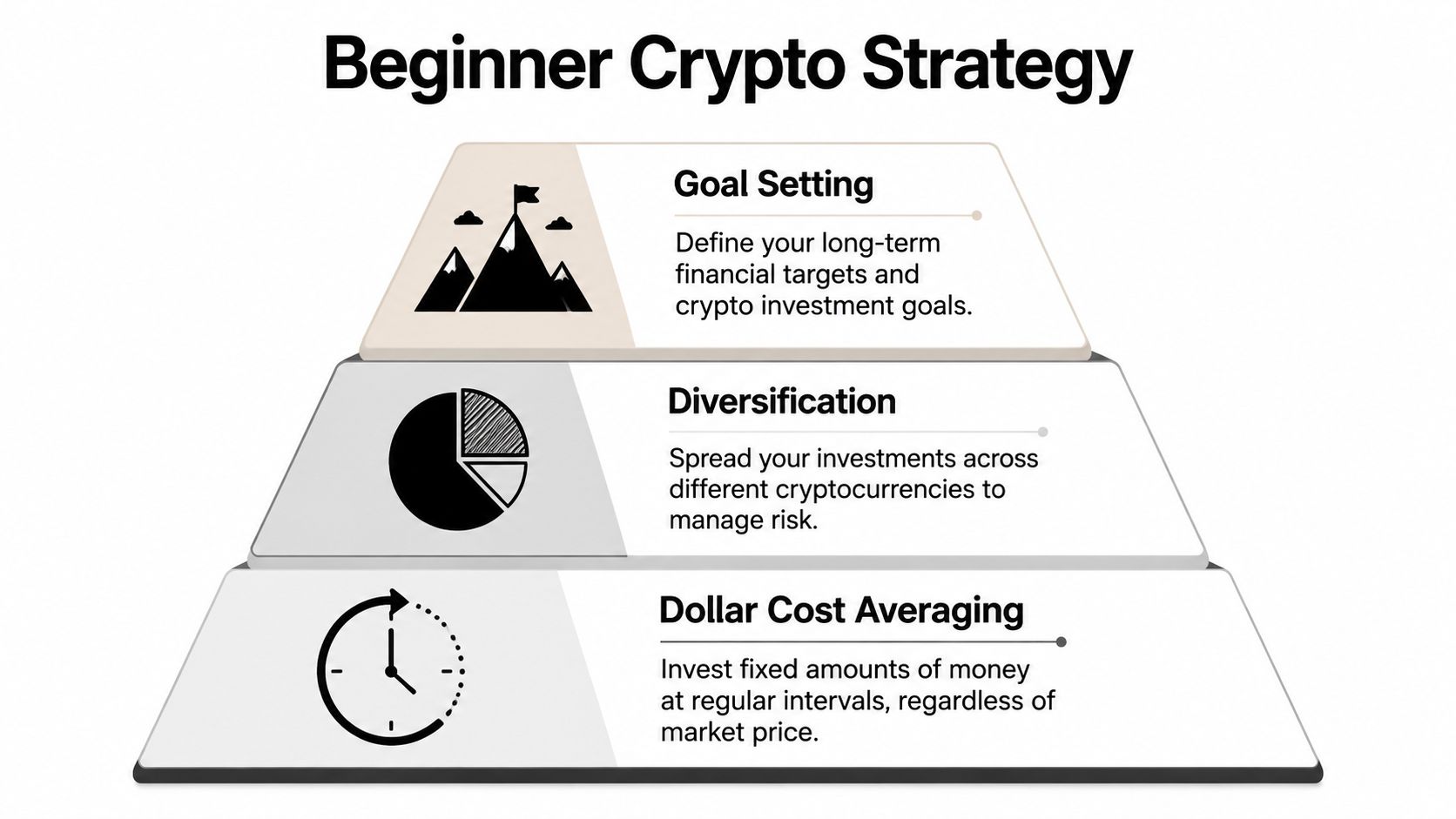
A beginner DCA plan doesn't need to be fancy. Pick a schedule. Choose the assets you understand. Keep records. Reassess when your thesis changes, not when your emotions spike.
Buying on a schedule is often smarter than buying on adrenaline.
How to think about portfolio construction
Beginners usually get tempted to overcomplicate things at this stage. They discover altcoins, meme coins, DeFi governance tokens, AI tokens, GameFi tokens, and every “next Ethereum” pitch on social media. The result is often a scattered portfolio with no core thesis.
A cleaner framework is to think in layers:
Core holdings
Many beginners start with established assets such as Bitcoin and Ethereum. The point isn't that they're safe in an absolute sense. It's that they're more established, more widely followed, and easier to research than thinly traded speculation.
Satellite positions
This can include projects tied to categories you believe in, such as Layer 1 infrastructure, Layer 2 scaling, DeFi rails, or oracle networks. Here, the burden of research rises quickly. You need to understand tokenomics, competitive positioning, and whether usage depends on genuine demand or incentive engineering.
Experimental bets
This is the part of the portfolio where narrative risk is highest. New sectors like tokenized real-world assets, AI-integrated protocols, blockchain gaming, or early-stage Web3 applications can be exciting, but they also require the most skepticism.
What tends to work:
- Concentrate research, not just capital
- Own fewer things you understand well
- Review token utility before buying
- Keep speculative positions clearly separate from long-term holdings
What usually doesn't work:
- Buying every trending coin on the timeline
- Confusing community noise with product traction
- Rotating constantly between narratives
- Ignoring custody, fees, and tax consequences
Managing Risk, Taxes, and Common Crypto Pitfalls
Security isn't a side topic in crypto. It's part of the investment process itself.
Security habits that matter
A few habits do more for beginners than any advanced tactic:
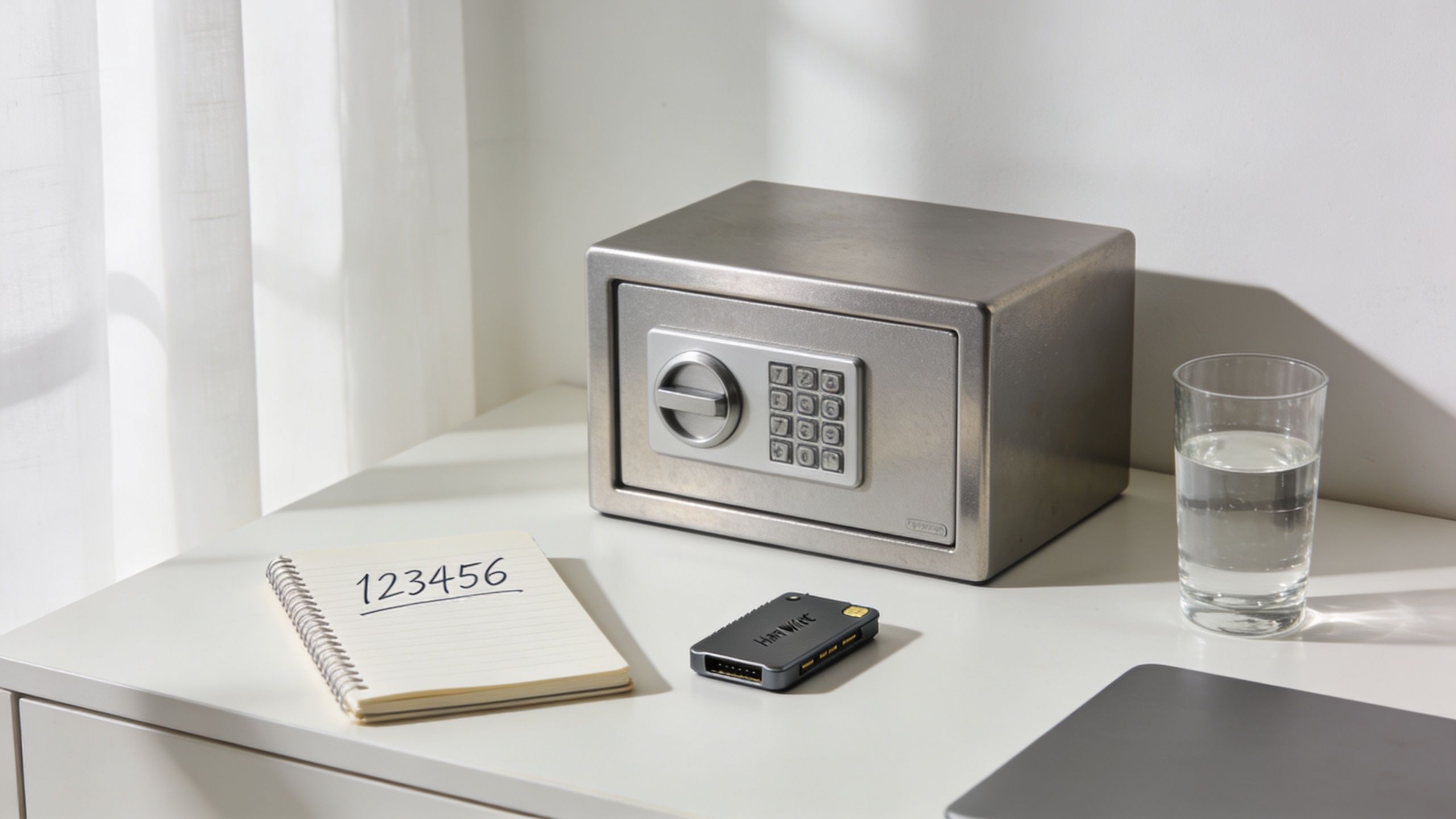
- Store your recovery phrase offline: Don't leave it in cloud notes, screenshots, or email drafts.
- Use a dedicated wallet for experimentation: Keep long-term holdings separate from the wallet you connect to random dApps.
- Verify addresses carefully: Clipboard malware and fake interfaces exist for a reason.
- Treat every message as suspicious by default: Support impersonators and phishing pages often look convincing.
If you hold meaningful assets over time, a hardware wallet becomes worth considering because it adds friction where friction is useful. You want instant access for messaging apps. You do not want instant, impulsive signing for your entire crypto stack.
Good crypto security feels inconvenient in exactly the right places.
What usually creates tax headaches
Crypto taxes vary by jurisdiction, so this isn't tax advice. But beginners should understand one basic principle: taxable events often happen more often than expected.
Selling crypto for fiat is the obvious one. Trading one crypto asset for another can also matter. Depending on where you live, other actions might matter too. The safest habit is simple: keep records from day one.
That means saving:
- Purchase dates
- Cost basis
- Sale or swap details
- Wallet and exchange history
- Fees associated with transactions
The people who struggle most at tax time usually aren't active traders with advanced systems. They're casual users who assumed they'd “sort it out later” after months of transfers, swaps, and forgotten wallets.
A solid explainer can help you visualize the basics before you get more active:
The mistakes that wipe beginners out
Crypto punishes emotional behavior fast. The technical mistakes matter, but the psychological ones often cause more damage.
Here are the repeat offenders:
- FOMO buying: Entering after a violent move because you can't stand watching others post gains.
- Revenge trading: Doubling down after a loss to “get it back.”
- Ignoring tokenomics: Buying a story without understanding supply, emissions, or vesting risk.
- Blind trust in influencers: Outsourcing due diligence to people who may have incentives you don't see.
- Signing unknown wallet approvals: Many losses begin with a rushed click.
The best countermeasure is a written checklist. Before you buy, ask what the asset does, why the token exists, where you'll store it, and what would make you sell. That single habit filters out a huge amount of low-quality decision-making.
Expanding Your Horizon to DeFi and Web3
Once you've learned to buy, store, and manage crypto responsibly, the space opens up. The next phase isn't only about holding assets. It's about understanding what these networks let people do.
From holding assets to using protocols
DeFi, or decentralized finance, replaces parts of traditional financial infrastructure with smart contracts. Instead of relying solely on brokers, banks, or centralized intermediaries, users can interact directly with on-chain protocols for activities such as swapping tokens, providing liquidity, borrowing, lending, or staking.
That doesn't mean DeFi is automatically better. It means the trade-offs shift.
You gain:
- Direct interaction with protocols
- Open access to financial applications
- More composability across Web3 services
You also take on:
- Smart contract risk
- Wallet security responsibility
- Greater complexity around approvals and transaction flows
For investors, DeFi is useful because it turns crypto from a passive asset class into a live software ecosystem. You're not only buying coins. You're evaluating whether on-chain financial rails can support durable demand.
Why Layer 2s, RWAs, and AI matter
Three areas deserve attention because they connect technology to investable narratives in a way beginners can study.
Layer 2 scaling solutions
Ethereum's ecosystem keeps evolving, and Layer 2 networks aim to make transactions faster and more practical while relying on Ethereum's broader security model. If you want to understand where Web3 user growth may happen, Layer 2s are one of the first places to look.
Tokenization of real-world assets
This is one of the clearest bridges between crypto rails and traditional finance. The core idea is simple: represent off-chain assets on-chain so they can move through blockchain-based systems. If adoption grows, tokenization could become one of the most pragmatic use cases in the industry.
AI and crypto integration
This area attracts both serious builders and plenty of noise, so skepticism matters. The promising angle isn't just “AI token goes up.” It's whether blockchains can help coordinate data access, compute markets, agent payments, identity, or verification in ways that complement AI-native applications.
The strongest crypto themes usually combine real technical constraints with real user demand.
Web3 gets much easier to understand once you stop asking, “Which coin will moon next?” and start asking, “Which networks, protocols, and token models solve meaningful problems?” That shift is where beginners begin turning into informed investors.
If you want ongoing analysis that connects blockchain technology, market structure, DeFi, NFTs, crypto gaming, Layer 2s, AI integration, and real investor trade-offs without the usual hype, follow Coiner Blog. It's built for readers who want sharper judgment, better context, and a more durable understanding of where crypto is going.
4 Comments