
What is Phantom Wallet? The Ultimate Solana & Web3 Guide
Phantom Wallet is a self-custodial, multi-chain software wallet that had reached about 15 million monthly active users by early 2025 and grew from a Solana favorite into one of the biggest consumer wallets in crypto. In short, Phantom is a non-custodial, multi-chain crypto wallet that acts like your digital passport to the decentralized web, starting with Solana and now expanding to other major blockchains like Ethereum and Polygon.
If you're trying to buy a Solana token, mint an NFT, stake assets, or connect to a DeFi app and keep hitting the same wall, that wall is usually the wallet step. You need something that lets you hold your own keys, sign transactions, and move between chains without feeling like you're operating enterprise software from a decade ago.
That usability gap is where Phantom won. It didn't just give Solana users a cleaner interface. It turned the wallet from a clunky utility into a front door for Web3. That's why so many people asking what is phantom wallet aren't really asking about an app. They're asking how to enter the on-chain world without getting wrecked by friction, bad UX, or basic security mistakes.
Table of Contents
- Your Gateway to Solana and Beyond
- The Rise of Phantom in the Solana Ecosystem
- How Phantom Wallet Works Under the Hood
- Unpacking Phantom Wallet's Key Features
- A Practical Guide to Getting Started with Phantom
- Security and Self-Custody Best Practices
- Risks Alternatives and the Future of Phantom
Your Gateway to Solana and Beyond
You usually notice you need Phantom when you try to do something simple on-chain and realize an exchange account isn't enough. You can buy tokens on a centralized platform, but you can't really live in Web3 from there. You can't sign into a marketplace, interact with smart contracts directly, or manage your own on-chain identity the same way.
Phantom fixes that by giving you a wallet that feels approachable without stripping out the control that matters. It started as the easiest way into Solana, then expanded into a broader wallet for users who want one clean interface across multiple networks. If you're exploring NFTs, DeFi, gaming, or even blockchain-based virtual worlds like Infinite World game coverage, this is the kind of wallet that makes those ecosystems usable.

Why people gravitate to Phantom
A lot of wallets technically work. Fewer wallets make common tasks feel natural.
- Easy onboarding: New users can create a wallet quickly and start receiving assets without fighting a confusing interface.
- Useful daily flow: Sending tokens, viewing collectibles, and approving transactions are straightforward.
- Broader reach: It isn't stuck in one chain silo anymore, which matters if your activity spans Solana, Ethereum, Polygon, Bitcoin, Sui, or Base.
- Cleaner Web3 access: Phantom works like a sign-in layer for decentralized apps, not just a place to park coins.
Phantom is best understood as a user interface for self-custody. The wallet isn't the destination. It's the control panel for everything you do on-chain.
Why this matters now
Web3 is moving toward interoperability. Users don't want one wallet for NFTs, another for DeFi, and another for Bitcoin-related assets. They want one reliable tool that can travel with them as crypto keeps blending trading, payments, gaming, tokenized assets, and AI-driven applications.
Phantom's importance isn't just that it became popular on Solana. It's that it recognized where crypto UX was going and adapted early.
The Rise of Phantom in the Solana Ecosystem
Open a Solana dApp in the early wallet era and you felt the gap right away. The chain was fast, cheap, and built for constant on-chain activity, but the wallet experience often lagged behind. Phantom won because it closed that gap at the product level.
Founded in 2021 by Brandon Millman, Chris Kalani, and Francesco Agosti in San Francisco, Phantom arrived at the right moment. Solana was attracting traders, NFT collectors, and DeFi users who were signing transactions all day. They needed a wallet that felt clear under pressure, not one more source of friction or doubt.
Why Solana needed a wallet like Phantom
Early Solana had momentum, but the user tooling still felt uneven. A wallet had to do more than store tokens. It had to make approvals readable, balances easy to scan, collectibles visible, and dApp connections feel safe enough that users would keep coming back.
Phantom got that right early. I remember that being the difference. On Solana, where activity can be constant and fees are low enough to encourage experimentation, small UX mistakes stack up fast. A confusing signature prompt or messy asset view does real damage because users interact more often, not less.
That fit Solana's culture. The ecosystem skewed toward speed, consumer apps, active trading, and frequent wallet interactions. Phantom became the interface that made that style of crypto usable for normal people, not just power users who were willing to tolerate rough edges.
From Solana favorite to multi-chain contender
The bigger story is not just growth. It is expansion without losing the original product identity.
As noted earlier, Phantom's user base and transaction volume climbed sharply from the post-FTX period into 2024 and 2025. That matters because growth in a wallet is only interesting if users stick around and keep signing real transactions, swapping assets, and returning to the same interface across cycles. Phantom showed that kind of stickiness.
Phantom also avoided a common wallet trap. Many products earn loyalty inside one ecosystem, then weaken that loyalty when they expand. Phantom started as a Solana-first wallet, then added support for other chains while keeping the fast, clean consumer feel that made it popular in the first place.
That strategic shift matters far beyond Solana. Web3 is heading toward a world where a user might hold SOL, bridge into Base, mint on Polygon, keep some BTC exposure, and still expect one wallet to handle the workflow cleanly. If the wallet layer stays fragmented, interoperability remains a technical feature instead of a user reality.
Phantom's rise shows what the next phase of crypto UX probably looks like. Fewer chain-specific tools. More wallets that abstract the messy parts without hiding the risks of self-custody. That is why Phantom now comes up in broader ecosystem conversations, including major industry gatherings covered in this Consensus crypto event analysis. It is no longer just a Solana success story. It is one of the clearer examples of how a wallet can become the front end for a multi-chain internet.
How Phantom Wallet Works Under the Hood
The shortest useful answer to what is phantom wallet is this: it's software that lets you hold your own crypto keys and interact directly with blockchains through a browser extension or mobile app.
What non-custodial really means
Non-custodial means Phantom doesn't hold your funds for you. It gives you the tools to control them yourself. If you keep crypto on an exchange, the exchange controls the wallet infrastructure and you access it through an account. With Phantom, the wallet is tied to your private keys, and those keys stay under your control.
The simplest analogy is physical cash versus a bank account. An exchange feels more like a bank. Convenient, familiar, and dependent on a provider. Phantom feels more like carrying your own wallet. More freedom, more responsibility.
That trade-off is the whole game in self-custody:
- You control the assets: No centralized custodian stands between you and your tokens.
- You sign the transactions: Every swap, stake, or dApp interaction needs your approval.
- You carry the recovery burden: Lose the recovery phrase, and recovery becomes your problem, not customer support's.
Extension app and revenue model
On desktop, Phantom's browser extension is where many power users spend most of their time. It's ideal for DeFi workflows, NFT marketplaces, governance actions, and frequent dApp connections. On mobile, it works better as an always-available wallet for quick approvals, asset checks, and day-to-day activity.
That split is practical.
- Browser extension: Better for traders, NFT users, and anyone juggling multiple tabs and dApps.
- Mobile app: Better for notifications, fast approvals, and casual wallet management while away from a desk.
Phantom is also free to use at the wallet level, but free doesn't mean charity. Its business model centers on small fees from optional services such as in-wallet swaps and integrations with perpetual trading platforms, as explained in MoonPay's overview of what Phantom Wallet is. That setup matters because it gives Phantom a revenue stream without turning the core wallet into a custodial product.
A wallet's business model matters. If the product is free, you should still ask what incentives shape the roadmap.
From a user standpoint, that model is fairly clean. If you never use the convenience features, you mostly use Phantom as infrastructure. If you do use swaps or integrated trading tools, you pay for convenience inside the wallet instead of stitching together multiple external tools.
For anyone thinking about where wallets are headed, this is part of a bigger trend. The wallet is becoming the operating layer for consumer crypto. That's relevant for DeFi, Layer 2 onboarding, tokenized real-world assets, and AI-assisted transaction flows. If Web3 ever gets simpler for mainstream users, the wallet is where much of that simplification will happen. For a deeper technical backdrop on how trust and verification evolve in these systems, future of cryptography analysis is worth a read.
Unpacking Phantom Wallet's Key Features
You buy a token on Solana, mint an NFT, then a friend sends USDC on Base and asks you to join a mint on Ethereum later that night. A few years ago, that flow usually meant juggling wallets, browser popups, and plenty of room for mistakes. Phantom's best feature set is that it reduces that mess into one place that feels coherent.
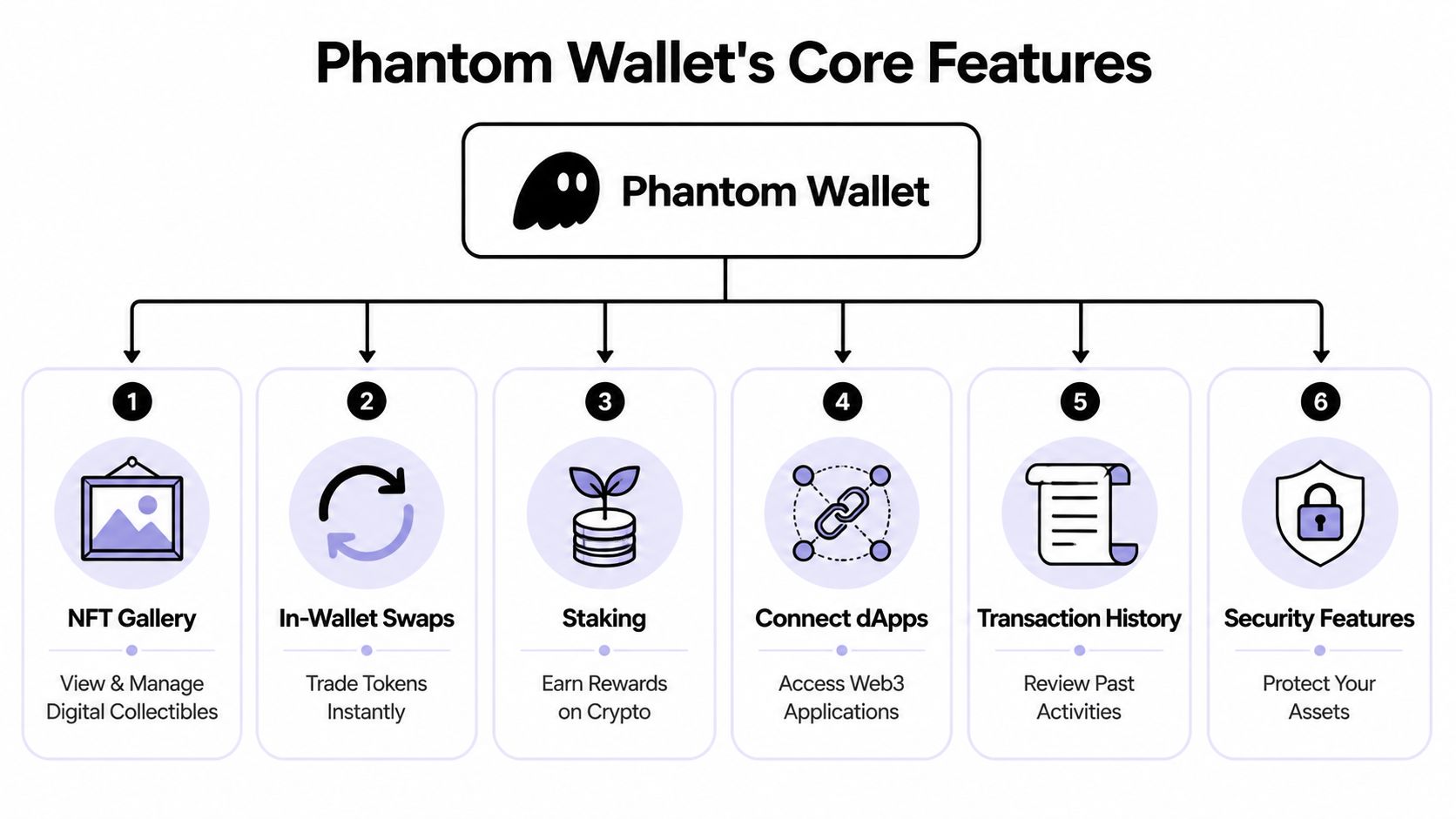
NFT gallery
Phantom earned early loyalty on Solana because it treated NFTs like a first-class asset, not an attachment buried in a token list. That mattered during the first big Solana NFT wave, and it still matters now.
Good NFT presentation is more than cosmetics. It helps users spot what they hold, notice spam collections faster, and manage collectibles without bouncing into a marketplace every time they want basic visibility.
In-wallet swaps
The in-wallet swap tool is one of Phantom's most useful everyday features. For small rotations or quick position changes, it saves time because you can trade without reconnecting to a separate interface for every step.
The trade-off is straightforward. Convenience is high, but power users still compare routes, slippage, and fees before hitting confirm. Phantom is great for execution inside the wallet. It is not a reason to stop caring about price impact.
Staking
Native staking is another reason Phantom became sticky with Solana users. Holding SOL in a wallet is passive. Delegating it to a validator from the same interface makes the wallet more productive without adding much complexity.
That said, staking inside a friendly interface can make the decision feel simpler than it is. Validator choice still matters. So do lockup expectations, rewards behavior, and the basic question of whether you want liquidity or yield at that moment.
Connect dApps
Phantom also acts as your access layer for apps across crypto. DeFi protocols, NFT marketplaces, games, onchain social tools, and newer consumer apps all meet the user at the wallet connection screen first.
That puts a lot of responsibility on transaction previews and approval design. A wallet wins trust when it makes signatures legible and suspicious requests easier to catch. If you want to sharpen those habits, spend time with these blockchain security best practices and threat examples.
Activity and portfolio visibility
One underrated Phantom feature is clarity. The wallet makes it fairly easy to check recent activity, review token movements, and understand which app touched the wallet.
That sounds basic. It is not. A lot of crypto losses start with confusion, not technical illiteracy. Users approve the wrong contract, forget a prior connection, or miss a strange token transfer because the wallet gives them poor visibility.
Multi-chain support
The biggest story is no longer any single feature. It is what Phantom has become.
Phantom started as a Solana favorite, but it now supports Solana, Ethereum, Polygon, Bitcoin, Sui, and Base, as noted earlier from Bitget's Phantom guide. That shift changes the wallet's role. It is no longer only a Solana tool with great UX. It is becoming a front-end for a multi-chain crypto life.
Why that matters is simple. Web3 is not heading toward one chain winning everything. Users already move between ecosystems for cheaper execution, different apps, NFT communities, and access to liquidity. A wallet that can make those transitions feel consistent has real strategic value. If Phantom keeps that experience clean while preserving self-custody, it will matter far beyond the Solana crowd that made it popular in the first place.
A Practical Guide to Getting Started with Phantom
The first setup takes only a few minutes. The security habits you establish in those minutes can matter for years.
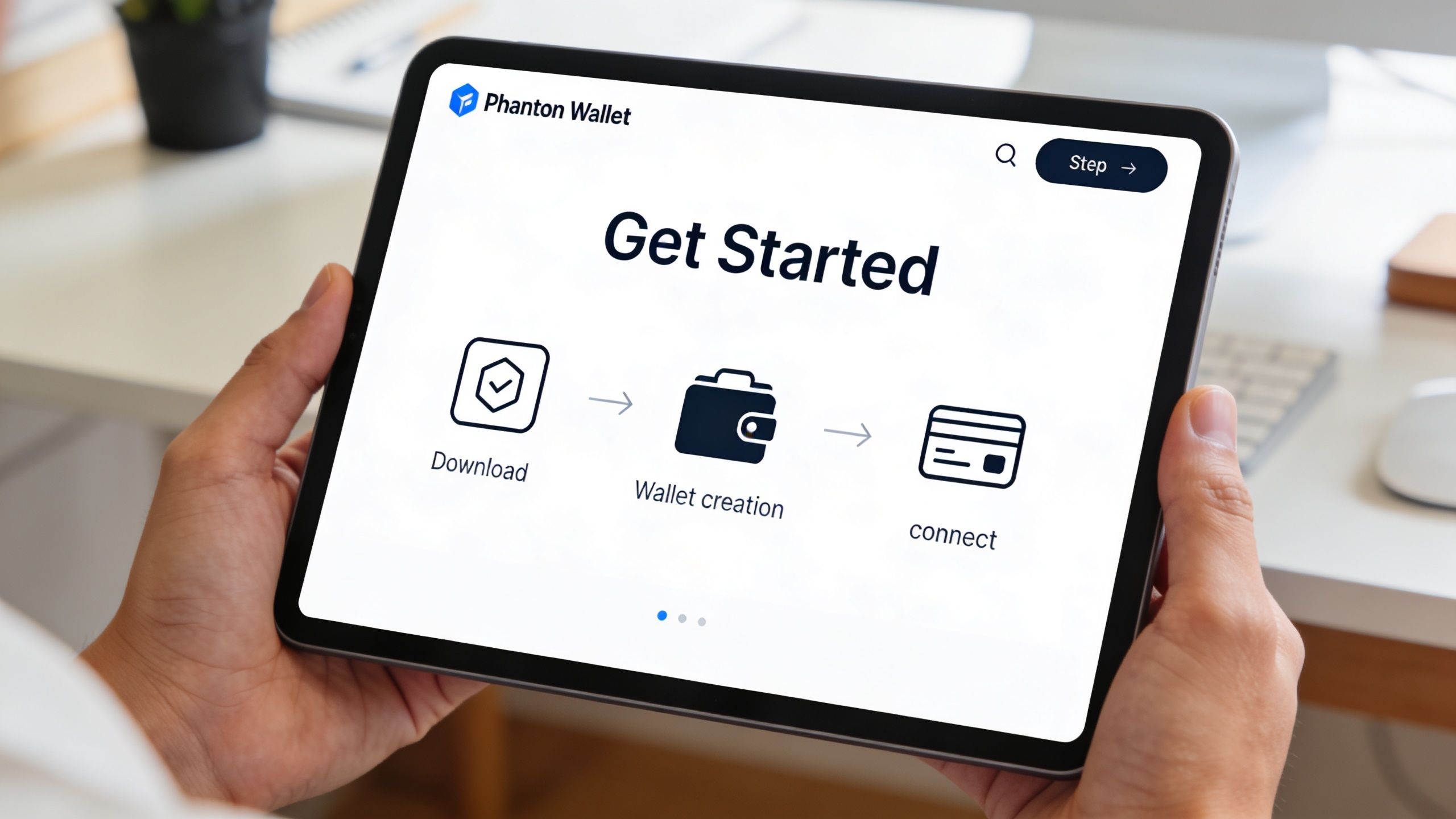
Step one starts before install
Download Phantom only from the official site or trusted app stores. In crypto, fake wallet clones and spoofed pages are a constant problem. The install step is simple. The verification step is where people get lazy.
Once installed, create a new wallet or import an existing one. Then set a strong password for local access on that device.
Non-negotiable: Your Secret Recovery Phrase is the master key. If someone gets it, they can take your assets. If you lose it, you may lose access permanently.
Write the phrase down offline. Don't screenshot it. Don't send it to yourself. Don't put it in cloud notes because it feels convenient.
Your first safe actions inside the wallet
Before doing anything ambitious, keep the first session boring. That's a feature, not a bug.
- Receive a small amount first: Send a test transfer before moving larger balances.
- Check the network carefully: Make sure you're using the correct chain for the asset you're receiving.
- Open the activity view: Get used to where Phantom shows approvals and transfers.
- Connect one trusted dApp only: Start with a platform you already know and understand.
If you're coming from NFTs, gaming, or consumer collectibles, a good low-stakes way to learn wallet behavior is through mainstream digital asset culture such as Hot Wheels NFT coverage, where ownership, marketplaces, and wallet connections become easier to grasp in context.
A walkthrough helps if you want to see the interface flow before touching funds:
A good first milestone is simple: receive funds, view them correctly, and connect to one reputable app without signing anything you don't understand. You don't need to master DeFi on day one. You need to build safe muscle memory.
Security and Self-Custody Best Practices
A lot of wallet losses start the same way. Someone installs Phantom, enjoys how easy it feels across Solana and other chains, then treats every pop-up like a routine click. Multi-chain convenience is real. So is multi-chain blast radius if you sign the wrong message or expose the wrong seed phrase.
Phantom does a good job surfacing risk before you approve an action. It encrypts keys locally on your device, flags many known scam interactions, and shows transaction details before you sign. That matters because Phantom is no longer just a Solana wallet for swaps and NFTs. It is a single control panel for assets and app connections across multiple ecosystems. Better warnings and clearer signing screens reduce mistakes, especially for newer users crossing from one chain environment to another.
Still, Phantom is a hot wallet. Hot wallets are for access and activity, not for blind trust with your entire net worth.
The practical setup is simple. Keep small to medium working balances in Phantom. Put larger holdings behind a hardware wallet. If you use Ledger with Phantom, you keep Phantom’s interface while pushing key storage onto a dedicated device. That is the best balance I’ve found between usability and real self-custody.
What trips people up is not usually the wallet itself. It is the layer around it. Fake mint pages. Search ads leading to cloned sites. Discord DMs from “support.” Approval prompts that look harmless but grant far more access than expected. On a multi-chain wallet, those habits matter even more because one app session can expose activity across several networks you use regularly.
Use this checklist like routine maintenance:
- Store the recovery phrase fully offline: Paper, metal backup, or another offline method. No screenshots, no cloud docs, no email drafts.
- Use a hardware wallet for larger balances: If losing the funds would materially hurt, move signing authority off your everyday device.
- Read every transaction and signature prompt: Token approvals, wallet connects, and blind signatures deserve the same skepticism as a transfer request.
- Separate wallets by role: One for long-term storage, one for active trading, one for NFT or experimental dApps is a common and effective setup.
- Review connected apps and token approvals: Revoke access you no longer need, especially after using new protocols or mint sites.
- Treat bridges as higher-risk actions: Cross-chain movement is useful, but it adds more failure points than a simple transfer on one network.
The strategic shift from Solana-only to multi-chain makes these habits more important, not less important. One polished wallet across ecosystems improves Web3 UX. It also concentrates responsibility. If your setup is sloppy, you are no longer risking one chain’s activity. You are risking a much broader slice of your onchain life.
For readers who want to sharpen their threat model, this archive of blockchain security articles and exploit coverage is worth keeping in rotation. Good wallet security is less about paranoia and more about discipline.
Risks Alternatives and the Future of Phantom
Phantom is good. It isn't risk-free. That's the right frame.
The trade-off of going multi-chain
Multi-chain support is one of Phantom's biggest advantages, but it also expands your attack surface. Binance Academy's explanation of Phantom Wallet notes that interacting with smart contracts on less-audited chains or using bridges introduces risks that don't exist in a single-chain setup, and that secure management of the one seed phrase controlling those assets becomes absolutely critical.
That's the core trade-off. One wallet across chains is elegant. One compromised seed phrase across chains is devastating.
Phantom Wallet vs alternatives
Different wallets fit different habits. Here's the practical shorthand.
| Feature | Phantom | Solflare | MetaMask |
|---|---|---|---|
| Primary identity | Solana-first, now multi-chain | Solana-focused | EVM-first |
| Best fit | Users who want one polished wallet across major ecosystems | Users deeply anchored in Solana | Users living mainly on Ethereum and EVM networks |
| NFT experience | Strong, consumer-friendly | Strong on Solana | Functional, less collector-centric |
| dApp coverage | Broad and expanding | Strong in Solana apps | Deep across EVM DeFi and Layer 2 |
| Main trade-off | Broader scope increases complexity | Less broad multi-chain reach | Historically less native to Solana culture |
If you're heavily Solana-native but want one wallet that can stretch into Ethereum, Polygon, Bitcoin-related activity, and emerging consumer Web3 flows, Phantom makes a compelling case. If you're doing almost everything on EVM chains, MetaMask still has gravitational pull. If you want a more Solana-specialized alternative, Solflare remains relevant.
Where Phantom could fit next
The long-term opportunity is bigger than swapping tokens. Wallets are becoming the interaction layer for AI agents, tokenized real-world assets, on-chain identity, and consumer finance-style products inside crypto. Phantom is well positioned if it keeps doing what made it work in the first place: reducing friction without pretending risk doesn't exist.
That matters because interoperability is becoming the default expectation. Users won't want to think in isolated chain silos forever. They'll want assets, apps, and identity to move more smoothly across networks. Phantom's evolution from Solana-only darling to multi-chain wallet isn't just a product expansion. It's a preview of where Web3 UX is headed.
If you want more practical crypto guides, balanced wallet analysis, and coverage across NFTs, DeFi, blockchain gaming, AI and Web3, follow Coiner Blog for new articles that cut through the hype and focus on what matters when you're using these tools in everyday practice.
2 Comments