
Mines of Dalarnia Guide: Digging Into GameFi in 2026
You’re probably in the same place a lot of GameFi readers are in right now. You’ve watched wave after wave of crypto games promise ownership, yield, and “fun-first” design, only to realize the economy was doing all the work and the gameplay was mostly decoration.
That’s why mines of dalarnia still deserves a hard look in 2026. It isn’t the newest project in Web3 gaming, and it doesn’t get the same kind of hype that fresh launches get. What it does have is a more thoughtful economic design than many play-to-earn titles that burned hot and collapsed when new money stopped entering the system.
I’ve always found that the useful way to evaluate a GameFi project is simple. Ask what happens when the market cools off, token prices slide, and players stop treating the game like a short-term trade. If the answer is “the loop still makes sense,” the project is worth studying. If you’re navigating a rough market cycle, the broader lessons from a cryptocurrency bear market apply here too.
Table of Contents
- Welcome to the Mines Why Dalarnia Still Matters in 2026
- What is Mines of Dalarnia A Primer on the Project
- Exploring the Depths Core Gameplay Mechanics
- The Engine Room MoD's Tokenomics and NFT Economy
- Your First Expedition How to Start Playing Mines of Dalarnia
- From Pixels to Profit Earning Strategies and Investment Risks
- The Road Ahead MoD 2.0 Updates and Future Potential
- Frequently Asked Questions about Mines of Dalarnia
Welcome to the Mines Why Dalarnia Still Matters in 2026
Most GameFi projects fail in a familiar way. Players arrive for rewards, not for the game. Tokens start sliding. Asset prices soften. Then the whole structure reveals that it depended more on constant inflows than on actual in-game demand.
Mines of dalarnia stands out because its economy was built around two participant groups with different incentives. Miners want access to profitable runs and progression. Landowners want their plots used, but they also have to maintain those plots to keep them productive. That difference matters because it creates internal demand for activity rather than relying only on speculation.
What still holds up
The strongest part of the design is that it doesn’t reduce every participant to the same behavior. In weaker P2E economies, everyone farms the same reward and rushes to sell it. In mines of dalarnia, the game asks different players to do different jobs, and that usually makes an economy more durable.
A few reasons it still matters:
- Gameplay comes first: The mining loop, combat, and gear progression give the project more substance than token-only ecosystems.
- Ownership has function: Land and equipment aren’t decorative. They sit inside the economic loop.
- The token has multiple jobs: Utility, trading, upgrades, and governance make the token more than a reward coupon.
Practical rule: In GameFi, sustainability usually improves when a token is spent by different user types for different reasons.
Why analysts still watch it
I wouldn’t call mines of dalarnia a low-risk project. No serious analyst should. But I would call it one of the better case studies in how Web3 game design, NFT ownership, and tokenomics can be combined without making the game feel like a pure yield wrapper.
That’s why it keeps showing up in serious conversations about blockchain gaming. Not because it solved every challenge, but because it addressed more of them than many of its peers.
What is Mines of Dalarnia A Primer on the Project
The basic pitch
Mines of Dalarnia is an action-adventure blockchain game built around mining runs, combat, gear upgrades, and player-owned assets. According to Workinman’s project overview of Mines of Dalarnia, it launched as an open-source HTML5 action-adventure play-to-earn game in October 2021, with a full mainnet deployment in April 2022, and it lets players explore procedurally generated levels while trading tokenized assets as NFTs on the BNB Chain.
That description matters because it captures what makes the project different from a lot of NFT games. This isn’t just a menu-based staking loop dressed up as gaming. The core experience is side-scrolling action. You move through runs, break terrain, collect resources, avoid hazards, and fight monsters while trying to improve your character’s capability over time.
A good beginner comparison is this. If you’ve seen lighter blockchain experiences like Infinite World game coverage, mines of dalarnia pushes further into the “playable game first” direction. The blockchain layer is there, but the minute-to-minute loop still has to stand on its own.
Why the structure matters
The project is easier to understand if you split it into four parts:
The game loop
Players enter mines, gather resources, and survive hazards and enemies.The asset layer
Key items are tokenized, which means ownership and trading are built into the design.The token layer
The $DAR token powers core economic activity across the ecosystem.The role split
Some players act as miners, while others own land and benefit from traffic and upkeep.
That last point is the one many readers miss on first pass. Mines of dalarnia isn’t built around a single universal path to earning. It’s built around complementary roles, and that design choice influences almost every strategic decision in the game.
Mines of dalarnia makes more sense when you stop treating it like a token chart with a game attached and start treating it like a small virtual economy with a playable front end.
For beginners, the easiest way to think about it is this. You can participate by playing the action game and extracting value through effort, or by owning productive digital real estate and positioning yourself on the infrastructure side of the economy.
Exploring the Depths Core Gameplay Mechanics
You feel Mines of Dalarnia click the first time a run goes wrong. A route that looked efficient turns risky, an enemy knocks you off rhythm, and your extraction plan changes on the fly. That moment matters because it shows what the game is asking from players. Timing, route judgment, and gear choices matter as much as the reward at the end.
What a mining run feels like
A run starts before you enter the plot. Loadout decisions shape the entire session, especially if you are trying to balance speed, survivability, and resource efficiency instead of just chasing the deepest possible push. Better equipment improves your margin for error, but it does not remove the need for execution.
Inside the mine, the loop is part platformer, part resource run, part risk management exercise. You carve through terrain to open paths, deal with hostile creatures that interrupt farming lines, and constantly judge whether the next chamber is worth the extra exposure. Good players are not only faster. They are better at knowing when to leave.
That distinction is easy to overlook, and it has economic consequences. In weaker play-to-earn games, rewards often flow to anyone willing to repeat a low-skill action long enough. Mines of Dalarnia puts more pressure on player performance, which helps retention because the session has gameplay stakes even when token sentiment is weak.
The NFT layer supports that loop, but it works best when treated as a toolset rather than a sales pitch. Equipment, companions such as Canar-Es and Mining Apes, crafted items, and mining plots all affect how a run feels in practice. Different plot depths also change the pacing of exploration and extraction, which gives experienced players more room to specialize instead of following one dominant farming pattern.
Why procedural design carries so much weight
Procedural generation does more than keep the caves from feeling repetitive. It protects the economy from one of the biggest GameFi failure modes, which is over-optimization.
Once a game becomes fully solved, players stop playing and start executing scripts with extra clicks. That is where inflation problems usually get worse. Sessions become labor, retention drops, and the token has to do too much work to keep people interested. I have seen that cycle play out across multiple P2E titles. Mines of Dalarnia does not avoid it completely, but randomized layouts and active combat give it better defenses than many projects that collapsed after their early hype faded.
Several mechanics do the heavy lifting here:
- Terrain interaction: Mining and movement are tied together, so pathing is part of player skill.
- Combat pressure: Enemies break farming efficiency and punish greedy route decisions.
- Gear and companion impact: Build choices change run tempo, safety, and extraction potential.
- Run-to-run variation: Procedural layouts make static farming habits less reliable.
That matters for the miner and landowner model as well. A healthier gameplay loop supports steadier plot activity, and steadier plot activity gives land utility a better chance of holding up during weaker market periods. If miners keep showing up only when token prices spike, the whole dual-role structure becomes fragile. If they keep playing because the runs are genuinely satisfying, the economy has a better foundation than the average P2E system.
Mines of Dalarnia still faces the usual Web3 problem. Strong gameplay can reduce economic strain, but it cannot cover for a poorly balanced reward structure forever. What it can do is buy the project something many competitors never earned, a reason for players to return that is not purely speculative.
The Engine Room MoD's Tokenomics and NFT Economy
The long-term case for mines of dalarnia lives or dies in its economic plumbing. The project earns most of its credibility from this specific foundation.
The miner and landowner loop
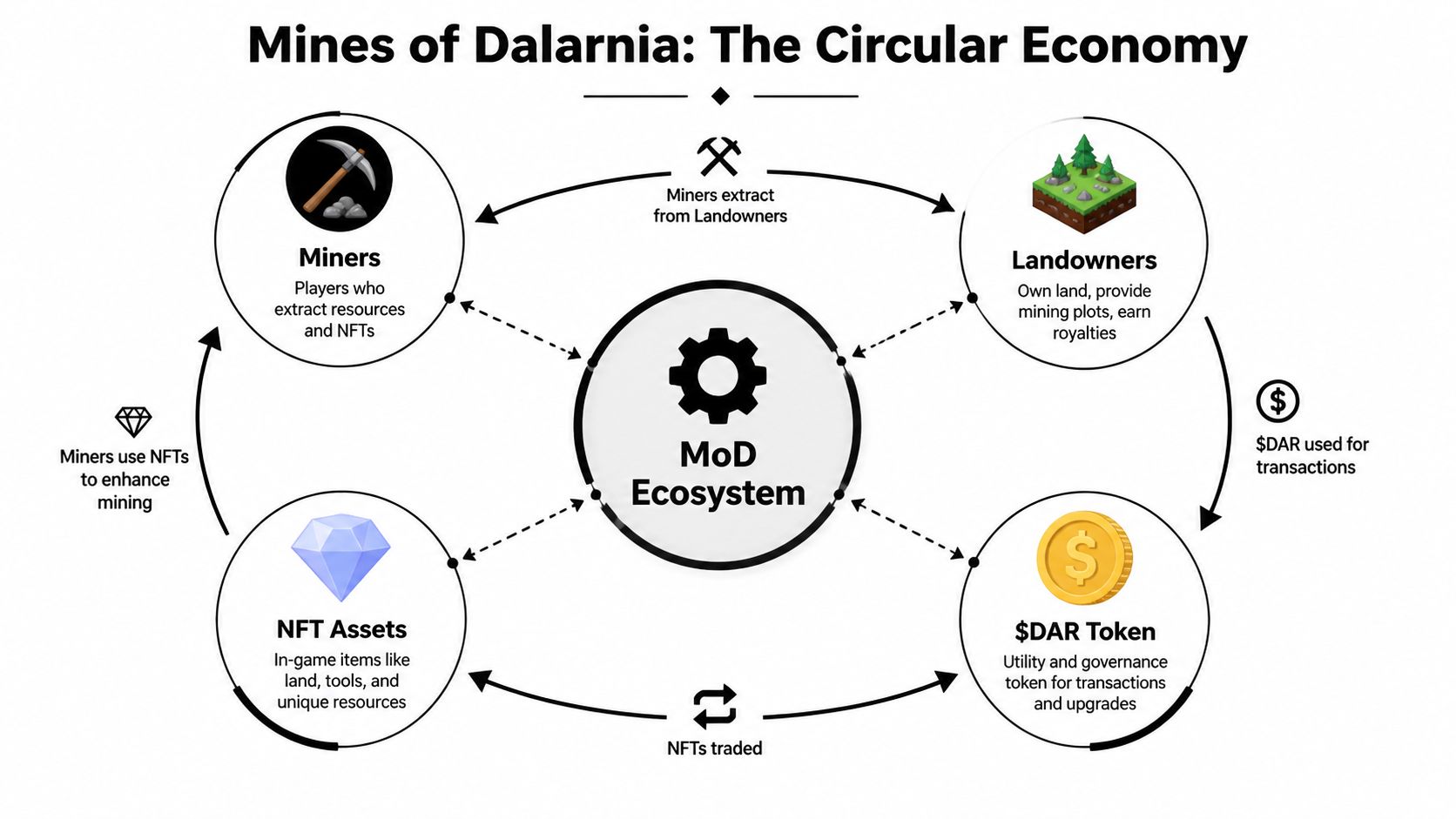
The key design choice is the dual-role economy. According to CoinMarketCap Academy’s breakdown of Mines of Dalarnia tokenomics, miners pay rent in $DAR to access plots and extract resources, while landowners use those resources to terraform plots and replenish them for more mining runs. That same analysis states the token has a maximum supply of 800,000,000 DAR.
This is the part many GameFi models never got right. They rewarded extraction but didn’t create enough meaningful spending. Mines of dalarnia at least attempts to solve that by making resource depletion part of the design. Landowners can’t just hold a plot and expect endless value without maintenance. They have to reinvest to keep the land productive.
That creates a more circular system:
| Role | Main action | Why it matters |
|---|---|---|
| Miner | Pays DAR rent and extracts resources | Creates token demand and gameplay activity |
| Landowner | Collects rent and manages plot productivity | Creates infrastructure and upkeep incentives |
| Marketplace participant | Trades NFTs and materials | Adds liquidity and price discovery |
| Governance holder | Uses DAR in voting | Extends utility beyond pure gameplay |
Where NFTs actually matter
NFTs in mines of dalarnia work better than in projects where ownership is mostly cosmetic. The land itself matters because it controls access. Equipment matters because it shapes effectiveness. Companions and crafted assets matter because they support different forms of progression and secondary market activity.
This is a more practical use of blockchain than minting collectibles and hoping a community invents utility afterward.
A few parts of the NFT economy stand out:
- Plots as productive assets: Land can generate ongoing value if managed well.
- Equipment as performance tools: Better gear changes how efficiently players can operate.
- Marketplace activity: Players can buy, sell, and reposition assets based on their strategy.
- On-chain ownership: Scarcity and transferability are visible and tradeable.
Analyst view: A sustainable GameFi loop needs token sinks, asset utility, and role diversity. Mines of dalarnia has all three in concept. The real question is execution quality over time.
I like the design more than I trust the market around it. That distinction matters. Strong tokenomics can improve resilience, but they don’t make a GameFi project immune to sentiment, liquidity shifts, or player churn.
Your First Expedition How to Start Playing Mines of Dalarnia
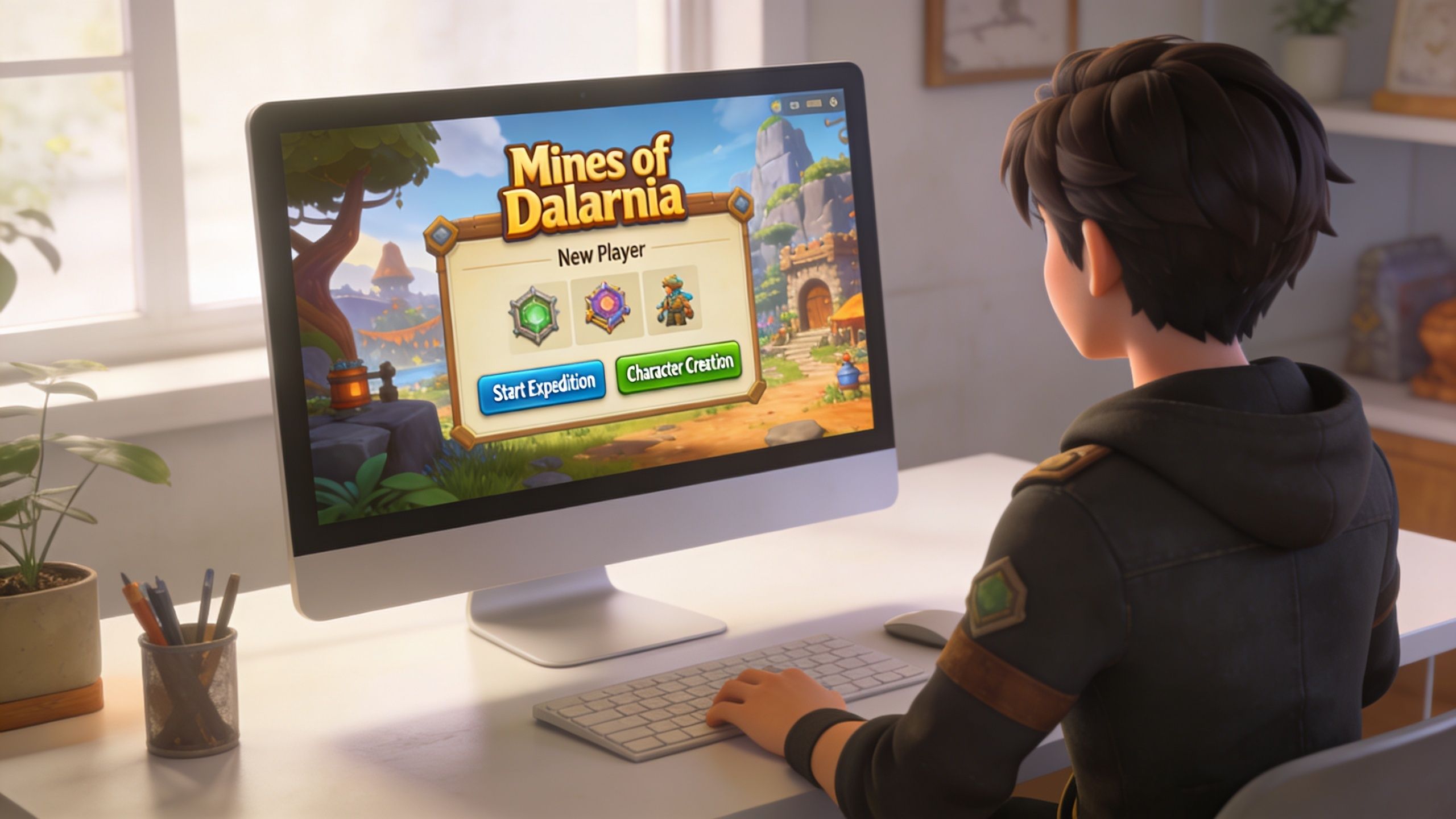
You install the game, connect a wallet, buy a few assets too early, and then realize you still do not know whether you enjoy the mining loop. I have seen that pattern across GameFi for years. In Mines of Dalarnia, the smarter start is smaller and more disciplined, because this economy rewards players who understand role fit before they commit capital.
Step one set up your wallet and chain access
Use a Web3 wallet such as MetaMask and connect only through the official game portal and marketplace. Check the network settings, confirm the wallet is on the correct chain, and read every transaction prompt before signing.
This sounds basic because it is. It is also where new players lose money.
The fastest way to turn a promising blockchain game into a bad experience is to click through setup without checking contract approvals, URLs, or token destinations. Security discipline matters more here than in a traditional free-to-play title because your mistakes can be permanent.
Step two fund your account and avoid overbuying
Bring in enough $DAR to cover early experimentation, not enough to force an investment thesis on day one. Players who start this way usually make better decisions because they learn the pace of upgrades, resource demand, and marketplace pricing from actual sessions instead of from hype.
NFT ownership matters in Mines of Dalarnia because assets affect production, access, and efficiency inside the game. That is a stronger foundation than the collectible-first model used in many weaker NFT projects. If you have followed branded drops such as Hot Wheels NFT coverage, the difference is clear. Dalarnia ties assets to an operating game economy, which gives them more practical value but also exposes them to gameplay balance risk and player demand risk.
That trade-off is worth understanding early. Utility can support prices. It can also fail to do so if activity drops.
Step three choose a role before you choose a big budget
New players usually do best with one of these entry paths:
- Start as a miner: This is the best route for learning the core loop, understanding resource scarcity, and seeing whether the game feels good enough to justify more spending.
- Study the marketplace before buying NFTs: Useful for players who already understand crypto markets and want to compare equipment, companions, and land pricing before committing.
- Delay land ownership: Land can be productive, but only if you understand plot quality, player traffic, and how rent potential changes in weaker market conditions.
That last point matters more than it sounds. The miner and landowner model is one of Mines of Dalarnia's better ideas because it creates two economic roles instead of one reflexive earn-and-dump loop. But dual-role systems only stay healthy if active players still have reasons to mine during down markets and landowners can price access realistically. Other play-to-earn games failed because asset owners expected yield after player growth had already slowed. Dalarnia has a better structure than those projects had. It still depends on real participation.
A practical starter checklist:
- Secure the wallet first: Back up recovery access and verify the correct network.
- Fund in small amounts: Treat the first deposit as tuition for learning the game.
- Review listings by function: Efficiency, access, and use case matter more than cosmetics.
- Play several sessions before scaling up: Good tokenomics on paper do not replace firsthand experience.
- Track your own behavior: If you are not returning to mine regularly, land ownership probably makes little sense yet.
The best first expedition is not the most aggressive one. It is the one that tells you whether you want to be a player, an asset owner, or neither.
From Pixels to Profit Earning Strategies and Investment Risks
People usually come to mines of dalarnia with one of two goals. They either want to earn through active play, or they want exposure to the ecosystem through productive assets. Both routes can work. Both can also go wrong.
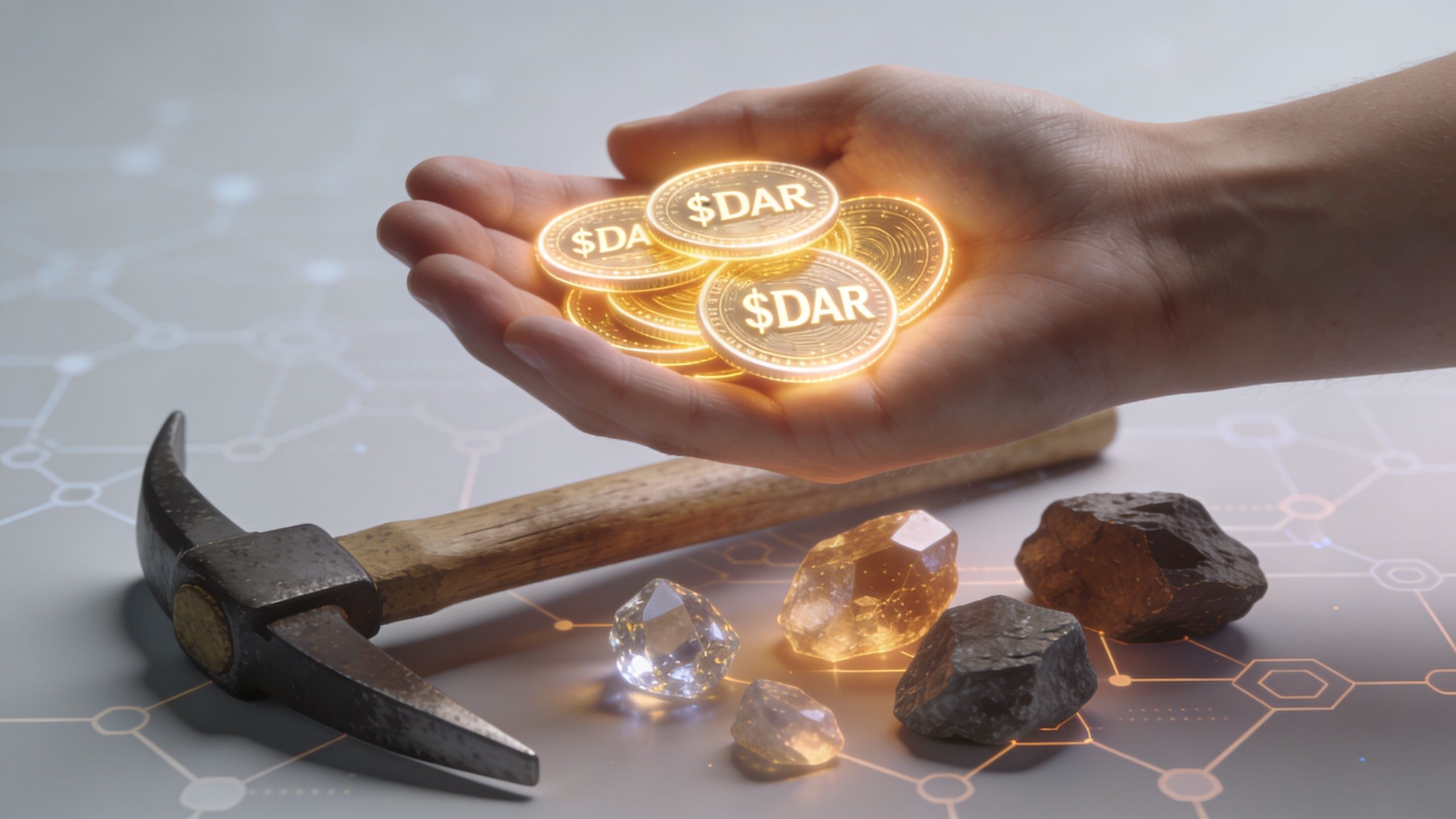
Active miner path
This is the more skill-driven route. You play the game, gather resources, improve your efficiency, and try to extract value from what you collect and craft. It suits players who enjoy session-based gameplay and don’t mind putting time into optimization.
The upside is flexibility. You can learn the economy from inside the game before making bigger commitments. The downside is that your return depends on execution, market demand for what you collect, and the broader price environment for the ecosystem.
Passive landowner path
This route is closer to digital real estate investing. You acquire a plot and position yourself to collect rent from mining activity, while also managing upkeep decisions tied to productivity. That can feel attractive because it reduces the need for constant gameplay.
But passive in GameFi rarely means effortless. Landowners still need to understand asset desirability, user traffic, and the health of the broader game economy. If miners aren’t active or the economics stop making sense, “passive income” can quickly become idle capital.
Here’s the cleanest side-by-side view:
| Strategy | Best for | Strength | Main weakness |
|---|---|---|---|
| Active miner | Players who enjoy action gameplay | Lower commitment to ownership infrastructure | Income is tied to effort and market conditions |
| Passive landowner | Investors who want ecosystem exposure | Positioning inside the rent loop | Requires accurate judgment on asset quality and demand |
What can go wrong
The largest risk is token volatility. CoinCodex historical data for DAR shows that between April 7 and April 8, 2026, the token moved from a high of $0.026412 to a low of $0.011761, a roughly 50% drop in a single day. That kind of move can overwhelm any in-game yield logic.
There are other practical risks too:
- NFT repricing risk: Land and equipment can lose appeal if player preferences shift.
- Liquidity risk: You may own an asset that looks valuable on paper but is hard to sell at your target price.
- Execution risk: A good economic design still depends on active development and stable operations.
- Behavioral risk: Players often overestimate reward potential and underestimate how quickly sentiment changes. That’s why general trading discipline strategies matter even inside GameFi.
If you need the token chart to stay stable for your strategy to work, your strategy probably isn’t strong enough.
My practical view is straightforward. Play as a miner if you want to learn the economy with lower structural commitment. Consider land only after you understand how activity, upkeep, and asset desirability interact. In mines of dalarnia, the best returns usually come from reading the ecosystem correctly, not from assuming the token will rescue a weak position.
The Road Ahead MoD 2.0 Updates and Future Potential
The optimistic case for mines of dalarnia is easy to understand. It already has a stronger economic concept than many failed P2E games, and it sits in a part of Web3 where better infrastructure could improve user experience. If it executes well on future updates, the project could benefit from broader trends in Layer 2, smarter Web3 infrastructure, and even selective AI-driven procedural design.
The bullish case
A “fun-first” blockchain game with a working ownership layer still has room in this market. If MoD 2.0 sharpens multiplayer depth, improves content cadence, and makes the economy easier for new players to understand, it can remain relevant even without hype-driven momentum.
AI is also an interesting fit conceptually. Dynamic mine generation, smarter balancing, or adaptive content systems would align well with the game’s procedural DNA. Broader crypto infrastructure trends, including the themes discussed in the future of cryptography, could also make blockchain gaming feel less clunky for mainstream users.
The skeptical case
The caution flag is development visibility. Gate’s overview of Mines of Dalarnia and DAR notes that a key community question is the progress of Mines of Dalarnia 2.0, with specific updates on Litepaper promises remaining sparse and uncertainty around enhanced features and potential Layer 2 integration.
That doesn’t mean the project is failing. It does mean analysts should avoid wishful thinking. In GameFi, roadmap quality matters less than delivery quality. Until players get clear evidence of progress, the upside case remains real but conditional.
Frequently Asked Questions about Mines of Dalarnia
Is mines of dalarnia free to play
Access and participation depend on the game’s current structure and the assets needed for gameplay. In practice, new users should expect some interaction with wallets, tokens, or marketplace assets rather than a frictionless Web2-style free start.
What blockchain does mines of dalarnia run on
The project launched with NFT activity tied to the BNB Chain, and its broader architecture is associated with Chromia as part of the game’s technical foundation.
Can I play mines of dalarnia on mobile
The game is commonly discussed in terms of web and desktop-style access. Players should verify the current client options through the official project channels before assuming mobile support matches the desktop experience.
What’s the difference between on-chain and off-chain resources
On-chain assets are recorded on blockchain infrastructure and can usually be owned, transferred, or traded with wallet-level verification. Off-chain resources are managed inside the game environment and may still matter for progression, but they don’t carry the same transfer and ownership properties.
Is DAR a good investment
It can be a speculative exposure to a GameFi ecosystem, but it isn’t a low-risk asset. Anyone considering DAR should evaluate the game loop, token utility, asset liquidity, and development pace together rather than treating the token as a standalone trade.
If you want more straight analysis on crypto gaming, NFTs, DeFi, and blockchain trends without the usual hype fog, visit Coiner Blog. It’s a solid place to keep tracking projects like mines of dalarnia with a balanced view of both opportunity and risk.
1 Comment