
10 Best Strategies for Trading Crypto in 2026

Most crypto traders still ask the wrong question. They ask, “Which coin will explode next?” A better question is, “What trading process will still make sense when the market turns chaotic at 3 a.m. on a Sunday?”
That gap matters now because crypto isn’t just Bitcoin and Ethereum anymore. It’s spot markets, perpetuals, DeFi rotations, NFT and GameFi narratives, Layer 2 ecosystems, AI-linked tokens, and tokenized real-world asset plays all competing for liquidity. In a market this fragmented, conviction alone isn’t enough. You need structure.
“Beyond HODL: Your Playbook for Profitable Crypto Trading” starts from a simple truth. HODLing can work, but it doesn’t solve entries, exits, sizing, or risk. A trader with no framework usually ends up chasing candles, overtrading headlines, or selling strong assets for weak reasons. A trader with a tested playbook makes fewer decisions, but better ones.
The best strategies for trading crypto aren’t all high-frequency or overly technical. Some are slow and systematic. Some are discretionary but rules-based. Some work best in spot. Others are built for derivatives, DeFi pairs, or fast-moving altcoin rotations. What separates them isn’t complexity. It’s whether they match your time horizon, your temperament, and the market regime in front of you.
I’ve found that most losses come from using the right idea in the wrong condition. Grid trading in a breakout environment gets punished. Mean reversion in a strong trend gets steamrolled. Scalping without deep liquidity turns into fee donation. Good strategy selection fixes a lot of bad behavior before it starts.
Below are 10 practical crypto trading playbooks. Each one includes where it fits, what usually goes wrong, and how to execute it with more discipline across spot, DeFi, and derivatives.
Table of Contents
- 1. Dollar-Cost Averaging DCA
- 2. Swing Trading
- 3. Arbitrage Trading
- 4. Mean Reversion Trading
- 5. Grid Trading
- 6. Breakout Trading
- 7. Scalping
- 8. Dollar-Based Portfolio Rebalancing
- 9. News and Event Trading Catalyst Trading
- 10. Accumulation and Hodling Buy-and-Hold with Conviction
- Top 10 Trading Strategies Comparison
- Finding Your Edge From Strategy to Execution
1. Dollar-Cost Averaging DCA
Dollar-cost averaging is still one of the best strategies for trading if your real goal is long-term exposure without getting baited into emotional entries. You buy a fixed amount on a schedule, regardless of what the chart is doing that day. That makes it boring, which is exactly why it works for so many people.
In crypto, DCA fits core positions better than speculative trades. Bitcoin, Ethereum, and a short list of high-conviction assets are the usual candidates. If you’re trying to build exposure to Web3 infrastructure, Layer 2 ecosystems, or blue-chip DeFi tokens over time, recurring buys remove the pressure to “find the perfect dip.”

The trade-off is obvious. DCA won’t maximize upside if you nail market bottoms. It also won’t save you from buying weak projects with poor tokenomics. It’s a position-building strategy, not a replacement for research.
Practical setup for crypto DCA
A clean DCA plan usually has just a few moving parts:
- Pick a fixed schedule: Weekly or monthly purchases are easier to sustain than trying to time every pullback.
- Use exchange automation: Kraken, Coinbase, and similar platforms let you schedule recurring spot buys.
- Separate core from tactical capital: Keep DCA for long-term holdings, then trade a smaller side account for setups in DeFi, AI-crypto, or GameFi rotations.
- Track cost basis: A spreadsheet or portfolio tracker helps you see whether you’re averaging into strength, weakness, or dead capital.
Practical rule: DCA only works if you can keep funding it during ugly markets. If the amount isn’t sustainable in a drawdown, it isn’t a real plan.
A good real-world use case is an investor building exposure to Bitcoin and Ethereum while using a separate wallet for onchain experiments such as staking, smart contract protocols, or tokenized real-world asset projects. That structure keeps your long-term thesis from getting wrecked by short-term impulses.
2. Swing Trading
Want a strategy that gives you time to think, still captures meaningful moves, and does not require staring at a one-minute chart all day? Swing trading is usually the best fit. It sits between long-term investing and intraday execution, which makes it one of the most practical crypto strategies for traders who want structure instead of constant screen time.
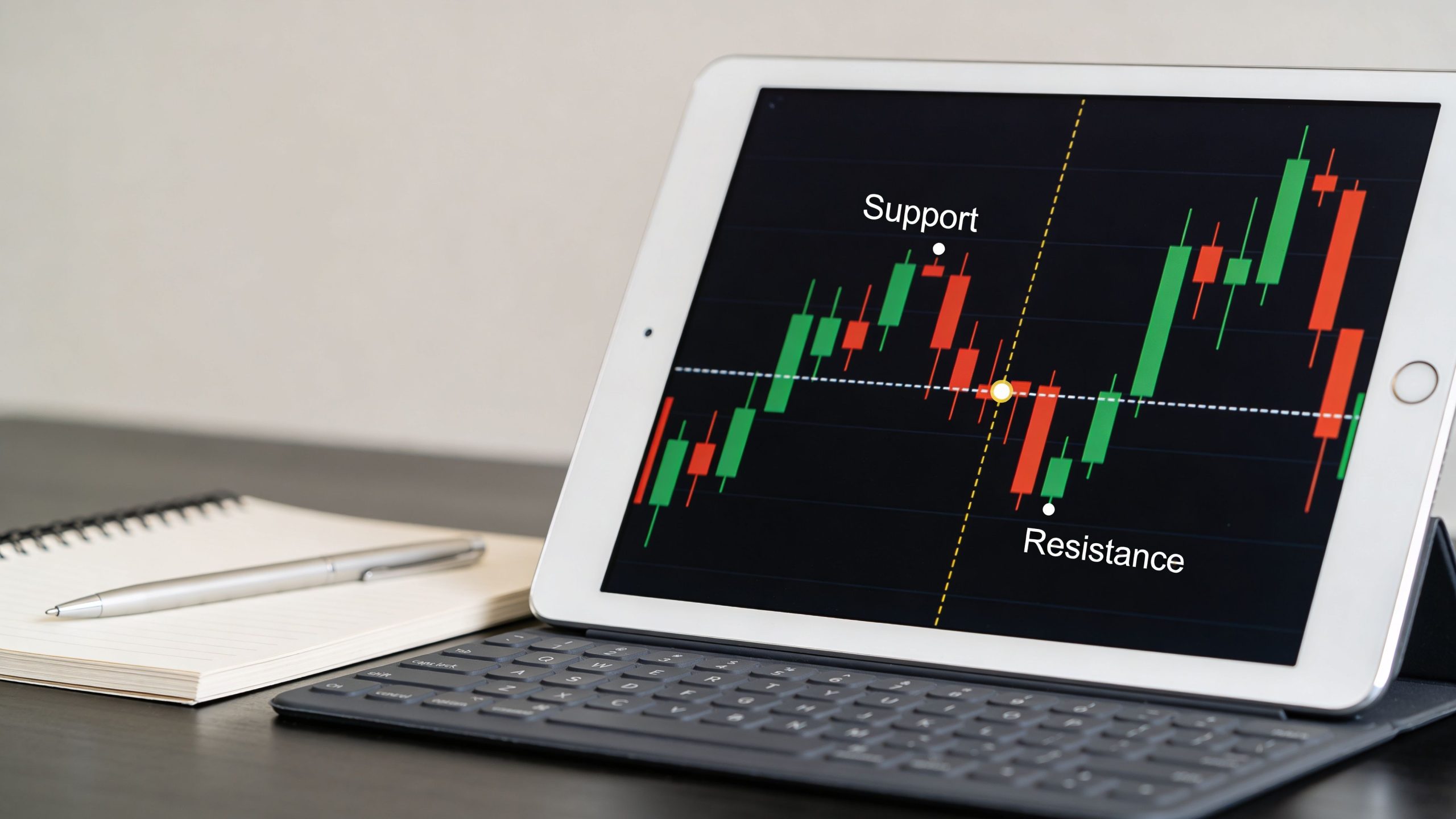
In crypto, swing trades usually target moves that last several days to a few weeks. The job is simple in theory. Identify a market with directional pressure, wait for price to pull into a level that matters, and only take the trade if the risk is clearly defined before entry. That applies to spot, perpetuals, and even selected DeFi tokens with enough liquidity.
Build the trade around structure, not excitement
Start on the daily chart to find trend direction, major support and resistance, and whether price is compressing or expanding. Then drop to the 4-hour chart for execution. That sequence filters out a lot of bad trades. Traders who start on low timeframes often end up reacting to noise instead of trading a real move.
A workable swing playbook looks like this:
- Market selection: Focus on liquid names first, such as BTC, ETH, SOL, or high-volume perp pairs. Thin altcoins can move fast, but slippage and funding noise make risk harder to control.
- Bias filter: Only look for longs above a rising daily 20 EMA or after a clear range reclaim. Only look for shorts when the higher timeframe is making lower highs and losing key support.
- Entry trigger: Use one of three setups. Pullback into support, breakout and retest, or failed breakdown that quickly reclaims range lows.
- Invalidation: Place the stop beyond the level that breaks the setup, usually under the swing low for longs or above the swing high for shorts.
- Profit plan: Take partials into the next resistance zone, then trail the rest under higher lows if trend strength stays intact.
The trade-off matters. Spot swing trading avoids liquidation risk, but ties up more capital and limits your ability to express short ideas. Perpetuals are capital-efficient and flexible, but funding, wick risk, and overnight exposure punish oversized positions fast. On DeFi names, the chart can look perfect and still fail because one governance proposal, token release, or liquidity migration changes the order flow.
Narrative helps, but only after the chart qualifies. If a GameFi or NFT-related token starts trending and volume expands through a clean range high, tracking sector context through Coiner Blog's coverage of NFT-driven market narratives can add useful context. It should not replace execution rules.
Swing traders rarely get hurt by one bad candle. They get hurt by entering late, sizing too large, and refusing to exit when the setup is invalid.
Example setups by instrument
For spot, a clean setup is a daily uptrend with a 4-hour pullback into prior resistance that flips to support. Buy the reclaim, risk below the recent higher low, and scale out into the next daily supply zone.
For perpetuals, use the same chart structure with tighter risk controls. Check funding before entry. If funding is crowded in the direction of your trade, reduce size or wait for a better entry, because even a correct directional view can suffer through a violent flush first.
For DeFi tokens, add one more filter. Confirm that volume is real and the token can absorb your order without a large spread. A strong chart in an illiquid token is often a trap.
A few tools help here. TradingView is enough for multi-timeframe chart work, alerts, and level mapping. Coinalyze or exchange dashboards help check open interest and funding on derivatives. For onchain sectors, Dexscreener and token terminal-style dashboards help confirm whether price strength is supported by actual activity.
Trend-following research points in the same direction. Markets often deliver a large share of returns through a small number of outsized moves, which is why swing traders do not need a very high win rate if they control losses and hold winners properly. Curtis Faith discusses that principle directly in his work on systematic trend following, including position sizing and asymmetric payoff logic in Way of the Turtle.
That is the edge in swing trading. Catching every move is impossible. Catching the right move with defined risk is enough.
3. Arbitrage Trading
Arbitrage sounds easy on paper. Buy lower on one venue, sell higher on another, collect the spread. In practice, crypto arbitrage is a game of speed, fees, transfer friction, and execution quality. It’s one of the best strategies for trading only if you treat it like operations, not guesswork.
The cleanest opportunities usually show up in exchange fragmentation, temporary pair dislocations, or correlated assets that drift apart and then snap back. That last category matters because modern crypto arbitrage often looks more like statistical arbitrage than simple exchange hopping.
Where crypto arbitrage still works
Pairs trading is the more realistic version for many advanced traders. Instead of hunting obvious price mismatches that bots already eat, you monitor correlated assets and act when they diverge beyond your threshold. According to systematic trading benchmarks on statistical arbitrage and pairs trading, this approach can generate 0.5%-1% per trade, with reported 65-75% backtested success on liquid pairs when combined with z-score thresholds above 2.0 and volume confirmation filters. The same source notes that quantitative traders often automate monitoring across 50-100 pairs and rely on tools like Python, pandas, NumPy, statsmodels, Interactive Brokers API, or MetaTrader 5.
That’s highly relevant for crypto. BTC-ETH, ETH-L2 ecosystem pairs, and sector baskets in DeFi or AI tokens can temporarily lose alignment during volatility spikes. A trader running this style usually isn’t trying to predict direction. They’re betting on relative normalization.
A practical workflow looks like this:
- Pre-fund multiple venues: Don’t depend on real-time transfers.
- Focus on liquid pairs: Thin books erase spreads fast.
- Model total cost: Include fees, slippage, and any withdrawal bottleneck.
- Automate alerts: Manual arbitrage is often too slow for live crypto markets.
This strategy works better for technically inclined traders than for casual investors. If you can’t build or configure tooling, you’ll likely arrive late and donate the edge to someone faster.
4. Mean Reversion Trading
Mean reversion fits crypto better than many people think, but only in the right environment. When price stretches too far from its average inside a range or after a panic flush, it often snaps back hard. That creates good setups in spot and derivatives, especially on highly watched assets.
The trap is obvious. Traders see “oversold” and start buying every dump. In a real downtrend, price can stay oversold far longer than a beginner expects. Mean reversion isn’t about buying weakness blindly. It’s about fading exhaustion when structure supports the idea.
How to avoid fading a real trend
The cleanest setups usually happen when several things line up. Price tags an outer Bollinger Band, momentum looks stretched on RSI, and the move runs into a prior support or resistance area that traders already care about. Add a reversal candle or a volume shift, and the setup becomes much better.
Crypto traders often use this on Bitcoin or Ethereum after liquidation events, but it also shows up in altcoins after failed breakout attempts. A token tied to a DeFi or smart contract narrative may overreact intraday, then retrace once the initial panic passes.
Useful rules:
- Trade ranges, not freight trains: Mean reversion works best when the market is oscillating rather than trending aggressively.
- Wait for confirmation: A wick into support is not enough by itself.
- Set stops beyond the extreme: If price keeps pushing, get out fast.
- Take profits into the mean: Don’t expect every reversion to become a new trend.
There’s a helpful adjacent data point from NinjaTrader’s statistical analysis of trading patterns. Their backtesting found that daily price ranges respected the daily Average True Range 72.44% of the time in E-mini Dow futures over the examined period. For crypto traders, the lesson is practical. Targets and stops often make more sense when they’re framed around a realistic daily range rather than raw hope.
A good mean reversion trade feels uncomfortable at entry, but it shouldn’t feel reckless. If you can’t define where the move should stop, you’re not trading a setup. You’re catching a falling knife.
5. Grid Trading
Grid trading is one of the few strategies that can feel almost mechanical in a sideways crypto market. You place buy orders below current price and sell orders above it, creating a ladder that profits from repeated oscillations inside a range. It’s especially popular with bots because crypto trades nonstop and ranges can persist for days.
Used correctly, grid trading can turn chop into cash flow. Used badly, it becomes a slow-motion disaster when price breaks out and never comes back.
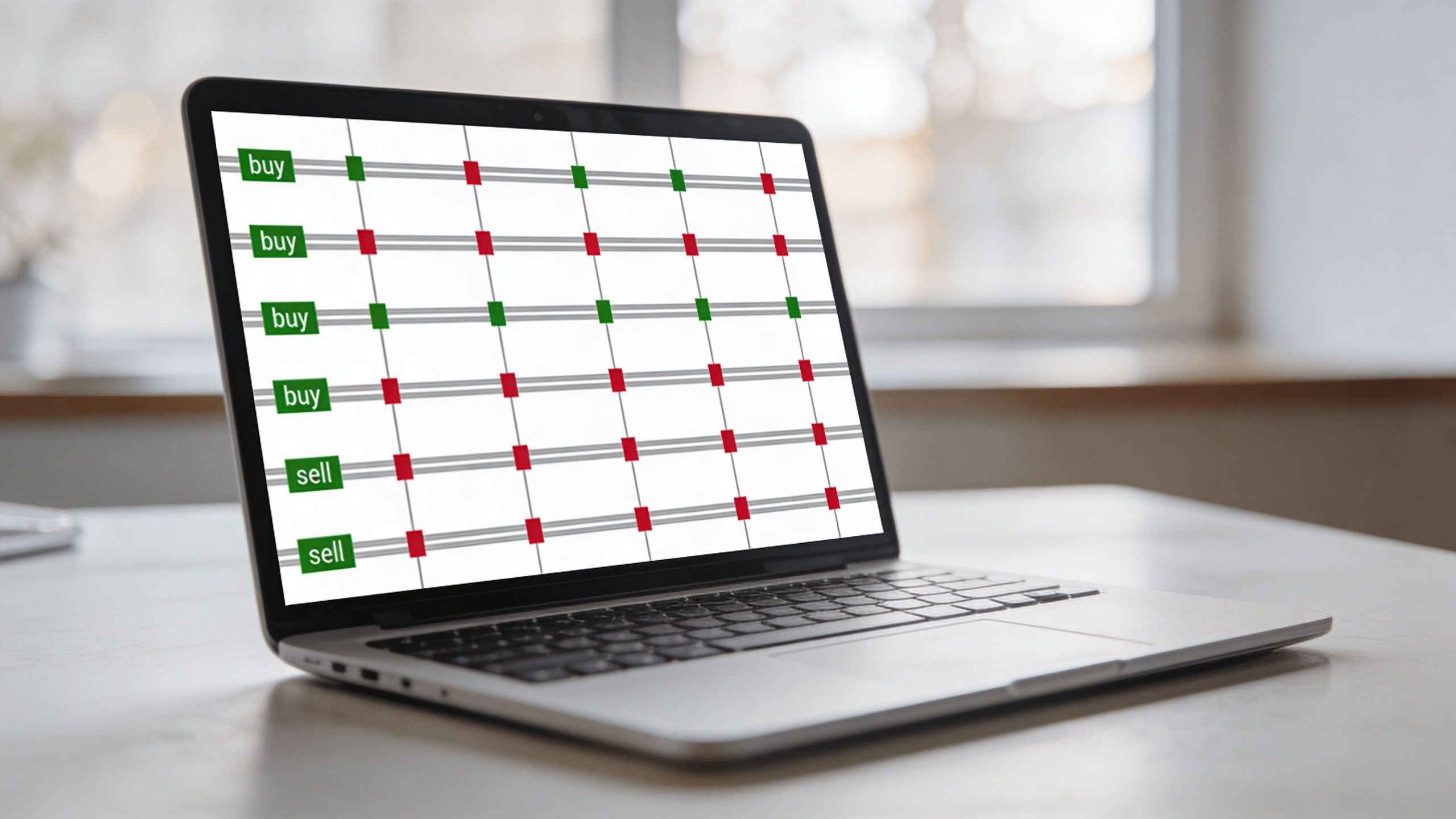
Here’s the chart style this strategy is built for:
Set the grid where the market is actually rotating
The best grid isn’t the one with the most levels. It’s the one drawn around a range the market keeps respecting. If Ethereum is rotating between a clear support shelf and overhead resistance, a spot grid or neutral bot can work well. If a meme coin is one influencer post away from vertical price discovery, stay away.
A solid crypto grid process usually includes:
- Choose a defined range: Use obvious support and resistance, not arbitrary spacing.
- Keep enough capital in reserve: A grid needs inventory to survive movement across the full band.
- Use bots carefully: TradingView alerts, 3Commas, and exchange-native bots help, but bad parameters still lose money automatically.
- Shut it down before catalysts: Major token releases, listings, or macro events can break the range.
Grid logic overlaps with breakout logic more than most traders realize. If the range fails, the strategy must change. Don’t let a market-neutral plan become an unplanned directional bet.
Later in the process, video walkthroughs can help traders visualize spacing, order ladders, and bot behavior in live ranges:
A practical use case is a trader running a grid on a liquid Layer 2 token during a quiet market week while avoiding magnified risk. The edge comes from repetition, not prediction.
6. Breakout Trading
Breakout trading is the strategy that attracts the most excitement and the most bad entries. The concept is straightforward. Price pushes through a well-defined level, momentum expands, and you ride the move. In crypto, that can be a Bitcoin range break, an Ethereum compression release, or an altcoin finally clearing a level it failed at for weeks.
The problem is that many “breakouts” are just liquidity grabs. Price pokes above resistance, breakout traders pile in, and then the market snaps back into the range. That’s why level quality and confirmation matter more than excitement.
Trade confirmed expansion, not random candles
A good breakout usually starts long before the actual entry. The market compresses, volume builds, and price keeps revisiting a key level without fully rejecting it. When the break comes, you want evidence that new buyers are committed.
One strong framework comes from intraday momentum breakout benchmarks, which describe 80% win rates on trades that occur with more than 2x average volume, and note that traders often target 1:2 to 1:3 risk-reward ratios using tools like Donchian or Keltner Channels and a 20-period ATR multiplier of 2.0. The same benchmarks mention filters such as RSI above 70 and volume spikes above 150% for stronger momentum conditions.
That doesn’t mean every crypto breakout with high volume is good. It means you should stop treating resistance breaks as enough by themselves.
A practical crypto breakout checklist:
- Use stronger timeframes: Daily and 4-hour levels usually matter more than noisy lower-timeframe lines.
- Wait for acceptance: A close above the level or a clean retest is often safer than chasing the first spike.
- Map the next target in advance: If there’s no room overhead, the trade may not be worth it.
- Respect failed breaks: A failed breakout can be one of the fastest reversal signals in the market.
Breakouts tend to work well in sectors with strong narrative tailwinds, including AI + crypto projects, new Layer 2 ecosystems, and hot DeFi infrastructure names. They work far worse in dead markets where liquidity is thin and follow-through is missing.
7. Scalping
Scalping is fast, stressful, and brutally honest. If your execution is sloppy, the strategy exposes you immediately. This isn’t where most new traders should begin, but it can be effective for traders who have deep focus, strict rules, and access to highly liquid products.
In crypto, scalpers usually operate on major pairs and derivatives because they need tight spreads and rapid fills. Bitcoin perpetuals, Ethereum perpetuals, and top spot books are the usual battlegrounds. Thin altcoins look tempting because they move fast, but they often punish scalpers with slippage.
Execution quality decides everything
Scalping works when you remove as much uncertainty as possible. That means trading during liquid sessions, keeping your chart simple, and deciding before entry where the trade fails and where you’ll exit. One hesitation can erase several small wins.
A few practices matter more than fancy indicators:
- Trade liquid instruments only: Deep books reduce slippage and improve consistency.
- Use low-fee venues: Frequent entries and exits magnify every cost.
- Work with the tape: Order book pressure and fast reactions around key levels matter more here than broad macro thesis.
- Stay emotionally flat: Revenge trading kills scalpers faster than bad analysis.
“If you need the trade to work, you’re already trading too big.”
Scalping also benefits from understanding where attention is flowing. During active rotations, sectors like crypto gaming markets can suddenly become liquid enough for fast momentum trades, especially when new listings, metaverse headlines, or GameFi updates pull volume into a narrow group of tokens.
The downside is sustainability. Not everyone wants to spend hours in front of a screen making tiny decisions. If the pace degrades your discipline, it isn’t your strategy.
8. Dollar-Based Portfolio Rebalancing
Portfolio rebalancing doesn’t get enough respect because it looks less exciting than active trading. It should. For investors managing a basket of crypto assets, rebalancing is one of the cleanest ways to enforce discipline without pretending you can predict every rotation.
The basic idea is simple. Set target allocations, then periodically trim what has run too far and add to what has fallen behind. In crypto, that matters because narratives move faster than fundamentals. A portfolio that starts balanced can turn into a concentrated bet on one ecosystem after a single hot run.
Use rebalancing to control narrative risk
A strong rebalance framework keeps your portfolio aligned with your actual thesis. If your target mix includes Bitcoin as reserve collateral, Ethereum as smart contract exposure, and smaller allocations to Layer 2, DeFi, and tokenized real-world asset themes, you shouldn’t wake up months later and discover one speculative sleeve dominates everything.
Good practice usually includes:
- Set target weights in advance: Decide allocations when you’re calm, not after a moonshot.
- Use drift thresholds or a time schedule: Monthly, quarterly, or threshold-based rebalances all work if you stay consistent.
- Account for fees and taxes: Small portfolios can get chewed up by over-rebalancing.
- Document why each asset belongs: If the thesis is broken, don’t rebalance into weakness just because a spreadsheet says so.
This approach is especially useful for investors who care about long-term crypto exposure but also want some tactical flexibility. It pairs well with secure storage habits and periodic portfolio reviews around custody, contract risk, and blockchain security topics.
What doesn’t work is constant tinkering. Rebalancing is effective because it imposes structure. If you override it every time market sentiment gets loud, you lose the benefit.
9. News and Event Trading Catalyst Trading
Catalyst trading is where crypto feels most like a reflex game. Exchange listings, protocol upgrades, token releases, ETF headlines, regulatory actions, and macro announcements can all move price fast. Traders love these setups because they create urgency. They also punish lazy preparation.
The biggest mistake is assuming the event itself is the edge. It isn’t. Everyone sees the calendar. The edge comes from knowing what’s priced in, how the market behaved on similar catalysts before, and whether you’re trading anticipation or reaction.
Trade the reaction, not the rumor alone
A strong catalyst trade usually starts before the event. You build a calendar, follow official channels, and identify assets that are likely to attract attention. Then you map your scenarios. If the market dumps on good news, what invalidates the long? If the asset spikes into resistance on hype, where do you take profit?
This is especially useful in crypto sectors driven by product milestones. A Layer 2 launch, a major DeFi integration, an AI-blockchain partnership announcement, or a GameFi ecosystem update can all pull capital quickly. The same is true for macro-linked events when Bitcoin starts trading like a high-beta risk asset.
Practical rules that keep this style sane:
- Reduce size around binary events: Volatility can expand faster than your plan.
- Use official sources first: Project blogs, governance forums, and exchange announcements beat rumor accounts.
- Define the setup before the headline hits: Once the move starts, discipline gets expensive.
- Expect contrarian reactions: Good news can sell off if traders were already positioned for it.
If you track emerging narratives and policy shifts, Coiner Blog’s look at the crypto future is the kind of thematic context that can help you spot where upcoming catalysts may matter most.
Catalyst trading works best for prepared traders. It works worst for anyone using X posts as a substitute for a plan.
10. Accumulation and Hodling Buy-and-Hold with Conviction
What does buy-and-hold look like when it is done like a trader, not a tourist?
It looks less like passive hope and more like a position management system. You choose a short list of assets that can survive a full cycle, build size over time, store them securely, and review the thesis on a schedule instead of reacting to every red candle. In crypto, that discipline matters because volatility shakes out weak conviction long before the market rewards the right thesis.
This strategy fits traders who want exposure to the biggest asymmetric trends without sitting in front of a screen all day. It also works as a base layer under more active tactics. I often treat long-term holdings as core inventory, then run shorter-term trades separately so I do not raid investment positions to chase noise.
Build conviction from a checklist
Accumulation only works when the asset has a reason to keep attracting capital, users, or fee generation over time. Bitcoin earns consideration through monetary scarcity and liquidity depth. Ethereum earns it through settlement activity, developer adoption, and its role across DeFi and tokenized assets. Smaller tokens need a much harder review because narratives change fast and many never recover from one broken cycle.
Use a checklist before you commit serious capital:
- Write a one-page thesis: Include demand drivers, supply structure, competitive risks, and what would make you exit.
- Define your accumulation plan: Fixed weekly buys work for spot. Larger adds after 20 to 30 percent drawdowns can work if you already want the asset.
- Set a max portfolio weight: Conviction does not justify concentration risk you cannot survive.
- Separate storage by purpose: Keep trading inventory on exchange only if needed. Move long-term holdings to a hardware wallet or qualified custody.
- Review quarterly: Check active addresses, fee activity, treasury health, token releases, governance changes, and regulatory risk.
The trade-off is simple. You give up perfect entries in exchange for staying in the trend long enough to benefit from it.
That is the part many traders miss. Long-term holders do not need to catch every swing. They need to avoid owning weak assets, overpaying in euphoric phases, and selling strong assets just because volatility gets uncomfortable.
A practical mini-playbook for spot and onchain accumulation
For spot, the cleanest setup is staged buying into higher-timeframe weakness. Allocate a fixed amount each month, then keep reserve capital for sharp market-wide selloffs. That reserve matters. It lets you add when forced sellers hit the book instead of buying only when sentiment feels safe again.
For DeFi exposure, the rule is stricter. If the token depends on emissions, fragile TVL, or governance that can change overnight, position sizes should be smaller than a comparable spot BTC or ETH hold. Onchain yields can improve returns, but smart contract risk, bridge risk, and liquidity risk have to be priced in from the start.
A simple framework looks like this:
- Core spot holdings: BTC, ETH, or other high-liquidity assets with long operating history
- Satellite positions: Smaller allocations to sectors with upside, such as DeFi infrastructure or modular blockchain plays
- Dry powder: Cash or stables reserved for panic weeks
- Exit rules: Sell if the thesis breaks, not because the chart is ugly for two weeks
For long-term context on the security foundations behind digital assets, Coiner Blog’s analysis of the future of cryptography is useful background.
Buy-and-hold with conviction is slow by design. Done well, it gives you staying power. Done poorly, it turns into bagholding. The difference is research, sizing, storage, and the discipline to keep a thesis current.
Top 10 Trading Strategies Comparison
| Strategy | Implementation Complexity 🔄 | Resource Requirements ⚡ | Expected Outcomes ⭐📊 | Ideal Use Cases 💡 | Key Advantages ⭐ |
|---|---|---|---|---|---|
| Dollar-Cost Averaging (DCA) | Low 🔄, simple setup, automatable | Low ⚡, small recurring capital, exchange tools | ⭐⭐⭐, steady long-term accumulation, lower short-term upside | New investors, long-term holders, volatile markets | Removes market-timing, reduces emotional bias |
| Swing Trading | Medium 🔄, requires technical analysis skills | Medium ⚡, charting tools, moderate time commitment | ⭐⭐⭐, higher potential than DCA; variable performance | Part-time active traders targeting days–weeks moves | Captures medium-term swings without 24/7 monitoring |
| Arbitrage Trading | High 🔄, complex execution and coordination | High ⚡, capital on multiple exchanges, low-latency tools | ⭐⭐⭐, frequent small, relatively market-neutral profits | Bots, quant teams, traders with multi-exchange access | Profits regardless of market direction; low exposure to trend risk |
| Mean Reversion Trading | Medium 🔄, indicator-driven, needs confirmation | Medium ⚡, indicators, automation beneficial | ⭐⭐, effective in range-bound/volatile markets; risky in trends | Contrarian traders during volatility or sideways markets | Exploits overreactions; clear indicator-based entries |
| Grid Trading | Medium 🔄, setup grid levels and boundaries | Medium–High ⚡, capital to cover grid, bot/platforms | ⭐⭐⭐, consistent small gains in ranges; poor in strong trends | Automated bots during consolidation and 24/7 crypto markets | Automates profit-taking across oscillations without directional bets |
| Breakout Trading | Medium 🔄, identify levels and confirm with volume | Low–Medium ⚡, charts, monitoring for confirmations | ⭐⭐⭐⭐, high upside when valid; false breakouts reduce wins | Momentum traders seeking early trend entries (daily/weekly) | Catches early trends with clear entry/exit rules |
| Scalping | High 🔄, rapid execution, tight management | High ⚡, constant monitoring, low-fee exchange access | ⭐⭐⭐, many small wins that compound; sensitive to fees/slippage | Full-time traders with HFT-like setups and high liquidity pairs | Low overnight risk; frequent compounding potential |
| Dollar-Based Portfolio Rebalancing | Low–Medium 🔄, set allocations and rebalance rules | Low ⚡, tracking tools, periodic trades | ⭐⭐⭐, enforces buy-low/sell-high; reduces concentration risk | Long-term diversified investors and retirement portfolios | Disciplined risk control and simplified diversification |
| News & Event Trading (Catalyst) | High 🔄, requires real-time monitoring and judgement | Medium–High ⚡, news feeds, sentiment tools, rapid execution | ⭐⭐⭐⭐, potential for large moves but unpredictable | Traders focusing on upgrades, listings, regulatory events | Access to outsized moves tied to fundamental catalysts |
| Accumulation & Hodling | Low 🔄, buy-and-hold with conviction | Low ⚡, capital, research, custody solutions | ⭐⭐⭐⭐, high long-term upside with deep drawdowns possible | Long-term believers, limited-time investors, institutions | Low fees, tax advantages, benefits from long-term adoption |
Finding Your Edge From Strategy to Execution
What separates a strategy that looks good on paper from one that holds up with real money on the line?
Execution does. The right strategy is the one you can follow through chop, momentum spikes, overnight headlines, and the kind of volatility that makes traders abandon their rules at the worst possible time. Start with an honest audit of your constraints: screen time, risk tolerance, decision speed, preferred instruments, and whether you want steady accumulation, active income, or asymmetric upside from selective trades.
Fit matters more than variety. Traders usually underperform because they mix styles that ask for different instincts, time horizons, and risk controls. A long-term spot investor who keeps reacting to every headline needs a tighter thesis and a portfolio plan. A breakout trader who keeps fading strength is applying the wrong playbook for the regime. A scalper without the focus for fast execution is paying fees for stress.
Crypto makes this more demanding because the opportunity set is fragmented. Spot rewards patience and balance-sheet thinking. Perpetuals reward timing, liquidity awareness, and strict invalidation. DeFi adds smart contract risk, bridge risk, and thinner liquidity, which means the same setup can behave very differently from a centralized exchange chart. Good traders do not try to trade every venue the same way. They build a small set of repeatable setups for each instrument type.
A practical starting framework is simple. Pair one slow strategy with one active strategy. For example, keep a core spot book built through DCA or conviction-based accumulation, then run a separate swing or breakout book for tactical trades. That split helps newer traders build experience without constantly disturbing long-term positions, and it helps experienced traders separate investment decisions from short-term execution.
Keep the playbook concrete:
- For spot, define entry zones, add levels, and profit-taking rules before buying.
- For perps, define invalidation first, then size the trade so a loss is routine, not disruptive.
- For DeFi tokens, account for liquidity, release schedules, and event risk before treating any chart setup as tradable.
- For all three, write down what conditions must be present for the setup to qualify.
Risk control decides whether you stay in the market long enough for edge to matter. That does not require a complicated model. It requires position sizes you can tolerate, exits you will respect, and a hard rule for what invalidates the trade. Traders who survive multiple cycles cut exposure faster than they cut corners.
Journaling is where strategy turns into evidence. Log the setup, instrument, thesis, trigger, exit, mistake, and whether you followed plan or improvised. After twenty or thirty trades, patterns usually stand out. Some traders discover their edge exists only on higher time frames. Others learn they read momentum well but force too many reversals. A journal makes that visible.
Paper trading still has value, but only when it mirrors live conditions closely. Track fills realistically. Include fees, slippage, and missed entries. If your process breaks in simulation, real capital will expose the same weakness faster and at a higher cost.
The traders who improve are not the ones chasing ten strategies at once. They choose one or two, test them on the instruments they trade, review results without ego, and refine rules until execution becomes repeatable. In crypto, flexibility helps. Randomness does not.
If you want more practical crypto analysis, deeper breakdowns on NFTs, Web3, DeFi, crypto gaming, blockchain security, and the trends shaping digital assets, follow Coiner Blog. It’s a strong destination for readers who want useful market context without the usual hype, and it’s worth watching as new guides, analysis, and ecosystem coverage continue to roll out.
7 Comments