
Finding the Next Bitcoin: Top 7 Crypto Contenders for 2026
Chasing “the next Bitcoin” is usually the wrong frame. Bitcoin already occupies a category few assets can challenge: digitally scarce, globally recognized collateral with institutional access, a fixed monetary policy, and a market structure shaped by years of liquidity, custody buildout, and regulatory attention.
A better question is which crypto network can achieve the same kind of category-defining position somewhere else.
That shift matters because crypto's winners no longer emerge from narrative alone. They emerge from a combination of developer adoption, distribution, settlement utility, integration depth, and the ability to become hard to replace once users, applications, or institutions commit. A token can post strong price performance for a cycle and still fail this test. A network that becomes core infrastructure in its niche can compound for far longer.
This article uses that stricter standard. “The next Bitcoin” does not mean a direct successor to Bitcoin, or a cheaper version of the same thesis. It means a project that can dominate a new vertical the way Bitcoin came to dominate digital scarcity. Depending on the category, that could mean smart contract settlement, decentralized data delivery, consumer distribution through messaging, tokenized finance rails, or cross-border payments. Readers tracking broader market scenarios can pair this framework with our crypto predictions for 2025.
That lens also filters out weak shortlist candidates. Market cap alone is not enough. Brand recognition is not enough. The core questions are harder. Does the network have durable demand from a specific user base? Does it benefit from ecosystem lock-in? Can it attract institutions, developers, or distribution partners at scale? And if adoption grows, does the token capture economic value or sit on the sidelines while activity happens elsewhere?
The seven contenders below matter because each has a plausible path to becoming dominant in a distinct segment of the crypto economy. Some already have that lead. One is included as a method for finding earlier opportunities before they become obvious. The goal is not to predict a single winner. It is to identify which projects have a credible route to becoming unavoidable in their category.
Table of Contents
- 1. Ethereum (ETH)
- 2. Solana (SOL)
- 3. Chainlink (LINK)
- 4. Toncoin (TON)
- 5. Avalanche (AVAX)
- 6. XRP Ledger (XRP)
- 7. Bonus: Finding Early-Stage Gems with Coiner Blog
- Next Bitcoin: 7 Contenders Compared
- Your Roadmap for Navigating the Evolving Crypto Frontier
1. Ethereum (ETH)
Ethereum is the easiest project to underestimate because it feels familiar. Traders often treat it as the obvious number two. Analysts should treat it as the default operating system for on-chain finance, tokenization, and smart contracts.
If Bitcoin owns digital scarcity, Ethereum still has the clearest claim on programmable trust. That matters because most serious Web3 activity, from DeFi to stablecoins to NFTs to Layer 2 rollups, still traces back to Ethereum's standards, tooling, or security model. For readers tracking broader market setups, Coiner Blog's take on crypto predictions for 2025 is useful context for where ETH fits in a multi-asset cycle.
Why Ethereum still sets the standard
Ethereum's edge isn't just brand. It's ecosystem density. Developers, wallets, stablecoin issuers, staking providers, and rollup teams already know how to build around it, which lowers the friction for the next wave of real-world asset tokenization and AI-linked on-chain services.
That doesn't mean ETH is frictionless. Base-layer gas fees can still spike. User experience often depends on Layer 2 networks, bridges, and wallet design choices that beginners find confusing.
Practical rule: If a chain needs to host serious DeFi, tokenized assets, and long-lived smart contracts, Ethereum is still the benchmark others have to beat.
A realistic scorecard looks like this:
- Best strength: Broadest smart contract ecosystem, with deep integration across DeFi, staking, wallets, and Layer 2 infrastructure.
- Most important catalyst: Easier brokerage access through spot Ether ETFs, which improves familiarity for traditional investors.
- Biggest risk: Ethereum's modular future is powerful, but it pushes complexity outward to rollups and middleware.
Ethereum also benefits from the market's broader maturation. Bitcoin's market structure has become more institutional and less chaotic, with spot ETF access broadening mainstream exposure and volatility declining versus earlier years, according to OANDA's Bitcoin market analysis. That trend doesn't prove ETH wins, but it does support the idea that large-cap crypto infrastructure is increasingly judged like a long-duration technology platform, not just a speculative token.
If you define the next Bitcoin as the category king of smart-contract settlement, Ethereum is still the asset to beat.
2. Solana (SOL)
Many investors still frame Solana as a faster Ethereum. That misses the more interesting thesis. Solana's real shot at becoming the "next Bitcoin" is not replacing Bitcoin or beating Ethereum at settlement. It is becoming the dominant chain for high-frequency, consumer-facing crypto activity.
That distinction matters. A category-defining winner in crypto usually owns a specific job better than everyone else. Solana's job is clear. It aims to make onchain payments, trading, gaming, social features, and app interactions feel close to normal internet products. If you want a refresher on why throughput, consensus design, and validator tradeoffs matter, this guide to blockchain technology basics is a useful primer.
Why Solana's category is bigger than many investors assume
The market often underrates user experience as a source of network dominance. Developers can work around many limitations. Consumers usually do not. If every action feels expensive, delayed, or unreliable, mainstream apps struggle to retain users.
That is where Solana's design starts to matter economically, not just technically. Low fees and fast confirmation times make new product categories more viable, especially those built around frequent user actions rather than occasional high-value settlement. The strongest use cases are not abstract. They include merchant payments, onchain trading interfaces, consumer wallets, in-app assets, and AI agents that need to transact repeatedly.
Solana has also built a culture around shipping products for active users rather than optimizing for institutional optics first. That gives it a different strategic profile from chains focused mainly on modular infrastructure or cross-chain finance.
The risk is execution quality.
Solana's history of outages and performance incidents still matters because consumer platforms live or die on reliability. Users will tolerate complexity in niche DeFi products. They are far less forgiving when a payment app, game, or mobile wallet stops working. Solana may have the right architecture for mass-market crypto apps, but architecture alone does not create durable trust.
A realistic scorecard looks like this:
- Best strength: Fast, low-cost execution that suits payments, trading, gaming, and other high-volume consumer use cases.
- Most important catalyst: Breakout adoption by applications that hide the blockchain layer and make onchain activity feel like a normal app experience.
- Biggest risk: Reliability and validator concentration concerns can limit its claim to long-term category leadership.
One more point is easy to miss. Easier Bitcoin access through spot ETFs has raised the bar for every altcoin story, as noted earlier. Scarcity alone is no longer enough to justify attention outside Bitcoin. Solana's case is stronger under a different standard: measurable product usage. If one chain becomes the default home for crypto apps that ordinary users touch every day, that chain does not need to be "the next Bitcoin" in the literal sense. It only needs to dominate its own vertical.
That is why Solana belongs on this list. It is one of the few large-cap assets with a credible path to category leadership in Web3 consumer apps. For a contrasting infrastructure thesis, you can explore Chainlink with Yield Seeker.
3. Chainlink (LINK)
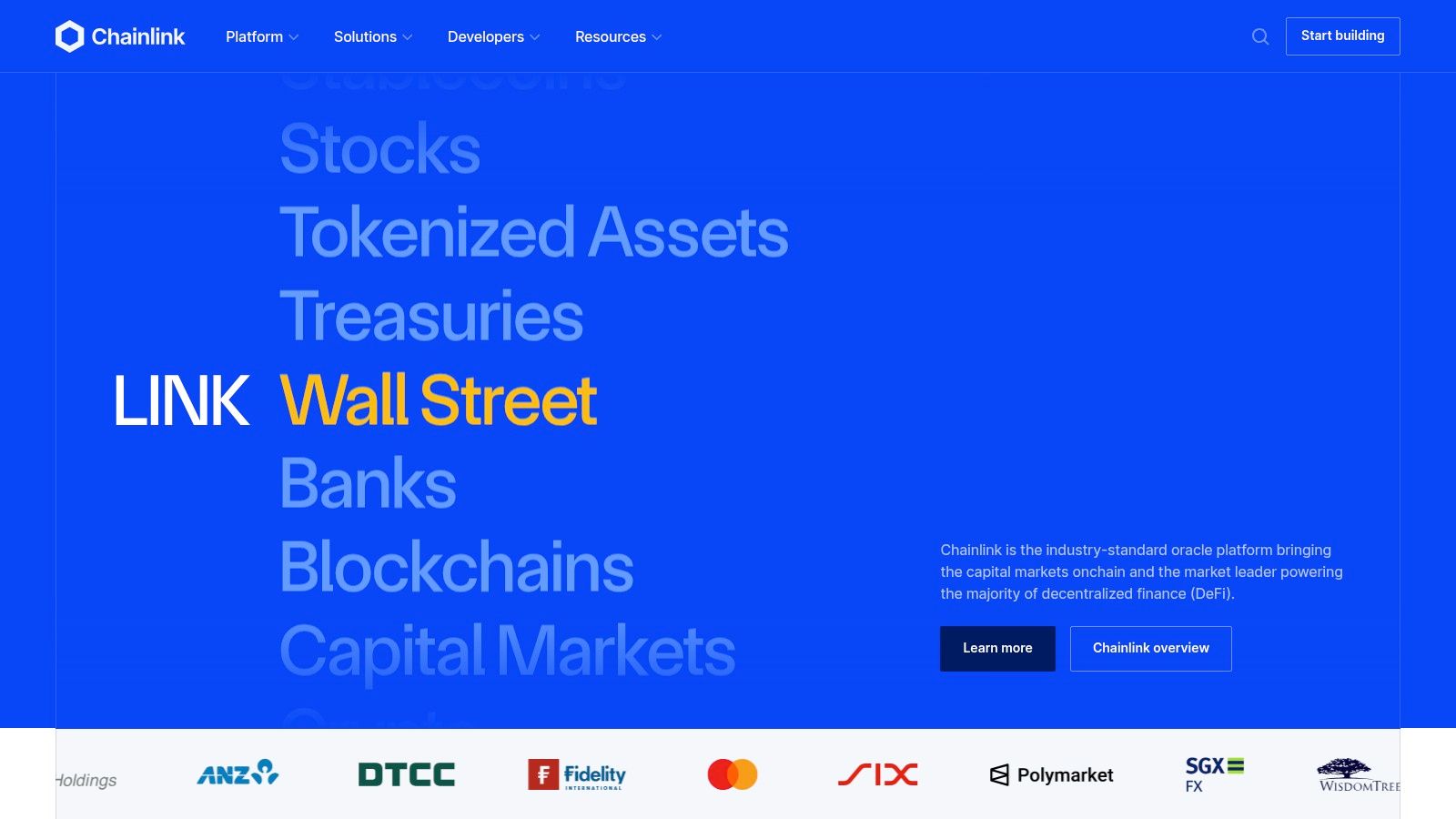
Chainlink makes a stronger “next Bitcoin” candidate than many investors realize, precisely because it isn't a general-purpose Layer 1. It sits in the picks-and-shovels layer of crypto. When smart contracts need trusted external data, proof of reserves, or cross-chain communication, that's where Chainlink enters the picture.
That position can be more durable than being yet another execution chain. Applications come and go. Middleware that many chains depend on can become harder to dislodge.
Why middleware can win bigger than many app chains
Chainlink's real significance is that tokenization and interoperable finance don't work cleanly without reliable data and messaging. Real-world assets, fund administration, and cross-network settlement all need a bridge between blockchains and external systems.
That's why Chainlink deserves more attention from investors focused on infrastructure rather than headlines. Its oracle network and CCIP story give it relevance across multiple ecosystems instead of tying it to one chain's fortunes.
- Core edge: It provides decentralized data feeds and cross-chain messaging that other projects can build on.
- Strategic angle: It benefits if tokenized assets spread across multiple blockchains instead of one winner taking all.
- Main risk: LINK's value capture depends on how well network usage translates into durable token economics.
The market often overprices visible apps and underprices invisible infrastructure.
That's the clearest reason to keep LINK on a serious watchlist. If tokenization, DeFi, and cross-chain finance keep maturing, the project that standardizes trust between systems may matter more than the loudest Layer 1.
For a deeper project-specific read, you can explore Chainlink with Yield Seeker.
4. Toncoin (TON)
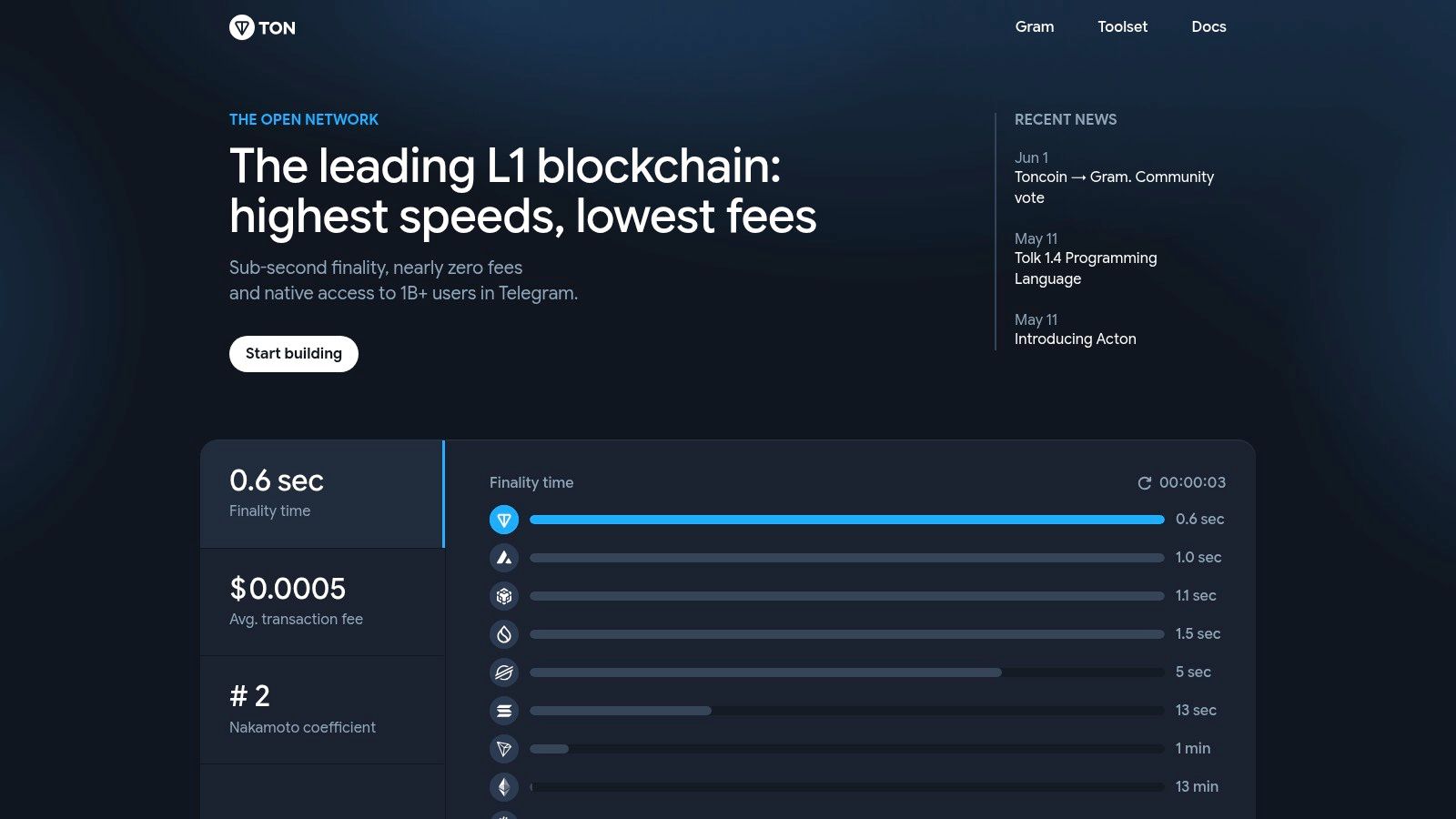
Calling TON "the next Bitcoin" misses the better question. The real opportunity is whether TON can dominate a different category altogether: Web3 distribution inside a mainstream consumer platform.
That framing matters because very few blockchains have a credible path to mass consumer usage. TON does, largely through Telegram. Instead of fighting for attention across fragmented wallets and standalone dApps, TON can appear inside chat, payments, mini apps, and creator communities where users already spend time. If you want broader context on why embedded consumer products matter, Coiner Blog's explanation of what Web3 technology is helps clarify the shift from pure speculation to user-facing utility.
Why TON stands out in consumer crypto
TON's edge is distribution tied to behavior, not just technology. A blockchain can have fast execution and low fees, but that rarely creates durable adoption by itself. Consumer crypto usually stalls at onboarding, key management, and app discovery. TON has a better shot at reducing those frictions because the surrounding interface is already familiar.
That gives TON a distinct lane in this list. Ethereum is the default base layer for programmable assets. Solana is competing for high-throughput consumer and trading activity. Chainlink is becoming core middleware. TON's claim is different. It could become the default blockchain rail for messaging-native commerce and lightweight consumer apps.
Three points drive the TON thesis:
- Category target: TON is not aiming to replace Bitcoin's store-of-value role. It is aiming to own crypto distribution inside a major messaging ecosystem.
- User acquisition advantage: Telegram provides a natural channel for wallets, tipping, mini apps, and peer-to-peer payments without forcing users to start from a blank slate.
- Platform risk: TON's adoption curve remains closely tied to Telegram's product priorities, policy choices, and willingness to keep integrating crypto features.
The most interesting part of the TON story is what it says about crypto adoption more broadly. Breakout networks may come less from ideological users seeking decentralization first, and more from people who want fast payments, digital goods, and social transactions inside apps they already use. That is one reason TON deserves serious attention from investors looking for category leaders rather than clones of Bitcoin.
TON still carries clear risks. Dependence on one dominant distribution partner can accelerate growth, but it can also cap independence. If Telegram's strategic direction changes, TON feels the impact quickly. That makes the upside asymmetric, but it also makes the dependency unusually visible.
If TON becomes the standard settlement and asset layer for messaging-based Web3, that would be category-defining in its own right. For another TON-focused resource, see Statiko's Tonwallet_news_en overview.
5. Avalanche (AVAX)
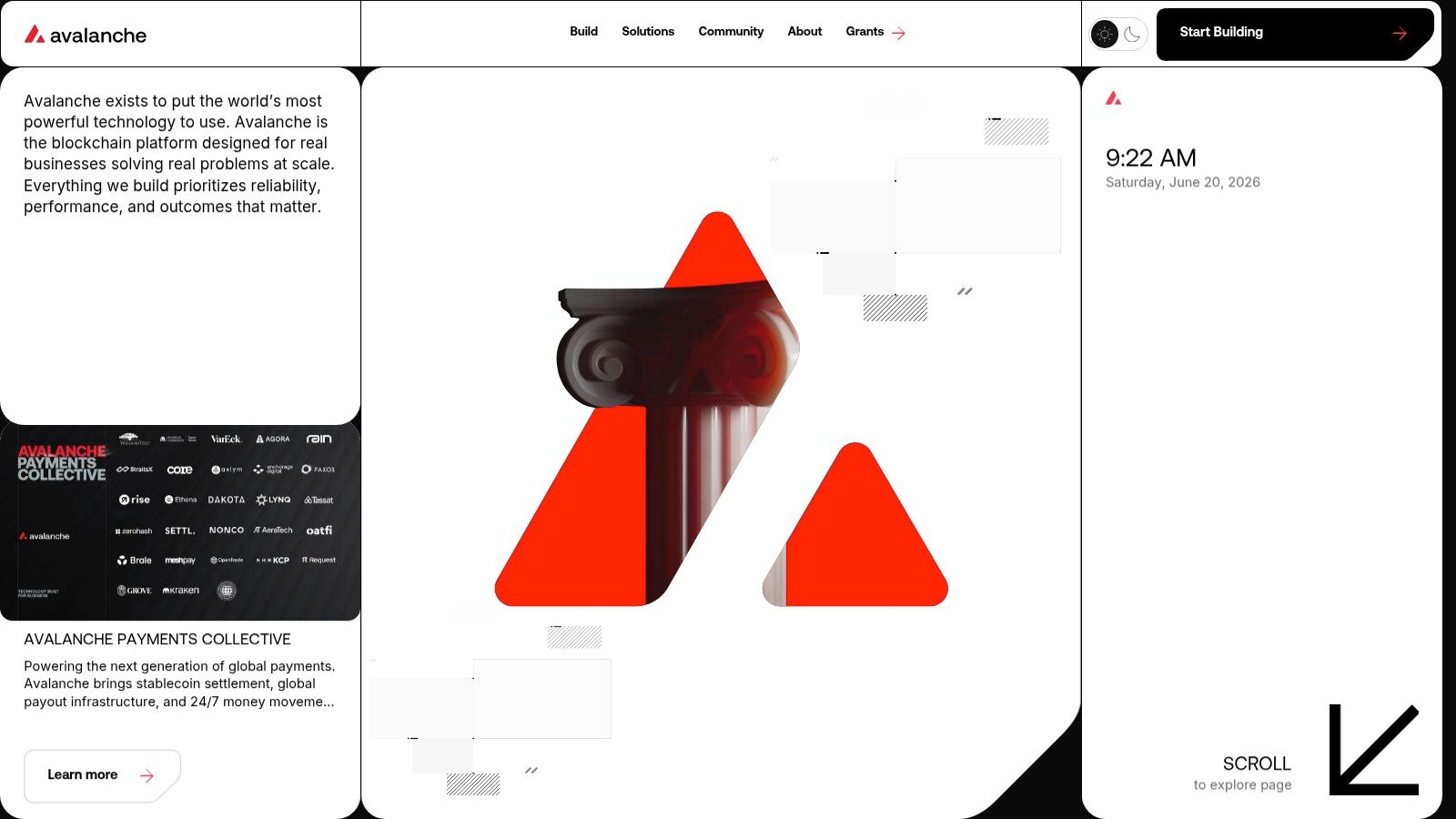
Avalanche stands out because it rejects a core assumption behind many smart contract platforms. One chain does not need to serve every use case equally well. Its architecture is built around the idea that different applications, especially financial ones, may want different rules, fee structures, validator sets, and compliance settings.
That makes Avalanche a credible candidate in a very specific race. If Ethereum is competing to remain the default settlement layer for general-purpose crypto, Avalanche is competing to become the preferred framework for application-specific blockchains, particularly in tokenized finance and enterprise deployments. That is a narrower ambition than "be the next Bitcoin," but it is also a more realistic and arguably more valuable one if real-world assets move on-chain at scale.
Why Avalanche matters for tokenized finance
The subnet model is the key. Instead of forcing every application into the same execution environment, Avalanche lets projects customize infrastructure around their own requirements. For institutions exploring regulated products, that matters. Public blockchain access is useful, but so are predictable costs, controlled participation, and systems that fit existing operational constraints.
This is why AVAX often looks stronger in institutional conversations than in retail hype cycles.
If Avalanche wins, it probably will not be because it became the dominant chain for meme coins or consumer apps. It will be because banks, asset issuers, fintechs, and large platforms decide that configurable blockchain infrastructure is easier to adopt than fully standardized public environments. That would give Avalanche category leadership in a vertical Bitcoin never aimed to own.
A few points matter most:
- Where it stands out: Customizable subnets, flexible deployment design, and a clearer path for regulated financial use cases.
- What could hold it back: Fragmented liquidity, uneven user experience across app-specific chains, and the risk that enterprise pilots do not convert into sustained on-chain activity.
- Why it still matters: If tokenized assets become a major crypto segment, networks built for specific operational requirements could capture more value than broad but less configurable chains.
Risk is part of the picture. Avalanche's model asks investors to bet not just on developer activity, but on actual business adoption. That requires more patience, and it also means users should understand basic crypto scam prevention practices before chasing any enterprise or RWA narrative tied to token launches.
Avalanche is best viewed as infrastructure with a targeted thesis. It does not need to dominate all of crypto to justify attention. It needs to become the platform that serious financial applications choose when shared-chain design stops being enough.
6. XRP Ledger (XRP)
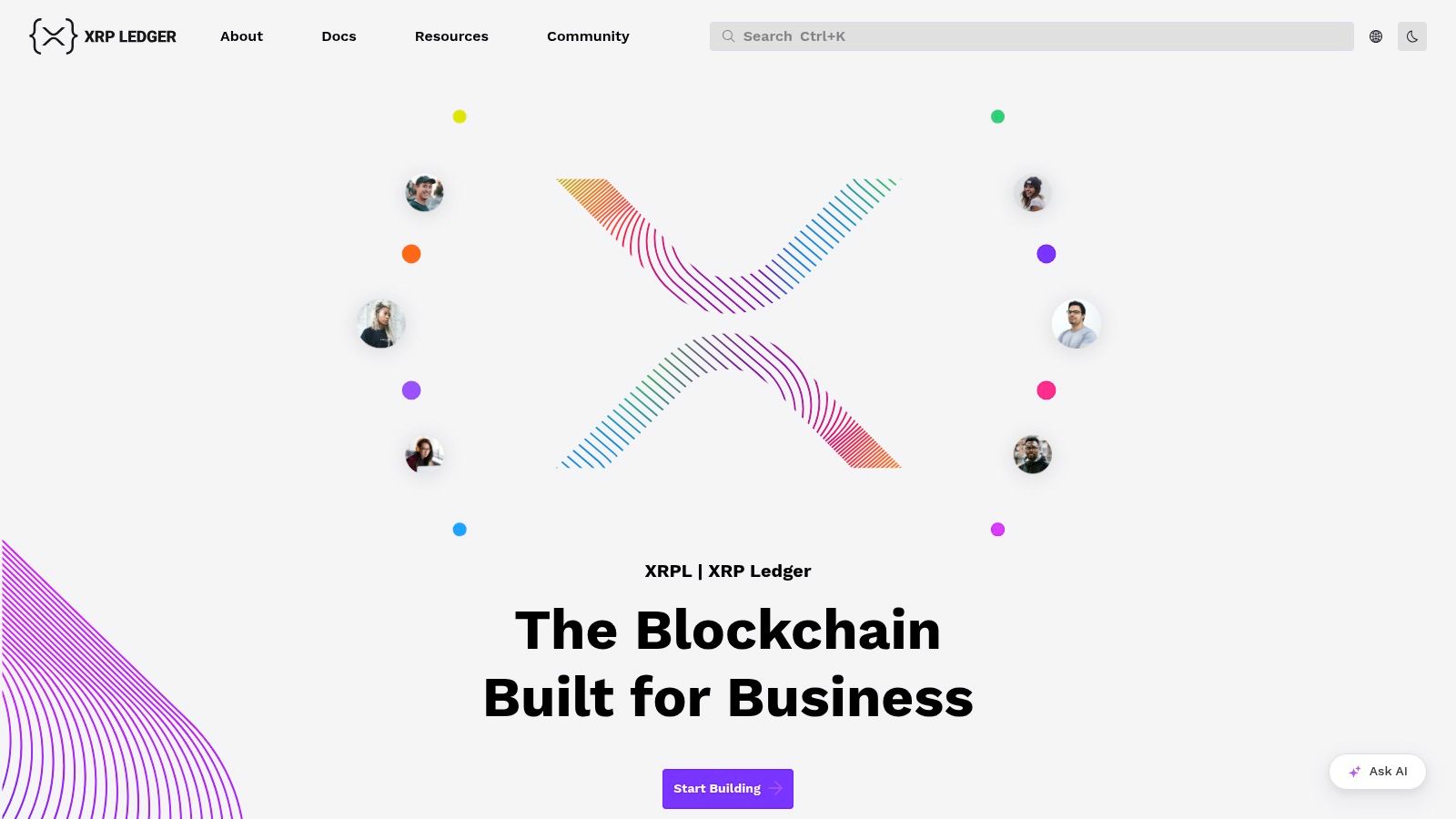
XRP is often discussed as a courtroom asset or a culture-war ticker. That framing misses the more important investment question. If the next Bitcoin is the network that becomes dominant in a specific crypto vertical, XRP Ledger deserves attention as a candidate for global value transfer.
That thesis is narrower than the pitch behind general-purpose smart contract chains. It is also easier to evaluate. XRP Ledger is built around fast settlement, low transaction costs, native token issuance, and an on-chain decentralized exchange. If cross-border payments, stablecoin flows, and tokenized financial balances grow into a major crypto category, a network optimized for moving value could hold a defensible position.
The tradeoff is clear. XRP Ledger has a more focused product identity than Ethereum or Solana, but it has less room for broad experimentation across consumer apps and DeFi niches.
Three factors matter most here:
- Why it stands out: Settlement is the product. XRP Ledger was designed for transferring value efficiently, not for becoming the default home for every app category.
- What supports the thesis: U.S. exchange access improved after the July 2023 federal court ruling on programmatic sales of XRP, which helped remove one practical barrier to market participation.
- What could limit upside: Regulatory overhang has eased, not disappeared. Adoption still depends on whether payment firms, liquidity providers, and issuers choose XRPL often enough to create durable network effects.
That last point matters more than many XRP discussions admit. A payments-focused chain does not win by attracting the loudest retail community. It wins by becoming infrastructure that businesses return to because settlement is fast, liquidity is available, and integration costs stay low.
Investors should treat XRP as a category bet, not a Bitcoin clone. The upside case is that it becomes a leading rail for cross-border settlement and tokenized money movement. The risk case is that stablecoin networks, fintech middleware, or other chains absorb that demand first. Anyone building a position should pair that thesis with basic risk controls and a practical guide to investing in cryptocurrency for beginners.
For traders who want external signals before timing entries, it can also help to compare leading crypto signal providers.
XRP Ledger remains relevant because it is one of the few long-running networks with a clear answer to a specific question: what if crypto's defining winner in the next cycle is the chain that moves value best, not the chain that tries to do everything?
7. Bonus: Finding Early-Stage Gems with Coiner Blog
The market rarely labels a future category leader while it is still cheap. Price discovery usually comes later, after users arrive, liquidity deepens, and the story becomes easy to tell. That is why early-stage research matters. It is one of the few areas where retail investors can still look before institutional filters harden around a narrative.
Coiner Blog's coverage of presales is useful in that context because it frames the search correctly. The goal is not to find “another Bitcoin.” The goal is to identify projects that could become dominant in a new vertical, whether that is decentralized compute, consumer crypto distribution, tokenized assets, or a niche infrastructure layer that expands into a standard.
That requires a stricter process than presale marketing usually encourages.
A workable framework should reduce bad decisions as much as it expands idea flow. Coiner Blog helps by organizing where opportunities surface and which filters deserve attention before capital is committed. For readers still building basic allocation discipline, this beginner's guide to investing in cryptocurrency is a better starting point than jumping straight into thin-liquidity launches.
The screening work should stay grounded in a few questions:
- Team quality: Are the builders identifiable, technically credible, and capable of shipping on schedule?
- Token design: Do vesting terms, supply distribution, and liquidity plans protect public buyers from immediate insider pressure?
- Security posture: Audits matter, but treasury controls, upgrade permissions, and launch structure matter just as much.
- Category logic: Is the project entering a market where durable demand could exist, or is it attaching a token to a short-lived narrative?
Presales make more sense when treated as venture-style speculation with a high failure rate. That mindset fits the article's broader thesis. Bitcoin does not need to be displaced for another crypto asset to generate outsized returns. A smaller project can still become “the next Bitcoin” within its own category if it secures distribution, developer attention, and user retention before competitors do.
That is also why copying Bitcoin's scarcity story is usually the wrong pitch for a new token. The stronger path is category ownership.
For readers who want another angle on market discovery and idea flow, it also helps to compare leading crypto signal providers. Signals can highlight momentum or unusual activity. They cannot replace primary research, contract review, or position sizing discipline.
Use Coiner Blog as a sourcing tool, then verify everything yourself.
Visit Coiner Blog presales guide
Next Bitcoin: 7 Contenders Compared
The stronger question is not which coin can replace Bitcoin. It is which network can dominate a category that Bitcoin was never designed to own.
That standard changes the shortlist. Market cap matters, but category control matters more. A credible contender needs durable user demand, clear product-market fit, and some structural edge that competitors will struggle to copy.
| Project | Category-defining thesis 🔄 | What adoption depends on ⚡ | Expected outcomes 📊⭐ | Ideal use cases 💡 | Key advantages ⭐ |
|---|---|---|---|---|---|
| Ethereum (ETH) | The default settlement and execution layer for programmable assets | Continued L2 growth, sustained developer activity, and fee compression that keeps users onchain | Deep liquidity, broad DeFi and tokenization usage, and staying power as crypto's core trust layer. High ⭐⭐⭐⭐ | General-purpose dApps, DeFi, NFTs, tokenized assets, institutional exposure | Largest developer and tooling base; regulatory familiarity; well-established staking and ETF access |
| Solana (SOL) | The consumer chain thesis: fast, cheap apps that feel closer to Web2 products | Network stability, developer retention, and continued success in user-facing apps | High transaction throughput, strong retail activity, and a real shot at owning consumer crypto if reliability holds. High ⚡⭐⭐⭐ | Payments, gaming, social apps, microtransactions, trading | Low fees, fast confirmation, and user experience that fits mass-market applications |
| Chainlink (LINK) | The coordination layer for real-world data, cross-chain messaging, and tokenized finance | Ongoing enterprise use, broad protocol integration, and trust in its oracle infrastructure | Persistent demand from DeFi, tokenization, and cross-chain systems if onchain finance keeps expanding. High ⭐⭐⭐⭐ | Oracles, cross-chain messaging, institutional data feeds, tokenization | Leading oracle position, wide multi-chain integration, and strong relevance to institutional blockchain pilots |
| Toncoin (TON) | The distribution thesis: Web3 adoption through an existing consumer platform rather than crypto-native onboarding | Telegram user conversion, Mini App traction, and sustained developer activity inside its ecosystem | Large onboarding potential if Telegram distribution turns occasional crypto use into repeat behavior. Medium-High ⭐⭐⭐ | In-app payments, social apps, gaming Mini Apps, consumer onboarding | Native Telegram distribution, low-friction onboarding, and direct access to a very large user base |
| Avalanche (AVAX) | The modular infrastructure thesis: custom blockchain environments for institutions and specialized applications | Enterprise demand for dedicated chains, subnet adoption, and execution in tokenized asset markets | Specific gains in enterprise and real-world asset deployments rather than broad retail dominance. Targeted impact 📊⭐⭐⭐ | Enterprise blockchains, tokenized assets, compliance-sensitive applications | Configurable subnets, flexible performance and fee design, and isolation of application traffic |
| XRP Ledger (XRP) | The payments rail thesis: efficient settlement and foreign-exchange transfer at scale | Broader payment adoption, issuer activity, and stronger network effects beyond its existing niche | Practical value in cross-border settlement and issuance, though with less momentum in general-purpose apps. Practical ⭐⭐⭐ | Cross-currency payments, settlement, token issuance, on-ledger DEX activity | Fast finality, very low fees, built-in DEX, and partial US legal clarity that reduces one layer of uncertainty |
| Bonus: Finding Early-Stage Gems (Coiner Blog) | A research workflow for spotting smaller projects before category leadership is obvious | Disciplined screening, audit review, tokenomics analysis, and skepticism toward hype cycles | More efficient discovery and presale filtering, with failure risk still high and verification still required. Utility ⭐⭐⭐ | Investors researching presales, launchpads, and early-stage narratives | Curated platform comparisons, repeatable screening criteria, and practical risk-management guidance |
The table also points to a less obvious conclusion. These projects are not competing on one scoreboard.
Ethereum is fighting for trust-layer dominance. Solana is competing for consumer attention. Chainlink is trying to become infrastructure that other chains depend on. TON is testing whether distribution inside a mainstream app can matter more than traditional crypto acquisition funnels. Avalanche and XRP sit closer to focused institutional and payments cases, where category leadership can still be valuable even without broad cultural dominance.
That makes "the next Bitcoin" a category question, not a branding exercise.
Your Roadmap for Navigating the Evolving Crypto Frontier
Investors often ask the wrong question. The more useful test is which network can become the default platform in a market that matters.
Bitcoin already owns the digital reserve asset category. Its position rests on long-running security, deep liquidity, broad recognition, and a role at the center of crypto pricing and sentiment. That leaves the rest of the field competing for dominance elsewhere, not for a direct replay of Bitcoin's history.
This distinction matters because category leadership is what creates durable value. A network does not become important by sounding similar to Bitcoin. It becomes important by becoming hard to replace within decentralized finance, consumer payments, cross-chain infrastructure, tokenized assets, or crypto distribution.
That is the right standard for judging the projects in this list. Ethereum needs to remain the chain institutions and developers trust for settlement and asset issuance. Solana needs to prove that high-throughput crypto apps can keep users, not just attract bursts of speculation. Chainlink needs to become embedded infrastructure that applications depend on across chains. TON needs to show that distribution inside a major messaging ecosystem can produce lasting user behavior, not temporary curiosity. Avalanche and XRP need to defend focused positions where performance, control, and payment efficiency matter more than broad retail mindshare.
The investment implication is straightforward. Look for evidence of staying power.
That means active developers, repeat usage, credible governance, integration depth, and token design that links network adoption to asset demand. It also means asking whether users or institutions would face real costs if they switched away. If the answer is no, category leadership is still weak, even if the narrative is popular.
Risk assessment matters just as much as upside. Strong technology can still lose to poor incentives, weak distribution, regulatory pressure, or dilution that limits tokenholder participation in network growth. A compelling story without durable retention usually becomes a trading narrative, not a long-term winner.
A disciplined portfolio reflects that uncertainty. Larger allocations usually belong to assets with clearer product market fit and stronger evidence of category leadership. Smaller positions make more sense where the thesis depends on earlier adoption curves, execution, or a market structure that has not fully formed.
That framework is more demanding than chasing a slogan, but it is also more useful. The next category-defining crypto asset, if one emerges, will likely win by owning a new vertical so thoroughly that competitors become secondary.
If you want ongoing research built around that kind of filter, Coiner Blog covers market analysis, tokenomics, early-stage project research, and practical risk management in a factual, readable format.