
Best Crypto Presales 2025: Best Crypto Presales of 2026

Crypto presales stopped being a niche corner of Web3 a while ago. Industry coverage describes presales as the stage before an ICO, IDO, or IEO, where projects sell tokens early, often at discounted prices, to fund development. By 2025, market coverage from ICODA said that segment had grown into a $4.8 billion ecosystem. That single detail matters because it changes how investors should behave. This isn't a side bet anymore. It's a real fundraising market with real competition, real infrastructure, and real downside if you pick badly.
Most articles about the best crypto presales in 2025 still make the same mistake. They rank tokens, repeat narratives about AI, DeFi, GameFi, or Layer 2s, and call that research. That approach misses where smart screening begins. The better question is where serious projects launch, how those launches are structured, and what signals tell you a sale is built for compliance, transparency, and post-sale execution rather than social hype.
This guide takes that route. Instead of chasing speculative picks, it focuses on the platforms and launch environments that give you a cleaner process for evaluating early-stage crypto investments. If you're trying to find better Web3 opportunities in 2025, the edge isn't just getting in early. It's getting in through systems that make due diligence easier.
Table of Contents
- 1. CoinList
- 2. Republic
- 3. INX.One
- 4. TokenSoft
- 5. Binance Launchpad
- 6. KuCoin Spotlight
- 7. Polkastarter
- Top 7 Crypto Presale Platforms (2025) Comparison
- Your Presale Strategy Key Takeaways for 2025
1. CoinList
If you want a platform that feels closer to capital markets plumbing than a flashy crypto landing page, CoinList is still one of the strongest names in the space. It has a long history with primary token sales, and that's important because process quality matters more than branding once a sale gets oversubscribed.
For investors screening the best crypto presales in 2025, CoinList's biggest advantage is repeatability. Sale pages tend to be structured, participation rules are clear, and distribution mechanics are usually documented well enough that you can understand what happens before, during, and after the raise.
Why CoinList still matters
CoinList works best for buyers who value transparency over convenience. Queue systems, auction models, caps, and KYC requirements can be annoying, but they also reduce the chaos you see in looser presale environments.
A few practical strengths stand out:
- Clear sale mechanics: CoinList typically explains pricing format, access windows, caps, settlement, and claim timing in a way retail participants can follow.
- Reusable onboarding: One KYC flow can make future participation easier, which matters if you're tracking several launches over time.
- Visible operating discipline: Stronger documentation usually means fewer surprises around allocations and token delivery.
Practical rule: If a presale page makes it hard to understand claim timing, vesting, wallet requirements, or eligibility, skip it. Good projects don't hide basic mechanics.
The main trade-off is access friction. High-demand launches can leave plenty of users with no allocation, and some offerings have regional limits or restricted U.S. participation depending on issuer structure. That's frustrating, but in practice I'd still prefer a strict process over an opaque one.
CoinList is also useful as a benchmark even when you don't buy there. If you're reading a speculative token pitch elsewhere, compare its disclosures with the kind of clarity stronger platforms require. That simple habit filters out a lot of weak deals. If you're thinking about broader market context around early entries and narrative cycles, Coiner Blog's 2025 crypto predictions pair well with that framework.
2. Republic
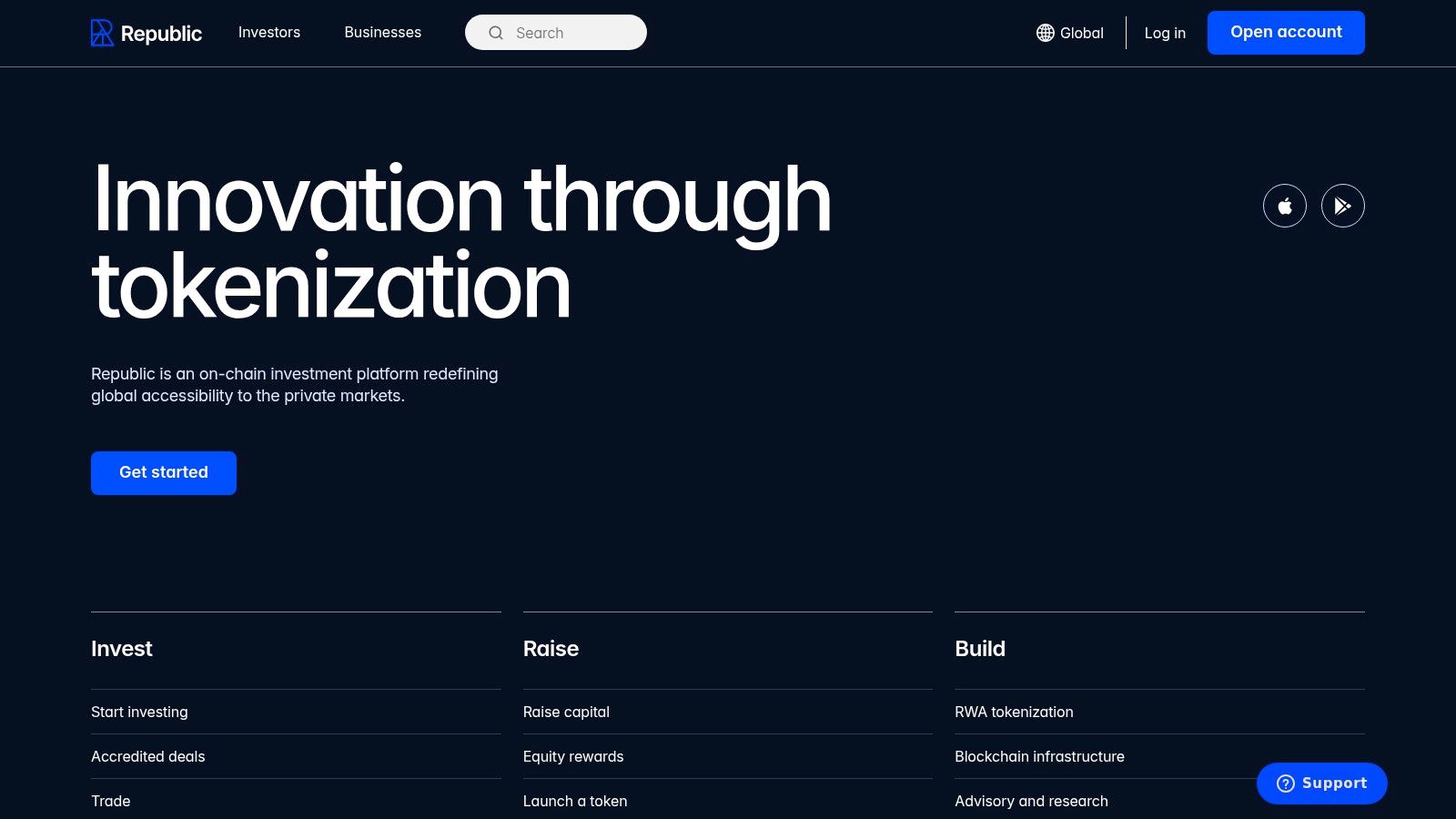
Republic belongs in this list because it broadens the conversation. A lot of investors use "presale" as shorthand for utility tokens only, but Republic pushes you toward a more mature view of digital assets that includes tokenized investments, structured offerings, and clearer legal packaging.
That makes it especially relevant for U.S.-based investors who want more explicit documentation and a stronger compliance frame. Republic isn't the place to look if you want the fastest, loosest path into a hyped Web3 token. It is a serious platform for investors who care how an offering is structured.
Where Republic stands out
Republic's strength is documentation. Offering types, investor eligibility, transfer restrictions, and lockup mechanics tend to be more visible than what you'd find on many crypto-native launch pages. That changes investor behavior for the better because it forces attention onto legal terms, not just tokenomics and social buzz.
It's also notable because it sits closer to the tokenization trend than most launchpads. Real-world asset tokenization and regulated digital exposure remain major themes in the current market, and Republic gives investors a framework for thinking beyond meme-driven fundraising.
Here are the trade-offs that matter:
- Better disclosure: Investors usually get a clearer deal-room experience and a more structured review process.
- More limited access: Some opportunities are geared toward accredited U.S. investors, which narrows who can participate.
- Restricted liquidity: Transfers and early trading may be controlled through whitelisting or other compliance rules.
The best presale opportunities aren't always the easiest to trade immediately. Sometimes the strongest signal is that the issuer cared enough to slow the process down.
That won't suit everyone. If you want instant exchange listing and rapid liquidity, Republic can feel restrictive. In a risk-off environment, though, that restraint can look more like a feature than a flaw. Investors navigating tougher cycles should also understand how sentiment shifts platform risk, which is why Coiner Blog's perspective on crypto bear markets is worth reading alongside any early-stage allocation plan.
3. INX.One
INX.One is one of the clearest examples of where regulated blockchain finance is heading. It's not trying to be a meme-token gateway or a generic launch calendar. It's built around compliant issuance and trading for digital securities, which makes it a different tool for a different kind of investor.
That distinction matters. If your definition of the best crypto presales in 2025 includes only high-volatility utility-token launches, INX.One may feel outside the category. If you're interested in regulated on-chain capital formation, it deserves serious attention.
Best fit for regulated digital securities
INX.One is strongest when the investment thesis depends on formal disclosures and a regulated trading environment. Investors who want a venue that connects primary issuance with compliant secondary trading get a more coherent workflow here than they do from fragmented issuer-led offerings.
What works well:
- Primary plus secondary access: The same ecosystem supports issuance and ongoing trading for digital securities.
- Formal onboarding: Investor checks, reporting, and compliance posture are part of the core experience.
- Clear category fit: Security tokens and digital securities aren't treated as an afterthought.
What doesn't:
- Narrower crypto scope: Many traditional presale hunters are looking for utility tokens tied to DeFi, AI, gaming, or Layer 2 infrastructure. That's not INX.One's main lane.
- Eligibility constraints: Participation can depend on investor status and issuer requirements, which limits broad retail access.
This is one of those platforms where category discipline is a strength. A lot of investors waste time comparing totally different fundraising models as if they're interchangeable. They're not. A regulated digital security offering should be judged on disclosure quality, transfer rules, and market structure, not just upside potential after listing.
If your portfolio includes both speculative Web3 exposure and more structured blockchain assets, INX.One can sit on the more conservative side of that barbell.
4. TokenSoft
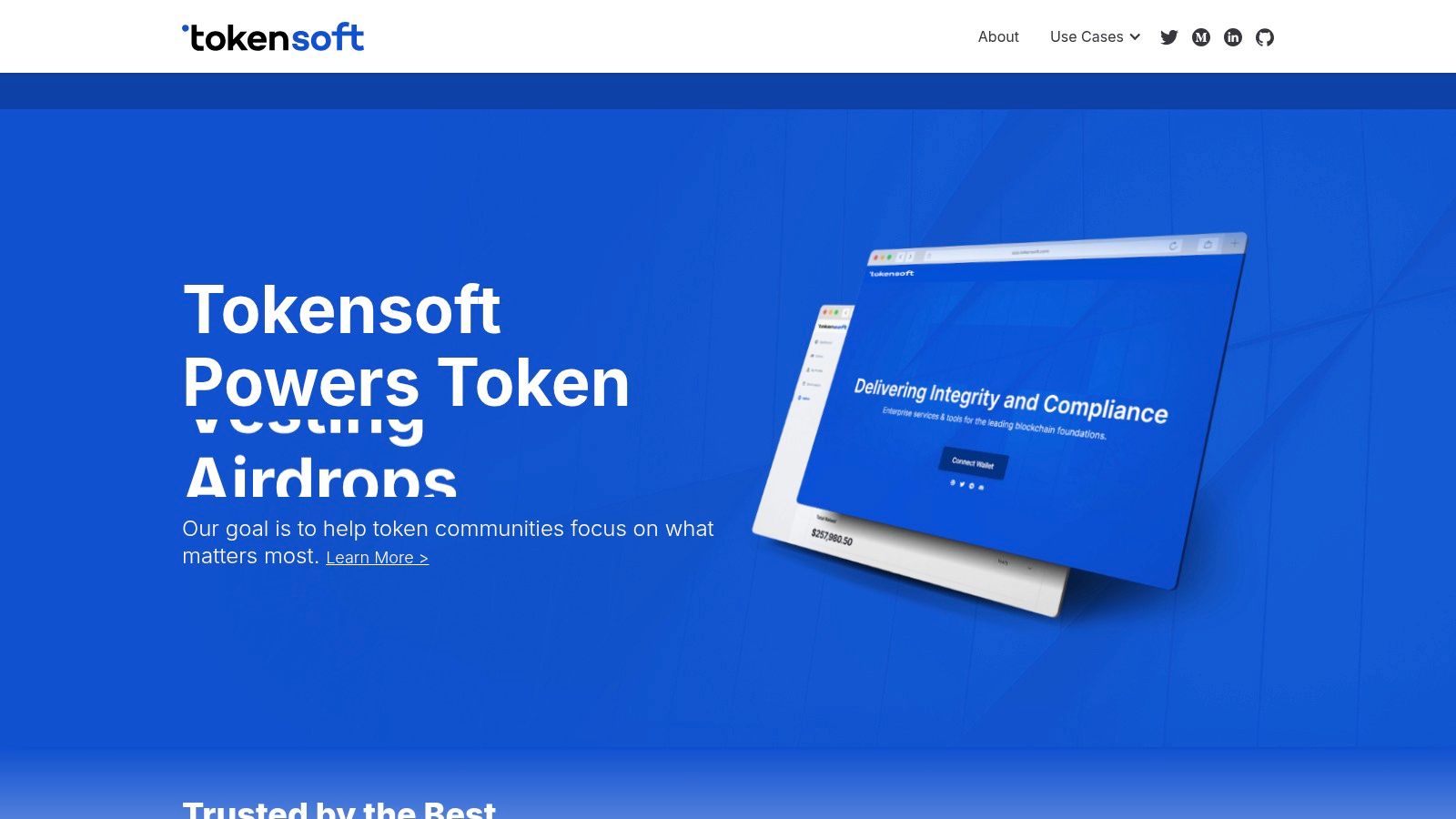
TokenSoft isn't a launchpad in the usual retail sense. That's exactly why discerning investors should care about it. TokenSoft is infrastructure. It powers token sales, KYC flows, accreditation checks, claim portals, and transfer controls for issuers that want a compliant framework without building everything from scratch.
In practice, that means you may interact with TokenSoft even when the issuer's branding is front and center. If you're trying to evaluate a presale setup, seeing established infrastructure behind the sale is usually a stronger sign than a custom site with polished marketing and weak operational detail.
Infrastructure, not marketplace
The biggest mistake retail buyers make with issuer-led presales is assuming the website tells the whole story. It doesn't. You need to know who handles identity verification, sanctions screening, distribution, and post-sale movement controls.
TokenSoft stands out because it addresses those operational layers.
- Issuer-grade tooling: Projects can use it for KYC, AML, accreditation, distributions, and claims.
- Support for regulated routes: It fits offerings built under different exemptions and distribution constraints.
- Post-sale controls: Transfer restrictions and structured token movement matter more than most buyers realize.
When a project talks endlessly about community growth but barely explains distribution controls, I assume the team values marketing more than execution.
The downside is simple. You don't "browse TokenSoft deals" in the same way you'd browse an exchange launchpad. Participation depends on the issuer, the jurisdiction, and the specific offering setup. That makes discovery less convenient.
But convenience isn't the right metric here. If you're trying to identify stronger early-stage crypto opportunities, infrastructure quality is one of the more reliable signals available. Good tooling won't make a weak token worth buying, but weak tooling can absolutely ruin an otherwise strong launch.
5. Binance Launchpad
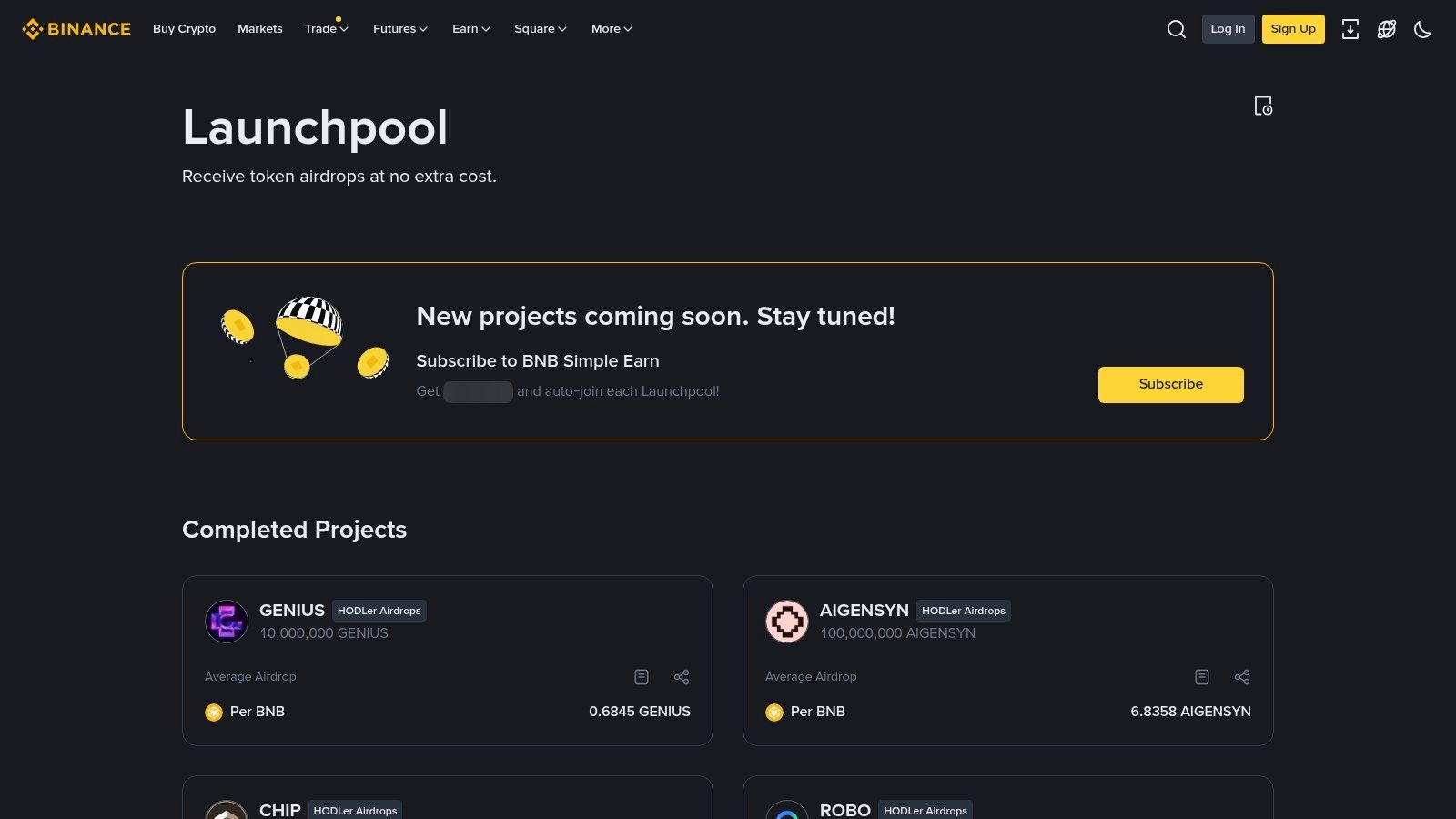
Binance Launchpad remains one of the most visible launch environments in crypto because it combines token distribution with built-in exchange attention. That matters for one reason above all. Immediate liquidity changes how investors price risk.
A presale on an exchange-backed venue isn't automatically safer, but it is usually easier to track. Sale requirements, snapshots, allocation methods, and listing pathways tend to be documented more clearly than in the average standalone token sale.
Best for exchange-backed access
Binance Launchpad is strongest for investors who want curated deal flow and fast transition from sale to trading. If your strategy depends on quick market access, this setup is hard to ignore.
Independent market coverage also points to what serious screening should focus on. In presale analysis, the most actionable technical signal is fundraising velocity combined with launch-readiness, and market lists have highlighted examples ranging from six figures to very large raises, including reports of BlockDAG raising over $267 million by May 2025 and Wall Street Pepe crossing $70 million. The useful takeaway isn't to chase those names. It's to compare capital raised with audit status, development transparency, vesting design, and whether the token's utility is tied to a real technical claim.
For Binance Launchpad specifically, the pros and cons are straightforward:
- High visibility: Exchange distribution puts a project in front of a large existing user base.
- Cleaner trading path: Secondary market access is usually faster than with issuer-led presales.
- Regional restrictions: U.S. users generally face access limits.
- Participation requirements: Allocation often depends on exchange-specific holdings, staking, or snapshots.
This model suits active traders better than passive investors. If you're evaluating launch participation as part of a broader trading plan, Coiner Blog's guide to stronger trading strategies is a useful companion read.
6. KuCoin Spotlight

KuCoin Spotlight has long appealed to users who want a curated launchpad without the heavier feel of a securities-style platform. Its value is practical. Sale pages are generally easier to use than many decentralized alternatives, and the exchange ecosystem gives projects a direct route into secondary trading.
That said, convenience can make investors lazy. A clean interface doesn't replace due diligence, and exchange branding doesn't guarantee a strong token.
A cleaner route for exchange launch participation
KuCoin Spotlight works best when you want the middle ground between fully decentralized launchpads and highly regulated issuance venues. It gives users more structure than the average IDO while keeping the experience familiar for exchange-native participants.
A few factors make it useful:
- Structured participation flow: Timelines, eligibility conditions, and sale pages are usually easier to interpret than fragmented issuer sites.
- Exchange support: Marketing, distribution, and post-sale listing pathways are a real advantage.
- Trackable history: Third-party trackers and launchpad records make comparisons easier over time.
The drawbacks are equally important:
- Regional limits: U.S. users are typically excluded.
- Competitive access: Allocations may depend on staking, token holdings, or snapshot mechanics.
- Variable quality: Even on a curated exchange launchpad, project strength still varies widely.
Most investors lose money in presales by treating platform reputation as a substitute for project review. It isn't. You still need to inspect vesting schedules, use case credibility, and whether the token has a product milestone you can verify.
For anyone entering exchange-led launches for the first time, the security side matters just as much as the opportunity side. Coiner Blog's crypto scam avoidance guide is worth keeping close because scammers often imitate legitimate launchpads with fake sale pages and wallet-drain prompts.
7. Polkastarter
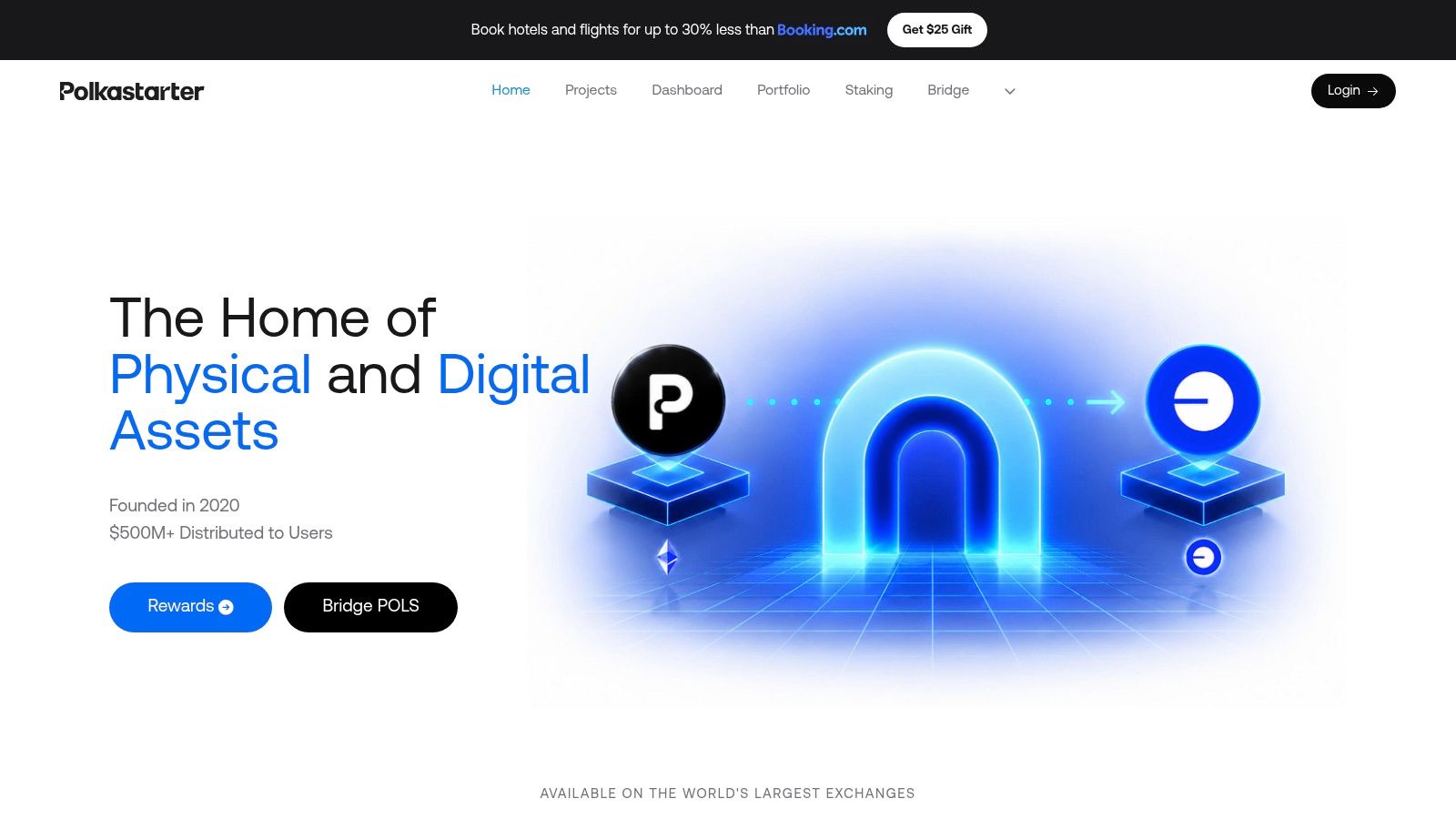
Polkastarter earns its place on this list because decentralized launchpads still matter. They often surface newer categories earlier than centralized exchanges do, especially in areas like AI tooling, gaming, multichain apps, and tokenized real-world asset experiments.
For investors searching for the best crypto presales in 2025, Polkastarter is useful not just for deal access but for signal quality. It puts more of the participation logic in public view through allowlists, staking tiers, KYC conditions, and claim processes.
Where decentralized launchpads still win
The broader presale market in 2025 has become harder to judge on hype alone. ICODA noted that its October 2025 presale comparison covered 6 projects raising between $100,000 and $2 million each. That spread tells you something important. Presales can look similar on social media while operating at very different fundraising scales and maturity levels.
Polkastarter fits investors who want more direct exposure to emerging sectors but still need some structure.
- Public sale discovery: Upcoming listings, allowlist timing, and participation details are easier to monitor than in private Telegram-driven deals.
- Multichain reach: That's useful for tracking Web3 segments like gaming, DeFi, AI, and RWA-adjacent experiments across ecosystems.
- Tiered access: POLS staking can improve access, but it also adds a cost layer and doesn't guarantee meaningful allocation.
Editorial coverage around presales for 2025 and 2026 has repeatedly highlighted infrastructure-driven categories such as Bitcoin or Solana Layer 2 scaling, AI tooling, and gamified mining as stronger-signal areas than generic meme-token sales, with audits, KYC signals, and utility verification recommended before participating in curated 2025 to 2026 presale research. That framework maps well to how I use Polkastarter. I don't treat it as a promise of quality. I treat it as a better hunting ground than random social channels.
If you're still learning the basics of wallets, allocations, and token sales, Coiner Blog's beginner crypto investing guide is the right starting point before you try to compete in a tiered IDO environment.
Top 7 Crypto Presale Platforms (2025) Comparison
| Platform | Complexity 🔄 | Resource requirements ⚡ | Expected outcomes 📊 | Ideal use cases 💡 | Key advantages ⭐ |
|---|---|---|---|---|---|
| CoinList | Moderate, platform-run sales with mandatory KYC/AML | KYC, CoinList account, crypto/stable payments; time for verification | Transparent allocations, audited distributions; repeatable sale mechanics | Compliant primary sales; participants wanting vetted, documented launches | Reputation for compliance; clear timelines and audited flows |
| Republic (Crypto & Digital Assets) | High, regulated offering workflows with accreditation checks | Accredited investor status often required, detailed offering docs | Structured tokenizations and securities-like outcomes; limited early liquidity | Accredited U.S. investors; tokenized RWA and structured products | U.S.-centric regulatory clarity; diverse offering types |
| INX.One (INX Digital Company) | High, SEC/ATS-regulated issuance + trading venue | Formal onboarding, custody and reporting; investor eligibility checks | Regulated primary + secondary trading for security tokens | Security token issuers and compliant U.S. investors | ATS oversight and formal disclosures; clear reporting |
| TokenSoft | Moderate, issuer-integrated compliance tooling (issuer-led) | Integration effort for issuers, KYC/accreditation modules, transfer-agent controls | Compliant issuance and controlled transferability; UX depends on issuer | Issuers needing compliance-first infrastructure and transfer controls | Robust compliance stack; scalable, audited tooling |
| Binance Launchpad | Low–Moderate, exchange-curated with staking/allocation rules | Binance account, possible token staking/holding; regional restrictions (US) | High visibility and immediate secondary liquidity on launch | Projects seeking rapid market access and liquidity (non-US) | Large user base and immediate listing liquidity |
| KuCoin Spotlight | Low–Moderate, exchange mechanics with staking/dual-crypto support | KuCoin account, staking/snapshots, regional ineligibility (often US) | Quick routes to exchange listing and secondary markets | Projects targeting fast exchange listings and marketing support | Structured sale pages, exchange distribution and tracking |
| Polkastarter | Moderate, decentralized IDO with allowlists, KYC and staking tiers | POLS staking for tiered access, multichain wallets, optional KYC | Transparent allowlisting and multichain distribution; competitive allocations | Decentralized IDOs, multichain projects, community-driven launches | Transparent processes, governance curation and multichain support |
Your Presale Strategy Key Takeaways for 2025
The best crypto presales in 2025 won't be found by scrolling hype lists and buying the loudest narrative. They'll be found by using better filters. That's a key takeaway across every platform here. CoinList and TokenSoft reward investors who care about sale mechanics and operational quality. Republic and INX.One matter if you want a more regulated path into tokenized assets and digital securities. Binance Launchpad and KuCoin Spotlight suit investors who prioritize exchange-backed access and faster liquidity. Polkastarter works best when you want earlier exposure to Web3, DeFi, AI, gaming, and multichain experimentation, but still want more structure than back-channel deal flow.
The wider market also supports a more disciplined approach. Neutral educational coverage notes that presale discovery tools often function more like calendars or bulletin boards than true due-diligence engines, while legal guides focus more on red flags than on a repeatable scoring model. That gap is exactly why investors need their own framework, especially in a market crowded with promotional content. A useful starting point is the due-diligence lens outlined in ChangeHero's presale guide, which highlights legality concerns and red-flag awareness rather than blind ranking.
My practical scoring model is simple:
- Check compliance signals: Look for KYC, audit disclosure, claim clarity, and documented sale rules.
- Check token design: Read token distribution, vesting, liquidity plans, and actual use case.
- Check product reality: Ask whether the project has a measurable milestone, integration path, or technical claim you can inspect.
- Check platform fit: A security-token venue, an exchange launchpad, and a decentralized IDO pad shouldn't be judged by the same standard.
- Check your own risk: Liquidity, restrictions, and lockups matter as much as upside.
Don't treat any platform in this guide as automatic validation. Strong infrastructure lowers some risks, but it doesn't remove execution risk, market risk, or token design risk. Crypto presales are still early-stage speculation. That's why position sizing matters, patience matters, and jurisdiction rules matter.
Use these platforms as your shortlist, not your final answer. Do your own research, keep expectations realistic, and never allocate money you can't afford to lose. Investors who focus on process instead of excitement usually make better decisions in this part of the market.
Coiner Blog is built for readers who want more than recycled crypto headlines. If you want grounded analysis on presales, Web3 trends, DeFi, AI-blockchain convergence, Layer 2 growth, tokenomics, NFTs, and crypto gaming, follow Coiner Blog for practical guides and sharper market perspective.
1 Comment