
Cryptocurrency Bear Market: A 2026 Survival Guide

Your portfolio is down, the timeline is full of doom, and every bounce feels fake. That’s where many make their worst decisions in a cryptocurrency bear market. They confuse noise for trend, conviction for stubbornness, and patience for passivity.
A bear market in crypto isn't just a price decline. It changes behavior. Traders get overexposed, long-term investors lose discipline, NFT and GameFi users stop caring about floor prices and start asking whether the ecosystem will still matter next year. The good news is that bear phases are brutal, but they’re also readable if you know what to watch and how to respond.
This guide is built for the actual situations people face in a crypto winter. Not generic “buy the dip” slogans. Not permanent-bull-market optimism. Just practical ways to protect capital, preserve mental energy, and stay positioned for what comes after.
Table of Contents
- What a Cryptocurrency Bear Market Really Means
- Unpacking the Causes of a Crypto Winter
- Key Indicators That a Bear Market Is Here
- A Look Back at Historical Crypto Bear Markets
- Actionable Survival Strategies for Every Crypto Investor
- Spotting the Thaw Signs of a Market Recovery
- Building Your Bear Market Resource Toolkit
What a Cryptocurrency Bear Market Really Means
You log in after a rough week expecting a bounce. Bitcoin is flat at best, your altcoins are down much harder, NFT floor prices have thinned out, and even “strong communities” have gone quiet. That is usually the point where traders stop asking whether the dip is buyable and start asking what kind of market they are in.
A cryptocurrency bear market is a sustained period where price weakness changes behavior across the market. Participants stop chasing every narrative. Liquidity gets selective. Risk moves out of weaker tokens first, then out of weaker sectors, and eventually out of almost everything except the assets with the deepest conviction, the best balance sheets, or the clearest utility.
In crypto, that shift is harsher than many newer investors expect. A stock-market playbook often fails here because digital assets reprice faster, sentiment turns faster, and thin liquidity can turn a manageable decline into a cascade.
What it is, and what it isn’t
A real crypto winter has a recognizable structure.
- Narratives lose their protective effect: Good storytelling stops holding up weak projects.
- Time works against impatience: The market stays heavy long enough to wear out dip buyers and overconfident holders.
- Capital gets defensive: Funds move into Bitcoin, majors, stablecoins, or cash while speculative corners dry up.
- Participation drops: Retail interest fades, volumes fall in weaker assets, and bad token design gets exposed.
For the nervous beginner, this is the phase where every red candle feels personal. For the steadfast HODLer, it is where conviction gets tested against actual fundamentals rather than social media slogans. For the opportunistic trader, it is a market of fewer easy longs and more failed breakouts. For the NFT or GameFi participant, it often shows up as lower volume, weaker bids, and a sharp difference between projects with real users and projects that only had momentum.
A bear market is not just a bad week. It is a change in regime.
Practical rule: If weakness lasts long enough to alter position sizing, holding periods, liquidity conditions, and risk appetite, you are dealing with a bear market, not a routine pullback.
The right mental model
The best way to read a bear market is as a stress test. It forces every thesis through harder questions.
- Are developers still building when token incentives cool off?
- Does the protocol still attract users without aggressive rewards?
- Can the product hold demand when speculation leaves?
- Does the token do anything useful once marketing loses force?
In a bear market, experienced participants separate signal from attachment. In bull markets, almost every chart looks smarter than it is. In bear markets, weak treasury management, poor tokenomics, fake user growth, and dependency on emissions become obvious.
That clarity is useful if you treat the period correctly. Beginners need simpler rules and smaller exposure. HODLers need to audit conviction, not repeat it. Traders need patience, tighter invalidation, and respect for trend. NFT and GameFi participants need to track community retention and actual transaction activity, not just floor-price headlines.
For a broader view of how blockchain systems fit into long-term digital security, the piece on the future of cryptography adds useful context beyond price action alone.
Unpacking the Causes of a Crypto Winter
A crypto winter usually starts before the average investor accepts that it has started. Price is the late signal. The earlier damage shows up in tightening liquidity, weaker bids, shrinking risk tolerance, and a market that stops forgiving bad behavior.
Macro pressure cuts off the easy money
Crypto does not trade in isolation. When rates rise, credit tightens, or growth expectations weaken, capital moves out of speculative assets first. That shift hits the weakest parts of crypto fastest: small-cap altcoins, thinly traded DeFi tokens, GameFi assets, and collections that depended on constant new buyers.
Crypto's status as a risk asset means it feels macro pressure fast. In real selloffs, participants sell liquid positions to raise cash, cover losses elsewhere, or reduce volatility. Early in a downturn, that can make strong and weak projects fall together.
Internal failures turn a correction into a winter
Macro weakness creates the setup. Crypto-native failures usually create the panic.
Exchange blowups, stablecoin stress, smart contract exploits, poor treasury decisions, and borrowed capital backed by fragile collateral can turn a normal drawdown into a full repricing event. Once counterparties stop trusting each other, liquidity dries up, withdrawals slow, and forced selling spreads through the market.
The pattern has repeated across cycles. A large failure does more than push prices lower. It changes behavior. Traders reduce exposure. Long-term holders question assumptions. New capital waits on the sidelines until trust starts to rebuild.
NFT markets follow the same script, just with thinner liquidity and sharper sentiment swings. In branded collectible ecosystems such as Hot Wheels NFTs, confidence loss usually shows up first in fewer bids, slower sales, and widening gaps between headline floor prices and what assets clear for.
Sentiment breaks in stages
Bear markets are not driven by fear alone. They are driven by the removal of excuses.
In a bull run, weak products can survive on emissions, sponsorships, aggressive market making, and optimistic narratives. In a bear market, users become selective, vesting events weigh more heavily, and cash flow, treasury runway, and real demand matter again. I have seen this shift repeatedly. The projects that looked unstoppable near the top often had the least room for error once capital became selective.
The sequence is usually familiar:
- Speculation spreads too far into low-quality tokens, fragile business models, and shallow communities.
- A trigger hits, often macro stress or a major credibility failure inside crypto.
- Risk comes off across the board, and correlations jump as participants rush to cut exposure.
- Capital gets selective, rewarding assets with staying power, active users, and balance-sheet discipline.
Markets do not need universal panic to enter a winter. They only need buyers to stop treating every dip as an opportunity.
That is why crypto winters feel sudden to newer participants. The trigger looks abrupt, but the weakness usually built for months underneath the surface.
Key Indicators That a Bear Market Is Here
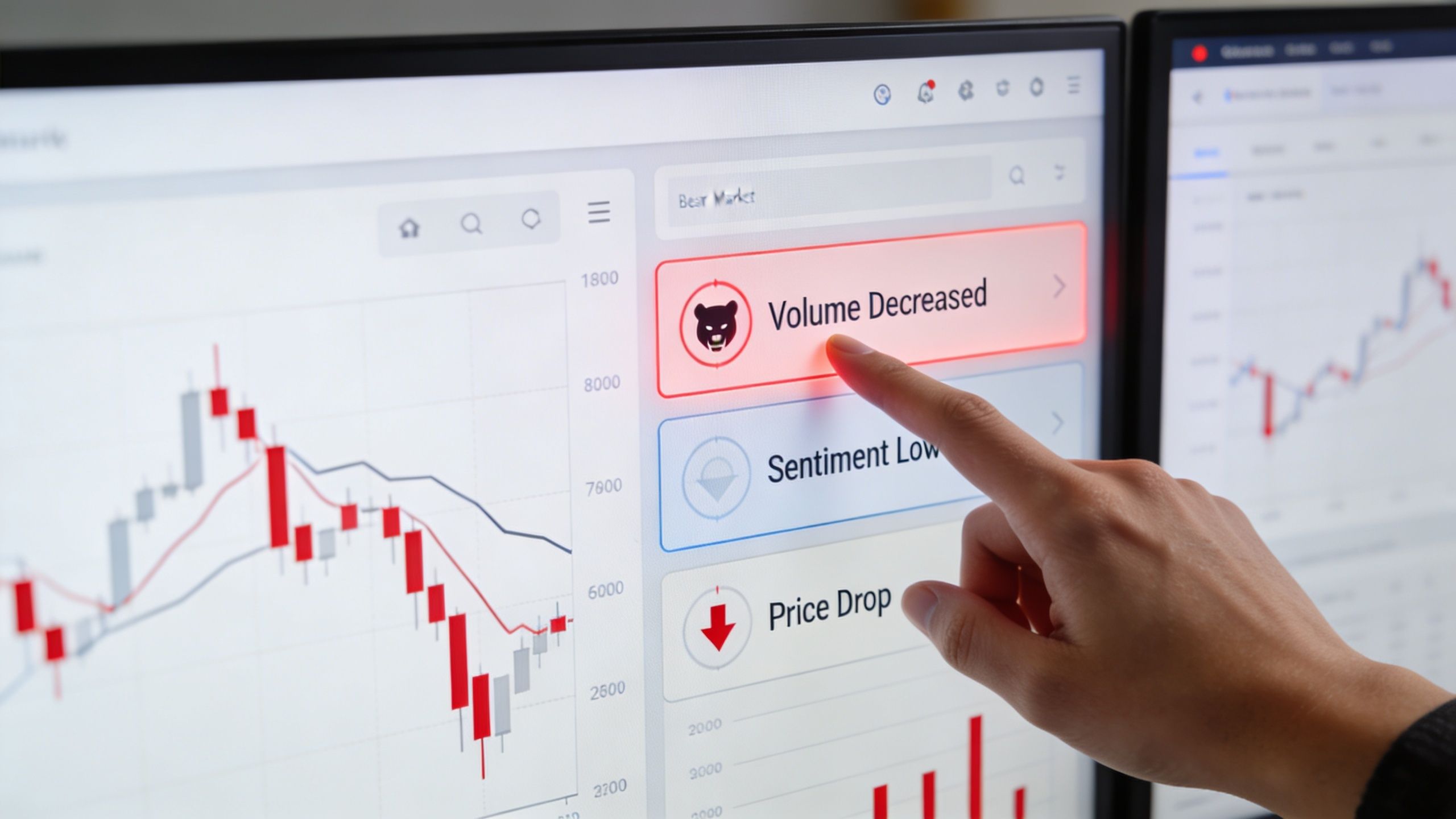
The shift usually becomes obvious on an ordinary day. Bitcoin breaks a level that had held for months, altcoins fail to bounce with any conviction, NFT volume dries up again, and traders start treating every rally as a chance to cut risk. That is how bear markets announce themselves in real time.
Technical structure matters first
Price structure is still the cleanest starting point. One of the clearest warnings is Bitcoin losing long-term trend support and failing to reclaim it on weekly closes. According to CryptoRank’s analysis of Bitcoin bear market structure, sustained closes below the 100-week moving average have historically aligned with extended downside periods.
In practice, I care less about a single breakdown than I do about what happens after it. Bear markets trap traders with sharp reflex rallies, then reject them at levels that used to act as support. That pattern shows up across cycles.
A useful weekly checklist:
- Weekly closes below major support: Repeated closes matter more than one intraday flush.
- Failed retests: If price rallies back into a broken range and gets sold quickly, sellers still control the market.
- Weak breadth: If Bitcoin stabilizes but altcoins keep making fresh lows, risk appetite is still poor.
- Lower highs on rebounds: Each bounce travels less distance before sellers return.
For the nervous beginner, this is a signal to slow down and stop averaging into every red candle. For the steadfast HODLer, it is a reminder to review position sizing, not just conviction. For the opportunistic trader, failed retests often offer cleaner information than the initial breakdown.
On-chain behavior shows who is exiting and who is staying
On-chain data helps separate routine volatility from a real contraction in participation. During a bear phase, weaker holders distribute into fear, stronger holders absorb supply, and liquidity becomes more selective.
The most useful signals are straightforward:
- Exchange inflows rising during weakness: More coins moving onto exchanges can point to higher sell pressure.
- Long-term holder supply holding firm or rising: That usually suggests stronger hands are willing to sit through volatility.
- Stablecoin balances staying high: Capital has not left crypto entirely, but it has not committed to risk either.
- Network activity fading: Fewer active users, fewer transactions, and less fee generation often confirm that speculation has cooled.
These indicators matter differently depending on your profile. Beginners should use them as context, not as trade triggers. Active traders can use them to confirm whether a bounce has real sponsorship behind it. NFT and GameFi participants should pay even closer attention to user activity, treasury health, and whether ecosystems are retaining actual players or just losing speculators.
A quick visual explainer can help if you want a chart-based overview of these conditions:
Sentiment confirms the regime change
Sentiment is late, but it is still useful. In a true bear market, the emotional tone changes in a way that experienced traders recognize fast.
Look for these shifts:
- Apathy replaces urgency: Fewer participants ask what is about to pump. More ask whether they should leave the market altogether.
- Good news stops working: Positive announcements fail to produce lasting upside.
- Rallies get sold faster: Traders trust downside continuation more than upside follow-through.
- Speculative niches lose sponsorship: Smaller tokens, meme coins, and thin NFT collections struggle to attract fresh buyers.
A bear market is established when market participants stop buying weakness on instinct and start selling strength on purpose.
That distinction matters. HODLers can survive a bear market if they own quality and have time. Traders can still make money, but they need tighter risk controls and less ego. NFT and GameFi participants need to judge ecosystems by retention, liquidity, and treasury discipline, not by floor-price screenshots from better months.
A Look Back at Historical Crypto Bear Markets
A trader who lived through 2014, 2018, and 2022 can spot the pattern fast. The headlines change, the tokens change, and the slogans change. The failure points usually do not.
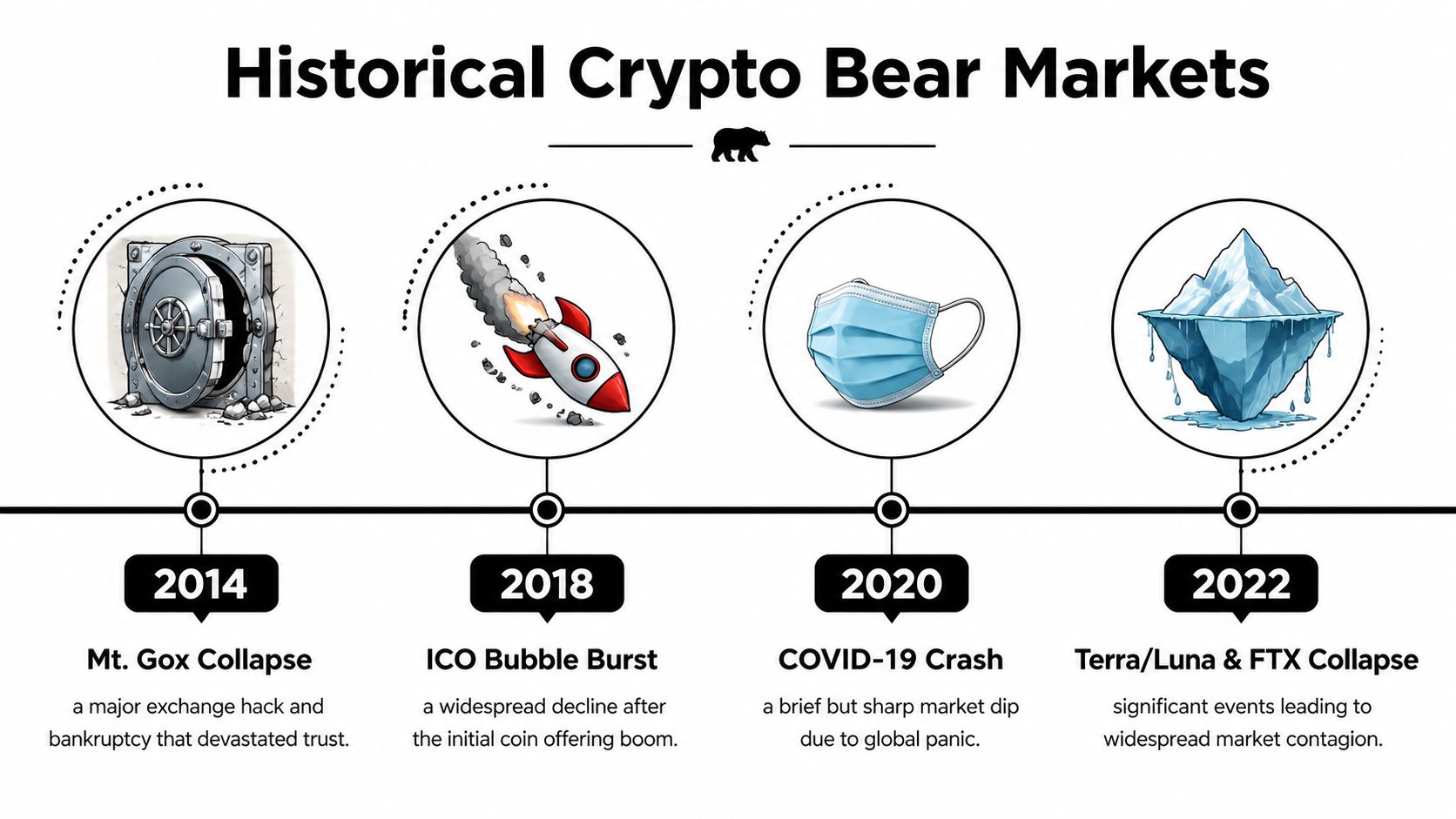
History is relevant in crypto because the market repeats the same emotional cycle with different branding. Capital floods in, risk discipline fades, weak business models get funded, and the downturn exposes what was never built to last. That is useful for every type of participant. Beginners learn what failure looks like. HODLers learn which convictions survive stress. Traders learn which rallies deserve respect. NFT and GameFi users learn which ecosystems still function after speculation leaves.
The Mt. Gox era broke trust and forced maturity
The first major crypto winter was a custody lesson, not just a price lesson. Mt. Gox dominated Bitcoin trading, then failed in a way that shattered confidence across the market. For many early participants, that was the moment crypto stopped feeling experimental and started feeling expensive.
The takeaway was simple. Coins held on an exchange are only as safe as that exchange’s controls, governance, and balance sheet. Bear markets punish convenience first.
That period also forced the industry to grow up. Self-custody became a serious discussion. Exchange risk started to matter. Security practices improved because they had to.
The ICO unwind exposed weak token models
The 2018 bear market came from excess issuance and unrealistic assumptions. Projects raised capital on whitepapers, listed quickly, and traded on narrative long before they proved product demand. Once the market turned, many of those tokens had no reason to recover.
I still use that cycle as a filter. If a token needs constant buyer inflows to defend its story, it is not an investment thesis. It is a distribution mechanism.
The projects that made it through usually had a few things in common:
- Active builders shipping through the downturn
- A product or infrastructure layer people still used
- A community that stayed after price collapsed
- A token design tied to something more durable than attention
Ethereum’s survival mattered for that reason. Speculative issuance got crushed, but smart contract infrastructure kept proving its value underneath the wreckage.
The 2020 shock and 2022 contagion punished fragility
March 2020 showed how fast crypto can sell off during a global panic. Correlations rise, liquidity thins out, and assets that looked independent start trading like every other risk asset. Traders who treated crypto as insulated from macro learned the opposite in a few brutal sessions.
The 2022 cycle cut deeper because it attacked trust inside the industry itself. Exchange failures, forced liquidations, fragile lending structures, and bad risk controls all hit at once. Projects and firms built on debt, circular collateral, or opaque balance sheets did not get much time to explain themselves.
Bear markets remove excuses. If a project needs constant liquidity, permanent hype, or hidden debt to survive, the downturn will expose it.
That is why historical bear markets are more than trivia. They show where the stress fractures usually form. If you trade actively, studying past unwind phases will improve your timing and risk control more than another prediction thread. A solid starting point is this guide to crypto trading strategies that hold up under pressure.
The constructive side only becomes obvious later. Stronger custody standards, cleaner token models, more disciplined DeFi design, and better infrastructure usually start taking shape when the easy money is gone. Bear markets are where serious projects earn the right to survive.
Actionable Survival Strategies for Every Crypto Investor
Your portfolio is down, the timeline is full of forced optimism, and every bounce looks like the start of recovery until it fails by the weekend. That is the point where generic advice stops being useful. A bear market tests different weaknesses in different people. The nervous beginner needs structure. The committed HODLer needs honest thesis review. The active trader needs tighter risk control. The NFT or GameFi participant needs to separate living ecosystems from abandoned ones.
Bear Market Strategy Matrix
| Investor Profile | Primary Goal | Key Actions |
|---|---|---|
| Beginner | Stay solvent and keep learning | Simplify holdings, automate small buys, avoid trading with borrowed money |
| HODLer | Protect conviction from turning into denial | Reassess thesis, cut weak assets, prioritize core positions |
| Trader | Preserve capital and exploit structure | Trade smaller, focus on majors, respect invalidation |
| NFT/GameFi user | Stay in resilient ecosystems | Follow active communities, track treasury quality, value utility over hype |
The nervous beginner
If you are new, survival comes before returns.
The mistake I see most often is overcomplication. New investors buy too many tokens, spread capital across weak ideas, and confuse activity with progress. In a bear market, that usually ends with a portfolio full of illiquid positions and no clear reason for owning any of them.
Cut the watchlist. Hold fewer assets. Focus on networks with staying power, deep liquidity, and real users. A simple plan with small scheduled buys is usually stronger than a reactive plan built around headlines and group chats.
A workable beginner checklist looks like this:
- Automate entries carefully: Small recurring buys into stronger assets reduce the urge to guess every local bottom.
- Keep reserve capital: Cash or stablecoins give you flexibility when fear creates better prices.
- Build operational skill: Learn self-custody, wallet security, Layer 2 transfers, and basic DeFi mechanics while speculation is quieter.
- Reduce emotional triggers: If hourly price checks change your decisions, your position size is too large.
The Arkham research summary on bear-market behavior points to familiar patterns in deep drawdowns: panic selling, apathy, and emotional fatigue. Their practical suggestions are sound. Journal your decisions, spend less time staring at candles, and stay close to people who discuss risk clearly instead of promising easy reversals.
The steadfast HODLer
Conviction helps. Denial destroys capital.
A real HODL strategy in a bear market starts with ranking positions by quality, not by past performance. Bitcoin and Ethereum often remain the core because they keep liquidity, developer attention, and institutional relevance longer than smaller assets. Many altcoins do not earn that patience. Some lose users, some lose builders, and some never recover from one cycle to the next.
Review every position as if you did not already own it. Ask direct questions. Is adoption growing or shrinking? Is the token still tied to a product people use? Does the team still ship? Has the original thesis improved, stalled, or broken?
This is also the right time to clean up legacy bags. Last cycle winners often become dead weight in the next one. Price alone does not make an asset cheap. If you want to sharpen entries, exits, and portfolio rules during weak conditions, this guide on crypto trading strategies that hold up under pressure is a useful companion.
The opportunistic trader
Bear markets can still pay well, but they punish sloppy execution faster than bull markets do.
The edge is rarely constant action. It comes from selectivity. Trade smaller than you want to. Focus on liquid pairs where levels matter and slippage stays manageable. Respect invalidation points before you enter, not after the market moves against you.
A few habits make a big difference:
- Size down first: Smaller positions keep you in the game during ugly volatility.
- Prioritize majors: Bitcoin and Ethereum usually offer cleaner structure than thin altcoins.
- Sell the idea of certainty: Bear market rallies can run hard and still fail fast.
- Keep your process visible: Write the setup, the entry, the stop, and the exit condition before placing the trade.
I have seen many traders lose a year of progress by forcing longs on every sharp bounce because the chart looked oversold. Oversold can stay oversold for weeks. Capital preservation is the job. Profit comes after that.
The dedicated NFT and GameFi participant
This group faces a different problem. In token markets, liquidity thins out. In NFT and GameFi markets, liquidity can disappear.
That changes the filter. Floor price matters less than user retention, treasury runway, builder activity, and whether the product still gives people a reason to show up when speculation fades. Collections with no real culture or utility tend to go quiet fast. Games with weak token design usually expose themselves once rewards stop masking poor gameplay.
Focus on signs of durability:
- Community quality: Ongoing discussion and creator activity matter more than brief hype spikes.
- Product progress: Look for shipping cadence, feature updates, and visible development.
- Treasury discipline: Teams that manage runway well can survive long enough to improve the product.
- Ecosystem fit: Projects tied to broader infrastructure or interoperable assets have more ways to stay relevant.
In this part of the market, attention is not enough. Usage is the test. If people only participated to flip assets, the bear market will make that obvious fast.
Spotting the Thaw Signs of a Market Recovery
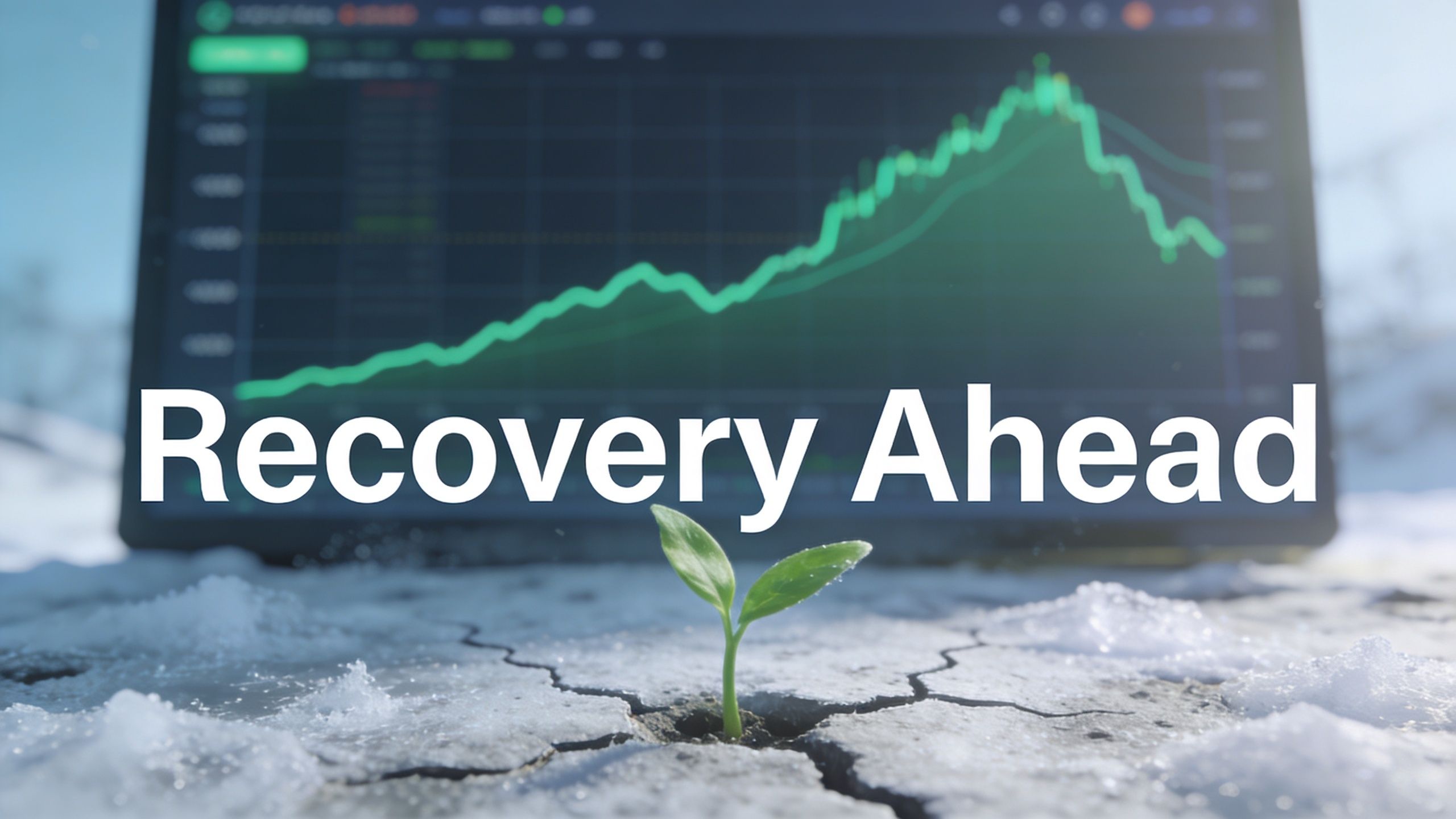
Most recoveries don't begin with a clean green signal. They begin with exhaustion. Sellers lose force, volatility changes character, and ownership slowly shifts toward participants willing to hold through uncertainty.
What bottoming action tends to look like
One of the more useful recovery frameworks comes from KuCoin’s review of Bitcoin bear-cycle behavior, which describes a shrinking severity pattern in drawdowns over time. More important for practical use, it highlights two bottoming signals that traders and investors can monitor: rising long-term holder supply and volume-price divergences where heavy selling gives way to weaker rebound selling pressure.
That combination matters because it suggests forced sellers may be running out while stronger hands accumulate. Tracking long-term holder versus short-term holder behavior on tools like Glassnode can improve timing, not by predicting the exact low, but by helping you recognize when the structure is changing.
Recovery usually starts looking more credible when you see several things together:
- Long-term holder strength: More supply sits with investors who aren't reacting to every swing.
- Less violent downside follow-through: Bad news stops producing outsized damage.
- Improving relative leadership: Higher-quality assets begin outperforming low-conviction names.
- Cleaner rebounds: Price starts building instead of instantly retracing.
Recovery often feels boring before it feels exciting. That's usually healthier than a one-week vertical bounce.
Which narratives deserve attention early
The next cycle's leaders often start building before the broader market feels good again. That doesn't mean every new narrative deserves capital. It means you should watch for sectors where usage, infrastructure, and developer commitment keep improving through the downturn.
The themes worth monitoring are practical, not just fashionable:
- AI and crypto integration: Projects connecting autonomous agents, identity, compute markets, or data verification to blockchains may attract attention if utility improves.
- Layer 2 scaling: When bear-market fees, throughput, and UX work continue, L2 ecosystems often emerge stronger.
- Tokenization of real-world assets: This area tends to matter more when markets care about cash flow, transparency, and asset backing.
- DeFi quality over yield theater: Protocols with cleaner collateral design, risk controls, and real use cases usually stand out after speculative excess fades.
The best early recovery setups often combine improving market structure with credible product traction. Price alone isn't enough. Narrative alone isn't enough. When both align, the thaw is getting real.
Building Your Bear Market Resource Toolkit
A bear market rewards people who become harder to fool. That means better tools, better habits, and a lower tolerance for weak information. The goal isn't to consume more content. It's to build a repeatable process that helps you see risk earlier and act with less emotion.
The core toolkit I’d keep lean and useful
For on-chain work, use Glassnode to track holder behavior and broad supply dynamics. Use Dune when you want dashboard-style visibility into protocol activity, DeFi usage, wallet trends, and ecosystem-specific questions.
For market structure, stick with charting platforms that let you review weekly levels cleanly. For news, favor research desks and outlets that explain why a move matters, not just that it happened. The Defiant and Messari are useful examples of the kind of research-oriented workflow serious participants tend to build around.
Security tools matter more in a down market because desperation attracts scams. Use reputable wallets, separate long-term holdings from active trading funds, and review permissions across DeFi apps and NFT marketplaces. If you're active in Web3 or GameFi, keep a closer eye on treasury quality, bridge exposure, and smart contract risk than on floor-price chatter.
A practical toolkit also includes less glamorous inputs:
- A trading journal for mistakes, entries, and emotional triggers
- A watchlist split by conviction level, not hype level
- A thesis document for each meaningful position
- A routine for checking data on schedule instead of reacting all day
If you want a broader view of where the industry conversation is heading, events and ecosystem roundups like this coverage of Paris Blockchain Week can be useful context.
The investors who come out of a cryptocurrency bear market stronger usually did one thing better than everyone else. They treated the downturn as a training ground, not just a drawdown.
If you want more grounded crypto analysis, practical Web3 guides, NFT and GameFi coverage, and smarter takes on market cycles, follow Coiner Blog. It’s a solid place to keep learning while the market tests everyone’s patience.