7 Good Cryptocurrency Podcasts for 2026
Trying to keep up with crypto without drowning in noise? The better question is which shows help you understand what's happening, because the best good cryptocurrency podcasts don't just repeat headlines, they translate Bitcoin, Ethereum, DeFi, regulation, and protocol design into something you can use. Podcast listening already has mass-market scale, with 174 million monthly listeners in the U.S. and Canada in 2024 and a global audience projected to exceed 500 million by 2024, which helps explain why crypto audio has moved from niche chatter to a serious learning channel, especially for long-form topics that need context Egem's overview of crypto podcast growth. If you want a fast path to the right show, start with the list below and skip the endless scrolling. For a broader set of audio discovery resources, see SparkPod's financial audio resources.
Table of Contents
- 1. Bankless
- 2. Unchained Laura Shin
- 3. Empire Blockworks
- 4. The Defiant Podcast
- 5. What Bitcoin Did
- 6. web3 with a16z crypto a16z Crypto
- 7. Epicenter
- Top 7 Cryptocurrency Podcasts Comparison
- How to Choose the Right Crypto Podcast for You
1. Bankless
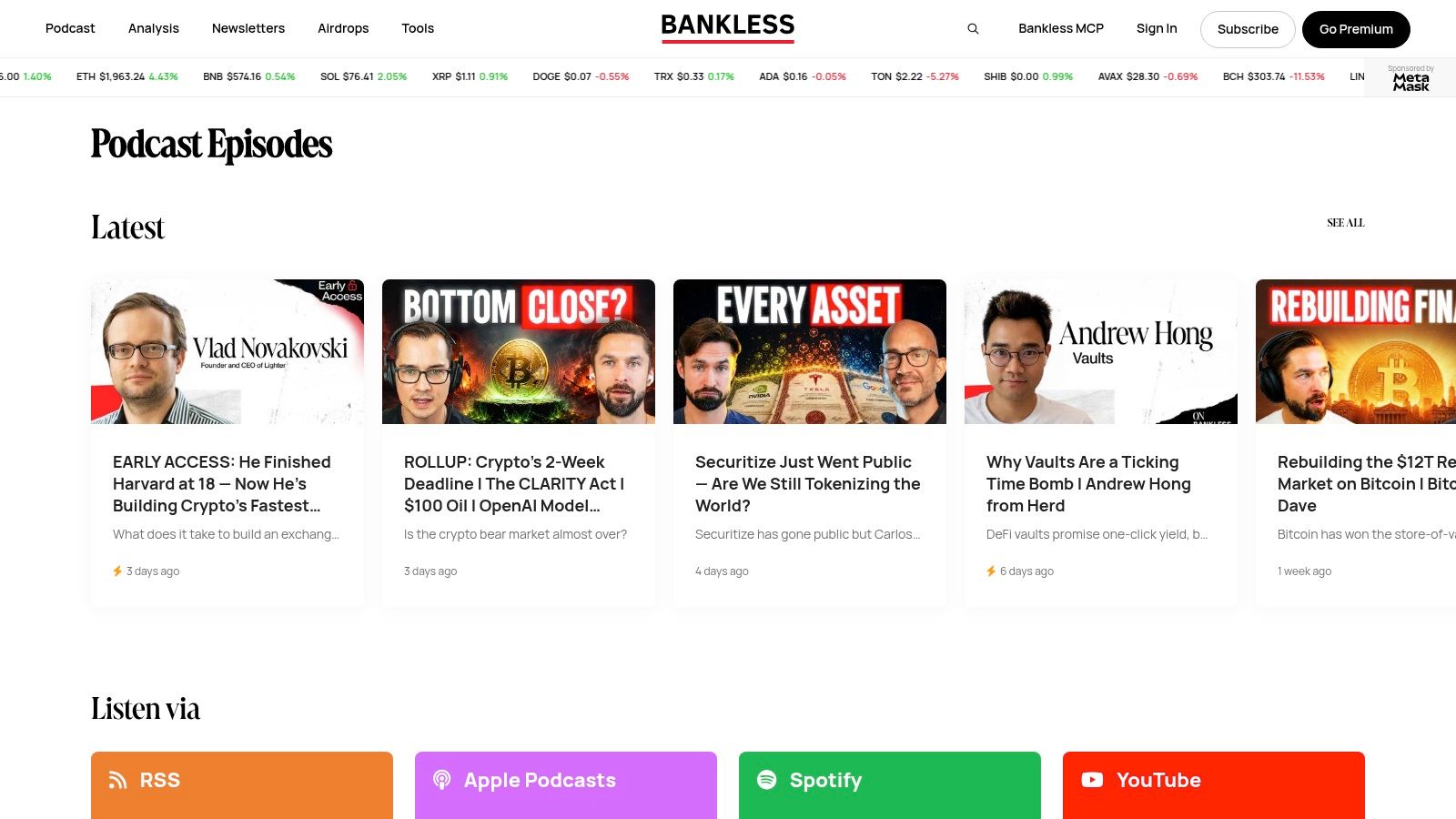
Bankless is the show I'd point Ethereum-native listeners to first. Independent crypto publishers consistently place it at the top for protocol-level coverage, especially if you care about Ethereum, DeFi, NFTs, and the broader crypto-finance stack rather than generic market chatter Koinly's crypto podcast recommendations. Its weekly Rollups recap format works well if you want market context without committing to a full news cycle every day.
Why it stands out
The strength here lies in translation. Hosts Ryan Sean Adams and David Hoffman tend to unpack token models, Layer 2 activity, and policy developments in plain English, then connect them back to what users and builders are doing on-chain. That makes it a strong fit for people who understand the basics and want more than headlines. The official archive also makes it easy to jump between interviews, explainers, and themed series on frontier topics Bankless podcast page and DeFi protocol resources.
Practical rule: if you mostly follow Ethereum, stablecoins, and DeFi infrastructure, this should be near the top of your rotation.
Recommended starting episode: begin with a recent Rollups episode, then move to an interview on protocol design or token models. That sequence gives you the cadence of the show first, then the deeper context behind it.
A fair trade-off is that the Ethereum bias is real. Bitcoin-first listeners may want a wider macro or policy lens elsewhere, and some episodes include frequent sponsor mentions. Still, for listeners who want a durable, community-backed source of Ethereum and DeFi analysis, Bankless remains one of the most useful good cryptocurrency podcasts available.
2. Unchained Laura Shin
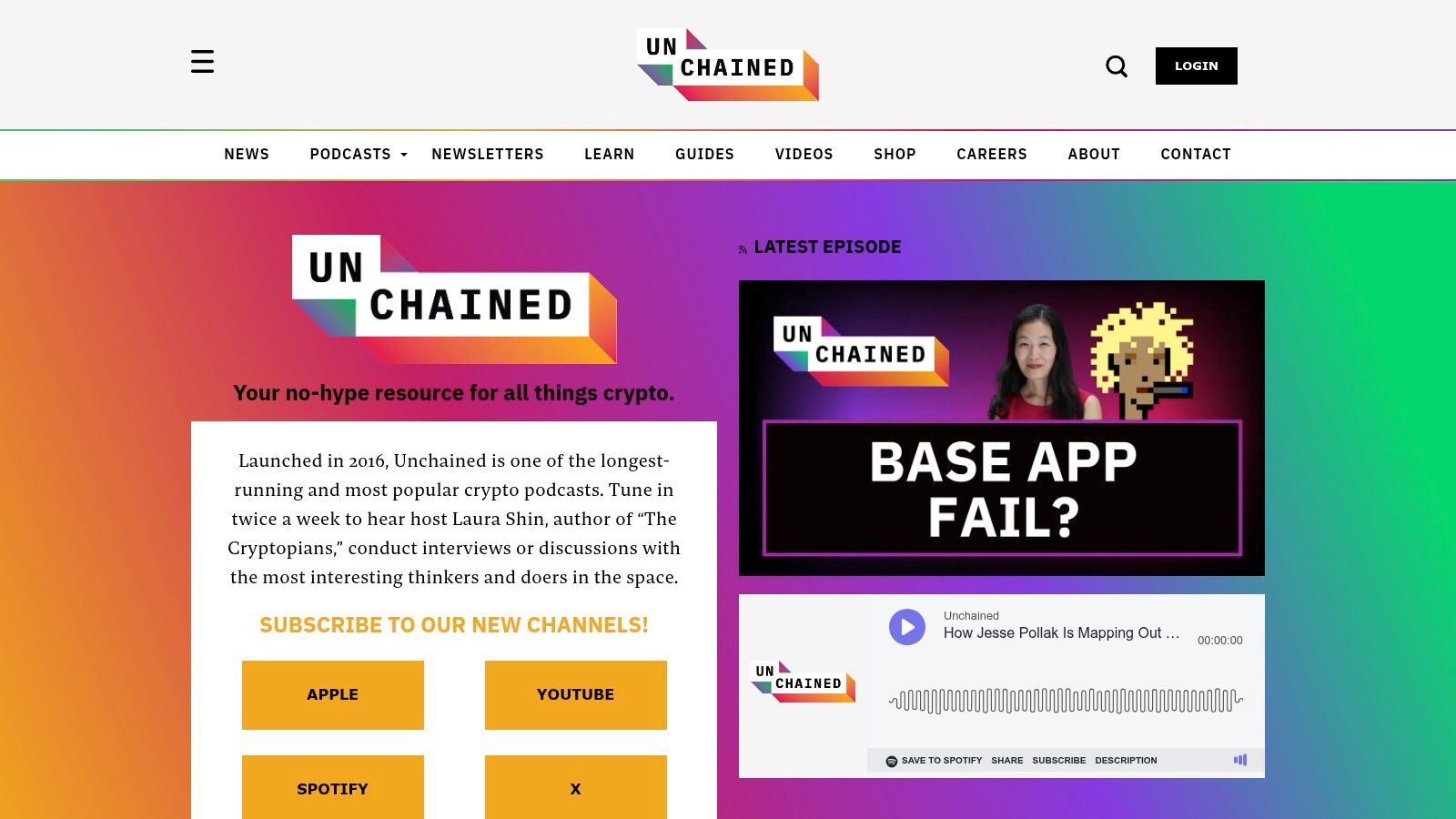
Unchained feels different because it's driven by journalism, not hype. Laura Shin brings a reporter's discipline to interviews with founders, developers, investors, and policymakers, and the result is a show that stays useful when the market mood changes. In a space full of hot takes, that matters.
The show's range is one of its biggest advantages. It covers Bitcoin, Ethereum, DeFi, NFTs, and regulation, while also reacting quickly to major events and enforcement actions. For listeners who want follow-up reading, the complementary newsletters and written analysis make the show easier to use as a research source Unchained podcast archive and how to think about crypto scams.
Best for listeners who want context
Unchained is strongest when you want the “why” behind a headline. Instead of only hearing what happened, you usually get a clearer sense of who is involved, which incentives are at play, and where the risks sit. That makes it especially good for policy, market structure, and investigative coverage.
Recommended starting episode: choose a recent interview tied to a major enforcement action, regulation update, or market structure dispute. Those episodes show the show's best traits, careful questioning and strong topical framing.
The main limitation is accessibility. Beginners can absolutely learn from it, but the pace and depth can feel intense if you're still getting comfortable with crypto basics. Publishing also tends to move around the news cycle, so it's not always the show you use for a fixed weekly routine. Even so, for readers who want a rigorous, balanced guide, Unchained belongs on any list of good cryptocurrency podcasts.
3. Empire Blockworks
Empire is the sharpest choice if you want market structure with a builder's edge. Blockworks positions the show around insiders, founders, researchers, and fund managers, which gives it a different energy from broader crypto news programs. It feels designed for people who already track liquidity, token design, and ecosystem positioning Empire on Blockworks and crypto trading strategies.
Where it fits in a serious listening stack
The show is especially useful when market narratives are shifting and you want informed perspective rather than social-media noise. Episodes often connect protocol design, token economics, and capital flows in ways that help intermediate and advanced listeners think more clearly about what's moving the market. The guest quality is typically strong, and the cadence is steady enough to make it part of a regular routine.
Best use case: listen here if you already know the basics and want to understand how builders and investors are reading the market.
Recommended starting episode: pick an interview with a founder or researcher tied to a recent protocol launch or market theme. That gives you the show's core style quickly, direct, tactical, and more insider than introductory.
The trade-off is the audience fit. Empire assumes you're comfortable with crypto jargon, and it doesn't spend much time on fundamentals. Sponsor reads and event promotion can also be noticeable, which is common for media brands embedded in a larger ecosystem. If you're fine with that, Empire is one of the more useful good cryptocurrency podcasts for staying close to how serious participants think.
4. The Defiant Podcast
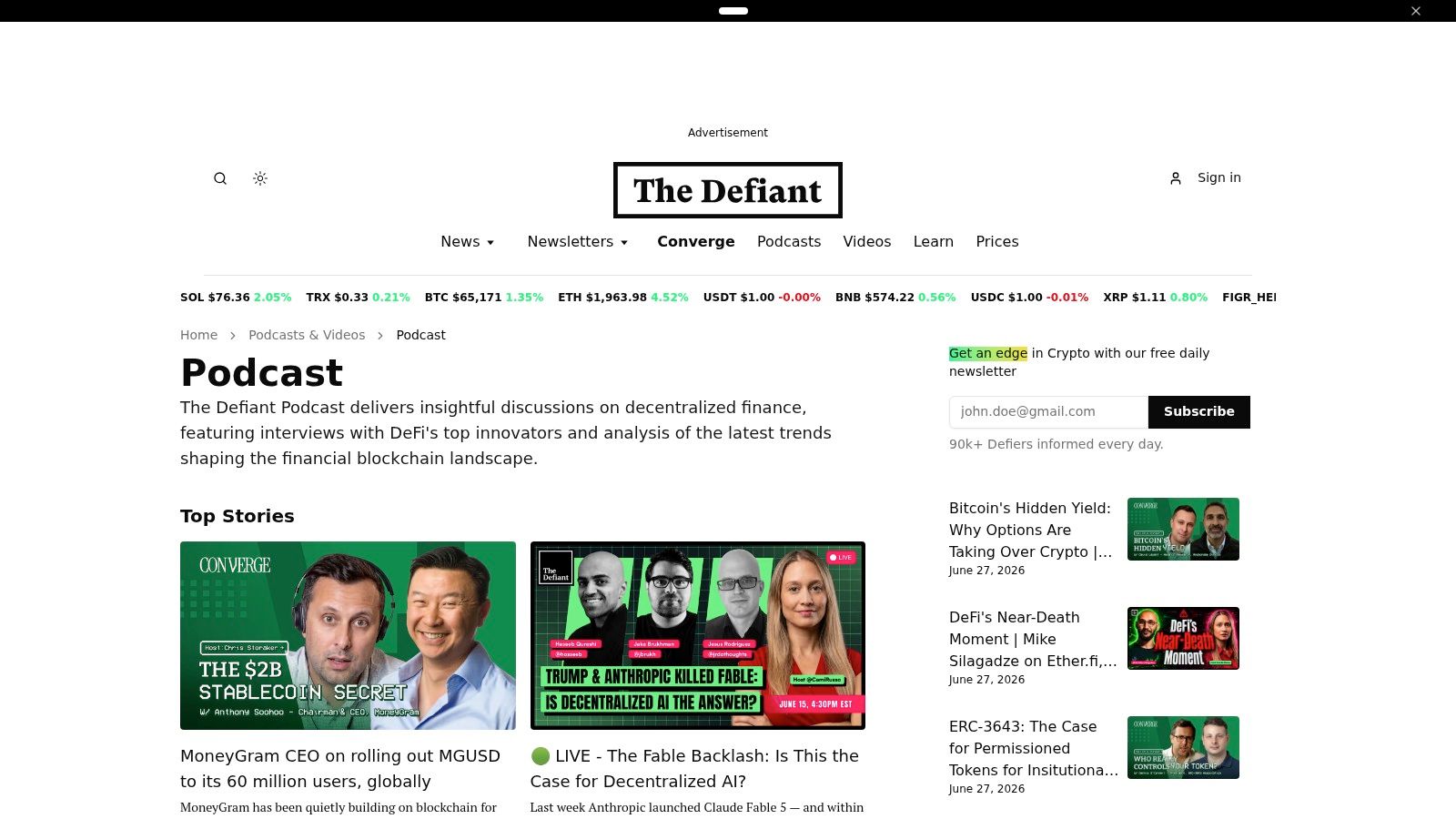
If your interest starts and ends with DeFi, The Defiant Podcast is built for you. Camila Russo's editorial background shows up in the structure of the conversations, which tend to focus on how on-chain finance works, not just how people talk about it. The show is useful for stablecoins, DEXs, staking, derivatives, and the way DeFi overlaps with traditional finance.
One reason it stands out is the on-chain lens. Rather than treating DeFi as a buzzword, the show digs into technical and market-structure topics such as Layer 2 networks, perpetuals, and options, with companion reporting on The Defiant site for readers who want more context The Defiant podcast archive.
Good for readers who want evidence, not slogans
That reporting angle matters because DeFi moves fast and narratives can get sloppy fast. A podcast that stays close to verifiable on-chain activity and research-backed commentary can save you from a lot of weak takes. The guest mix is also broad enough to include builders, analysts, and policy voices, which keeps the conversation from becoming purely promotional.
Recommended starting episode: start with an episode on stablecoins or derivatives. Those topics show how the show handles complexity, and they'll tell you quickly whether you prefer this deeper DeFi framing.
The obvious downside is focus. Bitcoin-only listeners may not find enough here, and some episodes vary in audio quality. Still, if your goal is to understand the plumbing of decentralized finance, The Defiant is one of the clearest good cryptocurrency podcasts to add to your queue.
5. What Bitcoin Did
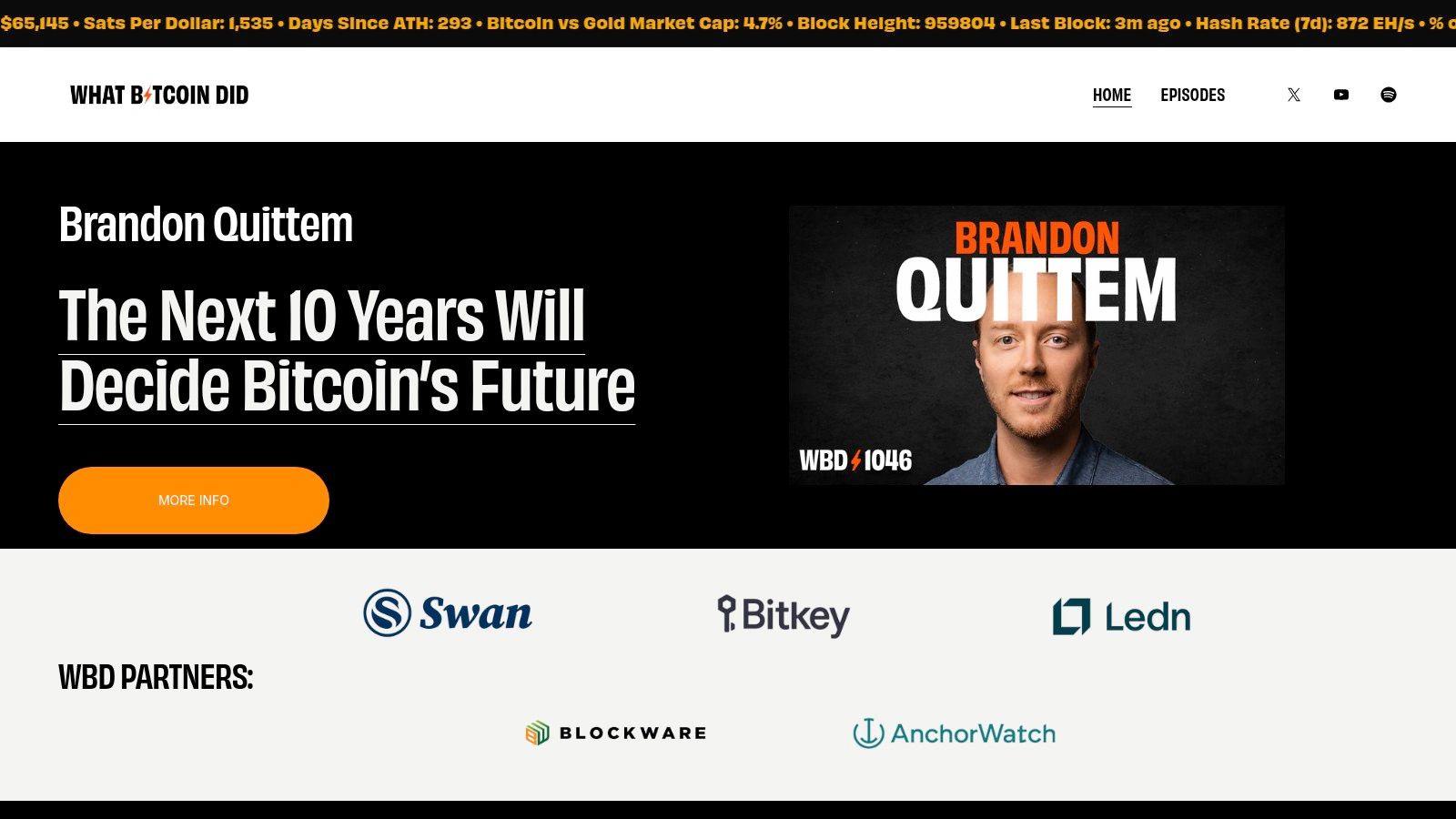
What Bitcoin Did is the cleanest Bitcoin-first option on this list. Peter McCormack keeps the focus tight, which is useful if you want deep conversations about Bitcoin economics, mining, Lightning, self-custody, and the geopolitical side of the network. The archive is well organized on the official site, so it's easy to find the exact theme you want What Bitcoin Did.
The show works because it treats Bitcoin as more than a trade. Episodes often connect core development, macro thinking, and culture, so you hear how different parts of the ecosystem interpret the same events. That mix gives it a practical edge for listeners who want to understand why Bitcoin matters beyond price.
Who should start here
If you're new to Bitcoin and want one dedicated source, this is a strong place to begin. If you already follow Bitcoin closely, the guest list still offers value because it tends to include developers, miners, and macro thinkers who speak from different parts of the ecosystem.
Recommended starting episode: pick a conversation with a core developer, miner, or economist. Those episodes tend to show the show's full range better than generic commentary does.
The trade-off is simple. This is not the podcast for altcoin scanning or broad DeFi coverage, and the Bitcoin-maximalist tone can feel repetitive if you listen to a lot of multi-chain media. For Bitcoin-focused readers, though, that commitment is exactly what makes it one of the most dependable good cryptocurrency podcasts.
6. web3 with a16z crypto a16z Crypto
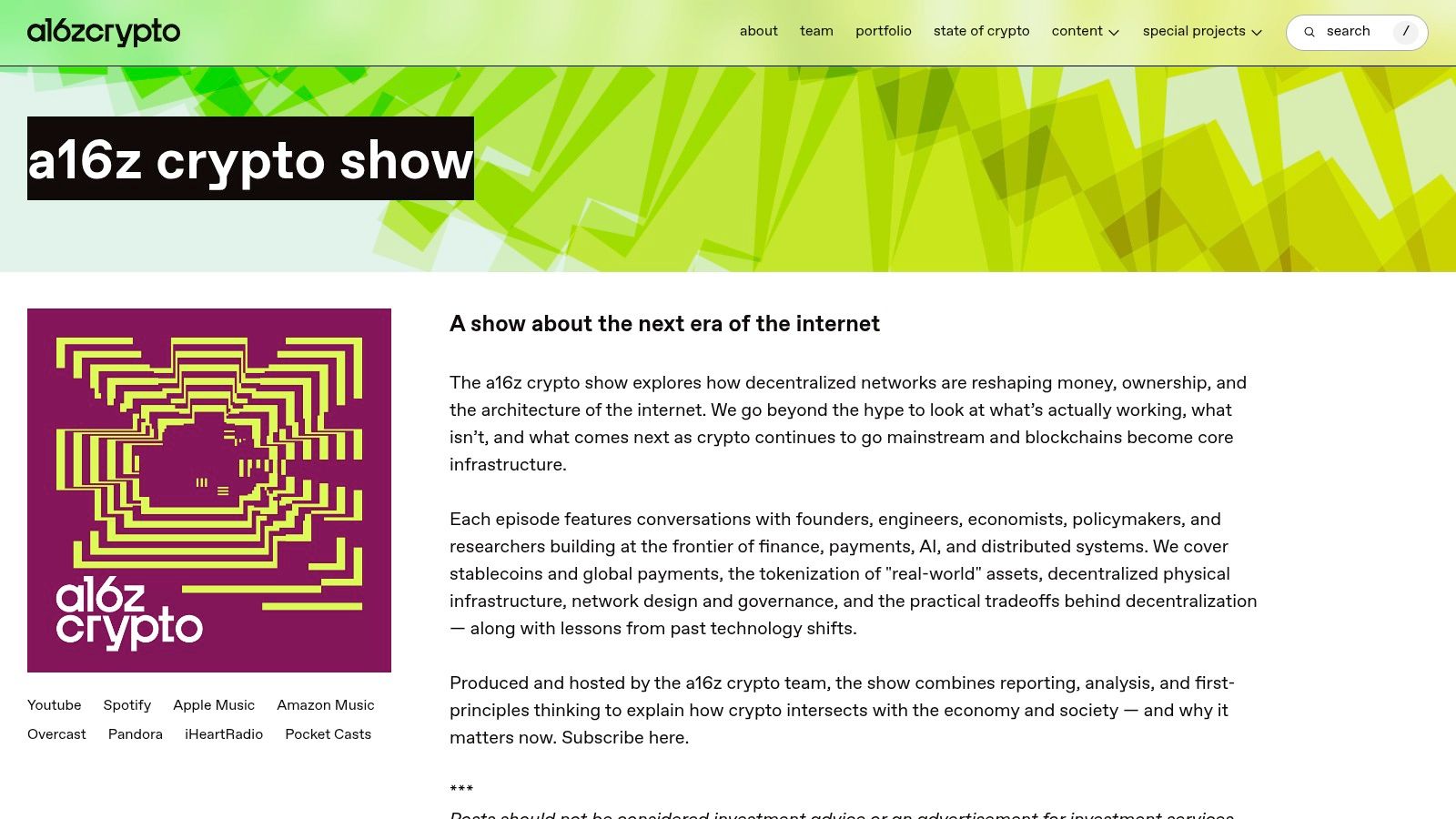
web3 with a16z crypto is the most research-heavy show in this group. The a16z crypto team leans into infrastructure, consensus design, scaling, token models, policy, and the overlap between AI and crypto, so the conversations usually feel strategic rather than trend-chasing a16z crypto podcast feed. That makes it especially useful for builders and technically curious readers.
The guests often include founders, academics, and a16z partners, which keeps the show grounded in both research and product thinking. The upside is obvious, high technical depth and strong production quality. The downside is equally clear, since the VC perspective can introduce portfolio bias or a narrower framing of what matters.
My rule for this show: treat it as a strategic briefing, not as a neutral map of the entire market.
Recommended starting episode: choose a conversation on scaling, consensus, or the AI and crypto intersection. Those subjects reveal the show's tone fastest and show whether you want that much technical density on a regular basis.
This is not the easiest show for complete beginners, and that's fine. Not every podcast should be entry-level. For readers who want a thoughtful view of where crypto infrastructure may be headed, a16z crypto earns its place among the most useful good cryptocurrency podcasts.
7. Epicenter
Epicenter is one of the few crypto podcasts that feels archival. It has been around long enough to track the industry across early Bitcoin and Ethereum debates, then into ZK systems, rollups, and today's more modular stack. That long view is valuable if you care about how the technology evolved rather than only where the headlines are pointing Epicenter.
The conversations are often highly technical, with protocol architects, researchers, and founders discussing the actual design choices behind networks and applications. If you build, research, or enjoy detailed crypto engineering talk, this is one of the most rewarding places to listen.
Why experienced listeners keep coming back
Epicenter's strength is continuity. Older episodes let you hear how assumptions changed over time, which is useful in a space where yesterday's certainty often becomes today's caveat. The multi-platform distribution also makes it easy to fit into normal podcast habits, even if the show itself feels more specialized than mass-market.
Recommended starting episode: begin with a recent episode on rollups, ZK, or protocol architecture, then browse backward into earlier discussions if the guest list catches your attention.
The drawback is accessibility. New listeners may need to pause and look up terms, and some older episodes reflect the recording standards of their time. But if you want a podcast that respects technical detail and long-range context, Epicenter is firmly in the top tier of good cryptocurrency podcasts.
Top 7 Cryptocurrency Podcasts Comparison
| Podcast | 🔄 Complexity | Resource requirements ⚡ | 📊 Expected outcomes | 💡 Ideal use cases | ⭐ Key advantages |
|---|---|---|---|---|---|
| Bankless | Medium, mix of recaps & long interviews | Moderate time; basic DeFi/Ethereum familiarity | Actionable DeFi/Ethereum insights and market recaps | Stay current on L2s, token models, and DeFi strategy | Strong DeFi/Ethereum focus with accessible explainers |
| Unchained (Laura Shin) | High, investigative, long-form interviews | High attention; some prior crypto knowledge helpful | Deep regulatory, technical, and market clarity | Follow enforcement, policy shifts, and investigative stories | Balanced, journalistic reporting across ecosystems |
| Empire (Blockworks) | Medium–High, market- and builder-focused | Moderate; market literacy expected | Investor-grade market context and token economics | Investors tracking liquidity, protocols, and research | High signal on markets with consistent cadence |
| The Defiant Podcast | Medium, DeFi-first interviews and explainers | Moderate; comfort with on-chain concepts helpful | Data-backed DeFi analysis and protocol insights | DeFi analysts, builders, and on-chain researchers | Strong on-chain data focus and protocol coverage |
| What Bitcoin Did | Medium, long-form Bitcoin-centric deep dives | Moderate; interest in Bitcoin economics/tech | Deep Bitcoin technical, economic, and cultural perspectives | Bitcoin-focused listeners, miners, and developers | Clear Bitcoin-first lens with veteran guests |
| web3 with a16z crypto (a16z Crypto) | High, research-oriented, technical | High; technical and strategic background useful | Advanced protocol design and strategic insights | Builders, researchers, and strategic planners | High technical depth and production quality |
| Epicenter | High, technically rigorous across chains | High; developer/advanced-user level | Architectural and historical perspective on protocols | Developers, researchers, and advanced practitioners | Long archive and deep technical interviews |
How to Choose the Right Crypto Podcast for You
The best podcast is the one you'll keep listening to. A lot of people start with the biggest names, then stop because the format doesn't match how they learn. The better approach is to choose by listener goal, because that's where the key differences show up.
If you want Ethereum, DeFi, and Layer 2 coverage, Bankless is the most obvious fit. If you want rigorous journalism and policy context, Unchained is stronger. If you care about Bitcoin above everything else, What Bitcoin Did makes more sense than a multi-chain show. If you want technical architecture and research depth, Epicenter and a16z crypto both go deeper than generalist podcasts.
A practical listening habit helps too. Most major crypto shows are now multi-platform and often video-first, with distribution on Spotify, Apple Podcasts, and frequently YouTube, which makes it easier to search by topic and revisit specific episodes later multi-platform crypto podcast distribution and Spotify and Apple's role in crypto podcast listening. If you prefer a video archive for skimming technical topics, that matters more than it used to. If you like clean subscription management on Apple devices, that matters too.
Choose the show that matches your current level, not the one that sounds smartest on paper.
There's also a practical selection problem in the market itself. Many roundups keep repeating the same major names, while fewer guides map podcasts to use cases like governance, security, Bitcoin macro, or DeFi engineering Coin Bureau's podcast roundup. That gap is useful for you, because it means the best way to build a good listening stack is to sample a few shows across categories, then keep the ones that consistently teach you something without wasting your time.
If you want more crypto education that stays grounded in real use cases, market context, and practical risk awareness, visit Coiner Blog for deeper guides on Bitcoin, Ethereum, DeFi, tokenomics, Layer 2 scaling, and the broader digital asset ecosystem.