
How to Buy Bitcoin Safely Without Getting Burned
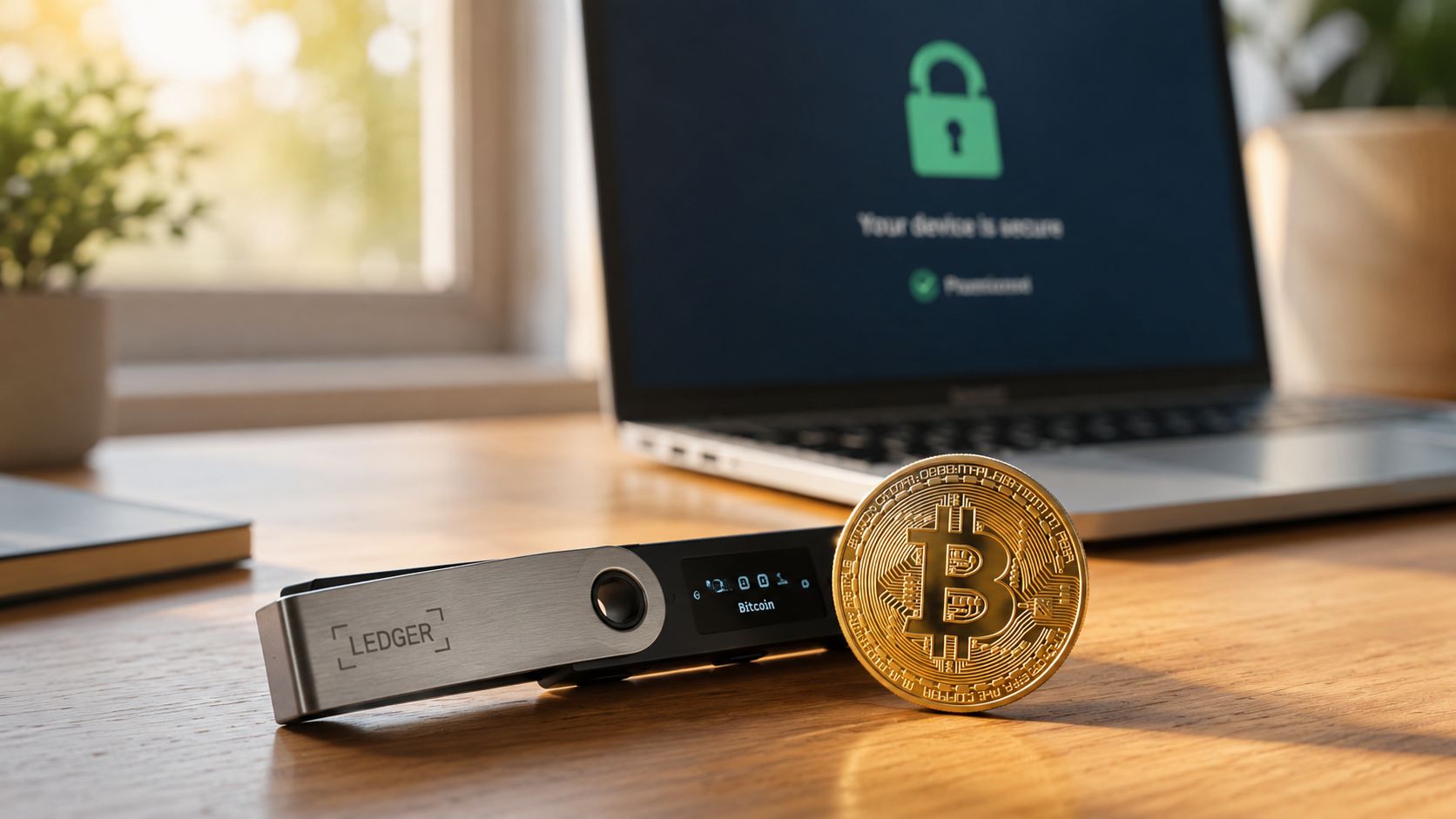
More than $3.8 billion was lost to cryptocurrency fraud and theft in 2025, and that figure should reset how people think about buying Bitcoin safely. The primary danger is not just picking the wrong exchange. It is what happens before, during, and especially after the buy, when a bad address, a fake support message, or a seed-phrase mistake can turn a normal purchase into a permanent loss.
How to buy Bitcoin safely comes down to process, not optimism. The safest buyers verify the platform, choose the right payment rail, prepare custody before funding, and treat the withdrawal window like a live-fire security check. Bitcoin transactions do not come with chargebacks once they confirm, so every step needs to be deliberate. A practical guide like the independent Coinbase analysis can help you compare one venue against the controls you need, but the final check is still on you.
Table of Contents
- What Safe Bitcoin Buying Means in 2026
- Picking the Right On-Ramp for Your Situation
- KYC, Privacy, and Choosing a Payment Method
- Setting Up Wallets Before Your First Purchase
- Placing the Buy and Withdrawing to Self-Custody
- Scams, Phishing, and Where Losses Truly Occur
- Fees, Taxes, and Your Printable Safety Checklist
What Safe Bitcoin Buying Means in 2026
Buying Bitcoin safely used to mean avoiding sketchy forums and hoping the exchange you chose would not disappear overnight. That standard is too low now. The safer mainstream path is still a regulated exchange, but the work starts after you choose one, because safety lives across three gates, venue, funding, and custody.
The three gates that matter
First, verify the venue. A trustworthy platform lowers operational risk with identity checks, payment rails, and account protection, but it does not remove the need for your own controls. Second, use a clean funding path. A payment method changes both your cost and your recovery options if a transaction gets disputed, reversed, or hijacked. Third, plan custody before the coins arrive, because Bitcoin becomes far safer once you control the private keys.
Practical rule: If you cannot explain how you will verify the exchange, fund the account, and move the coins afterward, you are not done preparing.
The historical lesson is blunt. Early Bitcoin buying moved from informal peer-to-peer transfers to regulated venues that reduced day-to-day operational risk, but that shift also made trust in the exchange and discipline around wallet custody part of the purchase itself. Bitcoin.org also pushes users to understand confirmations and wallet security before transacting, which is exactly where a lot of beginners still slip.
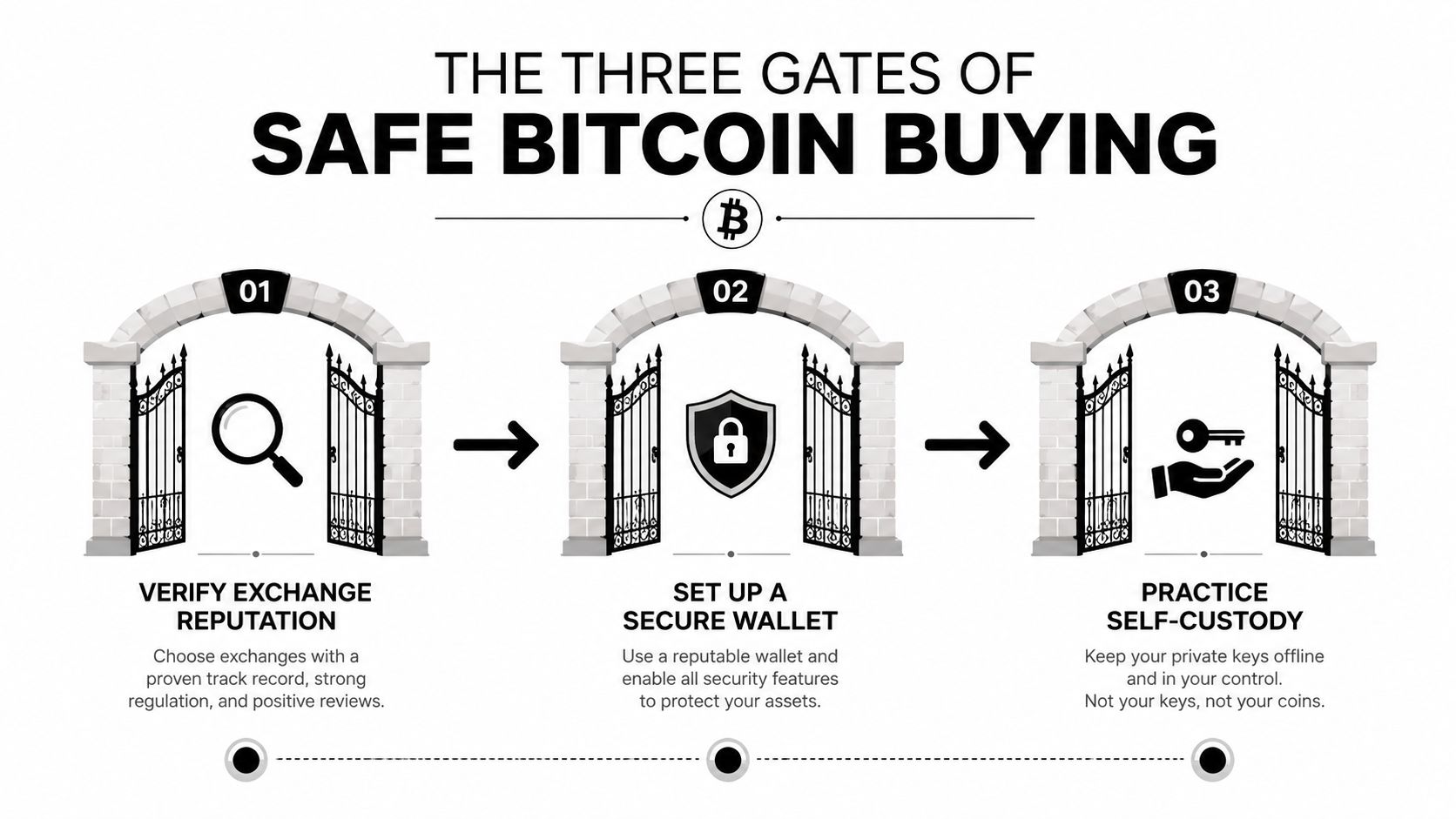
The mental model is simple. The buy is not one event, it is a chain of decisions. Most losses happen when people treat that chain like a single click. The bigger risks often show up after the purchase, when a wrong-network transfer, a seed-phrase mistake, or a phishing email turns a successful buy into a preventable loss.
Picking the Right On-Ramp for Your Situation
A regulated centralized exchange is usually the cleanest starting point for a first-time retail buyer. It's the easiest way to make recurring small buys, connect a bank account, and later withdraw actual Bitcoin to a wallet you control. If you want a practical example of how buyers evaluate those platforms beyond marketing, the independent Coinbase analysis is worth reading because it frames exchange choice as a set of trade-offs, not a brand contest.
Three on-ramps, three different jobs
An OTC desk makes more sense when the buy is large enough to affect the order book or when execution matters more than convenience. You're paying for smoother handling, but you'll usually need to do more diligence on the desk's legal entity, settlement process, and withdrawal terms. A peer-to-peer marketplace can be the right tool where banking access is limited or privacy matters more, but the scam surface is wider, so counterparty checks matter more than speed.
| On-Ramp Type | Best For | Verify Before Funding | Main Trade-Off |
|---|---|---|---|
| Regulated exchange | First-time buyers, recurring small buys | Legal entity, registrations, custody terms, fee structure, withdrawal rules | Easy to use, but you need to trust the platform's controls |
| OTC desk | Larger purchases, execution-sensitive buyers | Settlement process, entity details, custody terms, withdrawal policy | Better handling, less simple for beginners |
| P2P marketplace | Privacy-focused or unbanked buyers | Counterparty reputation, payment method, dispute handling | Flexible, but higher scam exposure |
A high-net-worth buyer often starts with OTC because execution and privacy matter more than a simple app experience. A privacy-focused buyer may accept more friction to reduce how much identity and banking data sit on a single platform. An unbanked buyer may have no realistic alternative to P2P, but that makes verification discipline essential.
The safest venue is the one that matches the size and frequency of your buy, not the one with the loudest brand.
Before funding anything, verify the legal entity behind the platform, the regulatory registrations it claims, the custody model, the fee structure, and the withdrawal rules. If those details are hard to find, that's already a warning sign.
KYC, Privacy, and Choosing a Payment Method
KYC and payment selection belong in the same decision. KYC is how an exchange proves who you are to satisfy its regulatory obligations, and that identity trail can matter if you need support, account recovery, or a dispute process later. It also means you're giving up some privacy, so the trade-off is real, not theoretical.
Privacy is a spectrum, not a switch
If your goal is to buy Bitcoin through a regulated venue, some identity disclosure is part of the deal. That can feel intrusive, but it also creates a more conventional paper trail than a purely informal transfer. The mistake is treating privacy as if it's either total or absent. In practice, you're choosing how much friction, visibility, and recourse you want in the same move.
Payment method changes the risk profile too. Bank transfers are usually the cheapest path, but they're slower and can be harder to reverse if you've been tricked. Debit and credit cards are faster and can offer easier dispute handling, but the convenience usually comes with higher costs. P2P cash or gift card deals are flexible, but the scam surface is much wider, so they demand more caution than most first-timers realize.
Practical rule: Pick the payment rail based on how much you value dispute options, not just speed.
The article on buying Bitcoin anonymously at this internal guide is useful if you're trying to understand where privacy-focused buying stops being normal exchange usage and starts becoming a more specialized workflow. For most buyers, though, the cleaner move is to accept standard KYC on a regulated venue and focus on reducing the operational mistakes that cause real losses later.
The safest default is often boring. Use the payment method you understand, the one with the clearest records, and the one that won't leave you stuck if the transaction goes sideways.
Setting Up Wallets Before Your First Purchase
A lot of Bitcoin losses happen after the buy button gets clicked. The coins are fine on the exchange for a moment, then someone rushes the withdrawal, copies the wrong address, saves the seed phrase badly, or falls for a phishing page during setup. A clean purchase is only half the job. The rest is making sure the Bitcoin ends up in a wallet you can control, and that you can still recover it if the device fails.
Start with the wallet you intend to use
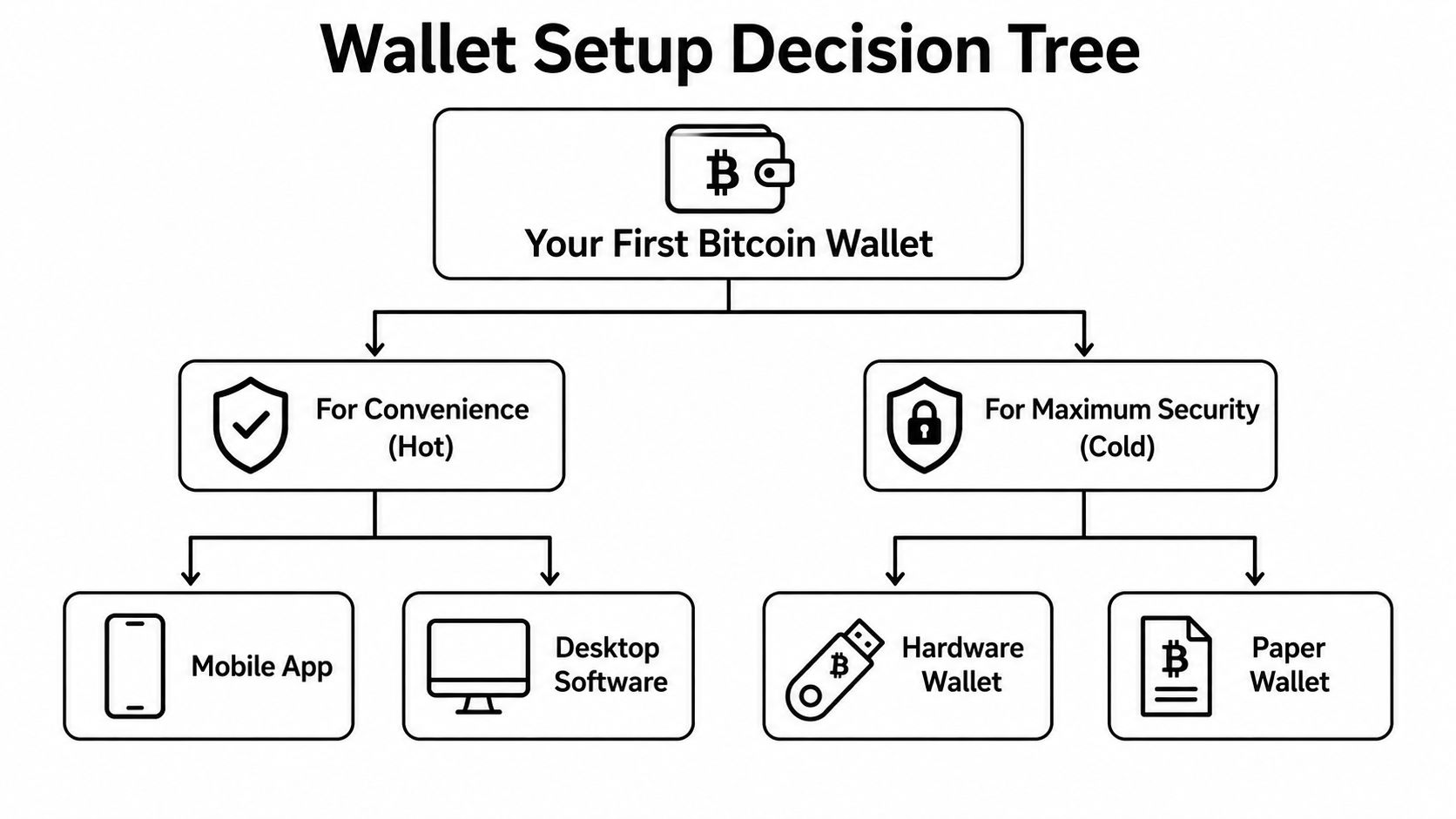
A hot wallet works for a small first purchase and for day-to-day use on a phone or desktop. It is easier to set up, quicker to use, and useful for learning how receiving Bitcoin works. A hardware wallet is the better home for anything you want to hold with more care, because the private keys stay off the internet. For larger balances, multisig adds another layer by requiring more than one key to move funds.
The wallet choice changes the risk profile before you ever place the order. A hot wallet is easier to live with, but it keeps more of the security burden on the device itself. A hardware wallet asks more of you during setup and recovery, which is the trade-off that makes it a better fit for meaningful holdings.
A seed phrase needs plain handling. It is the recovery key for the wallet, and anyone who gets it can move your Bitcoin. Write it down offline, store it securely, and never photograph it or paste it into cloud notes. If the device breaks or disappears, the seed phrase is what restores access on a new device.
That is also why setup discipline matters before the first purchase. The wallet is the custody model once the exchange is out of the picture, and if you skip the basics, the problems usually show up later during a withdrawal, a reset, or a recovery attempt. Fidelity's guidance on wallet security makes the same point in practical terms, and Nanak Accountants and Associates crypto tax help is useful if you want professional support for keeping the records around those moves in order.
If the coins matter to you, set up the wallet before the exchange asks for your money.
Placing the Buy and Withdrawing to Self-Custody
The most dangerous minute in buying Bitcoin is the one people rush through because the purchase already shows as completed. It is not safe yet. The coins are only under your control after they leave the exchange and land in a wallet you control, with the withdrawal confirmed on-chain. That is the point where mistakes turn into losses.
Use a test buy, then scale
Start with the smallest reasonable order. Let it settle, confirm the balance appears where you expected, then increase size only after the full path has worked once. This habit catches bad setup, bad assumptions, and exchange quirks before they become expensive. A test deposit is the same idea Fidelity recommends for the minimum amount of the cryptocurrency you are using, because the first transfer is where people discover whether their process is sound (Fidelity on Bitcoin safety).
The withdrawal needs a checklist, not confidence. Check the receiving address character by character. Do not trust your clipboard, because address-swapping malware exists and it only needs one careless paste. Select Bitcoin mainnet only, not a wrapped token or a bridged asset on a different chain. Then confirm the fee, submit the withdrawal, and wait for the network confirmations before treating the funds as fully received.
The failure mode is simple. If you send to the wrong address, the wrong network, or a scam-controlled wallet, there is no chargeback. Bitcoin finality is part of the system, and it punishes shortcuts.
The old rule, not your keys, not your coin, is still the right lens. Custody is the whole point. If the coins stay on the platform, you are still depending on the platform, and you have not removed that counterparty risk.
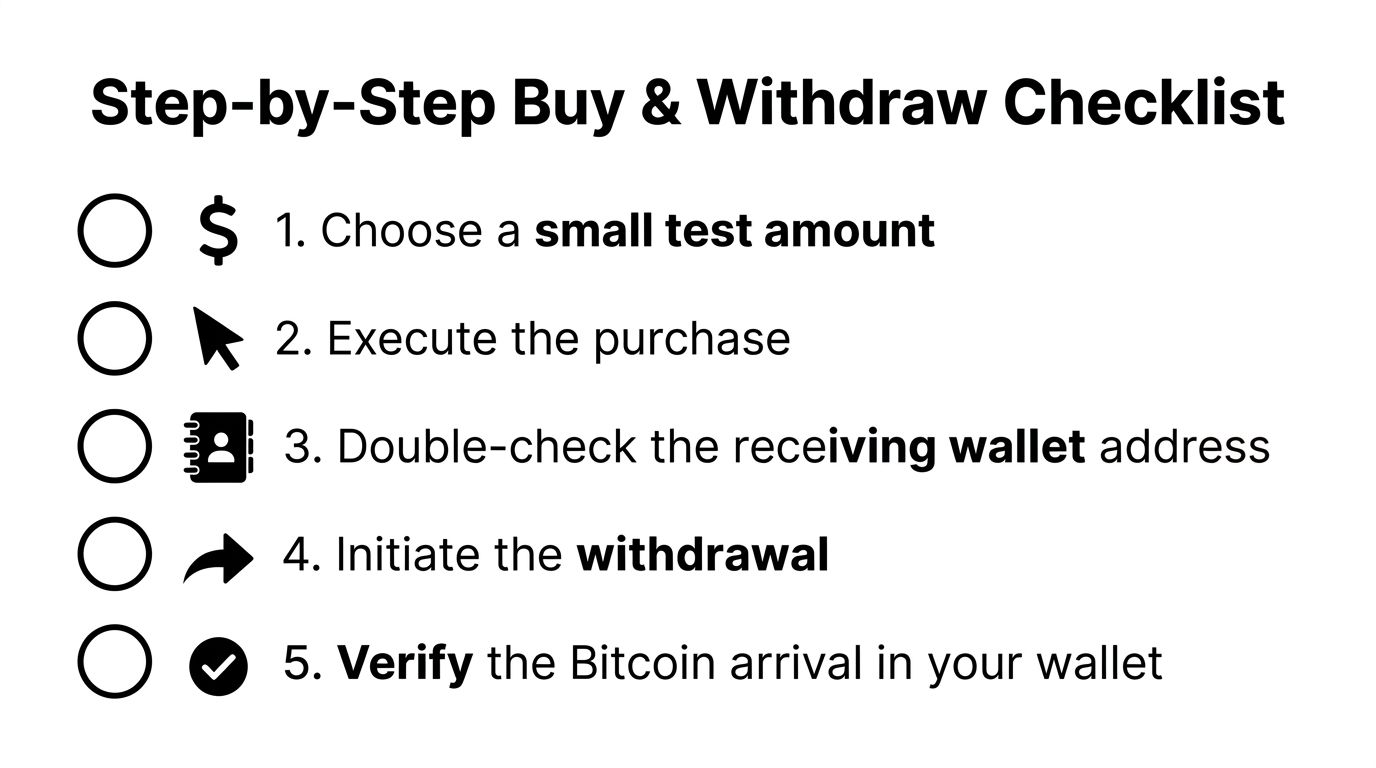
The first ten minutes after the purchase are where most preventable losses start. Slow down, verify the address, verify the network, and move only after the transfer history matches what you meant to do.
Scams, Phishing, and Where Losses Truly Occur
A lot of buyers watch the exchange risk and miss the mess that starts after the purchase. The more common failure points are access mistakes, phishing, and recovery errors, and those are the ones that keep draining wallets after people think they are finished. That is where the operational risk sits.
The attacks that catch people
Fake support messages are still one of the easiest traps to fall for. Someone messages you as if they work for an exchange, then pushes you to click a link or “verify” a wallet. The safe rule is simple, never click links in direct social media messages from supposed exchange support, because real support usually does not start that way unless you already opened a legitimate ticket, and the same pattern shows up in Coinbase email scam red flags.
Lookalike exchange URLs are another standard trick. Clipboard hijackers are worse, because they replace the address after you paste it, and the transfer looks fine until it is already gone. Giveaway scams are even more blunt, they promise extra Bitcoin if you send some first. You will not get anything back.
The breakdown of where buyers lose money should change how you work. Forgotten passwords, phishing attacks, and misplaced recovery phrases are far more common failure modes than exchange breaches in the normal buyer flow. That does not make platforms safe by default. It means your own process is usually the weakest link.
A lot of crypto security is refusing to react to urgency.
Withdrawal whitelists, app-based 2FA, and proof-of-reserves checks are still worth using because they make unauthorized movement harder and platform risk easier to judge. If you want a practical scam checklist, how to avoid crypto scams is a useful follow-up once your account and wallet setup are in place.
The goal is to slow the attacker down long enough for your own checks to catch the mistake. That is how people avoid the easy losses that happen after the buy.
Fees, Taxes, and Your Printable Safety Checklist
Fees don't just reduce returns, they can push you toward a worse venue. If the all-in cost on a small buy is getting uncomfortably high, the platform may be convenient but not efficient. Bitcoin network fees can also swing materially, so the price you see on the buy screen isn't the whole bill (NerdWallet on Bitcoin transaction fees).
Know the fee stack before you click buy
The fee stack usually has three pieces, deposit fees, trading spread, and withdrawal network fees. Those costs can be easy to miss when a platform advertises a simple interface. If the total cost on small buys is pushing above roughly 2% all-in, or withdrawal fees are clearly excessive for a normal transfer, it's worth reconsidering the venue.
Taxes matter even if you're only buying and holding. Keep the date, cost basis, and transaction log for every purchase, and learn the reporting rules where you live. Crypto doesn't become invisible just because it moved on-chain. If your records are messy, the cleanup gets ugly later.
For buyers who want help with the accounting side, Nanak Accountants and Associates crypto tax help is a practical reference for understanding how specialists approach crypto recordkeeping. That kind of support is useful when your transaction history gets more complicated than a single exchange buy.
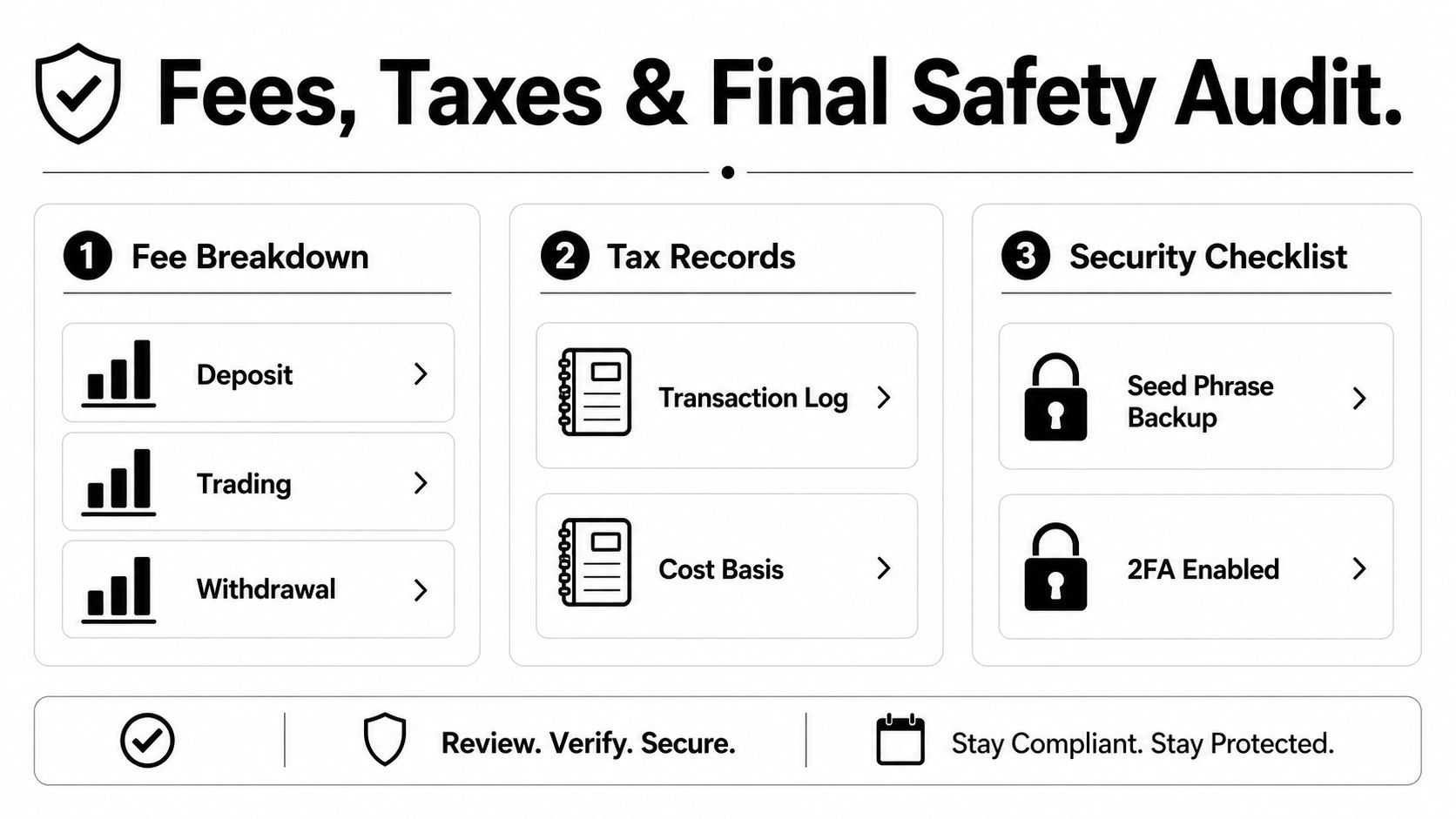
Print this and keep it near your wallet setup:
- Verify the venue: Confirm the legal entity, custody terms, fees, and withdrawal rules before funding.
- Enable 2FA: Use app-based protection on the exchange and your email account.
- Make a test buy: Start small, then confirm the purchase lands and the withdrawal works.
- Check the receiving address: Read it carefully before sending anything meaningful.
- Confirm the network: Use Bitcoin mainnet, not a tokenized substitute.
- Back up the seed phrase offline: Store it securely and never photograph it.
- Watch for phishing: Ignore unsolicited DMs, strange links, and urgent “support” requests.
- Keep records: Save dates, amounts, and cost basis for tax time.
Safe buying isn't about finding a perfect platform. It's about building a repeatable process that survives mistakes, phishing, and the moments when you're tempted to click too fast.
Coiner Blog publishes practical crypto guides that cut through hype and focus on what keeps your assets safe. If you want more hands-on breakdowns like this one, visit Coiner Blog and keep learning before the next buy.