
How to Buy NFT Safely in 2026
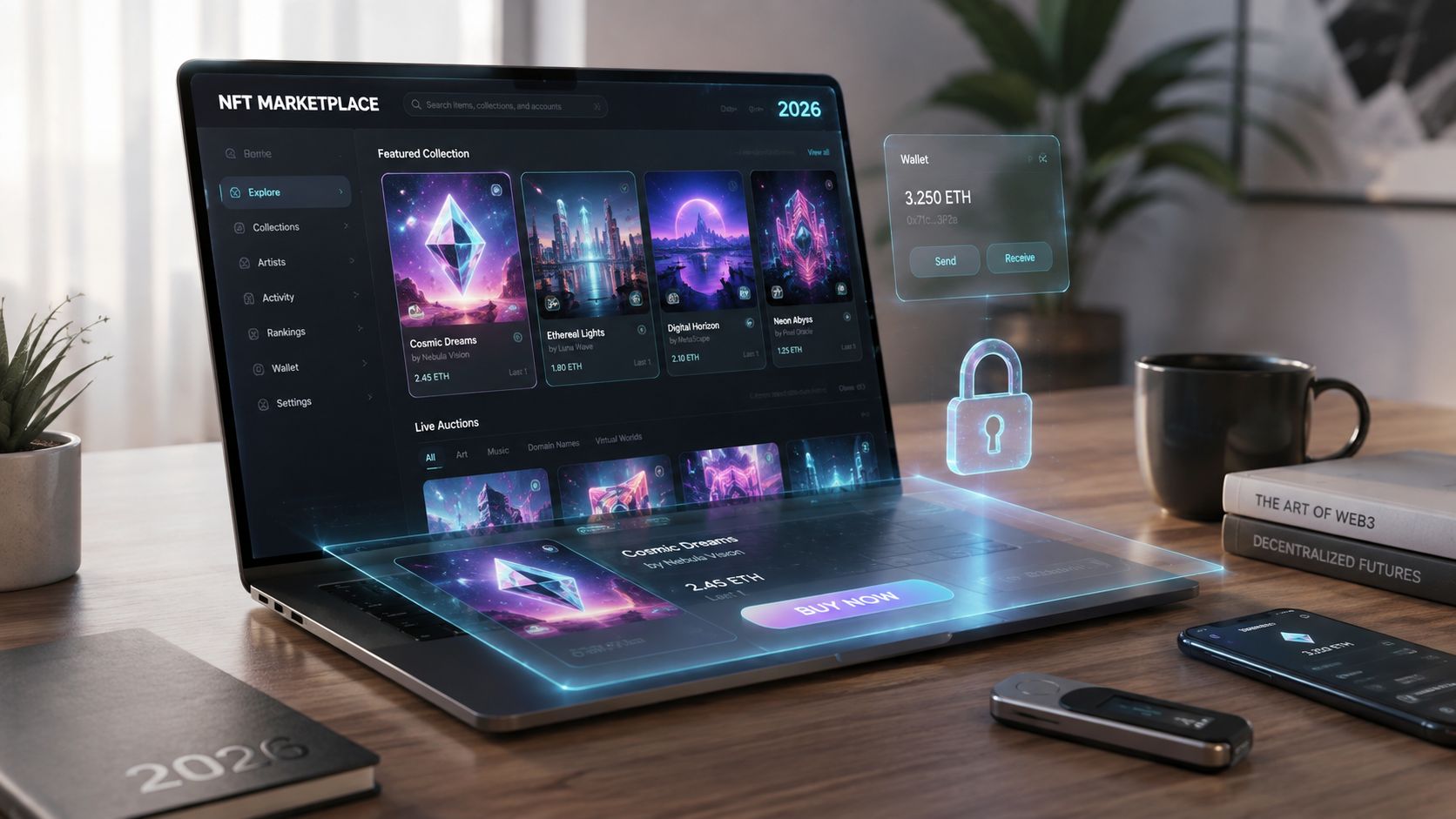
People search for how to buy NFT and get the wrong lesson. They're told to pick a marketplace, connect a wallet, and hit buy, as if this were a normal checkout flow. It isn't. An NFT purchase is a blockchain transaction, and once you sign it, the outcome is generally final, which is why the skill is verification, not speed.
That matters more now because the market isn't running on pure momentum anymore. CoinGecko reports a global NFT market cap of $1.6 billion and 24-hour NFT sales volume of $2.8 million on its NFT page, a very different environment from the speculative frenzy most beginners remember (CoinGecko NFT market data). When liquidity is thinner, bad purchases are harder to shrug off, and the buyer who knows how to inspect a collection contract, a network, and a wallet approval flow has a real edge.
Table of Contents
- Why Most NFT Buying Guides Get It Wrong
- Setting Up Your Wallet and Funding Strategy
- Choosing Marketplaces and Purchase Methods
- Executing the Transaction and Managing Fees
- Verifying Authenticity and Avoiding Scams
- Post-Purchase Management and Tax Considerations
Why Most NFT Buying Guides Get It Wrong
Most beginner guides treat NFT buying like a normal online purchase. That framing skips the part that matters most, the moment your wallet signs an on-chain transaction and the result becomes hard to reverse. A safer guide starts with verification, because the risk is not clicking buy, it is signing the wrong contract, on the wrong network, with the wrong approval.
Kraken's buying guide and Investopedia's walkthrough both describe the familiar flow, create a wallet, fund it, connect it, then confirm the purchase on-chain. That sequence is accurate, but it can make the process sound safer and simpler than it is. Yahoo Finance explains the same basic steps as well, and that is exactly why buyers need to slow down and inspect the details instead of treating the purchase like a checkout page.
The core mistake is buying too early
A lot of first-time buyers focus on the marketplace brand and ignore the collection itself. That is how people end up on the wrong chain, with the wrong contract, or clicking through a fake listing that looks close enough to a legitimate one. MoonPay's beginner guide even recommends bookmarking the marketplace site to avoid scams, which is a small detail that shows how common phishing has become in this category (MoonPay guide).
Practical rule: if the listing, the contract address, and the network do not all line up, stop. The cheapest mistake in NFTs is usually walking away before you sign.
The market's shape also changed how disciplined buying works. Analysts at DappRadar reported that NFT trading volume and sales fell sharply in 2024 versus 2023, which means fewer buyers can rely on hype to cover a weak decision. In that kind of market, floor price is only one signal, not a green light.
NFT buying is broader than one marketplace
Kraken describes three main purchase paths, secondary-market purchases, public mints, and pre-sales. That matters because each path carries different risks, from gas timing to contract trust to the chance of missing a reveal window or paying into a mint that is not what you thought it was.
The useful question is not which site to buy from. It is how to avoid buying the wrong NFT, on the wrong chain, through the wrong approval flow. That is the part most guides skip, and it is the part that saves money.
Setting Up Your Wallet and Funding Strategy
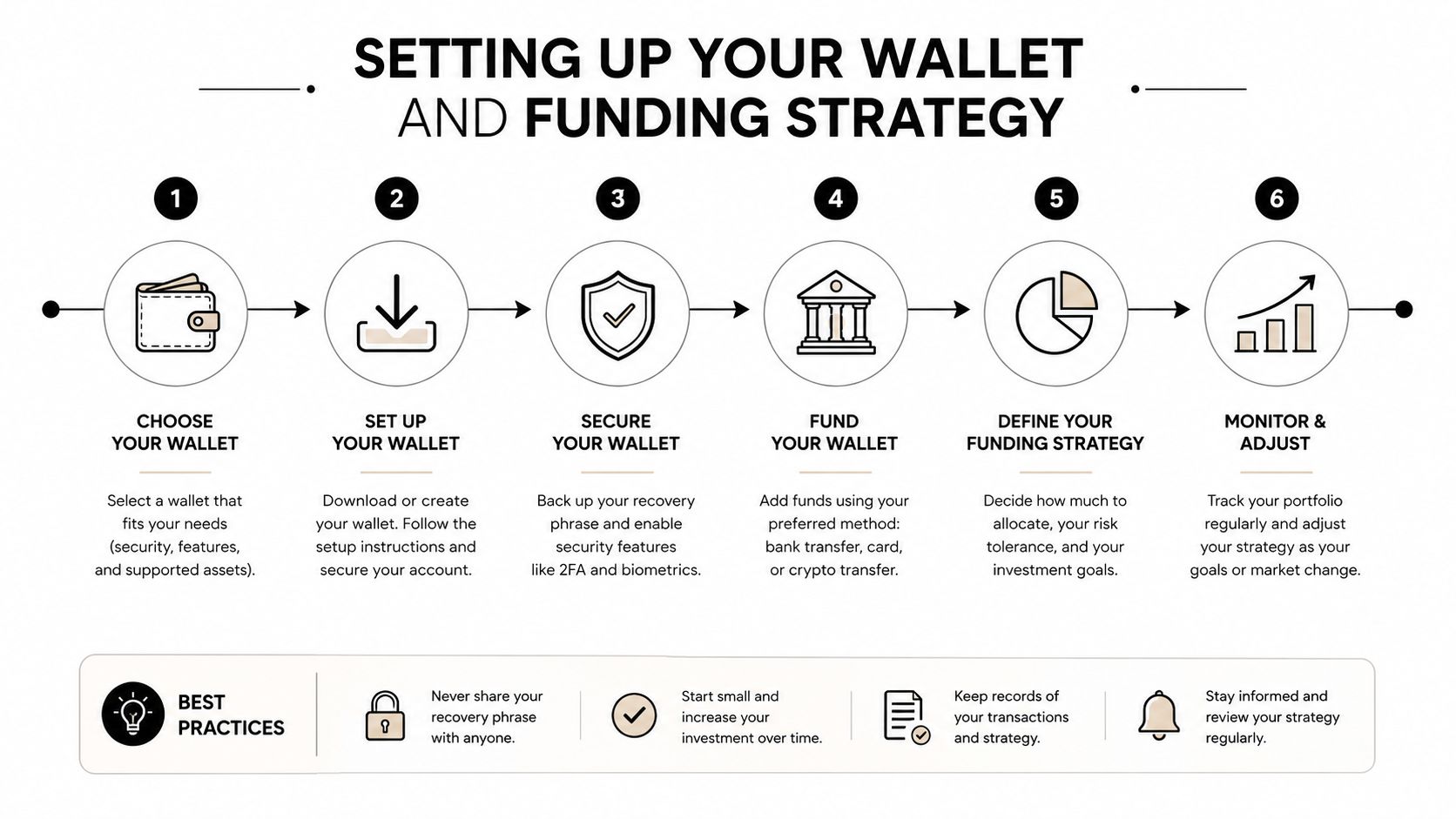
A wallet is the first security decision in NFT buying, because it controls custody, signing, and which chain you can use. For Ethereum-based NFTs, you need an Ethereum-compatible wallet and enough ETH to cover both the NFT and gas fees (Coinbase guide). If you're buying on another chain, the token changes, but the rule stays the same, you need the right wallet for the right network, with enough balance to finish the transaction without scrambling for funds at the last minute.
Pick the wallet before you pick the NFT
MetaMask is still the familiar starting point for a lot of buyers, and it can run as a mobile app on iOS or Android or as a browser extension for Chrome, Firefox, Brave, and Edge. That flexibility helps, but it also creates room for mistakes, especially if you mix casual browsing with real signing. One wrong approval on the wrong site can do more damage than paying a higher fee.
If you're new to wallet selection, a practical overview like best crypto wallets for beginners is useful because it forces you to compare convenience against control. A browser wallet is easy to use, but a hardware wallet is the better call once the NFTs you hold are worth protecting. I use a hot wallet for research and a separate wallet for purchases that I care about, because that separation limits the blast radius if I connect to a bad contract or a fake mint page.
Fund for the total cost, not the sticker price
People still get tripped up here. The NFT price is only part of the bill, because the wallet also has to pay the network, and that fee can change with demand. You need extra ETH for fees, and a balance that only covers the listed price often falls short once the approval and purchase transactions hit the chain.
The safer habit is to fund slightly above the target purchase amount, then leave room for both the approval transaction and the actual buy. If you are buying on an exchange first, move the funds into the wallet only after you know which chain and marketplace you're using. Keep the transfer and the purchase in the same network, and check that the wallet holds the right token before you sign anything.
Keep one wallet for browsing and one for serious purchases. That separation will not stop every mistake, but it reduces the damage if you click the wrong approval or land on a spoofed mint page.
Choosing Marketplaces and Purchase Methods
Marketplace choice matters less for brand loyalty and more for control. The key question is whether the venue lets you verify the contract, check the chain, and understand exactly what you are approving before money leaves your wallet. A payment method that feels easy does nothing for a suspicious collection, so treat checkout convenience as secondary to verification.
Match the purchase method to the risk
Secondary-market purchases are usually the simplest path because the NFT already exists and you can inspect the sale history, holder pattern, and listing details before you act. Public mints are a different kind of trade, because you are interacting with a contract directly, which makes the contract itself as important as the artwork or the community around it. Pre-sales and peer-to-peer trades can open access, but they also add trust assumptions that deserve more scrutiny than a normal fixed-price listing.
A platform like OpenSea is often the default starting point, but it is not automatically the best fit for every buy. Some collections sit better on specialized marketplaces or chain-specific storefronts, especially when the project's audience already uses those venues and the liquidity is there. The useful question is not which marketplace is popular, it is whether the marketplace gives you the chain support, payment method, liquidity, and contract visibility you need before you commit funds.
Compare the trade-offs before you click buy
| Marketplace | Supported Chains | Payment Methods | Best For |
|---|---|---|---|
| OpenSea | Multiple chains, depending on the listing | Crypto, and in some cases card | Broad discovery and mainstream collections |
| Rarible | Marketplace-connected collections | Crypto and card options on some storefronts | Creator-led storefronts and flexible checkout |
| Specialized collection storefronts | Collection-specific chains | Usually wallet-based, sometimes card | Single project communities and direct drops |
The habit that saves people real money is simple. Bookmark the official marketplace and the official collection page before you fund the wallet, because phishing pages usually win by being close enough to the legitimate thing. Check the URL, check the collection contract, and verify you are on the right chain before you touch a buy button. That small routine is still one of the strongest defenses in NFT buying.
Executing the Transaction and Managing Fees
The buy button hides a lot of moving parts. When you click it, your wallet opens a transaction popup, and that popup is the part you need to read carefully before you sign. The safest habit is still the same, check the listing's collection contract and network before confirming, because once the transaction is signed, it is generally irreversible (Jirasan guide).
Read the wallet popup like a contract, not a prompt
The wallet window should show what you are signing, but it will not explain the trade-off for you. Check the contract address, the network, the amount, and any approval text before you approve. If the popup is vague, or it asks for broader permissions than the purchase itself should require, stop and inspect it again.
Layer 2 networks can make the confirmation feel faster. Confirmations are usually quicker than Ethereum mainnet, often landing in seconds instead of waiting longer on the base chain, which is one reason many buyers use them for smaller or more frequent purchases. Speed helps, but it does not reduce the need to inspect every line before signing.
Manage gas like a buyer, not a gambler
Gas fees are part of the purchase price, especially on Ethereum. A low-priced NFT can become expensive once network fees are added, and buyers who ignore that detail often end up overpaying or failing transactions because the wallet was underfunded. If you are using a marketplace that routes through a different chain or a Layer 2, the fee profile changes, but the need to check it does not.
For a broader look at why that infrastructure matters, this overview of Layer 2 scaling solutions is useful context. Faster settlement can improve the buying experience, but the wallet still needs to be funded correctly, and the transaction still needs to be signed with care.
A failed transaction is more than annoying. It can leave you with a partial approval flow, an extra fee, and no NFT to show for it.
Verifying Authenticity and Avoiding Scams
Most beginner guides become too polite. The dangerous part of how to buy NFT isn't the payment screen, it's everything that happens before it, fake collections, impersonated creators, malicious approvals, and phishing links that look almost right. The safest approach is verification first, purchase second.
Verify the collection, not just the artwork
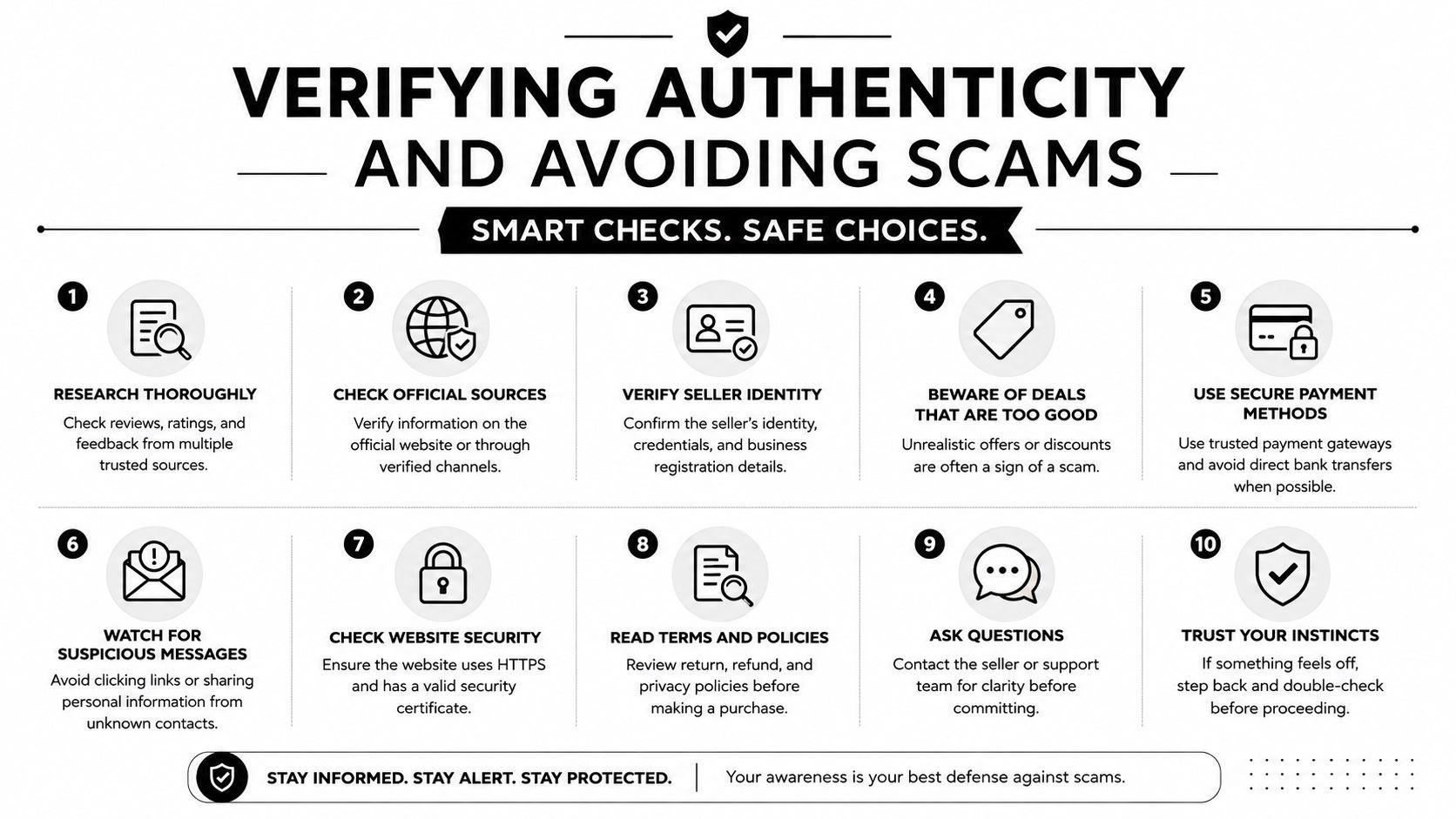
Counterfeit NFTs usually borrow the visual style of a real project and rely on buyer impatience. The first check is the contract address, then the creator profile, then the official social links that point back to the same collection. If the project's website, marketplace page, and social channels don't converge on the same address, don't buy.
Community signals matter too, but not in the shallow follower-count way people assume. A noisy timeline can still hide a fake collection, while a smaller community with consistent on-chain activity and recognizable moderators may be far safer. That's why holder distribution, sale history, and contract ownership are more useful than vanity metrics.
If you want a separate angle on spotting manipulated visuals in marketplace listings, identify fake product images is a practical resource for understanding how image fraud shows up in online commerce. It's not an NFT-specific tool, but the habit of checking whether an image is reused or fabricated carries over well.
Watch the approval flow
The most damaging scams often don't steal through the listing itself. They trick buyers into signing permissions that hand over more control than the purchase requires. That's why token approvals deserve as much attention as price and rarity, especially on unfamiliar sites or freshly launched collections.
A few warning signs deserve immediate skepticism:
- Unrealistic pricing: a blue-chip-looking asset priced far below the surrounding market usually needs a second look.
- Urgency pressure: countdown language and “last chance” prompts are classic manipulation cues.
- Unknown domains: if the official links don't point to the site you're using, stop.
- Contract mismatch: if the contract address differs from the verified collection, walk away.
For a deeper scam-avoidance checklist, the guide on how to avoid crypto scams gives useful broader context. In NFT buying, the principle is simple, trust the chain data more than the marketing.
Post-Purchase Management and Tax Considerations
Buying the NFT is only the first step. After the transaction confirms, the work shifts to custody, record-keeping, and deciding whether the asset belongs in long-term storage or active rotation. Once the NFT appears in the buyer's wallet or profile after blockchain confirmation, that is the point where the new buyer relaxes, even though the security work should start there.
Store the asset like it can be targeted
If the NFT has meaningful value, self-custody deserves serious attention. A hot wallet is fine for experimentation and low-stakes collecting, but a hardware wallet is the stronger setup for assets you would hate to lose. The practical trade-off is clear, convenience makes buying easier, while the same browser wallet can also make careless approvals easier.
Record-keeping matters just as much. Keep the transaction hash, the marketplace name, the chain, the collection contract, and the purchase price in one place so you can track cost basis later. That becomes even more important if you have bought across multiple chains or paid in different assets, because your spreadsheet ends up doing the memory work when you later review gains, losses, or transfer history.
Treat resale as a separate decision
Royalty structures, liquidity, and wallet security all affect the post-purchase choice to hold or sell. Some NFTs are worth keeping for access or community utility, while others are better treated as tradeable inventory. The mistake is assuming every purchase needs a resale plan on day one.
For tax tracking and transaction categorization, a comparison resource like Allied Tax Advisors crypto comparison can help you think about software and workflow before tax season gets messy. The point is to capture data now, not reconstruct it later from wallet history and marketplace emails.
If you only remember one thing after the purchase, remember this. Ownership without records is just a future headache with a profile picture attached.