Layer 2 Scaling Solutions: Escaping Ethereum’s High Fees

You try to swap a token on Ethereum, mint an NFT, or make a small in-game purchase. The wallet pops up with a gas fee that feels absurd relative to what you're doing. The transaction itself may be simple, but the network is charging you like you're filing paperwork in the most expensive office in town.
That frustration is the reason Layer 2 scaling solutions matter.
They aren't a niche optimization anymore. Ethereum Layer 2 networks now process over 1 billion transactions per month, which is 11 to 12 times Ethereum mainnet's transaction volume, according to reported L2Beat-based data on Layer 2 activity. Their rise accelerated after Ethereum's Dencun upgrade in March 2024, when EIP-4844 introduced blob transactions and cut Layer 2 transaction costs by 90 to 95% compared with prior levels, as described in that same Dencun and Layer 2 cost overview.
That changes the practical meaning of Ethereum. Mainnet no longer has to be the place where every user action happens. It can act more like the final court of record, while faster environments handle the day-to-day activity for DeFi, NFT trading, Web3 apps, and blockchain games.
For users, that often means lower fees and smoother interactions. For developers, it means products that finally make economic sense.
Table of Contents
- Introduction Beyond Ethereum's Limits
- The Core Idea Behind Layer 2 Architecture
- A Tale of Two Rollups Optimistic vs ZK
- Meet the Major Players A Layer 2 Ecosystem Tour
- Practical Magic L2s for Gaming NFTs and DeFi
- Security Bridges and Decentralization Trade-Offs
- Conclusion The Future is Layered
Introduction Beyond Ethereum's Limits
Ethereum became the default home for smart contracts because it offered something Bitcoin didn't aim to provide. Programmable money, composable apps, and an open environment for DeFi, NFTs, and tokenized assets. The trade-off was always capacity.
When too many people try to use the same base layer, prices rise. That's manageable for large trades or high-value settlement. It's terrible for routine actions. A game can't expect players to pay premium settlement-layer fees for every move. An NFT project can't build a healthy user experience if minting turns into a gas war. A DeFi strategy falls apart if every adjustment costs more than the yield it aims to earn.
That's why Layer 2s moved from “interesting scaling idea” to core Ethereum infrastructure. The key change isn't just lower fees. It's that Ethereum can keep its role as a secure base layer while specialized networks handle far more day-to-day execution.
Practical rule: If an action is frequent, low-value, or user-facing, it probably shouldn't run directly on Ethereum mainnet unless there's a strong reason.
This is also why Layer 2s matter beyond Ethereum itself. They shape how people think about Web3 architecture more broadly. Bitcoin remains the reference point for hard money. Ethereum remains the leading programmable settlement layer. Layer 2s are what make that programmability usable at scale for actual products.
The Core Idea Behind Layer 2 Architecture
A useful way to read Layer 2 architecture is to split blockchain work into two jobs. One system executes lots of user actions cheaply. Another system settles the final result and enforces the rules if something goes wrong.
On Ethereum, Layer 1 is the settlement layer. Layer 2 handles most execution.
For a game, that means player actions can happen on the Layer 2 instead of competing with every swap, mint, and liquidation on mainnet. For an NFT app, it means minting and trading can feel closer to a normal consumer app, while Ethereum still anchors the outcome. The point is not just speed. The point is putting expensive security where it matters most, then using cheaper blockspace for routine activity.
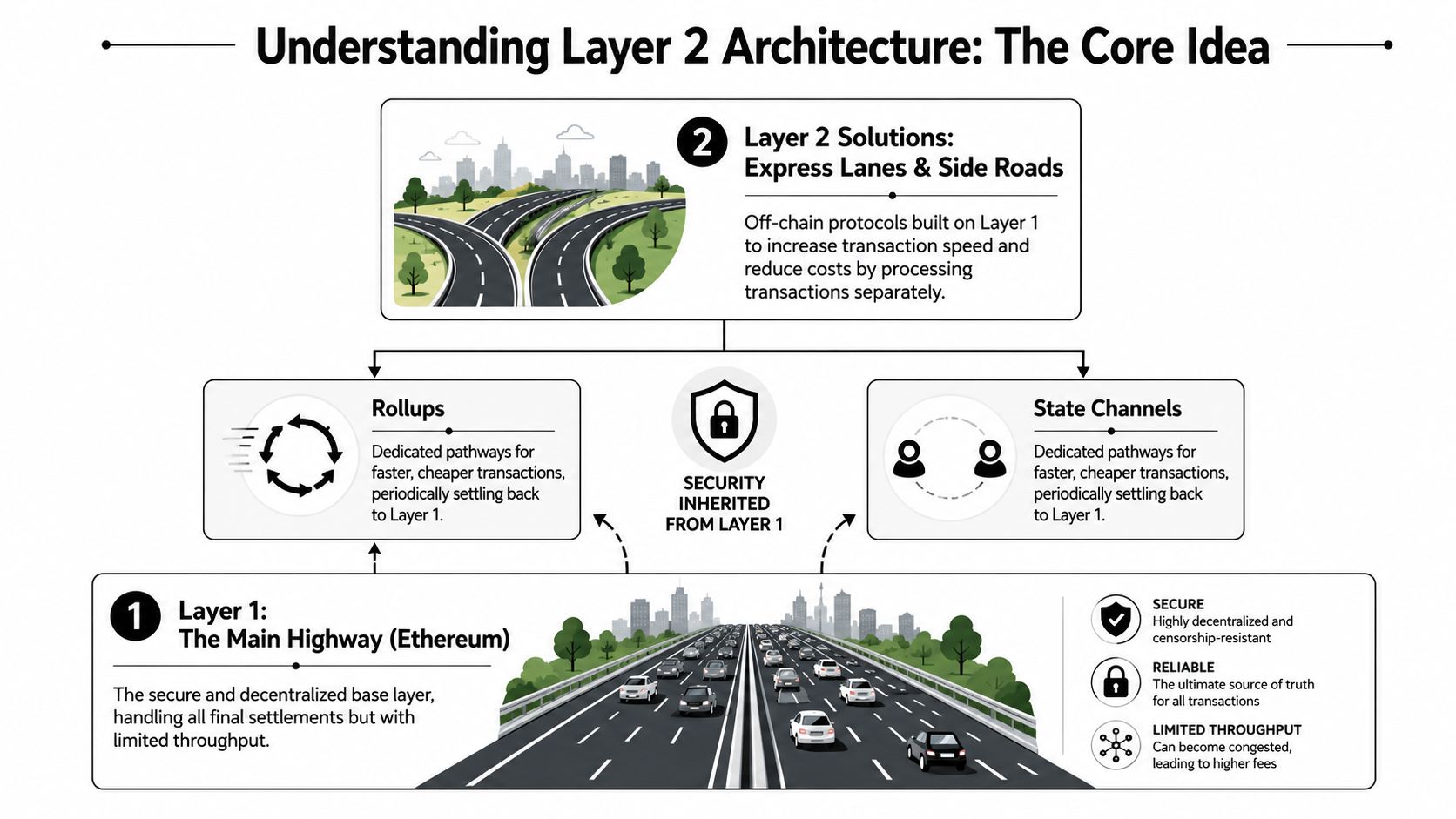
The clean analogy is a retail payment processor that settles to a bank later in batches. Customers tap their cards all day. The bank does not record each tap as a separate, high-friction event in the most expensive way possible. It records the net effect with strong finality. Rollups apply a similar idea to smart contract execution.
That distinction clears up a common misunderstanding about “off-chain.” Off-chain does not automatically mean “trust me, it's somewhere else.” In a rollup design, the Layer 2 still depends on Ethereum for settlement and security guarantees. Users may interact with another network day to day, but the system is built so Ethereum can confirm, reject, or enforce the final state according to the rollup's rules.
Here is the rough flow developers should keep in mind:
- Users transact on the Layer 2. Swaps, NFT mints, in-game purchases, and contract calls happen there.
- The Layer 2 batches many actions together. This spreads one mainnet settlement cost across many users.
- The batch is posted back to Ethereum with supporting data or proof. The exact format depends on the rollup design.
- Ethereum recognizes the updated state once the rollup's verification process is satisfied.
That batching model is why cost changes so much in practice. If a game needs thousands of small actions, or an NFT platform expects bursts of minting activity, pushing each action directly to Ethereum mainnet is like sending every grocery item in its own armored truck. Rollups group those items into one secured shipment.
The trade-off is that cheaper execution does not remove coordination costs. Users still have to choose the right Layer 2, bridge assets onto it, and sometimes deal with liquidity being split across multiple networks. If your NFT collection lives on one rollup and the deepest marketplace liquidity is on another, the low transaction fee is only part of the story. Architecture affects user flow, market depth, and exit paths.
That is why Layer 2 design matters beyond abstract throughput. It changes the economics of real products. A game usually values very low fees and fast in-app actions more than immediate mainnet withdrawals. A high-value NFT marketplace may care more about proof systems, bridge assumptions, and where buyers already hold liquidity. The core idea stays the same in both cases. Execute many actions cheaply on Layer 2, then use Ethereum as the final settlement anchor.
A Tale of Two Rollups Optimistic vs ZK
A player finishes a match, earns a skin, and wants to list it right away. The transaction needs to be cheap enough that a $5 item still makes sense to trade, and final enough that neither the player nor the marketplace worries about reversal risk. That is where the split between Optimistic and ZK rollups starts to matter.
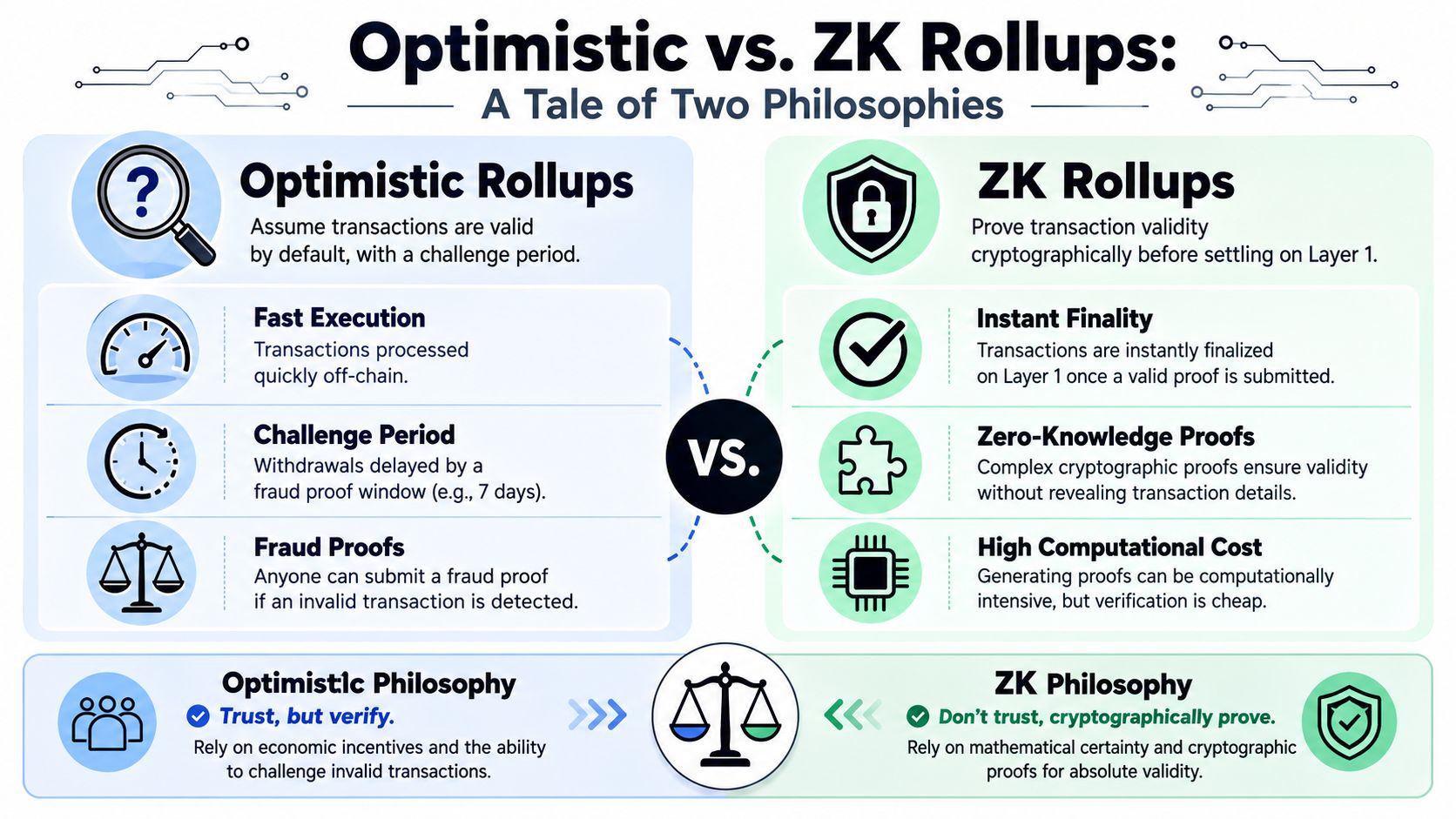
Both rollup types batch activity off Ethereum and settle back to mainnet. The difference is how they convince Ethereum that the batch is valid.
Optimistic rollups use dispute periods
Optimistic rollups such as Arbitrum and Optimism post transaction data to Ethereum and assume the result is correct unless someone challenges it. CoinMarketCap Academy's overview of Layer 2 verification models describes this as a fraud-proof approach.
A courtroom analogy fits well. The result is accepted provisionally, then a challenge window gives watchers time to prove fraud if the batch was wrong.
That leads to a practical profile:
- Fast and low-cost activity inside the rollup
- Strong compatibility with familiar EVM app patterns
- Slower withdrawals to Ethereum if you wait for canonical settlement
- Dependence on a functioning dispute system and active watchers
For gaming, this model often works well because players care most about cheap in-game actions and quick local confirmation. For NFTs, it depends on the workflow. Minting and trading inside one Optimistic rollup can feel smooth. Exiting to Ethereum, or moving value to another rollup, is where the delay becomes visible.
That delay is not a minor UX footnote. If a user bridges out through the native path, funds can be tied up for days on many Optimistic systems while the challenge window passes. In practice, users often avoid that wait by using third-party liquidity providers or fast bridges, but that swaps time delay for added bridge and counterparty risk.
ZK rollups prove validity before settlement
ZK rollups use cryptographic proofs to show that a batch of transactions was executed correctly before Ethereum accepts the state update. The core idea is simple. Instead of waiting to see whether someone can prove fraud later, the system submits proof of correctness up front.
That gives ZK rollups a different set of strengths:
- Faster finality after proof verification
- No withdrawal delay caused by a fraud challenge period
- Stronger settlement guarantees per batch
- More demanding prover infrastructure and tooling
If you want the math behind that model, this guide to zero-knowledge proofs and how validity proofs work is a helpful companion.
For NFT markets, that proof-first design can be attractive because settlement certainty arrives sooner. For games, the picture is more mixed. Very high-frequency actions can still be cheap, but prover costs, proving latency, and developer tooling can shape what is economical to put on-chain versus what stays off-chain and only settles periodically.
The real trade-off is cost shape, not just speed
Beginner guides often stop at “Optimistic is simpler, ZK is faster.” That is too shallow for product decisions.
The better question is how each model handles your app's transaction pattern. A DeFi protocol may tolerate more expensive but fewer high-value actions. A game usually produces many tiny state changes. An NFT launch creates bursts of activity, then quieter periods. Those patterns interact differently with proof generation, calldata costs, withdrawal flow, and bridge design.
Optimistic rollups often make sense when developers want mature EVM compatibility and users mostly stay inside one ecosystem. ZK rollups can be cost-efficient when proof systems amortize well across lots of activity and when faster settlement matters to the product.
Bridging risk and liquidity fragmentation are part of the choice
Users do not experience a rollup in isolation. They experience deposits, exits, marketplaces, wallets, and where their counterparties already hold funds.
If your assets start on Ethereum and your game lives on one rollup while the strongest NFT marketplace sits on another, every move introduces friction. You may pay one fee to bridge in, another to move between ecosystems, and a spread or routing cost when liquidity is thin. Cheap execution on the rollup can be outweighed by expensive movement around it.
There is also risk concentration. If a user relies on the canonical bridge, the main cost is time. If the user relies on a fast bridge or external liquidity network, the cost is extra trust assumptions. In plain terms, the user is no longer relying only on Ethereum settlement and the rollup's own rules. They are also relying on the bridge design, its operators, and the depth of available liquidity.
For real products, that can be quantified operationally even without a universal number. Each additional bridge hop adds another contract system to trust, another point where liquidity can dry up, and another place where users can face slippage, delay, or a failed transfer path. That is why liquidity fragmentation is not just a market structure issue. It changes conversion rates, retention, and how quickly users can exit.
Which model fits which job
A useful shortcut is to match the rollup to the user journey.
- Gaming: Optimistic rollups often fit if the priority is low-cost, frequent actions and users rarely need immediate withdrawal to Ethereum. ZK rollups become more attractive when the game economy needs faster settlement or wants stronger proof-based guarantees around asset state.
- NFTs: ZK rollups can be appealing for marketplaces and high-value transfers where finality matters more. Optimistic rollups can still work well for minting communities and lower-stakes trading that stays inside one network.
- General app development: Optimistic rollups still appeal to teams that want EVM familiarity and broad ecosystem support. ZK rollups appeal to teams willing to work with younger tooling in exchange for faster settlement properties.
For users, the decision usually comes down to four concrete questions. What does it cost to transact, how long does it take to withdraw, where is the liquidity, and how many extra trust assumptions appear once bridging enters the picture?
For developers, there is a fifth question. Does this rollup stay cheap and usable when your product succeeds, not just when you test it with a small group of users?
Meet the Major Players A Layer 2 Ecosystem Tour
A team launching an on-chain game or NFT app usually discovers the Layer 2 market in a practical way. They are not choosing between abstract technologies. They are choosing where users will pay less, where liquidity already exists, and how much extra friction appears when assets need to move between chains.
That is why this ecosystem grew so quickly. Capital, users, and developer attention concentrated around a handful of networks because each one offers a different balance of cost, compatibility, finality, and distribution. As noted earlier, the broader L2 market held tens of billions of dollars in value through 2025. That level of activity matters because it affects where swaps clear, where NFT bids appear, and where a game studio can expect players to keep funds without bridging every session.
A practical way to read the field is to separate two questions. First, which networks are easiest to build on today? Second, which ones create the fewest headaches for the specific app you want to run?
Leading Layer 2 Networks at a Glance 2026
| Project | Rollup Type | Approx. TVL | Key Strengths | Primary Use Case |
|---|---|---|---|---|
| Arbitrum | Optimistic | Part of the broader multi-billion-dollar L2 ecosystem | Mature DeFi presence, broad EVM compatibility, strong developer adoption | General-purpose DeFi and apps |
| Optimism | Optimistic | Part of the broader multi-billion-dollar L2 ecosystem | Strong ecosystem vision, Ethereum alignment, app-friendly environment | General-purpose apps and DeFi |
| Base | Optimistic-style rollup ecosystem | Part of the broader multi-billion-dollar L2 ecosystem | Consumer-facing onboarding, exchange adjacency, growing app distribution | Retail-facing Web3 apps |
| zkSync | ZK rollup | Part of the broader multi-billion-dollar L2 ecosystem | Proof-based architecture, focus on scaling with cryptographic validity | Payments, apps, and evolving consumer use cases |
| Starknet | ZK rollup | Part of the broader multi-billion-dollar L2 ecosystem | Advanced ZK design, distinct developer stack, strong proof-centric identity | ZK-native applications and specialized scaling |
The table stays qualitative on individual TVL because this section does not cite a verified project-by-project dataset.
What these networks mean in practice
Arbitrum often attracts teams that want the shortest path from Ethereum mainnet habits to lower-cost execution. For DeFi, that usually means deeper liquidity and a larger base of users who already know the tooling. For games and NFT projects, the upside is familiar infrastructure. The trade-off is that assets and users can still end up split across multiple venues, especially once a project also deploys on another L2 for marketing reach or lower fees.
Optimism serves a similar general-purpose role, but many teams choose it because of the broader Superchain vision and shared standards across connected chains. That matters for developers who expect their app to live in a family of interoperable environments instead of a single chain silo. The catch is that interoperability on paper does not automatically remove liquidity fragmentation in practice. If a collection, game token, or stablecoin pool is thin on one chain, users still pay the price through worse execution or extra bridge steps.
Base stands out for distribution. It has become a natural option for consumer apps because onboarding can feel closer to a mainstream product flow than a crypto-native one. That is attractive for NFT drops, social apps, and games that care more about getting users in quickly than about serving advanced DeFi traders on day one. The trade-off is strategic. A project may gain easier user acquisition while still depending on outside liquidity hubs for deeper markets.
zkSync appeals to teams that want a proof-based system and faster finality characteristics than Optimistic rollups typically offer. That can matter for NFT marketplaces where users care about quicker confirmation, or for game economies that need state updates to settle with fewer waiting periods. Developers should still weigh cost patterns carefully. A proof-oriented design can be a strong fit for some workloads, but not every high-frequency app gets the cheapest path from it.
Starknet is usually the choice for teams that are comfortable adopting a more specialized stack to get deeper into ZK-oriented architecture. It often appeals to builders who are planning for long-term technical differentiation rather than the easiest possible migration from Solidity workflows. For mainstream product teams, that means a real trade-off. You may get architecture that aligns well with proof-centric scaling, but you also accept a steeper learning curve and a smaller pool of experienced developers.
One detail beginner guides often miss is how these differences show up in user behavior. A player who keeps $50 to $200 inside one gaming ecosystem may never notice withdrawal delays. A trader or NFT collector moving four figures across chains notices immediately. If the app lives on one L2, the liquidity lives on another, and the preferred marketplace sits on a third, each extra hop introduces bridge exposure, timing risk, and another point where prices can drift.
That is why “which L2 is best” is usually the wrong question. A better question is: where will your users keep assets most of the time, and how often will they need to leave?
Hiring patterns reflect how mature this space has become. If you want a concrete example of the production engineering behind these networks, this developer platform job listing at Offchain Labs shows the kind of infrastructure work Layer 2 teams now need to support at scale.
Practical Magic L2s for Gaming NFTs and DeFi
Layer 2s become easier to understand when you stop thinking about them as infrastructure and start thinking about user actions.
A DeFi trader wants to rebalance without paying mainnet-style fees. An NFT creator wants a mint that doesn't punish collectors. A game studio wants players to interact constantly without forcing them to treat each move like a high-stakes financial transfer.
Why gaming and NFTs stress test cost models
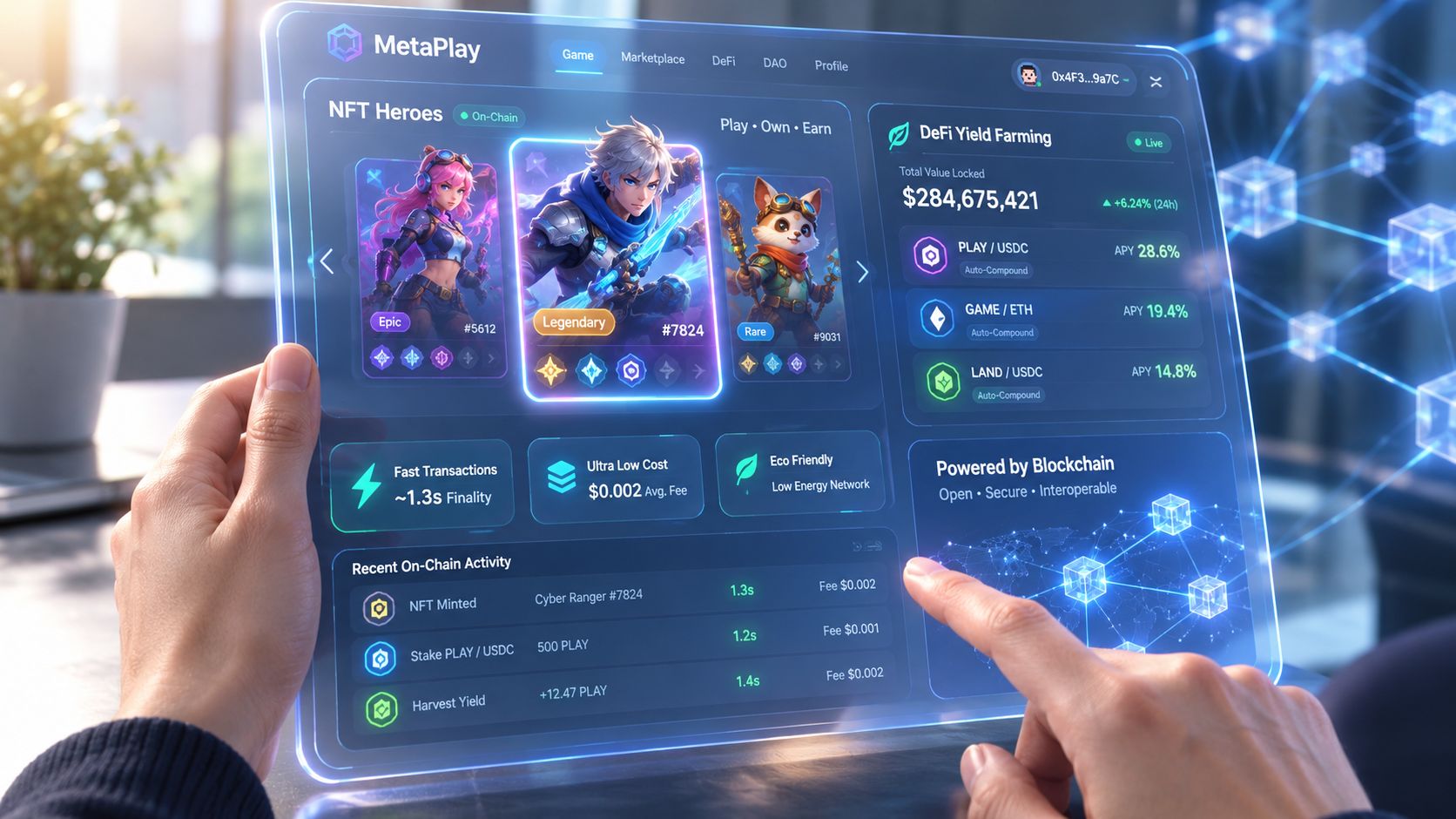
Gaming and NFTs are where simplistic Layer 2 narratives break down.
The common claim is that ZK rollups are better and cheaper. A more nuanced view exists. For high-frequency, small-value actions, recent benchmarks indicate ZK rollups can be 30 to 50% more expensive per transaction because proof generation is complex, while crypto gaming and NFTs grew 40% year over year in 2024 to 2025, making this distinction especially important for builders, according to recent benchmarking research on rollup cost efficiency.
That doesn't mean ZK rollups are bad for gaming or NFTs. It means transaction pattern matters.
A few examples make this concrete:
- In-game micro-actions: If players are crafting, moving assets, upgrading items, or making frequent low-value interactions, per-action cost sensitivity is severe.
- Large NFT mint events: Cost predictability matters as much as low average fees. You want the network to stay usable during bursts of activity.
- Marketplace activity: Users care about the full loop, not just minting. Listing, canceling, bidding, and transferring all add up.
If you're building in this area, this Web3 application development guide is a useful way to think about the broader app architecture around those choices.
Where DeFi gets immediate value
DeFi often benefits from Layer 2s more directly because users are already comfortable moving between apps and chains if the savings are meaningful.
On a good Layer 2, strategies that feel wasteful on mainnet become viable again. Smaller swaps make sense. Routine portfolio maintenance gets less punitive. More complex smart contract workflows stop feeling like luxury operations reserved for whales.
Don't choose a rollup based on ideology alone. Choose it based on the shape of user behavior your app creates.
Here's a quick decision frame:
| Use case | What matters most | Likely concern |
|---|---|---|
| Fast-paced game actions | Lowest possible cost per small interaction | Proof-generation overhead or UX friction |
| NFT mint and trading | Predictable fees during surges | Marketplace liquidity and bridge friction |
| DeFi execution | Liquidity depth and app composability | Fragmented capital across networks |
A short visual refresher helps if you want the user-facing version of the story:
Choosing for product fit not ideology
Developers sometimes debate Optimistic versus ZK as if one architecture will win every category. Real products don't work that way.
A crypto game might prefer the environment with the lowest practical cost for repetitive actions. An NFT ecosystem may care more about wallet support, creator tooling, and community presence. A DeFi protocol may put liquidity access above everything else. The right Layer 2 is often the one whose trade-offs line up with the user journey, not the one with the cleanest theory.
Security Bridges and Decentralization Trade-Offs
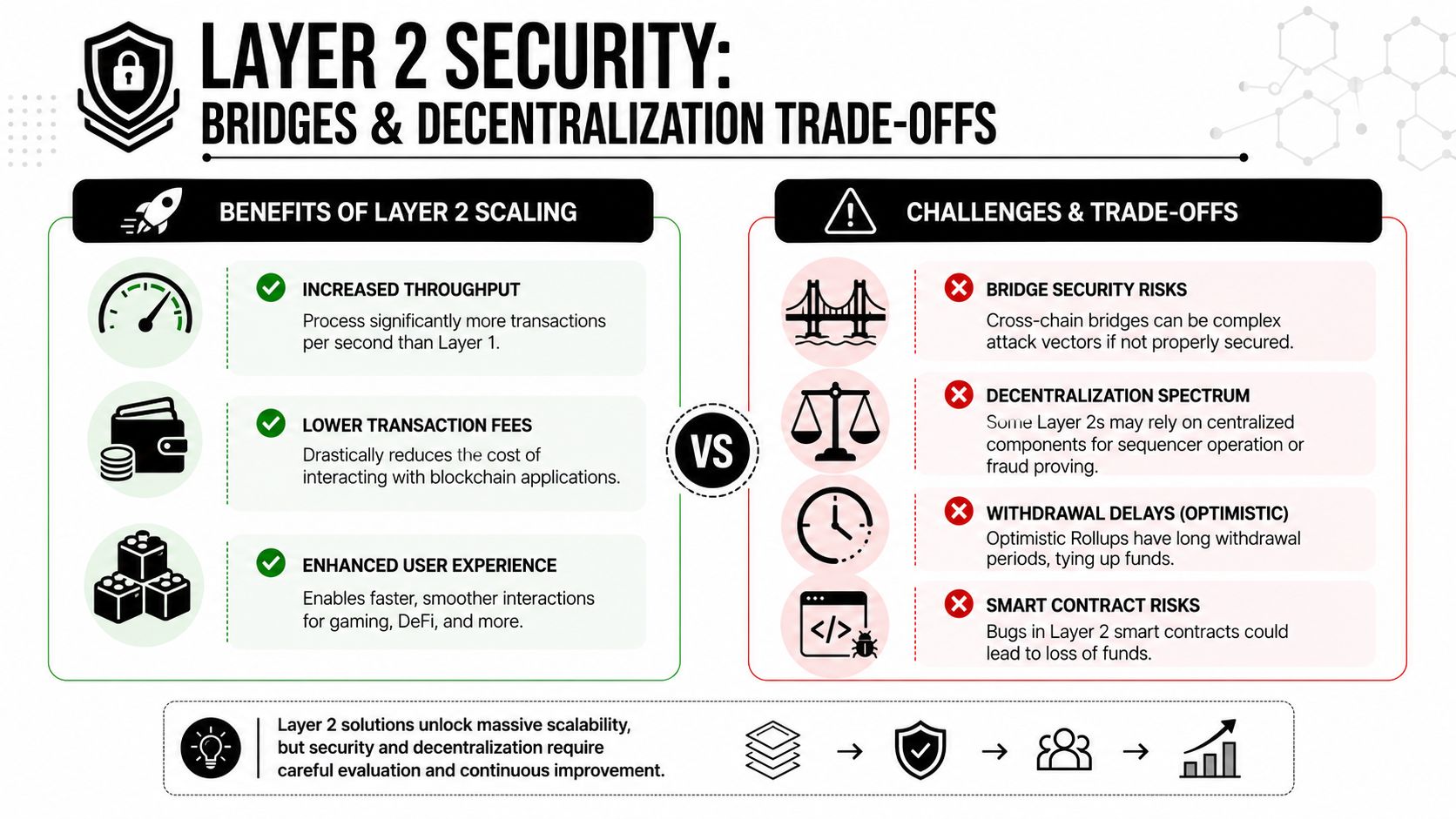
The strongest beginner articles explain why Layer 2s are useful. The better ones also explain where people get hurt.
Bridges are the sharp edge
Once you have many Layer 2s, assets need to move between them. That usually means a bridge. Bridges are useful, but they also widen the attack surface.
The risk isn't hypothetical. Cross-chain bridge exploits and liquidity fragmentation have caused over $2 billion in losses since 2021, and the current ecosystem spans 20+ Layer 2 networks, according to Starknet's discussion of Layer 2 bridging risk and fragmentation.
That single fact should change how users think about “cheap transactions.” A low fee doesn't help if the path you used to move assets carries hidden operational risk.
If you actively move funds across networks, this cross-chain swaps guide is worth reviewing before treating bridging as routine.
Liquidity fragmentation is a usability problem
Fragmentation sounds abstract until you feel it in practice.
You hold one asset on one Layer 2, but the app you want is on another. The best NFT market for a collection is on a different network. The DeFi pool with the best depth sits elsewhere. Suddenly the ecosystem feels less like one Ethereum and more like a cluster of semi-connected cities.
That creates practical friction:
- Capital gets stranded. Funds may be usable, but not where you need them.
- Users pay attention to routing again. Good products are supposed to hide infrastructure complexity, not expose it.
- Price and liquidity quality vary by network. The same token can feel like a different market depending on where you access it.
Safety habit: Treat every bridge interaction as a separate risk decision, not as a routine transfer step.
Decentralization is still a spectrum
There's another trade-off that gets less attention than it should. Not every Layer 2 is equally decentralized today.
Some rely on more centralized components in sequencing or operations than Ethereum users may expect. That doesn't automatically make them unsafe, but it does mean the phrase “secured by Ethereum” needs careful interpretation. Security inheritance exists on a spectrum shaped by data availability, proof systems, governance, upgrade controls, and who can operate critical infrastructure.
For users, the takeaway is simple. Don't evaluate a Layer 2 only by cost and speed. Check the bridge path, withdrawal model, operational maturity, and how much trust the system still places in a small set of actors.
Conclusion The Future is Layered
Ethereum scaling no longer looks like a single-chain race to make the base layer do everything. It looks like a stack.
That's the important shift. Ethereum increasingly acts as the secure settlement foundation, while Layer 2 networks handle the activity users experience. For DeFi, NFTs, gaming, and other Web3 products, that design makes blockchain applications usable in a way the base layer alone often can't.
The trade-offs are real. Optimistic and ZK rollups don't optimize for the same things. Bridges introduce risk. Liquidity is still fragmented. Some networks remain more centralized than their marketing suggests.
But the direction is clear. A layered model gives Ethereum room to stay secure while supporting much broader application demand. If better interoperability, cheaper data availability, and cleaner user experience keep improving, blockchain stops feeling like specialist infrastructure and starts behaving more like mainstream internet infrastructure with verifiable settlement built in.
If you want more clear, balanced breakdowns of Ethereum, DeFi, NFTs, crypto gaming, and the practical realities of Web3, explore Coiner Blog. The site focuses on helping readers understand both the upside and the trade-offs without hype or empty predictions.
1 Comment