
Is Bitcoin Halal? a Practical Guide for Muslim Investors
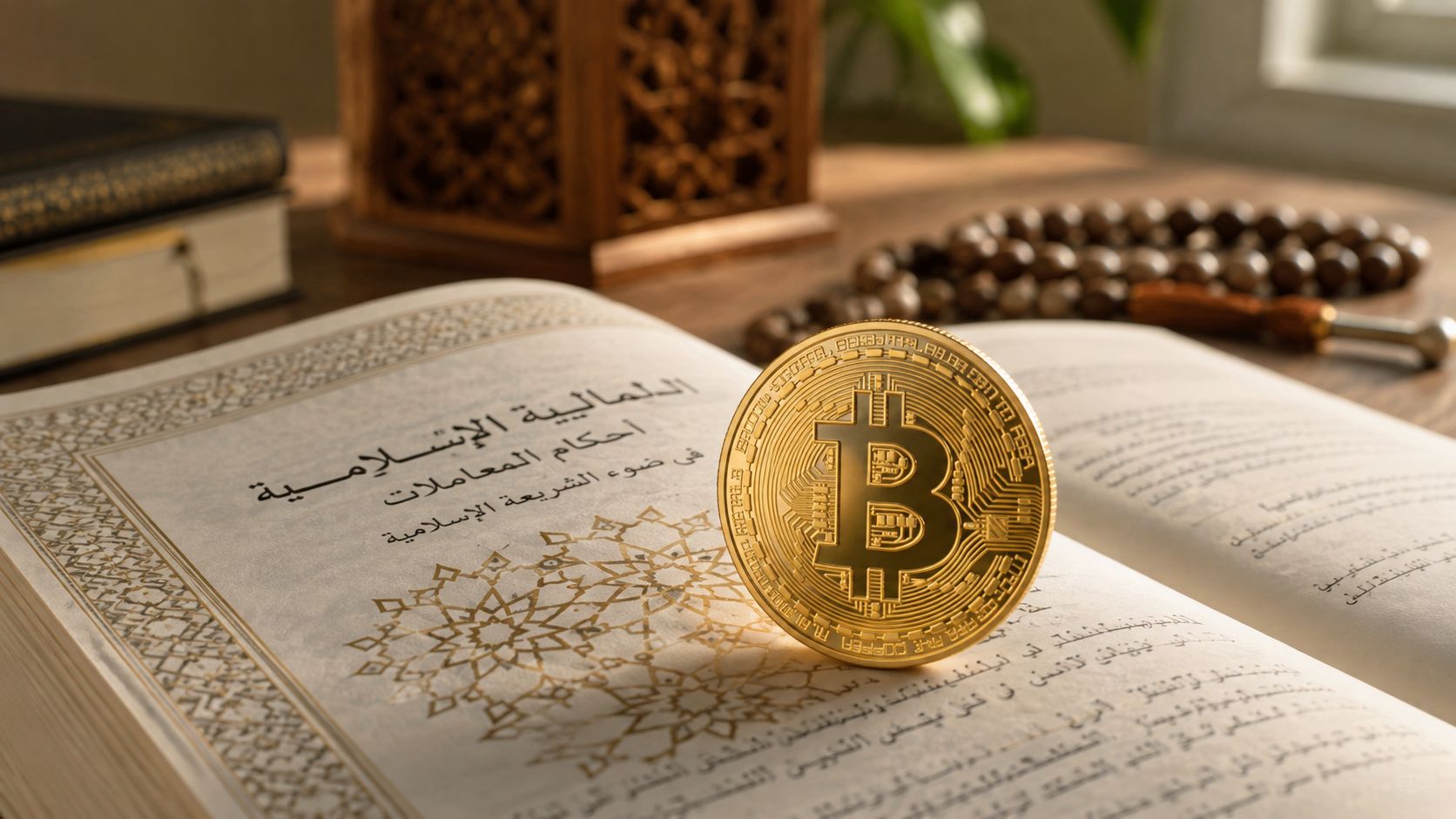
There's no single global ruling on whether Bitcoin is halal. Contemporary scholarship is split roughly 54% to 46%, and the dispute isn't just what Bitcoin is, but how it's used.
A Muslim saver can buy a little Bitcoin and still be left with the same question: does that count as a faith-friendly asset, or does the way it moves through the market make it impermissible? The honest answer is that is Bitcoin halal is not a yes-or-no question with a universal answer, because the debate turns on spot ownership, borrowing, lending, and yield products, not only on the coin itself.
Table of Contents
- Why Muslims Are Asking Whether Bitcoin Is Halal
- The Shariah Rules That Decide Crypto's Status
- What Major Scholars and Fatwa Bodies Have Said
- How Bitcoin's Economics Shape the Debate
- A Practical Halal-Checklist for Using Bitcoin
- Recommended Resources for Personal Guidance
- Key Takeaways for Muslim Bitcoin Investors
Why Muslims Are Asking Whether Bitcoin Is Halal
A Muslim who has watched Bitcoin move from a niche internet asset into a widely discussed store of value often asks a very practical question, not a theoretical one. If the goal is to buy a small amount and hold it, is that different from trying to trade it like a casino chip?
That distinction matters because Islamic finance does not use one central church-style authority. Scholars and fatwa bodies reach different conclusions by prioritizing different Shariah principles, so the same asset can be judged differently depending on whether the scholar focuses on uncertainty, speculation, utility, or ownership.
Why the binary answer breaks down
The global debate is already split. One reviewed analysis found that 54% of fatwas classify Bitcoin through the lens of gharar and maysir, which pushes them toward prohibition, while 46% allow it under conditions such as regulated use and non-speculative holding, and that same analysis reports a 10-year average annual volatility of 42% as a central concern in the ruling debate (research on Islamic Bitcoin fatwas). That means many scholars are not arguing about a fantasy asset. They're arguing about whether the structure of use crosses Shariah lines.
Practical rule: the most useful question isn't “Is Bitcoin halal in theory?” It's “Is this specific Bitcoin setup built around spot ownership and real possession, or around speculation and interest-like returns?”
What this guide does, and doesn't, settle
A careful answer needs to stay modest. This article won't hand you a single universal verdict, because the Islamic world doesn't offer one. It does, however, give you a decision framework so you can compare Bitcoin uses against the principles scholars apply.
That framework is especially important for readers who are not asking about the entire crypto market. They may only want to know whether a regulated spot purchase, direct self-custody, or simple long-term holding fits within the views they already trust. Others may be looking at futures, lending, or yield products, and those are much harder cases.
For readers who want a broader market background on why Bitcoin keeps attracting attention in the first place, a market explainer like Why Bitcoin Is Rising can help frame the economic side before you evaluate the Shariah side.
The Shariah Rules That Decide Crypto's Status
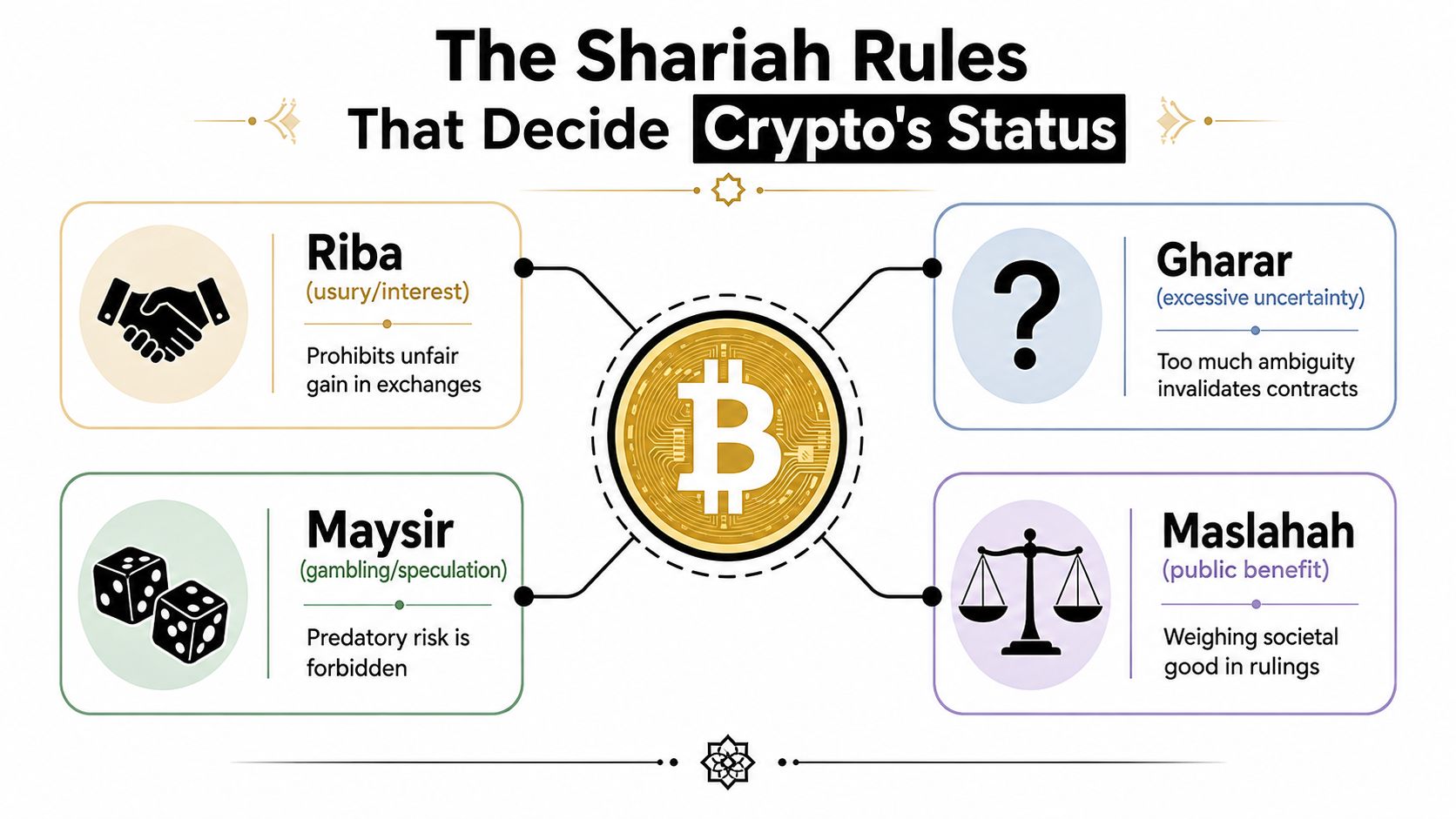
Bitcoin is usually assessed through a small set of Shariah concepts, and those concepts are more concrete than many people expect. If you can understand these four tests, you can evaluate most crypto products without guessing.
Riba, gharar, maysir, and mal in plain language
Riba is the easiest to recognize. It means interest or usury, so a product that pays or charges a built-in return for time, rather than for genuine trade or ownership, raises immediate concern. In crypto, that often shows up in interest-bearing accounts, lending wrappers, or yield structures that resemble fixed return promises.
Gharar means excessive uncertainty or ambiguity. A simple analogy is buying something when you can't reasonably tell what you're getting, or whether the contract's terms are stable enough to be fair. In crypto, scholars often connect gharar to tokens with unclear rights, opaque supply schedules, or assets whose pricing is so unstable that the contract starts to look lopsided.
Maysir is gambling-like speculation. It's not the same as every risk-taking investment, but it does describe arrangements where the main logic is betting on price movement rather than engaging in a real exchange of value. That's why highly borrowed trades, futures, and short-term speculation often draw stronger objections.
Mal is property, or something recognized as having legitimate value. In Islamic legal reasoning, that matters because an item does not need to be physical to count as an asset. A digital asset can still be debated as mal if it has recognized utility, can be possessed, and isn't just an empty claim.
How those rules map to crypto behavior
A useful way to think about crypto is to ask four questions before you buy anything. Does the product involve interest-like return? Does it create excessive uncertainty? Does the profit depend mainly on speculation? And does the asset qualify as recognized property with legitimate use?
That same lens is why Bitcoin is debated differently from many other tokens. A spot purchase of a known asset is not the same as borrowing into a perpetual futures position. A self-custodied coin is not the same as an interest-bearing wrapper. And a payment asset used in a real transaction is not the same as a bet on price direction.
For Muslims trying to stay within a conservative framework, the decision gets practical. If the product's return depends on time, or opaque synthetic exposure, the Shariah concerns increase. If it's a direct asset purchase with clear ownership, the analysis becomes more defensible, though still not universally settled.
What Major Scholars and Fatwa Bodies Have Said
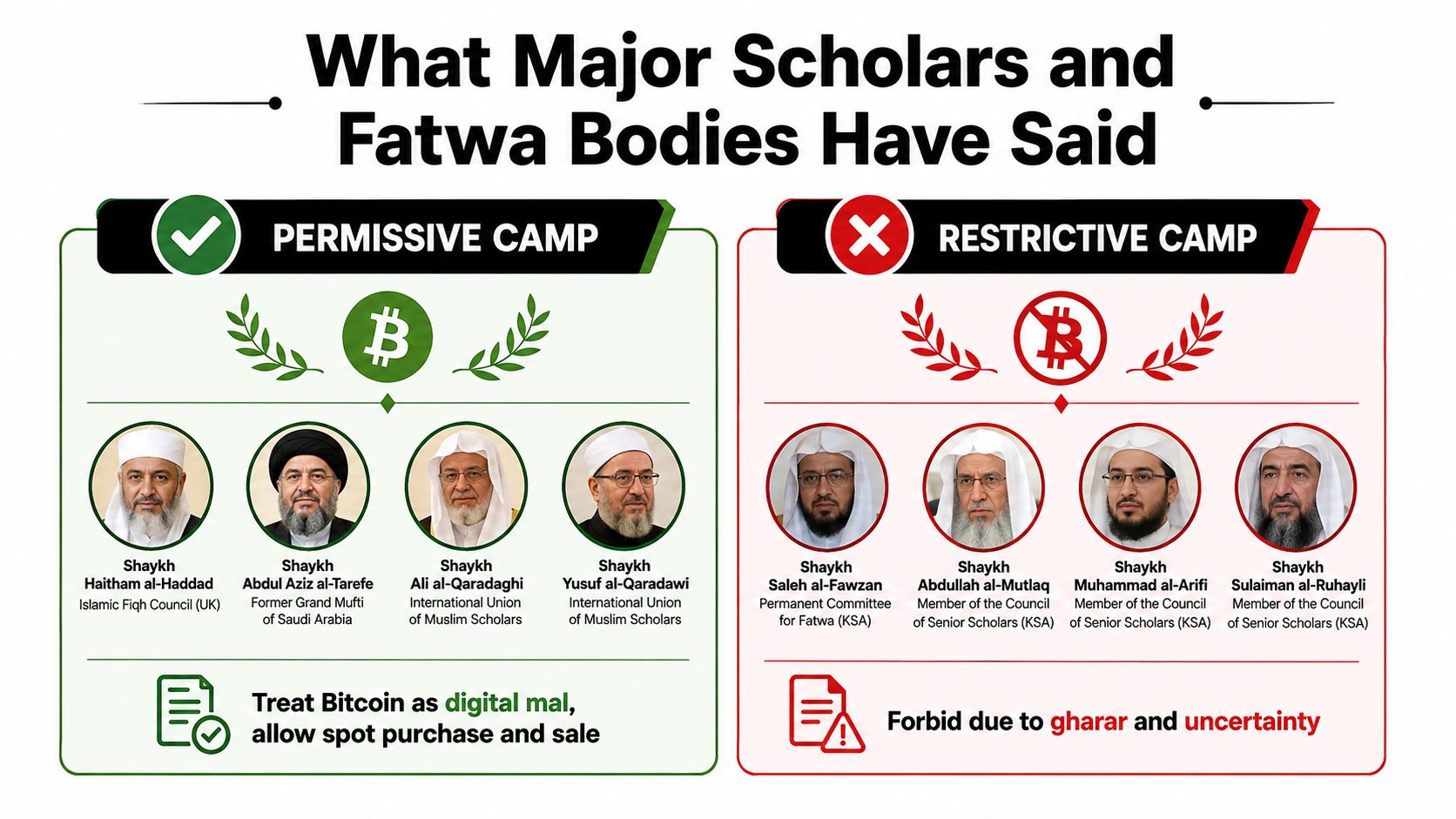
Bitcoin's Shariah debate has never been reduced to one authoritative voice. The disagreement is better understood as a map of camps, with each camp weighting the same facts differently.
The permissive and restrictive camps
The permissive camp generally treats Bitcoin as digital property, or mal, and says it can be bought and held if the structure is clean. That usually means spot purchase, direct ownership, and avoiding riba, maysir, and excessive gharar. The logic is straightforward, if an asset has recognized utility, can be possessed, and is not tied to prohibited mechanisms, then it may be treated more like property than like forbidden speculation.
The restrictive camp focuses on the opposite features. It sees high uncertainty, speculative behavior, and weak intrinsic grounding as reasons to prohibit or sharply limit Bitcoin. From that angle, Bitcoin's use in markets often looks too close to gambling-like price chasing to satisfy Shariah concerns.
Named rulings that show the split
The split is visible in formal positions. The Indonesian Ulema Council stated in November 2021 that cryptocurrency use as currency is haram and also rejected trading it as a commodity, while Malaysia's Shariah Advisory Council in 2020 classified major cryptocurrencies as commodities rather than currencies, which made spot trading more defensible in Shariah terms (Islamic finance comparison of Bitcoin rulings). Major bodies such as AAOIFI and the OIC Fiqh Academy still have not produced a single universal ruling as of 2026, which matters because the absence of consensus itself tells readers that the debate remains open (no consensus summary).
A ruling that addresses Bitcoin as a currency may not answer the same question as a ruling about Bitcoin as a spot-held asset.
Why readers get confused
Many articles flatten the issue into "Bitcoin is halal" or "Bitcoin is haram," but that skips the use-case problem. A scholar who objects to borrowed money, speculative wrappers, or interest-bearing structures may still be more open to simple ownership than a headline summary suggests.
That's why the decisive issue for investors is often not the coin name, but the transaction design. A spot purchase through a regulated venue, held directly, belongs in a different category from margin trading or yield lending. For a more detailed look at custody-related tradeoffs, Not Your Keys, Not Your Coin is a useful custody primer.
How Bitcoin's Economics Shape the Debate
Bitcoin's economics are a big part of why scholars disagree. They see the same network, but they interpret its scarcity, volatility, and real-world use through different Shariah lenses.
Scarcity supports one argument, volatility supports the other
Bitcoin has a hard supply cap of 21 million coins, and roughly 19.6 million BTC had been mined by early 2026, facts that supporters often use to argue that Bitcoin behaves like a scarce digital asset rather than an interest-bearing contract (Bitcoin supply and mining background). That scarcity is one reason some scholars are willing to discuss Bitcoin as a form of property.
But the same debate is shaped by the asset's price instability. The research brief cites a 10-year average annual volatility of 42%, and that statistic sits at the center of the gharar objection because it suggests a level of uncertainty that many scholars find hard to reconcile with ordinary money or stable commodities (volatility and fatwa analysis). The same study also reports a moderate negative correlation of r = –0.49 between volatility and permissive rulings, which is a plain-language way of saying that the more unstable Bitcoin looks, the less likely scholars are to permit it.
Utility matters too
Bitcoin is not just a theoretical object in the vacuum of legal discussion. The same analysis notes 300 million estimated global users in 2024 and documented commercial use cases in 160+ countries, which some scholars cite as evidence that Bitcoin has measurable economic utility and can function as mal in certain frameworks (global user and use-case analysis). That doesn't settle the halal question, but it stops the conversation from becoming purely abstract.
For readers thinking about transaction consequences, tax treatment can also matter in practice. A specialized guide like Bitcoinprofits tax insights can help you think through recordkeeping and reporting, even though tax compliance and Shariah permissibility are separate questions.
Investor takeaway: Bitcoin's economics do not answer the halal question by themselves. They explain why one scholar sees a scarce digital asset, while another sees uncertainty too wide to ignore.
Why the numbers change the ruling mood
The numbers pull in different directions. Scarcity, transparent issuance, and real usage support the asset-property argument. Volatility and speculative trading patterns support the prohibition argument.
That's why Bitcoin debates often sound repetitive, even when the reasoning is serious. People keep circling the same facts because those facts are doing the legal work. If the asset is treated mainly as a payment-like property, the permissive case strengthens. If it is treated mainly as a speculative instrument, the restrictive case strengthens.
A Practical Halal-Checklist for Using Bitcoin
For a Muslim investor, the core issue is usually not whether Bitcoin exists, but whether a particular setup respects the Shariah rules already discussed.
Clearly permissible and clearly problematic uses
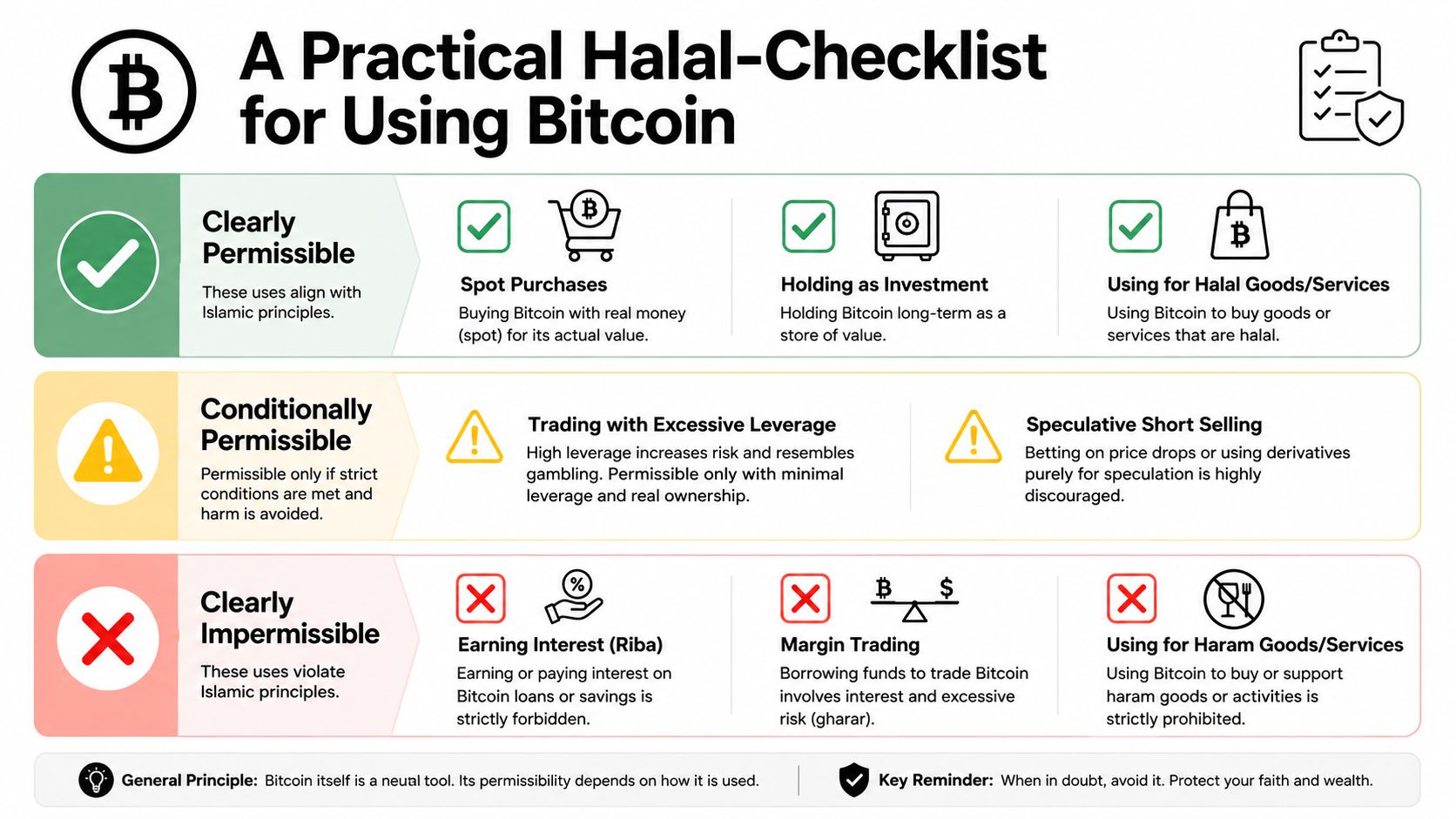
A spot purchase through a regulated custodian is the cleanest starting point for many permissive scholars, especially when the buyer takes direct ownership and doesn't borrow to fund the purchase. Direct self-custody in a hardware wallet is often viewed more favorably than leaving an asset inside a structure that pays interest or mixes it with other products.
Long-term holding is also easier to defend than active trading, because it looks more like ownership than betting. If the Bitcoin is used to buy halal goods or services, the use case stays tied to a real exchange rather than a synthetic profit machine.
On the other side, some activities are much harder to justify. Margin trading, futures, perpetual contracts, and lending Bitcoin for yield are widely treated as impermissible by cautious scholars because they introduce leverage, speculation, or interest-like return structures. Interest-bearing wrapped products fall into the same problem set, since the return mechanism, not just the underlying coin, drives the Shariah concern.
If you want a deeper look at buying and taking possession, How to Purchase Bitcoins Anonymously is relevant for privacy-minded readers, though privacy should never be confused with Shariah compliance.
A simple decision check
Before using Bitcoin, ask yourself these questions:
- Am I buying the asset directly? If yes, the use case is easier to defend than a derivative or synthetic product.
- Do I need borrowed money? If yes, the Shariah risk rises fast.
- Is there any promise of fixed or interest-like yield? If yes, the structure looks closer to riba than ownership.
- Can I explain the asset's utility without relying on pure price speculation? If not, the maysir concern becomes stronger.
- Does the token or wrapper have unclear terms, opaque supply, or hidden mechanics? If yes, gharar becomes a serious issue.
A separate caution applies to projects that market guaranteed returns, vague “passive income,” or structures that depend on new entrants paying old participants. Those are classic red flags, and they should trigger skepticism long before a halal label enters the conversation.
For broader payment-specific examples, even luxury spenders sometimes look at private jet crypto payments as a real-world illustration of how crypto gets used in commerce. The permissibility still depends on the underlying structure, not the prestige of the purchase.
Recommended Resources for Personal Guidance
A good Bitcoin ruling starts with the right authority, not the loudest post. The most useful guidance usually comes from sources that understand both Islamic jurisprudence and modern financial structure.
Who to consult first
If you live in a country with a recognized Shariah advisory council, that's often the best place to start because local rulings can reflect jurisdiction, regulation, and social context. Institutional bodies such as AAOIFI are also worth reading when you want a more structured Islamic finance framework, especially if you're dealing with custody, exchange products, or asset classification.
For individual questions, a scholar who knows your madhab, your local rules, and your actual use case is more valuable than a viral clip. A scholar can tell the difference between a spot purchase, a margin trade, and a yield wrapper, which matters more than many people realize.
How to read a fatwa critically
Look for three things. First, check whether the ruling discusses ownership, speculation, and yield separately. Second, see whether the scholar explains why Bitcoin is treated as currency, property, or a speculative instrument. Third, look for whether the answer is tied to a real market setup or just to a headline description of “crypto.”
If you want to build the habit of reading source material more efficiently, focused reading setup tips can help you process long articles and rulings without losing the thread. That matters because the best decisions usually come from slow reading, not fast sharing.
Key Takeaways for Muslim Bitcoin Investors
The cleanest way to think about is Bitcoin halal is not as a universal label, but as a use-case question. Bitcoin sits inside a real scholarly split, with permissive readings focused on digital property and direct ownership, and restrictive readings focused on uncertainty, speculation, and prohibited return structures.
The four Shariah tests, riba, gharar, maysir, and mal, give you a practical filter for any Bitcoin product. The same asset can look more or less acceptable depending on whether you're buying spot, holding directly, or entering margin, lending, or yield arrangements.
Bitcoin's scarcity and real-world use help explain why some scholars stay open to it, while its volatility explains why others stay cautious. That's why the best decision framework is narrower than a headline verdict and more honest about the details of use.
This article is for education, not personalized financial or religious advice. If Bitcoin is relevant to your own portfolio, speak with a qualified scholar who understands your tradition and your local context before you act.
Coiner Blog covers Bitcoin, Ethereum, DeFi, Web3, Layer 2 networks, tokenomics, and the fast-moving questions that matter to everyday crypto readers. If you want more plain-language guides that balance opportunity with risk, visit Coiner Blog and keep building your understanding from there.