
How to Set Stop Losses in Crypto a Professional’s Guide
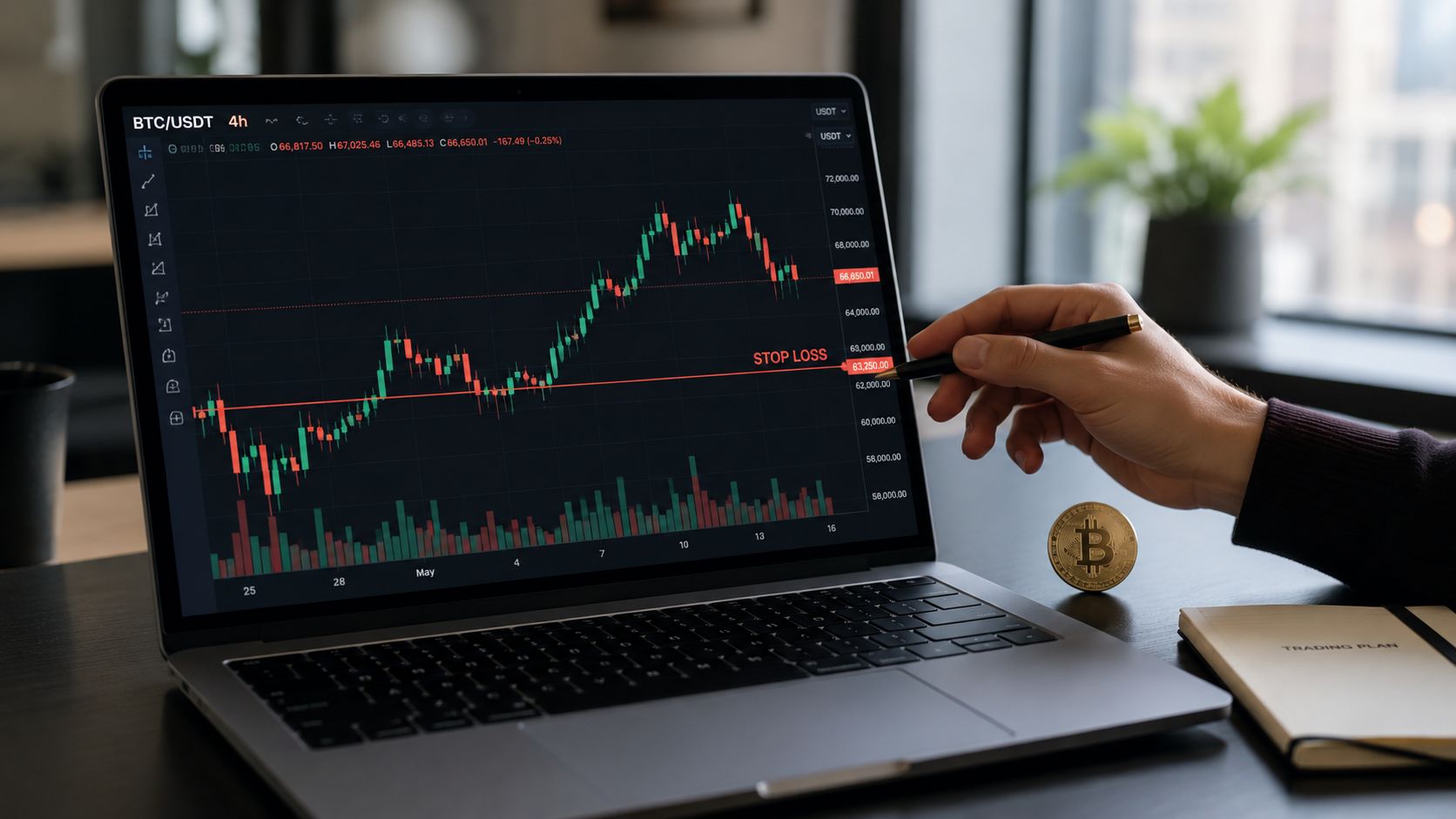
You're probably here because you've lived the same ugly sequence most crypto traders face. You buy a coin after a breakout, the chart looks clean, momentum is strong, sentiment on Crypto Twitter is loud, and then a violent wick hits your position in the middle of the night. Your unrealized gain disappears. Then your conviction turns into hope, and hope turns into a much bigger loss.
That cycle ruins more accounts than bad entries.
Crypto trades around the clock, liquidity shifts fast, and volatility changes from one sector to another. A large-cap asset behaves differently from a thin DeFi token, a fresh airdrop listing, or a speculative Web3 gaming coin with weak order book depth. If you want to stay in the game long enough to benefit from trends in DeFi, Layer 2 ecosystems, tokenized real-world assets, AI-integrated crypto projects, and the broader smart contracts economy, you need an exit plan before you enter.
Table of Contents
- Why Your Crypto Portfolio Needs a Non-Negotiable Exit Plan
- The Trader's Toolbox Choosing Your Stop Order Type
- Smart Placement Where to Actually Set Your Stop Loss
- The Holy Trinity of Risk Management Stops Position Sizing and Take Profits
- Advanced Tactics and Common Pitfalls to Avoid
- Your Shield in the Crypto Arena
Why Your Crypto Portfolio Needs a Non-Negotiable Exit Plan
A crypto flash crash doesn't ask for permission. It hits when funding is crowded, when liquidity thins out, or when traders pile into the same narrative and then rush for the exit together. One long wick can cut through every weak hand in the market before price even stabilizes.
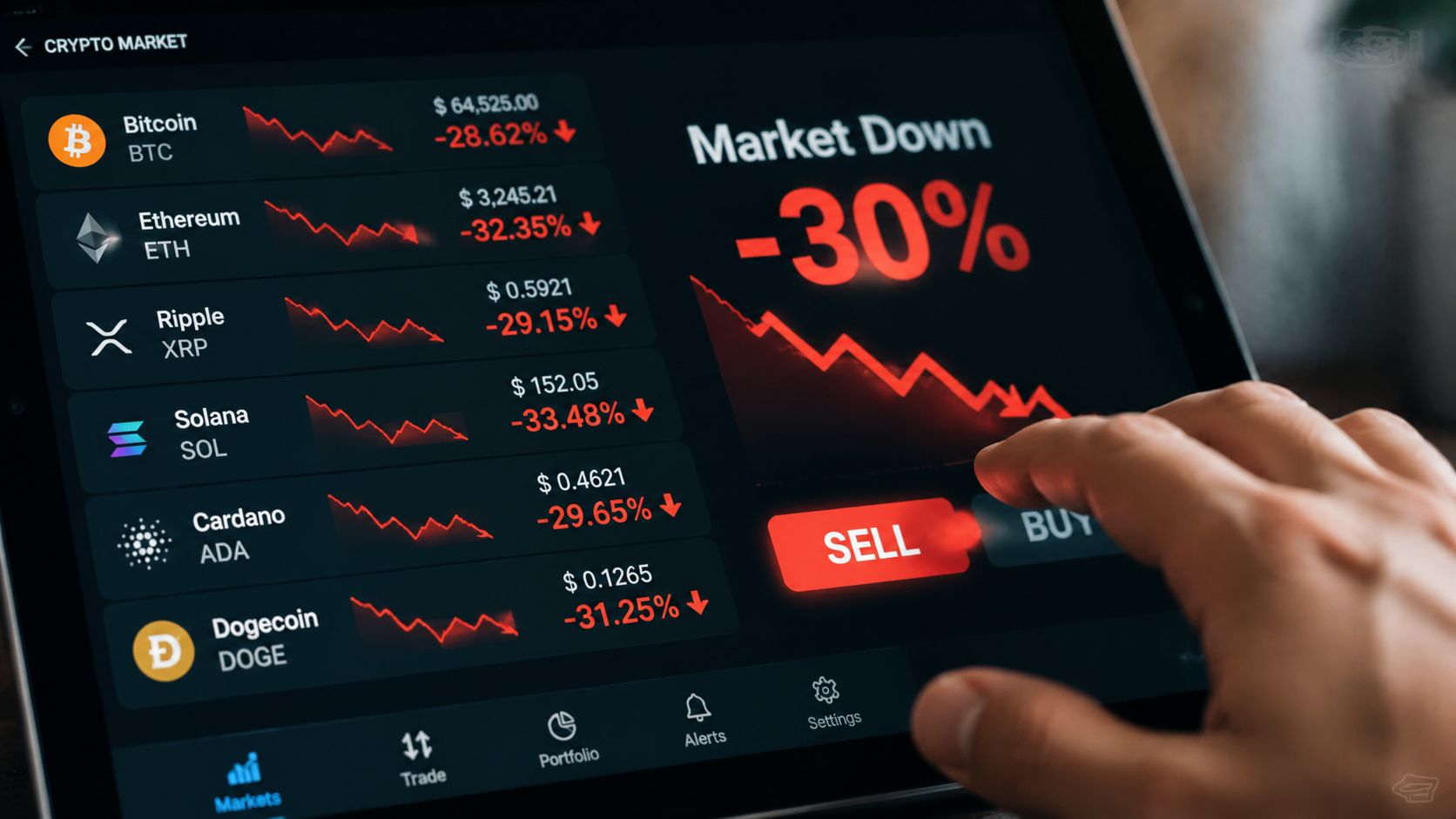
That's why a stop loss isn't a nice extra. It's survival gear. In a market where Bitcoin, altcoins, DeFi governance tokens, and Layer 2 ecosystem assets can all react differently to the same macro move, your portfolio needs rules that don't depend on your mood.
If you've ever held through a drawdown because you “still believed in the project,” you already know the enemy isn't only volatility. It's emotional delay. Traders freeze, widen losses, and talk themselves into staying in a broken setup because taking a small loss feels worse than absorbing a bigger one later.
The cost of trading without a predefined exit
Most losing trades don't become disasters instantly. They usually decay through a series of bad decisions:
- No hard stop: You tell yourself you'll exit manually.
- First drop ignored: You decide the move is just noise.
- Narrative defense: You lean on tokenomics, roadmap promises, or community hype instead of price action.
- Capitulation late: You finally sell after the market has already done the damage.
That sequence is common in bear phases and in chaotic altcoin rotations. It's one reason traders spend so much time trying to recover from preventable losses instead of preparing for the next high-probability setup. If you want perspective on how brutal those cycles can get, this breakdown of the cryptocurrency bear market is worth reading.
A stop loss protects more than capital. It protects your ability to think clearly on the next trade.
Why stop losses matter more in crypto than in slower markets
Crypto never closes. That changes everything.
A stock trader can step away after the bell. A crypto trader can wake up to a liquidation cascade, a bridge exploit, a regulatory headline, or a sudden shift in DeFi risk appetite. Add magnified positions, thin weekend liquidity, and aggressive market makers, and random-looking moves become routine.
A stop loss also gives you a cleaner way to participate in new themes without betting the account on each one. That matters when capital rotates from smart contract platforms to AI tokens, from GameFi to real-world asset tokenization, or from Ethereum mainnet activity to Layer 2 ecosystems. You don't need to predict every move perfectly. You need to survive the trades that don't work.
The Trader's Toolbox Choosing Your Stop Order Type
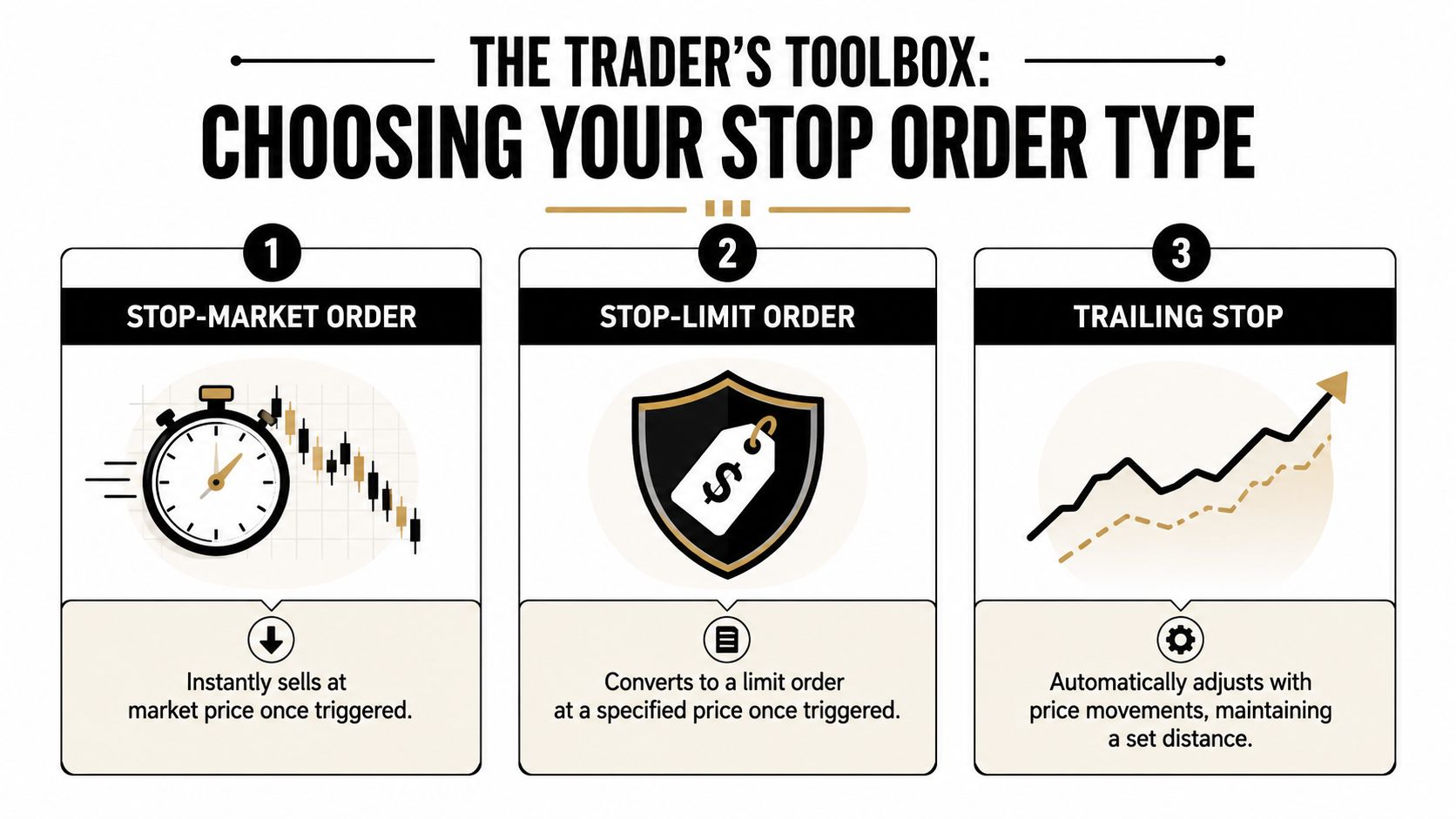
The first mistake many traders make is thinking all stop losses are the same. They aren't. The order type you choose changes how your exit behaves when the market gets messy, and crypto gets messy often.
Stop-market when execution matters most
A stop-market order triggers once price hits your stop level, then sells at the best available market price. It's the blunt instrument of risk management, but it does the main job well. It gets you out.
This is the order type I trust most when I care more about exiting than about exact price precision. If you're trading a fast-moving breakout in a volatile altcoin, execution usually matters more than trying to shave a tiny amount off the exit.
Best use cases include:
- Thin patience: You don't want to negotiate with the market.
- Fast selloffs: You expect price to move quickly once your level breaks.
- Momentum failures: The setup is invalid once a key level gives way.
The trade-off is slippage. In a violent move, your fill can land below the stop trigger. That's frustrating, but in a true breakdown, being out is often better than being stuck.
Stop-limit when price control matters more than certainty
A stop-limit order gives you more control. Once the stop is triggered, the exchange places a limit order instead of a market order. That means you set the minimum price you're willing to accept.
That sounds attractive, especially to traders who hate slippage. The problem is obvious in live crypto trading. If the market gaps through your limit price or slices down too fast, the order may not fill at all.
Use it carefully:
- Calmer market structure: Better for assets with steadier order flow.
- Price-sensitive exits: Useful when you won't accept a poor fill.
- Lower urgency setups: Less useful in panic conditions.
For many retail traders, stop-limit orders create a false sense of safety. They control price better, but they don't guarantee the exit.
Trailing stops for strong trends and profit protection
A trailing stop moves with price as the trade goes in your favor. It's a strong tool when a trend is healthy and you want to protect gains without capping upside too early.
This matters in crypto because the best moves often happen in bursts. A trailing stop can keep you in a trend on a strong Layer 2 token, a DeFi leader, or a narrative-driven AI coin while still enforcing discipline if momentum breaks.
Historical research summarized by Quant Investing on stop-loss rules found that a 15% trailing stop-loss produced the highest cumulative return of 73.91%, while a 20% trailing stop-loss produced the highest average quarterly return of 1.71% over an 11-year period. The same summary notes that trailing stops in the 15% to 20% range have historically offered a balance between protection and staying in long trends.
Practical rule: Trailing stops work better when they're wide enough to survive ordinary noise. Tight trailing stops often cut off the very trends you're trying to ride.
If you want a broader framework for matching tactics to market conditions, this guide to the best strategies for trading adds useful context.
Stop order types at a glance
| Order Type | Execution Certainty | Price Certainty | Best For |
|---|---|---|---|
| Stop-Market | High | Low | Fast exits in volatile markets |
| Stop-Limit | Lower | Higher | Traders who prioritize price control |
| Trailing Stop | Depends on setup and exchange behavior | Depends on trigger method | Trend-following and profit protection |
Smart Placement Where to Actually Set Your Stop Loss
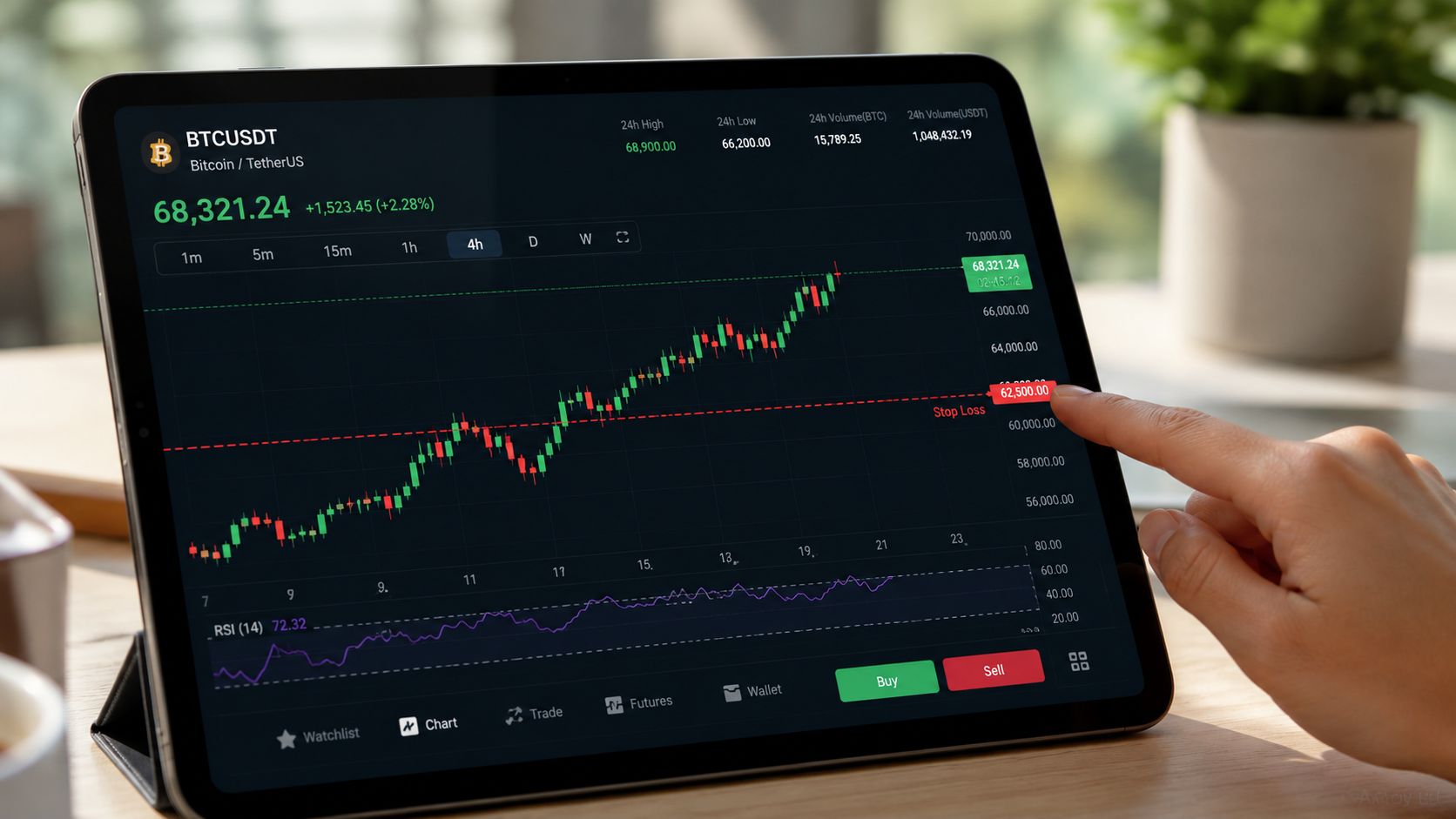
Choosing the order type is only half the battle. The bigger question is placement. A stop in the wrong place won't protect you well, no matter how clean the order ticket looks.
In crypto, bad placement usually comes from laziness. Traders drop a stop at an arbitrary round number, tuck it right under a visible line, or set it so close that normal volatility takes them out before the trade has a chance to work.
Fixed percentage stops as a starting framework
The simplest method is a fixed percentage stop. It's easy to understand and useful for beginners who need consistency before they need sophistication.
The weakness is obvious once you've traded crypto long enough. A fixed percentage doesn't know whether you're trading Bitcoin in a calm range, an Ethereum Layer 2 token during a breakout, or a thin DeFi microcap with messy liquidity. Market structure matters, and a static percentage ignores it.
Still, it has a place:
- For new traders: It creates a rule instead of improvisation.
- For simple portfolio systems: It helps standardize decisions.
- For traders with weak discipline: It removes room for emotional edits.
A solid external explainer on how to set stop loss orders is useful if you want to compare different placement styles and see how technical traders think about invalidation.
Support levels and invalidation zones
The better approach for many spot and swing traders is to place the stop below a clear support level. That means identifying a zone where buyers have stepped in before, then putting your stop beneath it with some breathing room.
Your stop should sit where your trade idea is wrong, not where your pain tolerance ends.
For example, if you're long a token because it reclaimed a prior support zone and held it on retest, the stop belongs below the level that invalidates that thesis. If price breaks that zone cleanly, the reason for the trade has changed.
Here's the catch. Don't place the stop exactly on the obvious line.
- Crowded levels attract attention: Many traders use the same visible support.
- Wicks happen: Crypto often probes beneath a level before reversing.
- Buffers matter: A little space reduces premature exits.
That's especially true in lower-liquidity sectors such as newer DeFi names, smaller GameFi projects, or ecosystem tokens tied to emerging Web3 narratives. Those charts often look tradable until the order book proves otherwise. If liquidity is something you're still learning to evaluate, this guide on the liquidity of cryptocurrency helps frame why some stops fail because the market structure is thinner than it looks.
ATR-based stops for volatile crypto markets
Volatility-based placement is where many traders become far more consistent. One practical method used by technical traders is to anchor the stop just below a clearly defined support level or place it one ATR beyond the trade's invalidation point, as discussed in this technical stop-loss explanation on YouTube. The ATR-based approach is designed to avoid getting stopped out by routine volatility.
That idea fits crypto well because volatility isn't a bug. It's the environment.
If you trade assets across different sectors, ATR-based thinking helps you adapt:
- Large-cap coins: Usually need a different buffer than small-cap altcoins.
- DeFi and governance tokens: Often need wider room because they swing harder.
- Narrative-driven tokens: AI, RWA, or new Layer 2 plays can move sharply on sentiment alone.
A practical walkthrough helps here:
- Mark the invalidation point: Where is your setup objectively wrong?
- Check whether the asset is noisy or orderly: Crypto pairs vary a lot.
- Add volatility buffer: Use ATR logic so ordinary price movement doesn't eject you.
- Adjust size after placement: Don't tighten the stop just to hold a bigger position.
For readers who want to see chart-based thinking in motion, this video gives a useful visual reference:
Your stop should live beyond normal noise, not inside it.
The Holy Trinity of Risk Management Stops Position Sizing and Take Profits
A stop loss on its own is incomplete. Professionals treat it as one part of a three-part system: stop placement, position sizing, and take-profit planning. Miss one, and the other two become less effective.
Risk first then stop then size
A widely used foundational rule is to risk only a small fraction of total trading capital on any single trade, commonly about 1% to 3% of the account balance, as explained in this guide on setting stop losses with risk calculations. The same source uses a simple example: a $100 entry with a 5% stop places the stop at $95, and a 50-share position would cap the loss at roughly $250 if the stop is hit.
That principle matters because it flips the process. You don't start by asking how big a position you want. You start by asking how much you're willing to lose if the idea fails.
The workflow is straightforward:
- Define account risk: Keep the loss small relative to your capital.
- Choose the technical stop: Put it where the setup is invalid.
- Calculate position size: Shrink or expand the size to fit that stop distance.
Many crypto traders sabotage themselves. They find a token they love, choose a large size, then force a tiny stop so the math works. That's backward. If the chart needs more room, the size must come down.
Good risk management starts with accepting that the market decides stop width, while you decide position size.
This mindset is useful beyond trading too. If you want a broader framework for thinking about uncertainty and exposure, understanding insurance risk types offers a surprisingly helpful comparison.
A portfolio tracker also helps enforce this discipline because it shows total exposure across holdings instead of one trade in isolation. For crypto-specific options, this roundup of the best crypto portfolio trackers is a practical place to start.
Take profits complete the system
Take-profit planning matters because a stop loss only defines the downside. You still need a plan for the upside.
That doesn't mean every trade needs a rigid target. Some trend trades deserve room, especially in strong sector rotations or broad market expansions. But you should know before entry whether you're managing the position as:
- A quick reaction trade
- A range trade
- A momentum breakout
- A longer trend position
That choice affects how you exit. Traders who scale out into strength often reduce emotional pressure. Traders who hold everything for one big target often give back too much when momentum stalls.
The cleanest approach is simple. Set the stop where the trade is wrong, size the position around that risk, and decide in advance how you'll realize gains if the market moves your way.
Advanced Tactics and Common Pitfalls to Avoid
The beginner version of stop-loss advice sounds neat. Set a stop, accept the loss, move on. Real markets aren't that tidy.
Crypto has thin books, crowded levels, fast sentiment shifts, and plenty of incentive for price to probe where retail traders cluster their exits. If you want to learn how to set stop losses in a way that survives contact with the market, you need to account for that reality.
Why obvious stops keep getting punished
A critical question is whether tighter stops improve outcomes once fees, slippage, and stop-hunting are included. Futures and trading education sources note that stops should be placed beyond invalidation, not at obvious chart levels, because obvious stops are more likely to be run, as discussed in this market-structure and stop placement video.
That point is underrated.
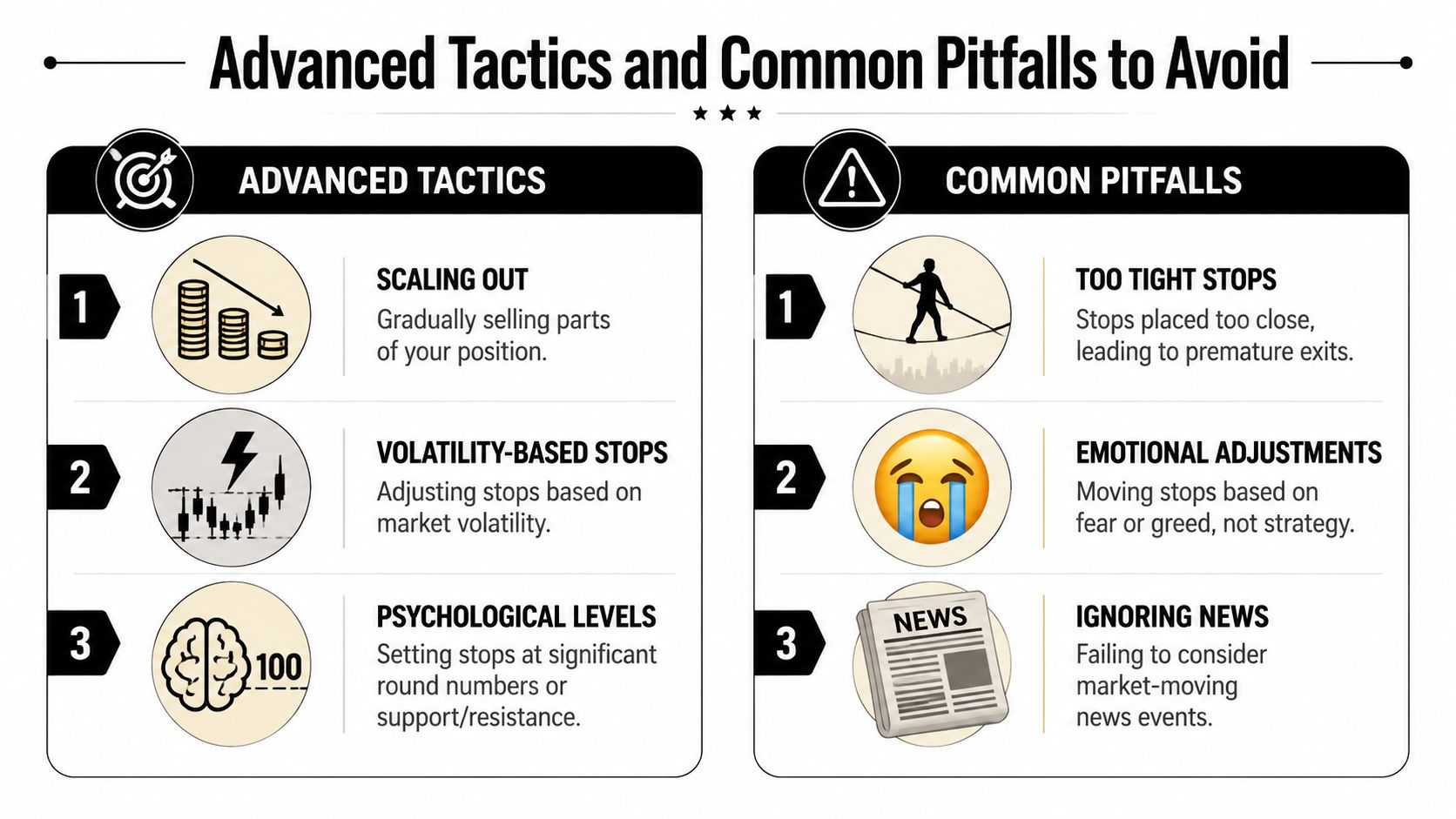
Many traders place stops exactly below obvious support, exactly under a swing low, or right on a round number. In crypto, those levels often attract liquidity. Price dips through, triggers a wave of stops, then snaps back. The move feels personal when it happens to you. It isn't. It's structural.
If you trade derivatives, this gets even more important because the way derivatives operate magnifies the cost of a badly placed stop. Traders exploring more complex instruments should understand how these mechanics interact with derivatives strategy, especially in markets like options trading cryptocurrency.
Mistakes that quietly wreck expectancy
Some errors are dramatic. Others are slow leaks.
The most expensive ones include:
- Moving the stop farther away: That turns a planned loss into hope-based gambling.
- Using the same stop style for every asset: Bitcoin and an illiquid DeFi token shouldn't be treated identically.
- Ignoring fees and slippage: Frequent stop-outs can erode your edge.
- Setting stops too tight: The average loss may shrink, but overall expectancy can worsen if exits become too frequent.
That last point matters most. A stop that's too tight can reduce average loss while still making your trading worse because it raises exit frequency and transaction costs. Many traders learn this the hard way after a long streak of being “almost right.”
Tactics that hold up better in live markets
The better alternatives are less glamorous but more durable.
- Place stops beyond invalidation: If the trade thesis breaks only after a level gives way cleanly, let the stop sit beyond that zone.
- Adjust size instead of forcing a tighter stop: Smaller size often solves the problem better than a closer exit.
- Scale out selectively: Selling part of the position into strength can reduce pressure while keeping upside exposure.
- Review stop placement by market type: A trending market, a range, and a news-driven spike all call for different handling.
Most traders don't fail because they lack entries. They fail because their exits don't match the market they're trading.
Backtesting helps here, but only if you test realistically. Don't test perfect fills on a clean chart and assume live crypto will behave the same way. Build your rules around execution reality, not idealized screenshots.
Your Shield in the Crypto Arena
A stop loss isn't a sign of fear. It's a sign that you trade like a professional.
The market doesn't care how strong your conviction is, how elegant the tokenomics look, or how exciting the narrative sounds around AI, Web3 infrastructure, DeFi yield, Layer 2 growth, or tokenized real-world assets. If price reaches the point where your setup is broken, your job is to act.
That's a key lesson behind how to set stop losses well. Pick the right order type for the job. Place the stop where the trade is invalid, not where your emotions get uncomfortable. Size the position so the stop can breathe. Respect the possibility of stop hunting and avoid obvious levels. Then let the process do its work.
You won't avoid every bad exit. Nobody does.
But you can avoid the account-killing habit of turning small mistakes into major damage. That's what keeps you solvent during rough markets and ready when better opportunities show up in Bitcoin, Ethereum, DeFi, GameFi, smart contract platforms, and the next wave of blockchain innovation.
Trade long enough, and you stop seeing stop losses as a tax on trading. You start seeing them as the shield that lets you stay in the arena.
If you want more practical crypto guides, market analysis, and grounded coverage of blockchain trends without the usual hype, explore Coiner Blog. It's a solid resource for traders and investors who want sharper insight into digital assets, risk, Web3, DeFi, NFTs, and the fast-moving token economy.
1 Comment