
What Is GameFi? Your 2026 Guide to Play-to-Earn & Beyond
GameFi's projected rise into a major digital market points to a larger shift in how games create, store, and distribute value. The underlying story is not hype around crypto inside games. It is the attempt to turn in-game time, items, and progression into assets that can exist beyond a single publisher's database.
That idea attracted players, speculators, and studios for obvious reasons. Traditional games monetize attention. GameFi tries to monetize participation and ownership at the same time. The problem is that early Play-to-Earn systems often treated token emissions as a substitute for game design, which produced economies that looked profitable during user growth and brittle once demand slowed.
This is the fault line that matters. A game can put NFTs on-chain and still fail as an economy. It can issue a token and still lack sustainable sinks, retention, or pricing power. The strongest projects now design around Play-and-Earn or Play-and-Own models, where rewards support engagement instead of carrying the entire value proposition.
For readers who want broader context before getting into the mechanics, this overview of how Web3 gaming works gives useful background.
For gamers, that changes the old bargain. Items, currencies, and identity can become portable and tradable, at least in theory. For investors and developers, the harder question is whether a game's tokenomics can survive after the first wave of speculation fades. That is where GameFi becomes worth examining seriously.
Table of Contents
- The Multi-Billion Dollar Question What Is GameFi Anyway
- The Core Concept A Fusion of Gaming and Finance
- How GameFi Actually Works The Three Pillars
- The Evolution from Play-to-Earn to Play-and-Own
- Exploring the GameFi Ecosystem Key Projects and Models
- Risks and Opportunities An Investor's Guide
- How to Get Started in GameFi Your First Steps
The Multi-Billion Dollar Question What Is GameFi Anyway
GameFi sits at the point where game design, digital ownership, and on-chain finance start affecting one another. At a market scale measured in the tens of billions of dollars, the category is large enough to matter to publishers, investors, and players alike. More important than the headline growth, though, is what that capital revealed. Early demand proved that players will engage with economies that have real stakes. It also exposed how quickly bad token design can turn a game into a payout machine that burns through its own user base.
That distinction matters.
GameFi is not just gaming with a token attached. It is a blockchain-based game economy where items, currencies, and access rights can be issued, tracked, traded, and governed through smart contracts. If you want the broader context around Web3 gaming and player-owned economies, GameFi is the part of that field where financial incentives are built directly into progression, ownership, and market activity.
What sets this category apart from traditional gaming extends beyond the ability to trade assets. The bigger shift is that economic logic becomes part of the game loop itself. A character, skin, land parcel, crafting material, or guild membership can function as an on-chain asset with a market price, a sink, and a role in retention. Once those pieces move onto blockchain rails, the developer is no longer the only keeper of value. Players, traders, guilds, and external markets start influencing the economy too.
Why the definition matters
If you're asking what is GameFi, the cleanest answer is this:
- Gameplay and finance operate in the same system: Playing, trading, staking, crafting, and governance can all affect player value.
- Ownership becomes transferable: Some assets live outside the publisher's closed database and can be bought, sold, or used across marketplaces.
- Tokenomics shape the game experience: Emission rates, burn mechanics, reward schedules, and asset scarcity affect whether a game feels healthy or extractive.
That last point is where many surface-level definitions fall short. The first wave of Play-to-Earn titles treated token rewards as the product. That attracted users quickly, but it also created economies that depended on constant new demand to support old rewards. Once user growth slowed, inflation hit, asset prices fell, and gameplay alone often was not strong enough to keep people around.
The more durable version of GameFi is heading toward Play-and-Earn or Play-and-Own design. In those systems, earning exists, but it does not have to carry the entire experience. Value comes from status, utility, progression, social coordination, and asset ownership, not only from token emissions. That shift is why GameFi deserves to be analyzed as a game economy first and a speculative market second.
GameFi matters because blockchain gives game worlds programmable property rights and open economic rails. Whether that creates lasting value depends less on hype and more on whether the economy can survive after the initial reward rush fades.
The Core Concept A Fusion of Gaming and Finance
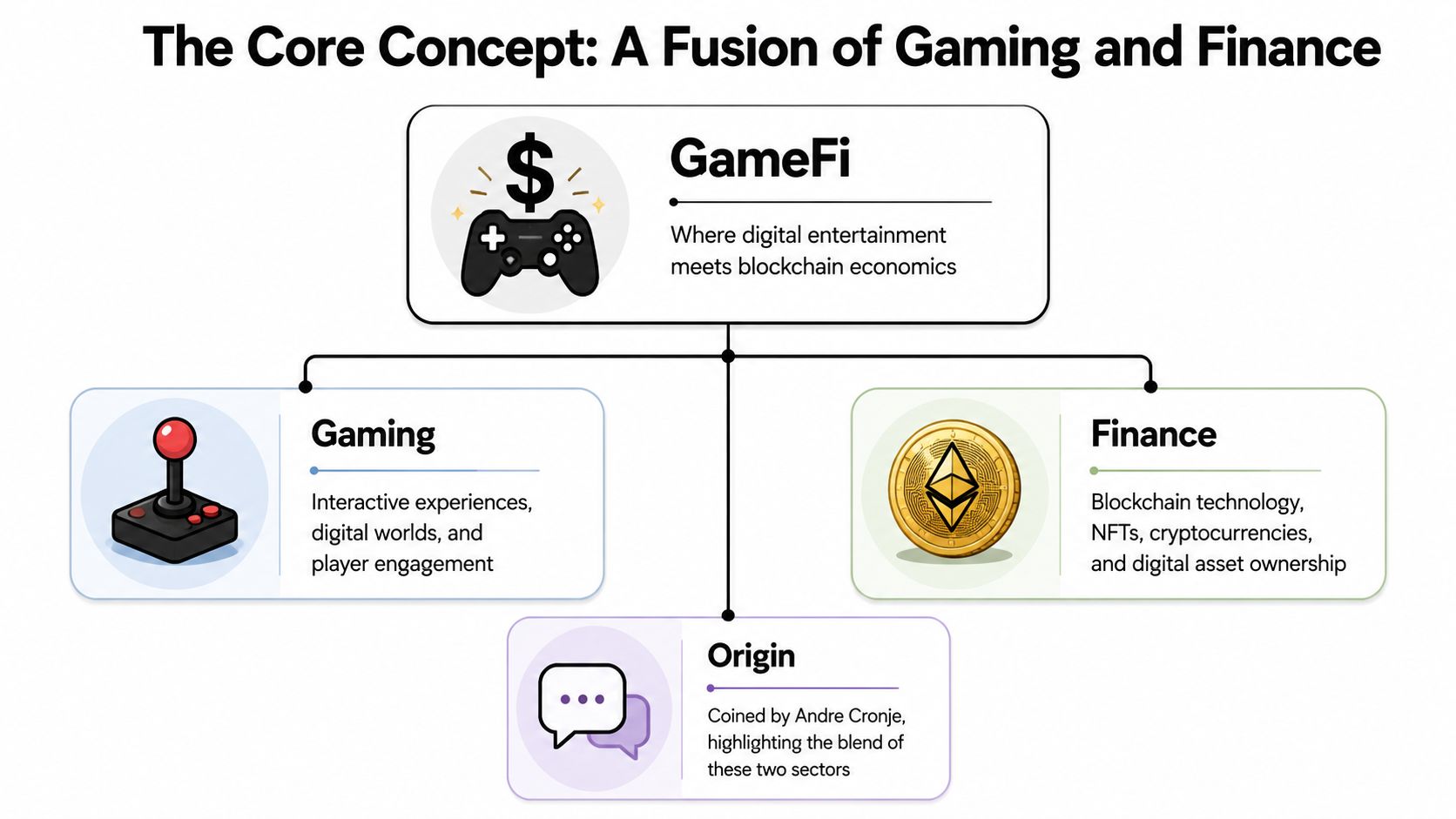
Traditional gaming works like renting an apartment. You can decorate it, spend money inside it, and invest time into it, but ownership stays with the landlord. GameFi feels more like digital homeownership. You still live inside a game world, but some of the assets can belong to you and move with you into broader marketplaces.
Where the term came from
The label itself tells you what changed. The term GameFi was coined in 2020 by Andre Cronje, founder of Yearn Finance, as a portmanteau of “gaming” and “finance,” formally naming the sector's integration of game mechanics with real-economy connections, according to Protokol's GameFi overview.
That naming mattered because it pulled two communities together that used to operate separately:
- gamers looking for progression, status, and utility
- crypto users looking for yield, liquidity, ownership, and composability
Once those groups overlapped, GameFi became a natural extension of DeFi, Web3 identity, NFT marketplaces, and token-driven communities.
A practical way to picture it is a digitally owned Monopoly board. In a classic game, the bank controls the ledger and the box decides the rules. In GameFi, the ledger can sit on-chain, the assets can exist as tokens, and the rules can be enforced by smart contracts.
For readers who want a deeper look at the ownership layer behind these assets, this guide on how NFTs work fills in the missing piece.
After the concept clicks, the mechanics become easier to follow.
Why ownership changes the player experience
The biggest shift is psychological as much as technical. In a normal live-service title, players chase items that remain trapped in the developer's ecosystem. In GameFi, the player can hold, trade, or potentially reuse digital property across open markets.
That changes incentives in three ways:
- Players think like participants, not customers.
- Developers design economies, not just content pipelines.
- Communities start caring about governance, treasury choices, and tokenomics.
Practical rule: When a game adds blockchain but keeps all meaningful control locked with the studio, it may use Web3 branding without delivering real GameFi value.
The core idea is simple. The implications are not. Once finance enters game loops, every design decision starts affecting value creation, inflation, and player behavior.
How GameFi Actually Works The Three Pillars
Most GameFi projects stand on three interlocking pillars: blockchain infrastructure, NFT-based asset ownership, and tokenomics. Remove any one of them and the model weakens fast.
Pillar one blockchain and smart contracts
Blockchain acts as the trust layer. It records ownership, transfers, marketplace activity, and reward flows on a shared ledger instead of a private game server. Smart contracts automate those rules, so asset minting, staking, crafting, rewards, and governance can execute according to code.
That's why infrastructure matters so much in modern Web3 gaming. A game running on a congested or expensive chain will struggle to support frequent, low-value interactions. For this reason, Layer 2 scaling solutions become strategically important. They can make on-chain game actions more usable by reducing friction for players who don't want every move to feel like a financial transaction.
If you want the mechanics behind this trust layer in plain English, this explainer on what a smart contract is is worth reading.
Pillar two NFTs as in-game property
This is the part gamers feel immediately. In GameFi, in-game assets like characters and weapons are tokenized as NFTs on a blockchain, granting players sole, sovereign ownership that enables unrestricted trading on open marketplaces without developer permission, as explained by Chainlink's GameFi education hub.
That single design choice changes several long-standing assumptions in gaming:
- Inventory becomes portable: Assets can sit in a wallet rather than only in a game account.
- Markets become open: Players can sell items through external platforms, not only official storefronts.
- Scarcity becomes verifiable: Supply can be audited on-chain instead of taken on faith.
A rare mount in a closed MMO is valuable only as long as the publisher says it is. An NFT-backed asset has a different profile. Its utility still depends on the game, but ownership itself is independently recorded.
Pillar three tokenomics as the economic engine
Tokenomics is where GameFi either graduates into a durable digital economy or collapses into extraction. Most projects use some combination of:
- Utility tokens for purchases, upgrades, entry fees, and in-game services
- Governance tokens for voting on treasury or protocol-level decisions
- NFT assets for characters, land, equipment, or access rights
These pieces create loops. Players earn, spend, trade, stake, vote, and reinvest. Developers try to keep the system balanced so tokens have demand beyond pure selling pressure. If everyone is rewarded for playing but few people have reasons to spend, inflation builds. If entry costs are too high, new users don't stay.
A GameFi economy is healthy when players want to keep using the token inside the game, not just exit into another asset.
A useful way to assess a project is to ask where value enters, where it circulates, and where it leaves. In stronger ecosystems, spending has purpose. Upgrades, cosmetics, crafting, tournament access, guild systems, and governance all create reasons to hold or use tokens. In weaker ones, the reward token exists mainly to be farmed and dumped.
That's why veteran analysts look at economic loops first and marketing second. In GameFi, a polished trailer can hide a fragile economy. The chain, the assets, and the token design tell you much more.
The Evolution from Play-to-Earn to Play-and-Own
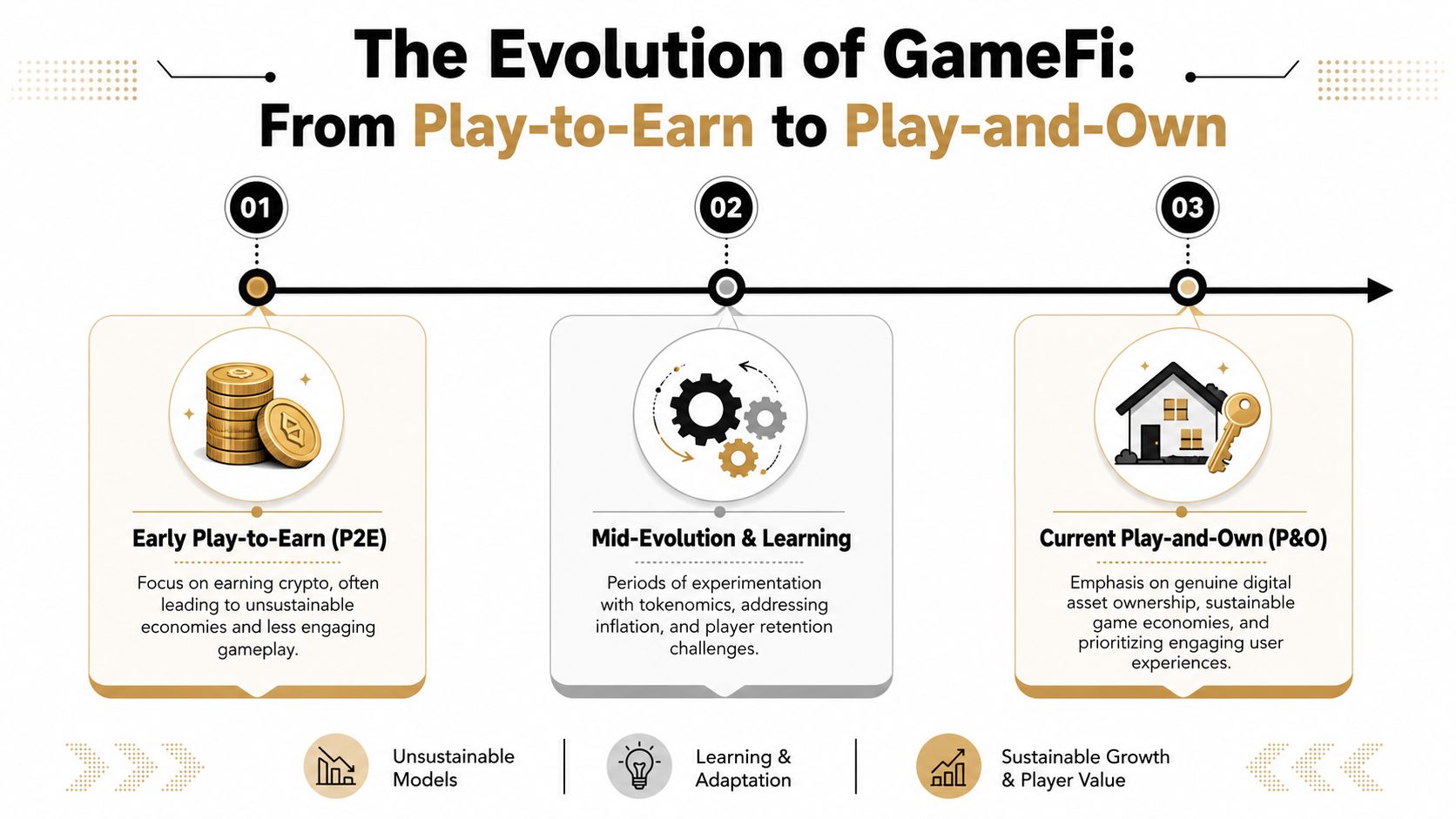
The first big wave of GameFi sold a simple dream. Play the game, earn tokens, and turn game time into real money. That model attracted huge attention because it offered something traditional gaming never did: direct economic participation.
But early play-to-earn, or P2E, often overemphasized extraction. Players joined for yield first and gameplay second. Once token rewards became the main attraction, the economy started depending on constant new demand to absorb constant emissions.
Why early P2E broke down
That's why the sector changed course. GameFi has evolved from early P2E models toward more sustainable “play-and-earn” approaches that prioritize gameplay quality alongside economic incentives, addressing risks like token price volatility and project sustainability, according to Binance Academy's GameFi explainer.
The language shift matters. “Play-to-earn” implies earnings are the product. “Play-and-earn” implies the game is the product, with rewards as a complement.
Here's the cleaner comparison.
Play-to-Earn vs. Play-and-Earn A Comparison
| Aspect | Play-to-Earn (P2E) | Play-and-Earn (P&E) |
|---|---|---|
| Core appeal | Token rewards lead the value proposition | Gameplay leads, rewards support engagement |
| Player mindset | Often income-seeking first | Entertainment and ownership first |
| Economic pressure | Heavy sell pressure on reward tokens | More emphasis on sinks, utility, and retention |
| Sustainability | More vulnerable to inflation and speculation | More focused on long-term balance |
| Design priority | Reward extraction loops | Fun, progression, ownership, and economy together |
Projects that lean toward P&E or play-and-own usually try to answer harder questions. Why would players stay if token prices cool off? What makes the world worth returning to? Does ownership add utility, or is it just a speculative wrapper?
A useful way to browse current projects is through a list of play-to-earn games worth tracking, but the label alone shouldn't persuade you. The better signal is whether the game can still attract players when the economy isn't euphoric.
What changed in play-and-earn design
The strongest teams now build around a different sequence:
- Gameplay first: Combat, progression, creativity, competition, or social status has to stand on its own.
- Ownership second: NFTs and tokens should deepen player agency, not replace fun.
- Economy third: Tokenomics should reinforce participation rather than becoming the whole reason the game exists.
The healthiest GameFi projects don't ask players to tolerate mediocre gameplay in exchange for token rewards.
That's the maturity signal in 2026-era GameFi. The industry is learning that sustainable economies don't emerge from hype alone. They come from good games with disciplined financial architecture.
Exploring the GameFi Ecosystem Key Projects and Models
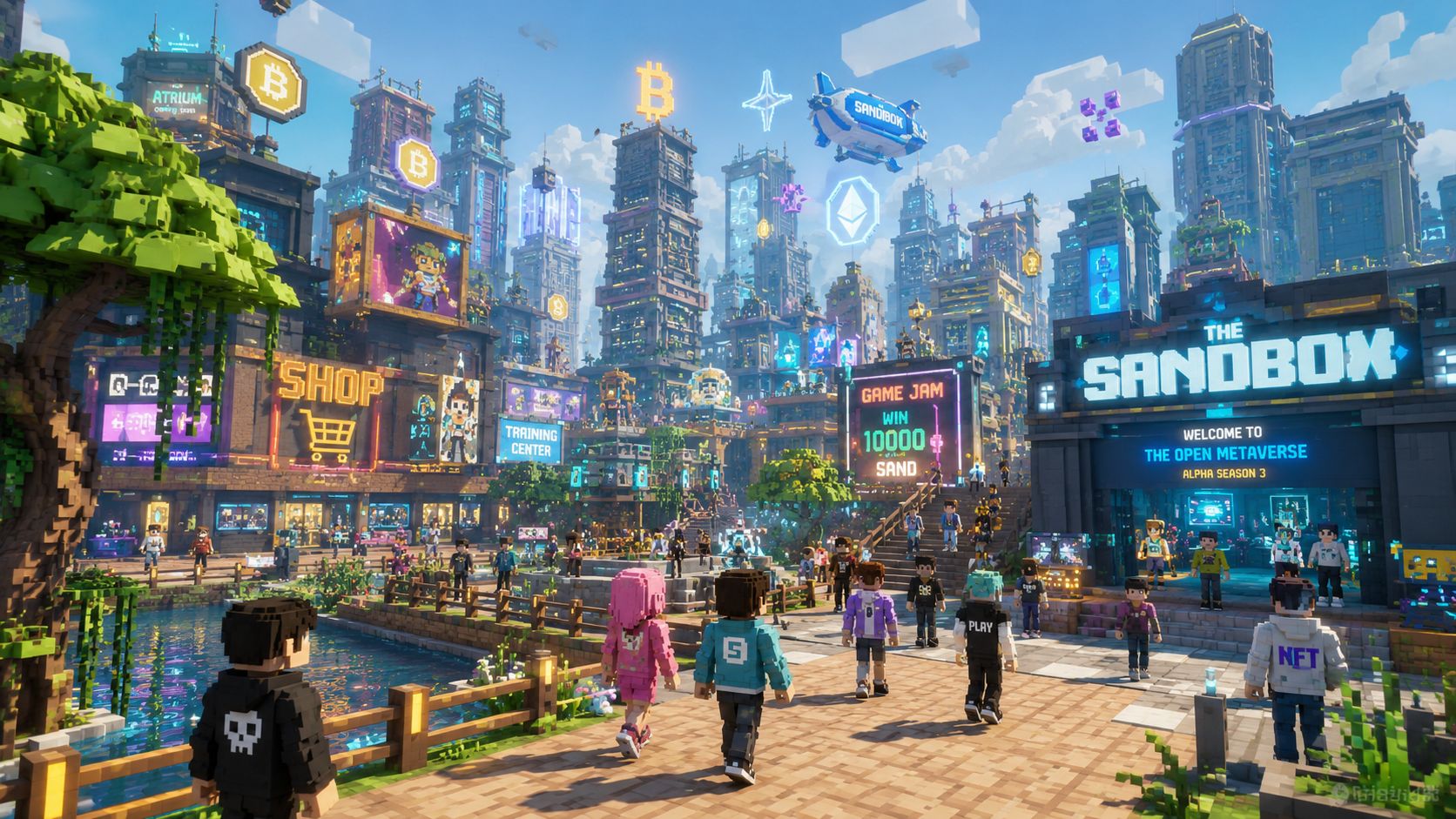
The GameFi ecosystem is broader than many newcomers expect. It includes metaverse platforms, strategy games, RPGs, card battlers, sports titles, idle economies, and mobile-first experiences. The better way to understand it is by model, not by hype cycle.
Metaverse worlds and digital land
The Sandbox is one of the clearest examples of GameFi as a creator economy plus metaverse infrastructure. It represents a branch of the market where value comes from virtual land, player-built experiences, branded spaces, digital collectibles, and social coordination rather than only combat or yield farming.
That matters because it expands what “earning” means. In some ecosystems, players earn through gameplay. In others, creators, landowners, traders, and community organizers also participate in value creation. A GameFi world can resemble a game, a marketplace, a social platform, or all three at once.
Another useful case study in blockchain gaming design is Mines of Dalarnia, which shows how genre identity and tokenized progression can intersect.
Beyond one genre
The ecosystem now spans several recognizable categories:
- RPG and adventure titles: These usually center on character NFTs, item drops, crafting, and progression trees.
- Strategy and card games: These often fit on-chain logic well because assets, turns, and competitive rankings are naturally structured.
- Move-to-play and click-to-earn models: These expand GameFi beyond conventional gaming and into behavior-driven engagement loops.
- Metaverse and builder platforms: These focus on land, user-generated content, identity, and commerce.
What ties these models together isn't a single gameplay formula. It's the same core architecture: blockchain-backed ownership, token-based incentives, and open economic participation.
A quick framework for reading any GameFi project
When I evaluate a new release, I sort it into one of three buckets:
- Game-first projects where Web3 is an enhancement
- Economy-first projects where the token model dominates the pitch
- Platform-first projects where creators and communities shape the value layer
That framework helps cut through branding noise. A metaverse title shouldn't be judged by the same standards as a battle RPG. A move-to-play app shouldn't be judged like a competitive strategy game. Each category has different strengths, different monetization logic, and different tokenomic risks.
The most interesting trend is convergence. AI-assisted NPC systems, tokenized real-world assets, DeFi integrations, and Layer 2 rails are starting to influence game design choices. As that continues, “GameFi” may become less of a niche label and more of a standard way digital worlds handle ownership and value.
Risks and Opportunities An Investor's Guide
GameFi has produced some of crypto's fastest user-growth stories and some of its fastest economic collapses. For investors, the mistake is usually the same. They track wallet activity, token listings, and NFT volume, then ignore whether the game economy can survive once speculation cools.
That distinction matters more in GameFi than in almost any other crypto vertical. Early play-to-earn systems often paid existing users with value supplied by new entrants, while offering too few reasons to spend, burn, or lock assets inside the game. The result was predictable. Reward emissions expanded faster than player demand, asset prices weakened, and retention fell once earning rates no longer justified the grind.
The red flags that matter most
The early 2020s gave the sector a useful stress test. Some of the biggest names in the first play-to-earn wave showed how fragile a game economy becomes when token issuance is treated as growth strategy. As noted in Coinbase's GameFi glossary entry, GameFi combines gaming rewards with blockchain-based ownership and financial incentives. That structure creates opportunity, but it also creates failure points that traditional games do not face at the same scale.
When I assess a GameFi project, I spend more time on monetary design than on marketing reach.
Here are the warning signs that deserve close attention:
- Weak token sinks: If players can farm rewards easily but have limited reasons to spend on upgrades, crafting, access, breeding, repairs, or governance, inflation pressure usually builds.
- Speculation-first onboarding: If trailers, community posts, and exchange listings get more attention than gameplay footage or retention metrics, the audience may be there for extraction rather than play.
- Opaque economic reporting: Vague emissions schedules, unclear treasury mandates, and fuzzy NFT utility usually signal that the team has not fully modeled long-term supply and demand.
- Circular reward loops: If token value depends on a constant flow of new buyers rather than recurring in-game utility, the economy starts to resemble a transfer system instead of a durable game market.
- Security and custody risk: Smart contracts, bridges, marketplaces, and staking systems add attack surfaces that can damage both player trust and asset values.
A healthy game economy needs sinks, scarcity, and reasons to participate that survive a bear market. If rewards are the product, selling pressure eventually dominates. If the game is the product, rewards can support engagement instead of carrying it.
Where Significant Upside Remains
The best opportunities in 2026 are not in pure play-to-earn nostalgia. They are in play-and-earn systems that treat tokens and NFTs as supporting infrastructure rather than the entire value proposition.
That shift is more important than many investor guides admit. Play-and-earn models usually perform better because they start with retention, progression, status, and ownership. Earnings become optional upside inside a broader loop, not the sole reason users log in. Economically, that lowers mercenary churn and gives developers more room to balance issuance against actual demand.
The strongest upside now tends to cluster around projects with a few shared traits:
- Gameplay that stands on its own: If players would still show up with reduced rewards, the economy has a stronger base.
- Disciplined token design: Lower emissions, clearer sinks, treasury transparency, and limited dependence on inflationary rewards improve survival odds.
- Low-cost infrastructure: Layer 2 and appchain deployments reduce transaction friction and make frequent in-game actions economically viable.
- Useful financial features: Lending, staking, rentals, or governance can add depth when they support the game loop instead of overwhelming it.
- Persistent digital ownership: Assets with real utility, social status, or creator value tend to hold attention better than purely speculative collectibles.
Regulation remains an active variable across regions, but it may help separate serious builders from teams selling recycled token schemes. Projects with clearer disclosures, tighter economic controls, and products that attract actual players should be in a better position if oversight increases.
The investing case for GameFi is still intact. It just looks narrower and more selective than it did during the first hype cycle. Capital is more likely to outperform in studios that understand both game design and monetary policy, and that is a much higher bar than launching a token with a reward loop attached.
How to Get Started in GameFi Your First Steps
You don't need to start with a big position or an elaborate strategy. You need a safe setup, a clear process, and enough skepticism to avoid becoming exit liquidity for someone else's token launch.
A simple path for beginners
Start small and stay operationally conservative.
- Set up a Web3 wallet. MetaMask is the wallet most newcomers encounter first because it connects easily to many dapps and marketplaces.
- Fund it carefully. Buy a base asset on a reputable exchange, transfer a small amount, and test with minimal value before doing anything larger.
- Connect only to known platforms. Read the game site closely, verify the app URL, and avoid signing wallet prompts you don't understand.
- Try the game as a player first. Spend time on the gameplay loop before buying NFTs or accumulating tokens.
A deeper checklist for experienced crypto users
If you already know your way around Web3, go beyond the trailer and token ticker.
- Read the economy, not just the roadmap: Look for clear token utility, item sinks, and reasons players keep spending inside the game.
- Check whether the game is fun without rewards: If the answer is no, the economy may be carrying a weak product.
- Study asset dependence: Ask whether NFTs are required, optional, cosmetic, or foundational to progression.
- Review community quality: Good communities discuss updates, balancing, governance, and gameplay. Bad ones discuss only price.
Treat time as capital. In GameFi, a weak game can waste both your money and your attention.
The best entry strategy is still the least glamorous one. Play a little. Read a lot. Buy slowly. If the project only makes sense when prices rise, it probably doesn't make sense yet.
Coiner Blog covers the part of crypto that matters most to curious users and serious analysts: the overlap between blockchain infrastructure, digital ownership, DeFi, NFTs, AI, and crypto gaming. If you want more grounded breakdowns like this one, explore the latest guides and analysis at Coiner Blog.
1 Comment