
Cold Storage Solutions for Crypto: A Practical Guide
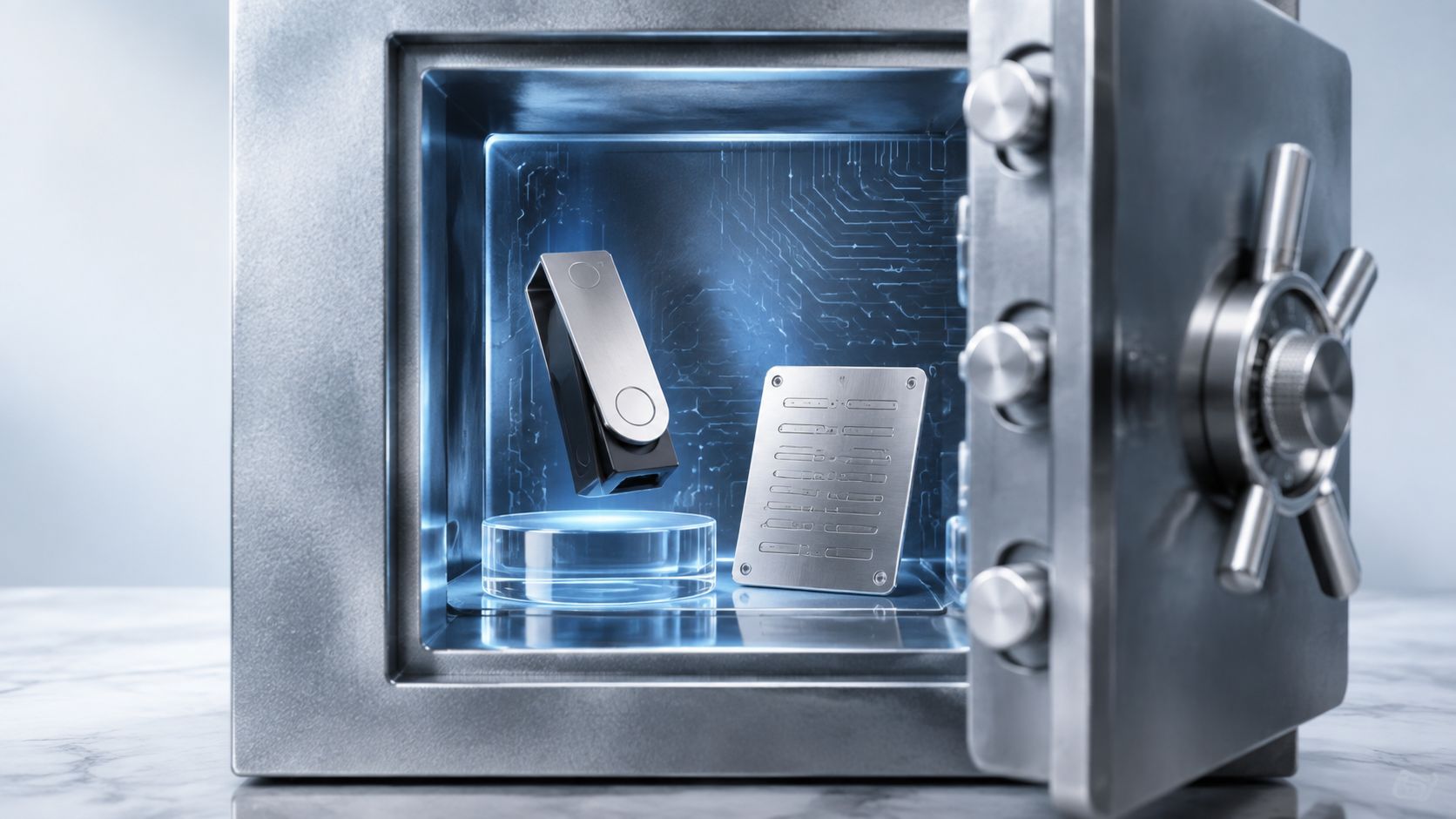
A crypto holder usually discovers cold storage solutions at an uncomfortable moment: after a suspicious browser pop-up, a failed withdrawal, or a wallet notification they don't recognize. The appeal is simple. Cold storage keeps private keys offline, reducing the remote attack surface that comes with internet-connected wallets.
That doesn't mean every offline setup is equally safe. A hardware wallet, metal seed backup, air-gapped signer, multisignature wallet, and custody vault solve different problems. The right choice depends on how much you hold, how often you transact, how well you can manage recovery procedures, and what could realistically happen to you or your devices.
Table of Contents
- When a Crypto Holder Watches Their Wallet Drain
- What Cold Storage Actually Means in Crypto
- The Five Main Cold Storage Options Explained
- Matching Cold Storage Options to Your Needs
- Setting Up a Secure Cold Storage Wallet Step by Step
- Backup Recovery and Long-Term Maintenance Practices
- Common Cold Storage Mistakes Worth Avoiding
- Choosing the Right Cold Storage Path for You
When a Crypto Holder Watches Their Wallet Drain
Maya, a freelance designer, treated her browser-extension wallet like a checking account. She kept Bitcoin there because it was convenient for client payments and occasional trades. One evening, she pasted a withdrawal address from a message into her laptop. Malware on the machine replaced the address with one controlled by an attacker.
The transaction looked normal at a glance. Maya clicked confirm, watched the wallet process the withdrawal, and returned to her design work. Within minutes, her balance was gone. The funds moved through five mixers, and the blockchain offered no reversal button, chargeback process, or customer-service intervention.
She refreshed the wallet repeatedly, hoping the balance would reappear. It didn't. Then she called a friend, who asked whether she'd ever considered “cold storage.”

Maya's loss illustrates the central weakness of a hot wallet. The wallet's private keys, signing environment, or transaction workflow remained exposed to a connected computer. Malware, phishing pages, malicious browser extensions, and careless smart-contract approvals can all create opportunities for theft. Ethereum and DeFi users face an additional problem, because a mistaken approval can authorize token movement even when the user believes they're only connecting to an application.
Cold storage changes the arrangement. The private key stays away from internet-connected devices, while the online computer prepares an unsigned transaction. An offline device reviews and signs it, then the signed transaction travels back through a controlled transfer path. The coins still live on the blockchain, but the secret that authorizes movement stays isolated.
Practical rule: Offline keys reduce remote exposure, but they don't eliminate the need to verify addresses, protect backups, and rehearse recovery.
The rest of the decision is practical rather than ideological. You'll need to understand the threat model, compare five major cold storage options, choose a setup that matches your behavior, initialize it correctly, and maintain it as your life, devices, and trusted contacts change.
What Cold Storage Actually Means in Crypto
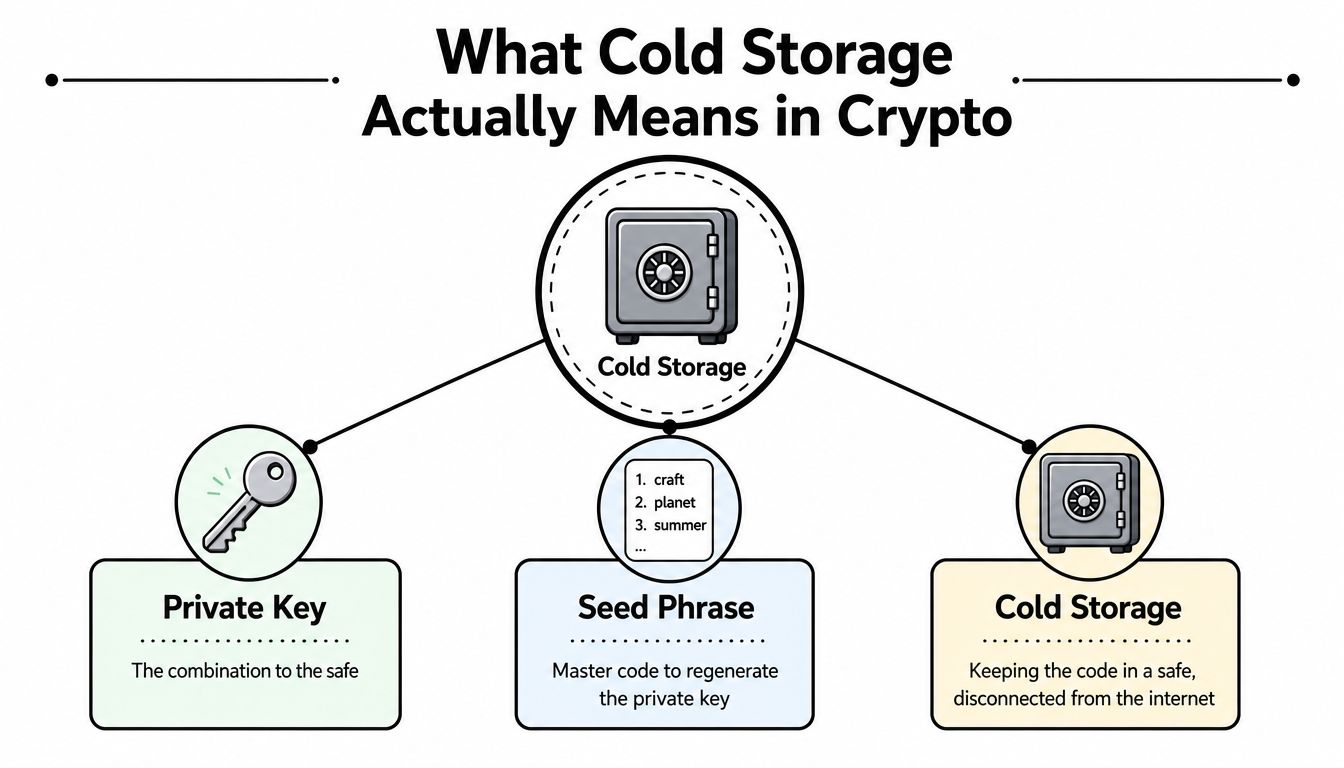
Think of a private key as the combination to a physical safe. Whoever controls that combination can authorize transactions from the associated blockchain address. The blockchain doesn't know whether the person signing is the rightful owner, a thief, or an automated script. It only verifies that the transaction carries a valid cryptographic signature.
A seed phrase is the master code that can regenerate a wallet's private keys. Many wallets use the BIP39 standard, which represents that secret as a list of 12 or 24 words. The words aren't a password you can casually replace. They're a human-readable representation of the mathematical material from which the wallet derives its addresses and signing keys.
Cold storage means keeping that secret somewhere that isn't connected to another device, network, or the internet. This explanation of cold wallets helps distinguish the storage method from the wallet application or brand.
Hot wallets and cold wallets use different signing environments
A hot wallet stores or accesses keys on an internet-connected phone, browser, or computer. The device can sign transactions quickly, which makes hot wallets useful for spending, trading, NFT activity, Layer 2 applications, and DeFi. The same connectivity also gives malware and phishing attacks more opportunities to interfere.
A cold wallet generates and retains keys offline. The connected computer may construct an unsigned transaction, but the isolated signer approves it without exposing the seed. The signed transaction can move through QR codes, microSD cards, or another controlled transfer method.
A hardware wallet isn't automatically cold storage because it's a small physical device. If you enter the seed into a laptop, photograph it with a phone, or approve a transaction without checking the destination, you've weakened the design. Conversely, a carefully generated seed stored on durable offline media can provide useful long-term protection even without an advanced device.
The threat model still includes physical attacks
Removing the network cuts off many remote exploits, but it doesn't stop someone from stealing the device or coercing the owner. The “$5 wrench attack” is a blunt way to describe physical violence or intimidation used to obtain a secret. It also reminds holders that security isn't only a software problem.
Your setup should answer several questions:
- Remote attacker: Can malware reach the signing device?
- Physical thief: Can someone find the seed or device in your home?
- Disaster: What happens after fire, flood, or hardware failure?
- Recovery: Can you restore the wallet without guessing?
- Human error: Could you approve the wrong address or forget a passphrase?
Cold storage is best understood as key isolation plus disciplined operating procedures, not as a magic product category.
The Five Main Cold Storage Options Explained
The five choices below differ in where keys live, how transactions get signed, and who carries the recovery burden.
| Option | How It Works | Best For | Main Risk |
|---|---|---|---|
| Hardware wallet | A dedicated device stores the seed and signs transactions separately from the host computer | Individual holders seeking a balance of security and convenience | Phishing, fake devices, mistaken approvals, or lost backups |
| Paper or metal seed backup | The recovery phrase is recorded on paper, steel, or a split-secret format | Long-term backup and disaster recovery | Physical damage, discovery, or a single point of failure |
| Air-gapped signer | An offline computer or phone signs through QR codes or removable media | Advanced users who want stronger network isolation | Complex setup and operational mistakes |
| Multisignature wallet | An M-of-N threshold requires multiple independent keys | High-value holdings and shared control | Lost signers, coordination failures, or recovery confusion |
| Custody vault | A professional custodian controls storage and withdrawal procedures | Institutions and holders who prefer managed infrastructure | Counterparty, policy, access, and jurisdiction risk |
Hardware wallets
Devices such as Ledger, Trezor, and Coldcard keep the seed inside a dedicated signing environment. The host computer can display addresses and prepare transactions, but the private key should never appear on the computer. A hardware wallet suits a retail holder who wants regular access without leaving the main balance in a browser wallet. A detailed hardware wallet and software wallet comparison can help clarify the trade-off.
The realistic failure mode is user behavior. A holder may approve a malicious contract, trust a fake support message, or connect a device bought through an unreliable channel. The hardware protects the secret, but it can't make every transaction legitimate.
Paper and metal backups
A paper backup is inexpensive and easy to create, while stamped steel offers stronger resistance to fire, water, and handling damage. Some holders use a Shamir-style split so that no single backup contains the complete recovery secret.
These backups work best as recovery material, not as convenient spending tools. Paper can burn, fade, or absorb water. Metal can still be discovered or stolen. A single copy also creates a single point of failure.
Air-gapped devices
An old phone or computer can be permanently kept offline and used to generate keys and sign transactions. QR codes or microSD cards carry transaction data between the offline signer and an online viewing device.
This approach can remove direct USB and Bluetooth exposure during signing. It also demands more technical discipline. The operator must control software provenance, verify transaction details, protect the offline device, and understand how the wallet derives addresses.
Multisignature setups
A multisignature wallet divides control across independent keys. In a 2-of-3 arrangement, any two of three authorized keys must sign the same transaction before funds can move. This removes the single point of failure, but it adds coordination, documentation, and recovery work.
Multisig is powerful when the value or threat model justifies it. It's excessive if the owner cannot explain where each signer is, how recovery works, and what happens when a signer becomes unavailable.
Custody vaults
A qualified custodian can provide controlled access, withdrawal delays, internal approvals, insurance arrangements, geographic key separation, and operational staff. This resembles a professional vault rather than a personal wallet.
The cost is reduced direct control. You must evaluate the custodian's legal structure, recovery policy, insurance scope, withdrawal rules, and counterparty exposure. Bahrain, for example, requires licensed custodians to keep at least 90% of client crypto-assets in cold wallets, with the test applied separately to each crypto-asset, according to its crypto-asset custody rulebook.
Matching Cold Storage Options to Your Needs
The best cold storage solutions aren't the most elaborate ones. They're the ones you can operate correctly under stress, recover after a disaster, and explain to a trusted successor.
The casual holder
Someone holding a modest amount and making few transactions usually needs a hardware wallet paired with a durable seed backup. A stamped metal plate protects the recovery words better than loose paper, while a small hot wallet can handle everyday spending.
The main objective is to stop routine laptop and browser threats from reaching the long-term balance. Adding multisig before learning basic recovery can create more failure points than it removes.
The active trader
An active trader should separate operating capital from long-term holdings. Keep the amount used for exchange deposits, DeFi activity, and Layer 2 transactions in a hot wallet, then move the larger reserve to a hardware wallet.
This arrangement accepts that convenience has a risk cost. The trader must still inspect addresses, limit smart-contract approvals, and avoid treating the trading wallet as a vault.
The long-term holder
A holder with a substantial Bitcoin or Ethereum position may benefit from a passphrase, geographically separated backups, and eventually multisig. The passphrase can create a separate wallet derived from the same seed, but forgetting it can make funds permanently inaccessible.
The important question is whether the owner can maintain the system. If the answer is yes, independent signers and locations reduce the damage from one stolen device, one compromised backup, or one local disaster.
The multi-generation saver
A family-office-style setup needs more than technical protection. It needs inheritance instructions, successor training, documented signing procedures, and a plan for replacing unavailable co-signers.
A custody vault may fit a family that wants professional administration. A self-managed multisig arrangement may suit a technically capable family that wants direct control. Neither works if heirs cannot identify the assets or understand the recovery process.
The DeFi treasury
A protocol treasury or active Web3 team should not place its entire balance in one signer. Multisig can separate spending authority across contributors, while a small operational wallet handles routine transactions.
The team should use transaction policies, address allowlists, review procedures, and clear limits for contract interactions. A wallet cannot compensate for anonymous signing or uncontrolled admin keys.
| Option Type | Security | Convenience | Cost | Recovery Risk | Ideal User |
|---|---|---|---|---|---|
| Hardware wallet | Strong against remote key theft | High | Moderate | Manageable with tested backup | Individual long-term holder |
| Paper or metal backup | Strong as offline recovery material | Low for transactions | Low to moderate | High if unique copy is lost | Backup-focused saver |
| Air-gapped signer | Very strong network isolation | Low | Moderate | Higher due to complexity | Technical operator |
| Multisig | Strong against one-key compromise | Moderate to low | Moderate to high | Depends on coordination | High-value holder or treasury |
| Custody vault | Strong operational controls | High for the client | Service-dependent | Depends on provider and legal access | Institution or hands-off owner |
Setting Up a Secure Cold Storage Wallet Step by Step
A safe setup begins before the device arrives.
Start with a trustworthy device and clean environment
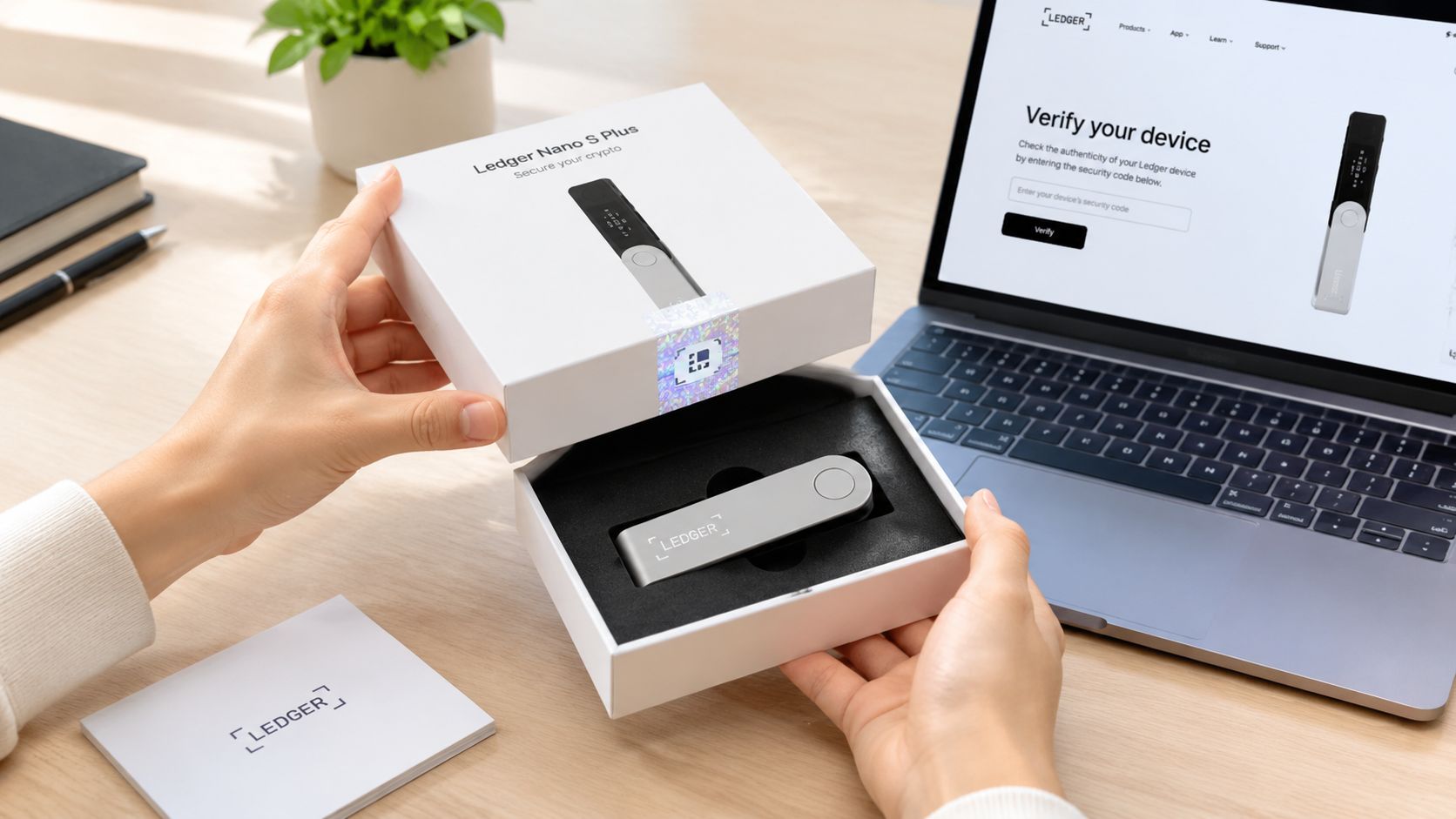
Buy directly from the manufacturer or an authorized channel. Inspect packaging and tamper-evident indicators, but remember that packaging checks aren't a substitute for authenticating the device through its official setup process.
Prepare a clean computer or a fresh wallet-initialized mobile device. Disconnect the network where practical during initialization. The aim is to keep the seed-generation process away from unknown software and active connections.
Generate and record the seed correctly
Let the hardware wallet generate the seed on its own screen. Never type the words into a computer, phone, cloud note, password manager, or camera app. Reject any device that arrives with a pre-printed recovery phrase, because someone else may already know it.
Record every word on a metal stamping plate or another durable, fire-and-water-resistant medium. Check the spelling and order directly against the device. A single wrong word can produce a different wallet that looks valid but contains no funds.
A BIP39 passphrase can create an additional hidden wallet, sometimes described as a “thirteenth word” when used alongside a shorter seed. Store it separately from the seed, and understand that the device cannot recover funds if you forget the exact passphrase.
Recovery principle: A seed and passphrase are a pair. Protecting only one of them isn't enough.
Test before funding
Receive a small test amount, confirm the address on the device screen, and send a small transaction back. Then wipe the device and restore it using the recorded seed. A second device can provide an independent recovery test.
Do this before moving meaningful funds. The test proves that the backup is readable, the derivation path is understood, and the owner can complete recovery without relying on memory.
For a visual walkthrough of the physical setup, this related video can help anchor the process:
Backup Recovery and Long-Term Maintenance Practices
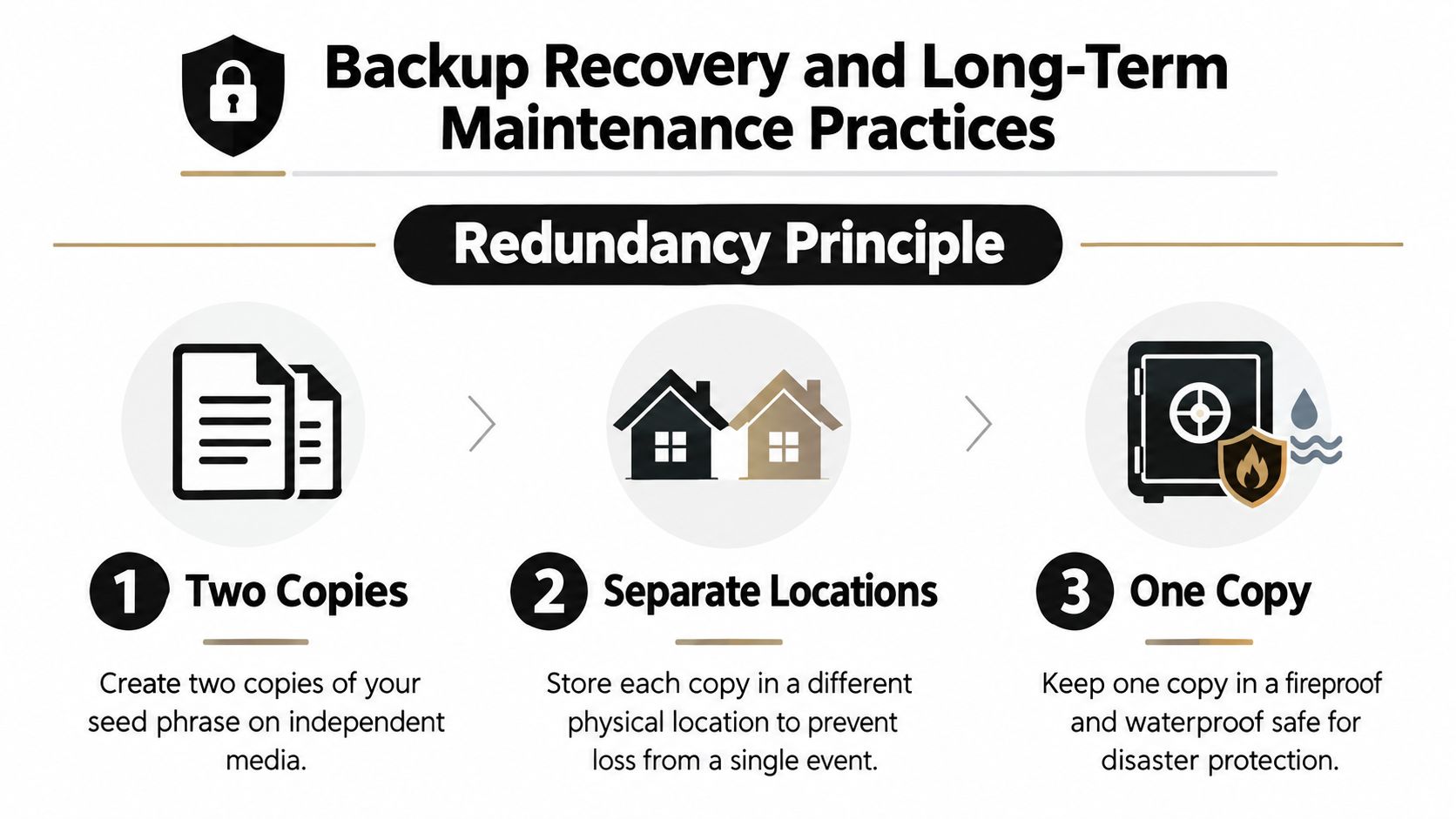
Cold storage is a continuing practice, not a one-time purchase. Start with redundancy: create two seed copies on independent media and keep them in separate physical locations. One might sit in a fire-resistant home safe, while another stays in a bank safety deposit box or a trusted relative's secure vault.
Seed backups and passphrase backups deserve separate treatment. A thief who finds both can access the wallet, but an owner who loses either may lose access. Keep enough documentation for recovery without placing the complete secret in an obvious, labeled container.
Plan for inheritance
Write a sealed instruction letter that explains what heirs should look for, which devices belong together, and whom to contact. The letter should guide a recovery process without exposing the keys inside the document itself.
A Shamir-style split or a multi-location arrangement can reduce the chance that one discovery reveals everything. Name executors who can follow the instructions, and consider giving them a supervised recovery demonstration while you're still available.
Maintain multisig deliberately
Multisig owners need rules for signer rotation, signing ceremonies, address verification, and unavailable co-signers. Document what happens if a participant dies, loses a device, becomes unreachable, or can no longer approve transactions.
Hardware devices also become electronic waste eventually. Organizations managing obsolete mining equipment can consult this resource on electronics recycling for miners to dispose of equipment without casually exposing storage media.
Review the system at regular intervals:
- Test recovery: Restore from a seed on a fresh device.
- Inspect devices: Confirm chargers, screens, and cables still work.
- Review passphrases: Change a passphrase if you believe it was exposed, then move funds to the new wallet.
- Update instructions: Revise beneficiary and executor documents after major life changes.
A practical guide to seed phrase storage methods can help you evaluate materials and locations without confusing backup durability with transaction security.
Common Cold Storage Mistakes Worth Avoiding
Cold doesn't mean unhackable. A holder can still install a fake wallet, approve a malicious contract, verify the wrong address, or purchase a compromised device. Offline signing protects the key, but it doesn't guarantee that the transaction is honest.
Paper isn't a perfect backup. Fire, water, fading ink, accidental disposal, and discovery can all defeat a paper seed. Metal improves physical durability, but it still requires duplication and geographic separation.
A drawer isn't a security plan. Anyone with access to the home may find an unprotected seed. Store backups discreetly, separate them, and make sure heirs can locate the recovery instructions without receiving an exposed secret.
Passphrases aren't harmless extras. A forgotten passphrase can lock away funds even when the seed and hardware wallet survive. Use one only when you can document, protect, and recover it reliably.
Choosing the Right Cold Storage Path for You
A smaller holding may need one reputable hardware wallet and a metal seed backup. A larger personal reserve can justify a passphrase, separate locations, and a tested recovery device. High-value holdings may warrant 2-of-3 multisig with geographically separated signers, or a qualified custody vault if the owner prefers professional controls.
Your next week can produce a meaningful security improvement:
- Buy a genuine hardware wallet through a trustworthy channel.
- Generate the seed on the device and record it on durable metal.
- Add a passphrase only if you can preserve and recover it.
- Complete a recovery drill on a separate device.
- Write inheritance instructions that a trusted person can follow.
The option isn't automatically the right option. Choose based on holding size, technical confidence, daily activity, recovery tolerance, and the threats you face.
Coiner Blog publishes practical guides and balanced analysis across Bitcoin, Ethereum, DeFi, Web3, Layer 2 networks, tokenization, and other blockchain topics. Visit Coiner Blog to keep building your crypto knowledge with clear explanations of both opportunity and risk.