
What Are Micropayments: A Crypto Guide to Small Sums
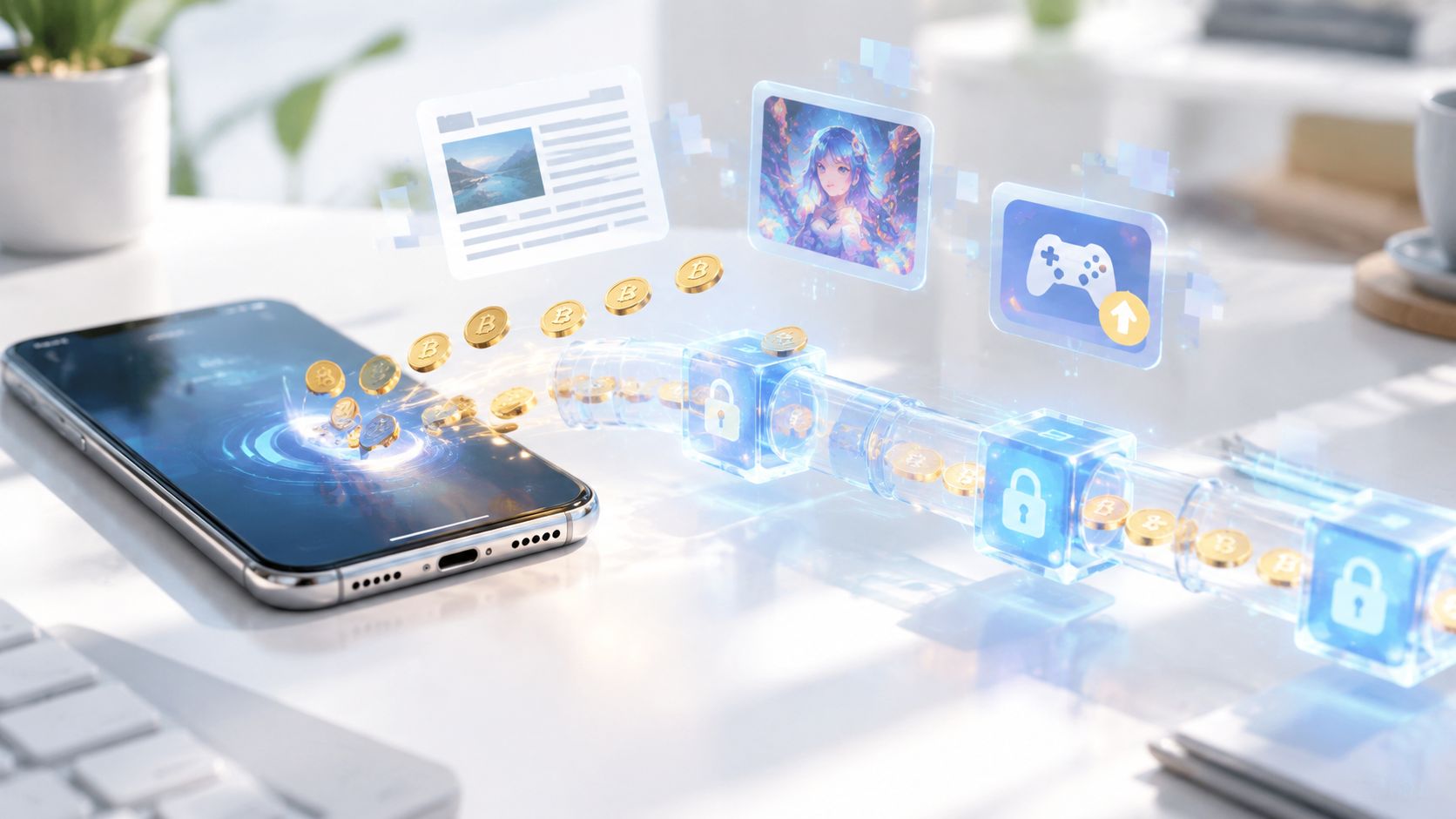
You open an article after seeing it shared online, read the first few paragraphs, and reach a paywall. The publisher wants a full subscription, while you only need this one piece. The alternative is usually an ad-heavy page, a registration form, or leaving without paying the creator.
Micropayments offer a third option: pay a small amount for the exact article, API request, game item, stream, or digital service you use. The idea sounds modern because crypto has made tiny, programmable transfers more visible, but the underlying problem is much older. The question isn't what are micropayments, but whether a payment system can make small-value transactions economical without turning every purchase into a frustrating checkout process.
Table of Contents
- The Micropayment Promise Beyond the Paywall
- Understanding Micropayment Economics
- How Crypto Unlocks Micropayments
- Real-World Micropayment Use Cases in Web3
- Challenges and Practical Considerations
- The Future of Micropayments and Automation
The Micropayment Promise Beyond the Paywall
A smaller commitment for a specific value
A reader might value one investigative article without wanting another recurring charge. A micropayment could let that reader access the article for a small one-time amount, while the publisher receives revenue directly tied to consumption. The same logic could support a tip for a useful tutorial, access to a single research dataset, or a brief period of premium audio.
That model sits between two familiar choices:
- Subscriptions: Convenient for frequent users, but excessive for occasional readers.
- Advertising: Free at the point of access, but dependent on attention, tracking, and crowded page design.
- Micropayments: Granular payment for a clearly defined digital good or service.
The appeal is straightforward. Users pay for what they consume, and creators can monetize smaller moments of value instead of forcing every visitor into a long-term relationship.
Practical rule: A low price only helps when the user understands exactly what they receive and can complete payment with almost no interruption.
The idea predates crypto
Micropayments have been discussed since at least the 1960s, while interest accelerated in the early 1990s as the internet expanded. One of the first major systems, Millicent, was developed in 1995 and promoted as a way to buy and sell internet information profitably down to fractions of a cent, as documented in this history of micropayments and the internet.
Early systems used token-based models and vendor-specific electronic currencies. They tried to solve a basic web monetization problem, traditional card fees made tiny purchases inefficient. This history matters because micropayments weren't invented for Bitcoin, Ethereum, or modern fintech. Crypto inherited an old ambition and introduced new tools for settlement, programmability, and ownership.
Blockchain networks might help because they can combine digital wallets, cryptographic authorization, smart contracts, and Layer 2 infrastructure. But technology alone doesn't guarantee adoption. A successful system must make the economic calculation work for the merchant and the user at the same time.
Understanding Micropayment Economics
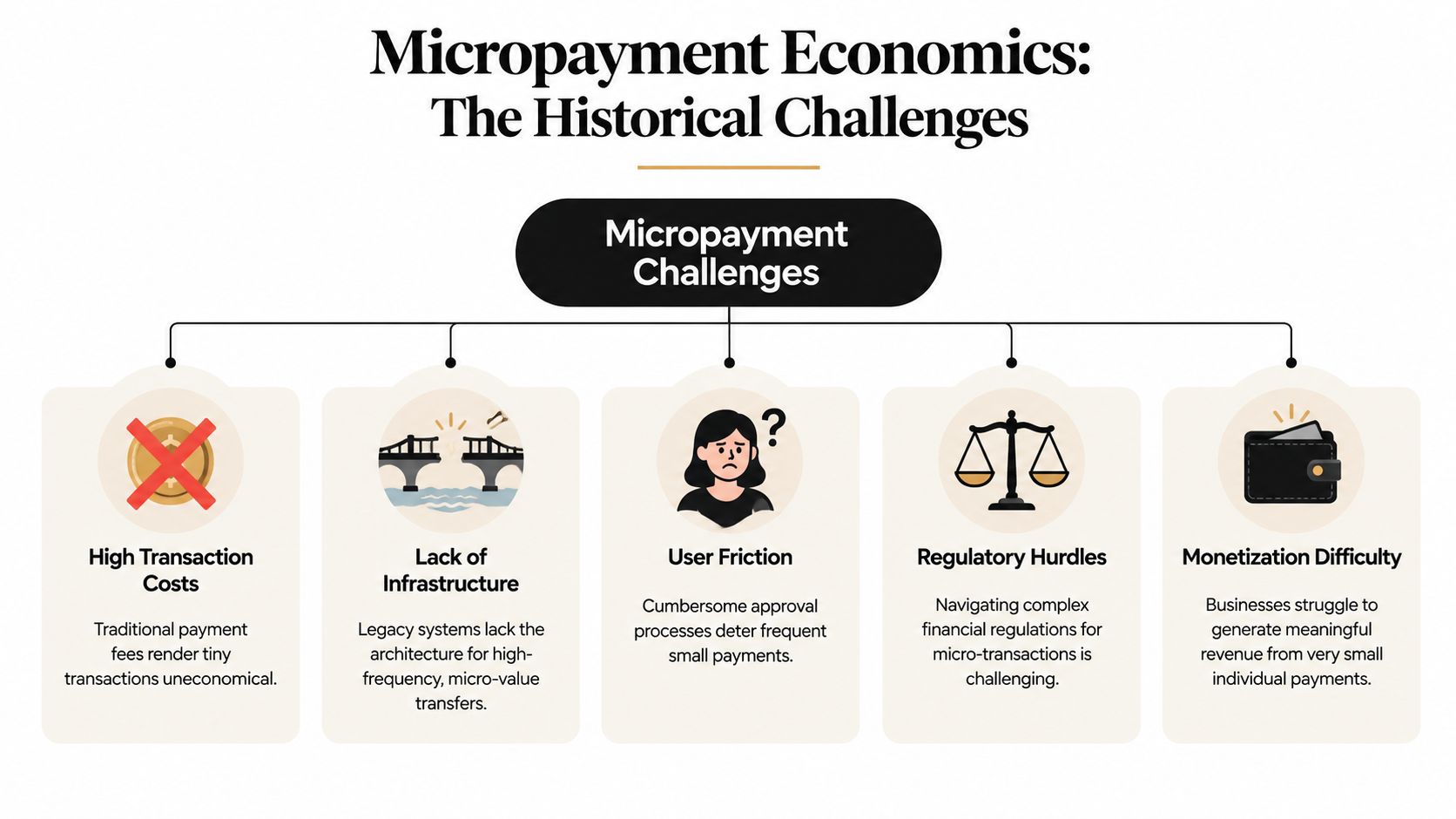
A micropayment isn't defined only by its small size. The European Central Bank describes micropayments as online, mobile, or machine-initiated transfers near or below €1 for digital goods and services delivered immediately or almost immediately. The European Central Bank's analysis of micropayments identifies the central constraint: traditional payment rails often include fixed costs for each transaction.
Consider a 50-cent purchase. If the payment rail takes a fixed processing charge plus a percentage, that fixed component consumes a large share of the payment. The same fee is much easier to absorb on a larger purchase. It's like a vending machine charging a service fee that costs more than the snack itself.
The problem isn't that banks or card networks can't technically move the money. They can. The problem is that the infrastructure was designed around transaction values large enough to absorb authorization, fraud screening, dispute handling, settlement, and intermediary costs.
The break-even question
A viable micropayment system must answer four practical questions:
- What does each transaction cost? The fee must remain small enough that the merchant keeps meaningful value.
- When does settlement occur? Immediate or near-immediate settlement helps digital services deliver access without maintaining complicated receivables.
- Can the system handle volume? A rail that works for occasional purchases may fail when software generates frequent requests.
- How much friction does the buyer face? Re-entering payment details for every small purchase can destroy conversion even when the price feels attractive.
Aggregation can improve the calculation. A platform may record multiple small purchases and settle them together, flattening the effective cost. A network may also defer settlement or use an account balance, although those choices introduce questions about custody, liquidity, refunds, and reconciliation.
Usage-based software pricing illustrates the same design challenge. Developers need to connect a measurable unit of consumption with a price that users can understand. For a practical explanation of that model, see this guide to demystifying usage-based pricing for SaaS.
Why a large market need hasn't been enough
Small-value commerce has always existed at scale, but demand alone hasn't solved the infrastructure problem. A 2006 Federal Reserve Bank of Philadelphia discussion paper, citing TowerGroup estimates, said purchases under $5 represented more than $1 trillion in United States consumer spending during 2003, across 400 billion point-of-sale transactions, as summarized in the survey of micropayment systems.
That contrast explains the industry's history. Consumers already make many small purchases, yet digital systems struggled to capture them profitably. A micropayment rail succeeds only when its fee model, compliance process, fraud controls, user interface, and merchant operations fit the value of the transaction.
How Crypto Unlocks Micropayments
The most useful crypto innovation here isn't sending a token from one wallet to another. It's changing where and when transactions settle.
Think of a bar tab. You don't swipe a card after every sip. The bar records what you consume, keeps the running balance, and settles the tab when you leave. A crypto payment channel applies a similar idea to digital transfers. Participants lock value into a shared arrangement, exchange signed updates off-chain, and later settle the final result on the underlying blockchain.
Payment channels in plain language
Bitcoin's Lightning Network uses payment channels to support faster off-chain transfers. Instead of publishing every small payment directly to Bitcoin's base layer, participants update channel balances and use the network to route payments. The blockchain remains the settlement layer, while the channel handles the rapid exchange.
An independent research summary cited public Lightning capacity of about 4,898 BTC across 41,080 channels and 17,438 nodes as of May 2026, within a broader 4,900 to 5,600 BTC range reported for 2026 in this Lightning Network capacity summary. Capacity isn't the same as adoption or guaranteed liquidity, but it shows the network's core design, locking bitcoin into channels so many transfers don't need separate on-chain settlement.
Ethereum and other ecosystems use different Layer 2 approaches, including payment channels, rollups, and application-specific systems. Some move execution away from the base chain and later submit compressed or aggregated data for settlement. The implementation varies, but the economic goal is similar: reduce the cost and delay attached to each individual action.
For readers evaluating payment infrastructure, BroLabel's crypto payment insights provide useful context on wallets, settlement, and merchant integration. Tokenization also matters when a platform represents balances or payment rights digitally. This overview of tokenization in payments explains why programmable representations can support more flexible payment flows.
What changes for users and merchants
A crypto micropayment system can offer a funded wallet, a QR code, a browser interaction, or an application-level authorization. The user may approve a payment once and allow a service to draw against a controlled balance, rather than confirm every tiny transfer manually.
Merchants gain several potential advantages:
- Lower effective fees: Off-chain settlement or batching can reduce the cost allocated to each payment.
- Fast access control: A service can verify payment before releasing an article, API response, or digital asset.
- Programmability: Smart contracts can distribute funds, enforce conditions, or split revenue.
- Global reach: A crypto wallet can interact across borders, although local regulation and conversion still matter.
The trade-off is that users and merchants must manage wallets, keys, network selection, liquidity, and compliance. Crypto can remove one bottleneck while creating another. The best designs hide unnecessary complexity without hiding important risk.
| Attribute | Traditional Systems | Crypto (Layer 2) Systems |
|---|---|---|
| Fee model | Fixed processing costs can dominate tiny purchases | Off-chain transfers, aggregation, or deferred settlement can reduce effective cost |
| Settlement | Often depends on intermediaries and established payment workflows | May occur quickly between wallets, with final settlement on a base blockchain |
| Access | Familiar cards, bank accounts, and stored payment details | Wallets, QR codes, tokens, or application-level authorization |
| Programmability | Usually handled through separate software and billing systems | Smart contracts and protocol rules can connect payment with delivery |
| Main risk | Fees, chargebacks, fraud, and payment reversals | Key management, volatility, liquidity, bridge or contract risk, and compliance |
A direct token tip is the simplest version. A creator publishes a wallet address, and a supporter sends a small amount. That approach can work for voluntary payments, but it doesn't solve every problem. Recurring tips, refunds, stable pricing, recipient privacy, and a smooth first-time wallet experience require more infrastructure.
Real-World Micropayment Use Cases in Web3
A reader lands on a Web3 publication and wants one article, not a subscription. A payment prompt displays the price, the wallet authorizes the transfer, and access opens after settlement. The value exchange is narrower than a membership purchase, which makes sense for occasional consumption.
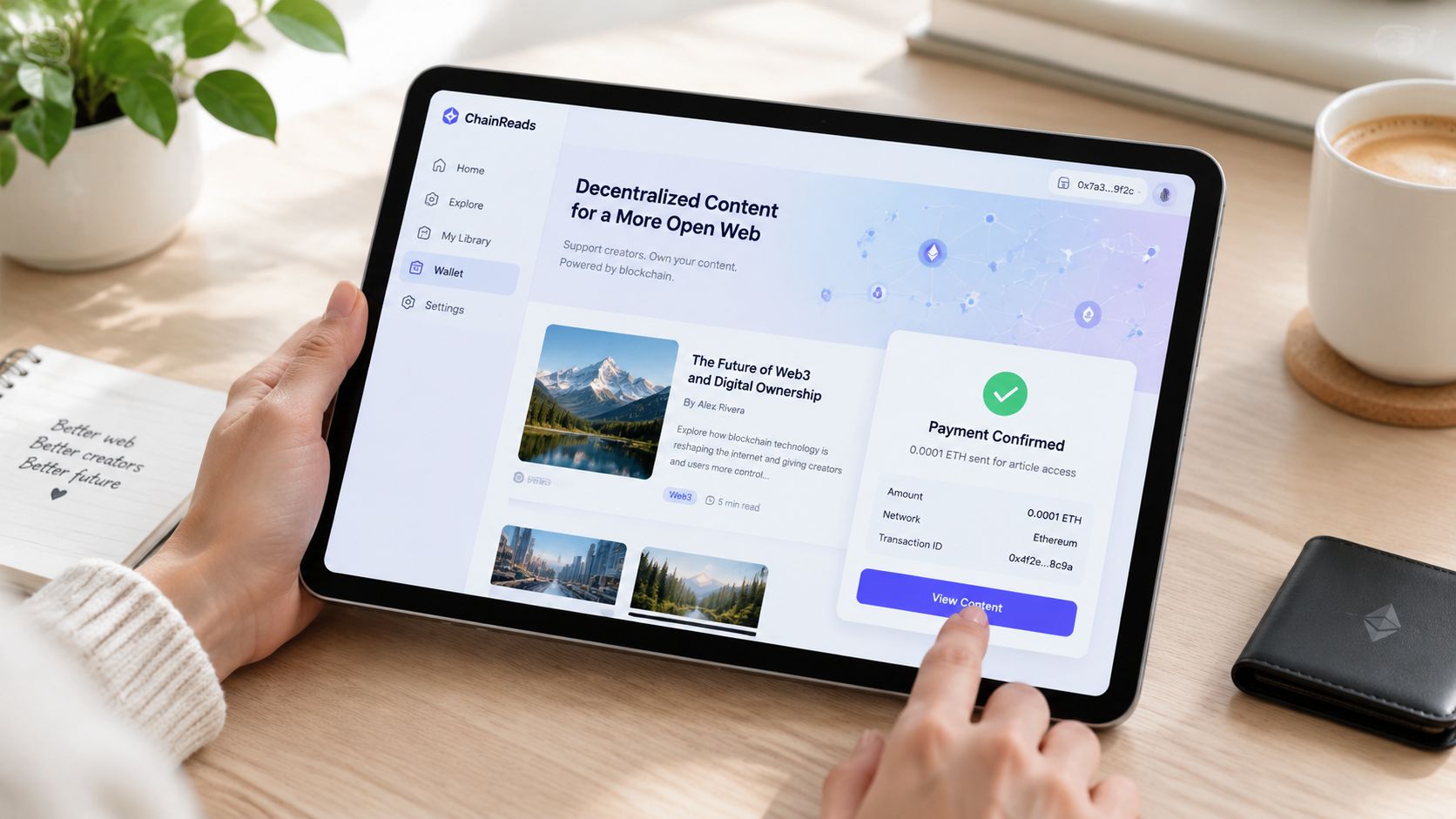
Content and creator support
A decentralized social platform could let a user send a small tip after reading a thoughtful post. The creator doesn't need to depend entirely on advertising or a platform's recommendation system. The user also doesn't need to commit to a recurring payment for every creator they occasionally follow.
The experience works only if the wallet is already available, the asset has a stable enough value, and the confirmation step feels proportionate to the tip. A technically elegant payment that requires network selection and several approvals will lose to a familiar free feed.
Crypto gaming
In a blockchain game, a player might buy a cosmetic item, access a temporary feature, or pay for a small in-game action. The advantage isn't merely lower price. Micropayments can connect payment with digital ownership, allowing the game to represent items through tokens or smart contracts when that design is beneficial to players.
That doesn't make every game economy healthy. Developers still need sound tokenomics, clear item utility, controls against exploitative spending, and a way to handle network fees. A low-value purchase should feel like part of the game, not a financial operation.
DeFi and NFT interactions
Decentralized finance often breaks complex activity into smaller actions, such as accessing data, paying a service fee, or triggering a smart contract. A low-cost payment could authorize an oracle request, a data lookup, or another narrowly defined service. NFT platforms could also use small transfers for creator tips, access features, or marketplace-related functions.
Users must distinguish between a micropayment and a speculative transaction. A tiny service fee can be predictable, while an NFT purchase may expose the user to asset volatility, liquidity risk, and smart contract risk. The payment size doesn't determine the overall risk of the application.
Machine-accessible services
APIs can charge for individual requests rather than forcing every developer into a large plan. An AI application could pay for data, compute, or a specialized response as needed. That model becomes more compelling when software makes the request automatically, because a machine can evaluate price, latency, and usefulness more consistently than a person completing repeated checkouts.
The following video offers visual context for how blockchain payment concepts are often presented to users and developers.
Across these examples, the winning use case isn't the one with the smallest possible payment. It's the one where granular pricing solves a real mismatch between what the user wants and what the existing billing model offers.
Challenges and Practical Considerations
Micropayments don't become viable merely because a blockchain transaction is inexpensive. A merchant still has to acquire users, prevent abuse, handle refunds, account for currency conversion, follow applicable rules, and explain the payment clearly.
The practical break-even calculation is often overlooked. Fixed fees are only one variable. Fraud screening, chargebacks, foreign exchange, operational support, and checkout friction can erase margins or reduce conversion even when the payment itself is only cents, as discussed in this analysis of micropayment mechanics and economics.
Wallets are still a user experience problem
Crypto wallets give users control, but control introduces responsibility. A new user may not know which network to select, whether a token is compatible, how to fund gas, or what a signature request means. A lost key can create a very different support problem from a declined card.
Account abstraction wallets can reduce some of these steps by letting applications offer programmable authorization, sponsored fees, or recovery features. They don't remove every custody or security question, but they can make the interface closer to familiar digital payments. Readers exploring the design space can review this guide to Layer 2 scaling solutions alongside wallet architecture.
Volatility changes the meaning of a fixed price
Bitcoin and many other cryptoassets can fluctuate in fiat value. A content provider that sets a price in a volatile token may deliver an inconsistent experience, while a user may hesitate to spend an asset expected to appreciate. Stablecoins such as USDC can make the unit of account more predictable, but they bring their own issuer, regulatory, liquidity, and infrastructure considerations.
Security and compliance remain central
Micropayments can reduce the incentive for some forms of fraud because each individual transaction has low value, but attackers can still automate activity, drain funded wallets, exploit contracts, or manipulate service endpoints. Merchants need rate limits, authentication, monitoring, clear authorization boundaries, and recovery procedures.
Regulatory treatment also depends on the asset, jurisdiction, business model, and role of the provider. A system that merely facilitates a user-controlled transfer may face different obligations from one that holds customer funds, converts currencies, or operates a payment service. The technical design must therefore sit alongside legal and operational analysis.
A cheap transaction is not the same as a viable payment product. The merchant must measure the complete cost of serving the transaction.
The Future of Micropayments and Automation
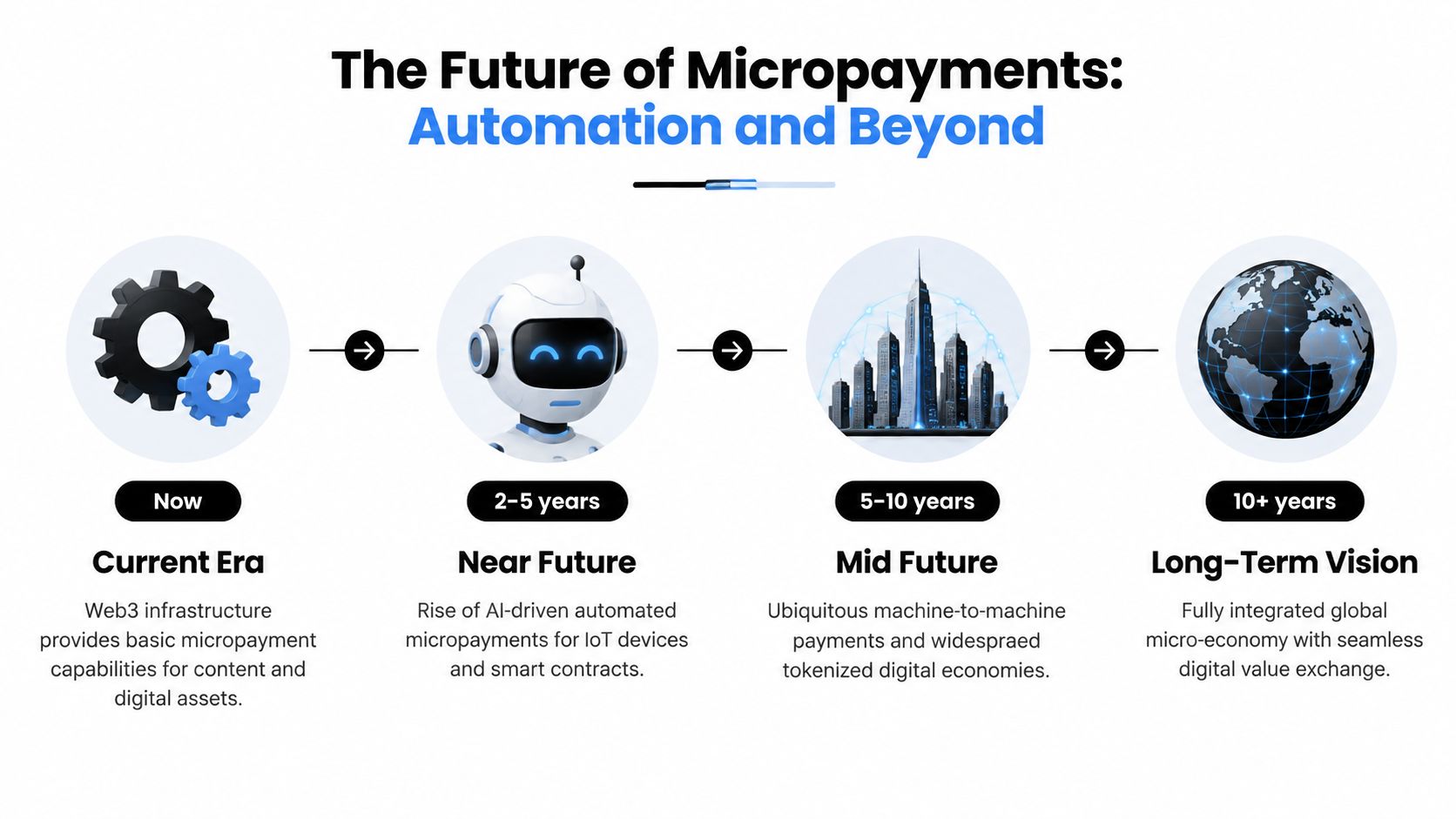
The most important shift may be from human-initiated payments to machine-led payments. An AI agent can compare the cost of data sources, pay for a permitted API request, and stop when it reaches a budget. An IoT device could request a service when needed, while a smart contract could release a small payment after a verifiable condition.
Recent reporting shows that this direction has moved beyond theory. Visa and Artemis reported that x402 reached about $15 million in adjusted transaction volume across roughly 1.096 billion transactions by April 21, 2026, with activity concentrated mostly on Base, Solana, and Polygon and settled in USDC, according to this report on x402 activity.
Why stablecoins and smart wallets matter
Stablecoins can provide a more intelligible price for digital services than volatile assets. Smart contracts can enforce spending limits, while account abstraction wallets can let users define what an agent may pay, where it may pay, and when it must request approval. This guide to account abstraction wallets covers the wallet design issues behind that experience.
The strongest future model may not look like a person approving hundreds of tiny transfers. It may look like a person setting permissions once, an agent negotiating a service price, and a payment protocol settling each approved interaction.
That future still depends on privacy, interoperability, liquidity, consumer protection, and clear compliance. The technology has to make value move with the same granularity as software, but the user must retain understandable control.
Micropayments began as an answer to the mismatch between web content and traditional billing. Crypto offers new ways to address fees and settlement, while AI creates more situations where software needs to buy software. Adoption will depend less on dramatic promises than on whether builders can make the complete experience affordable, stable, secure, and nearly invisible.
For balanced guides on Bitcoin, Ethereum, Web3, DeFi, AI and crypto, and emerging payment infrastructure, visit Coiner Blog. Explore its practical analysis to understand how blockchain systems work, where the risks remain, and which developments deserve closer attention.