
Ethereum Proof of Stake: The Ultimate 2026 Guide

Ethereum didn't just get a software update. It changed the economic engine that secures one of the most important networks in crypto.
On September 15, 2022, Ethereum completed The Merge, replacing Proof of Work with Proof of Stake and cutting the network's energy consumption by approximately 99.95% according to Wikipedia's overview of proof of stake. That headline mattered. But the more important story is what came after it: Ethereum shifted from security based on hardware and electricity to security based on staked capital, validator behavior, and financial penalties.
That's why Ethereum Proof of Stake matters now. It sits underneath DeFi, NFT markets, Layer 2 rollups, smart contracts, tokenized assets, and a growing Web3 stack that increasingly overlaps with AI-powered apps and real-world finance. If you're investing in ETH, using DeFi, evaluating staking, or building in Web3, you need to understand more than the “green blockchain” talking point.
You need to understand who validates blocks, why finality matters, what slashing does, and where the hidden concentration risks are starting to show.
Table of Contents
- The Dawn of a Greener Ethereum
- From Mining to Staking The Story of The Merge
- How Ethereum Proof of Stake Actually Works
- Proof of Stake vs Proof of Work A Head to Head Comparison
- Becoming a Staker Options Rewards and Risks
- The Billion Dollar Moat Ethereum's PoS Security
- The Ripple Effect of PoS on DeFi NFTs and Web3
The Dawn of a Greener Ethereum
Ethereum's switch to Proof of Stake cut one of the biggest cost centers in blockchain design: the need to burn real-world energy to defend the chain. For a network that underpins DeFi, NFTs, DAOs, stablecoin activity, and a large share of smart contract development, that change mattered far beyond public relations.
The easy headline is that Ethereum became far more energy efficient after The Merge. The more useful takeaway is what changed underneath. Ethereum no longer asks miners to prove commitment with machines and electricity. It asks validators to post capital and risk losing it if they break the rules.
If you want a quick refresher on the foundations before going deeper, this guide to blockchain technology basics will help.
Why this upgrade mattered beyond optics
Proof of Stake changed Ethereum's security model from industrial competition to economic exposure. That sounds abstract, so put it in simpler terms. Under Proof of Work, security came from the cost of buying hardware and power. Under Proof of Stake, security comes from putting ETH at risk on-chain, where the protocol can punish bad behavior directly through slashing.
That shift reshapes how to evaluate Ethereum.
A greener chain is nice. A chain that can make attacks financially painful is far more interesting. If an attacker wants to rewrite history or violate finality, the question is no longer just "How much electricity would this take?" It becomes "How much ETH must be controlled, and how much of that stake could be destroyed?" That is the core of Ethereum's crypto-economic security.
There is also a tradeoff that gets less attention. Proof of Stake lowers hardware barriers, but it can concentrate influence in large staking providers, liquid staking protocols, custodians, and block builders who capture MEV. In other words, Ethereum reduced one form of centralization pressure and introduced another. For builders and investors, that is a more realistic frame than the simple "green upgrade" story.
Where readers often get confused
Many new readers hear "staking" and picture a crypto version of a savings account. That mental model causes problems.
Staking is closer to posting a security bond while performing a job. Validators propose and attest to blocks, help the network agree on the current state, and put their ETH on the line while doing it. Rewards are payment for correct participation. Losses are possible if a validator is offline at the wrong times, configured poorly, or acts maliciously.
Finality also trips people up. Finality works like wet cement hardening into stone. A fresh block can still be changed if the network reorganizes. A finalized block is much harder to reverse because reversing it would require a coordinated attack that puts large amounts of staked ETH at risk. That is why finality matters to DeFi protocols, bridges, and anyone settling large-value transactions.
So yes, Ethereum became greener. Of note, it became a network where security, yield, and governance power are tied together by economic incentives. If you are considering staking, that means your first question should not be "What is the reward rate?" It should be "Who controls the validator, how is MEV handled, and what risks sit behind the yield?"
From Mining to Staking The Story of The Merge
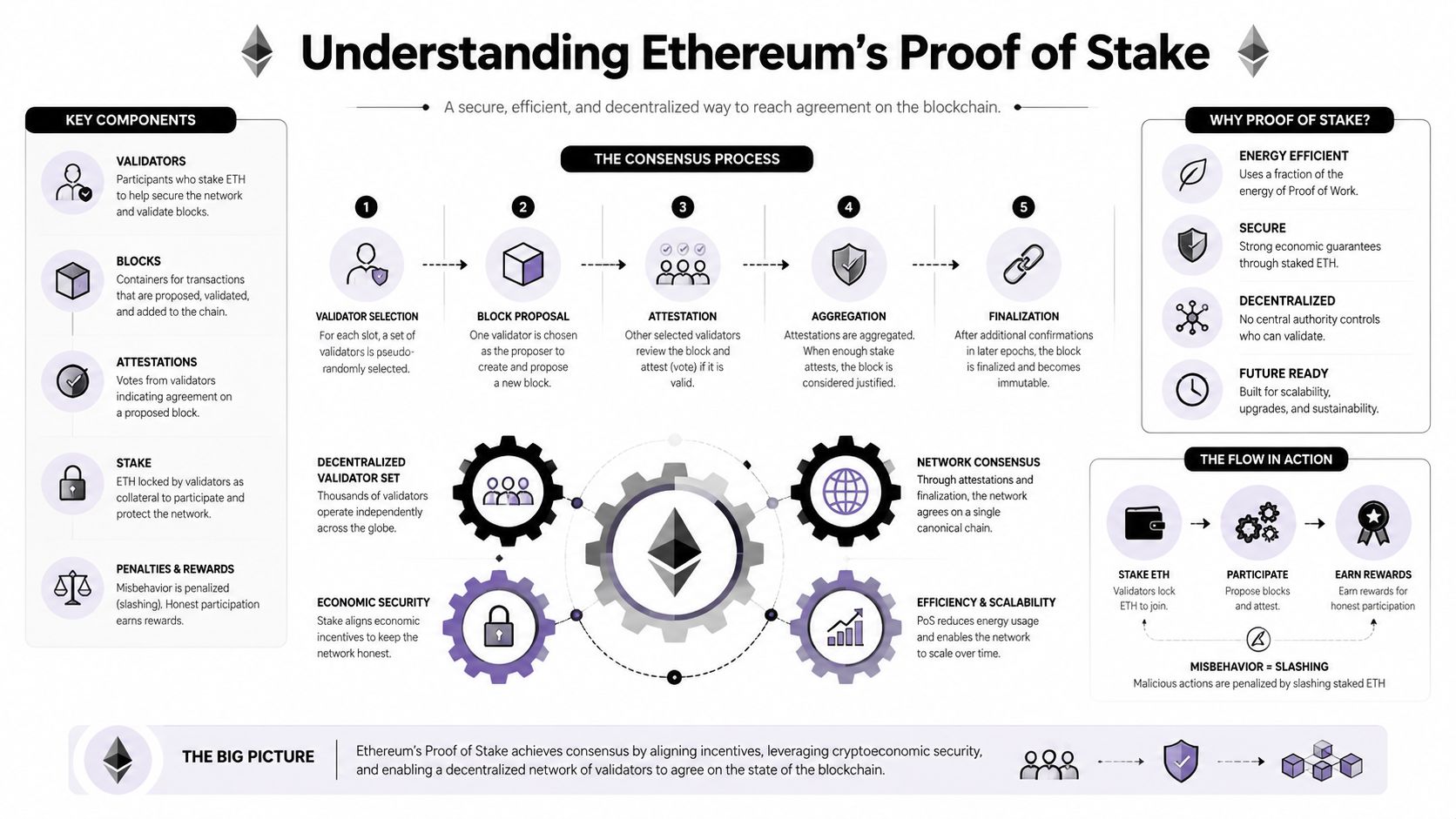
On September 15, 2022, Ethereum changed the machine at the center of a blockchain worth hundreds of billions of dollars without stopping the chain for users. That event, The Merge, replaced miners with validators and changed the way Ethereum buys security.
That last point matters more than the usual headline about lower energy use. Before The Merge, Ethereum's defense came from electricity, hardware, and competition among miners. After The Merge, its defense came from capital locked inside the protocol. An attacker no longer needs to gather warehouses of machines. They would need to control a huge amount of ETH, risk losing it, and still coordinate an attack under public scrutiny. The security budget shifted from physical resources to financial penalties.
Why Ethereum had to move on from mining
Proof of Work gave Ethereum a proven way to order transactions, but it also shaped who could participate and how power accumulated.
Mining favored operators with cheap power, specialized hardware, and access to scale. That created a system where security depended on real-world industrial advantages. It worked, but it was a hard fit for Ethereum's long-term goals. The network wanted a consensus system that could support a larger validator set, pair better with future upgrades, and lower the cost of participating in security.
There was also a practical difference for everyday ETH holders. Owning ETH did not make you part of consensus under mining. Owning ETH can make you part of consensus under staking, either directly or through pooled products. If you want a refresher on how the old model worked, this guide to best solo mining approaches shows why mining and staking attract very different participants.
The Beacon Chain was the bridge
Ethereum did not replace its consensus engine in one step. It rehearsed the transition by launching the Beacon Chain first, then later joining that staking system with Ethereum's existing execution layer.
A useful comparison is a theater production changing stages while the play continues. The script, actors, and audience stay in place, but the support structure behind the scenes is rebuilt with extreme care. The Beacon Chain let Ethereum test validator behavior, block coordination, and incentive design before the main chain fully depended on it.
One design choice made that coordination concrete. A solo validator needs exactly 32 ETH in the deposit contract, as ConsenSys explains in its proof of stake overview. That deposit is collateral, not a membership badge. It gives the protocol a financial way to reward correct behavior and punish harmful behavior.
What The Merge changed in practice
The Merge did not lower gas fees by itself, and it did not instantly scale Ethereum. That confusion came from treating a consensus change like a user-facing product update. Consensus is lower in the stack. It changes how the network agrees, not how much blockspace appears overnight.
What changed immediately was the network's economic structure. Validators replaced miners. Yield from staking became part of Ethereum's security model. Finality became tied to the cost of corrupting or coordinating a large share of staked ETH. For institutions, DeFi protocols, and large traders, that is what matters most. Security after The Merge depends on whether honest validators stay distributed, whether staking power concentrates in a few providers, and whether MEV extraction pushes influence toward specialized builders and relays.
That is why The Merge should be read as a tradeoff, not a fairy tale. Ethereum reduced reliance on mining hardware and energy markets, but it increased the importance of validator incentives, staking concentration, and block-building supply chains. For a potential staker, the practical question is no longer just “How much can I earn?” It is “Who runs the validator, where does MEV flow, and how much control is pooling into too few hands?”
How Ethereum Proof of Stake Actually Works
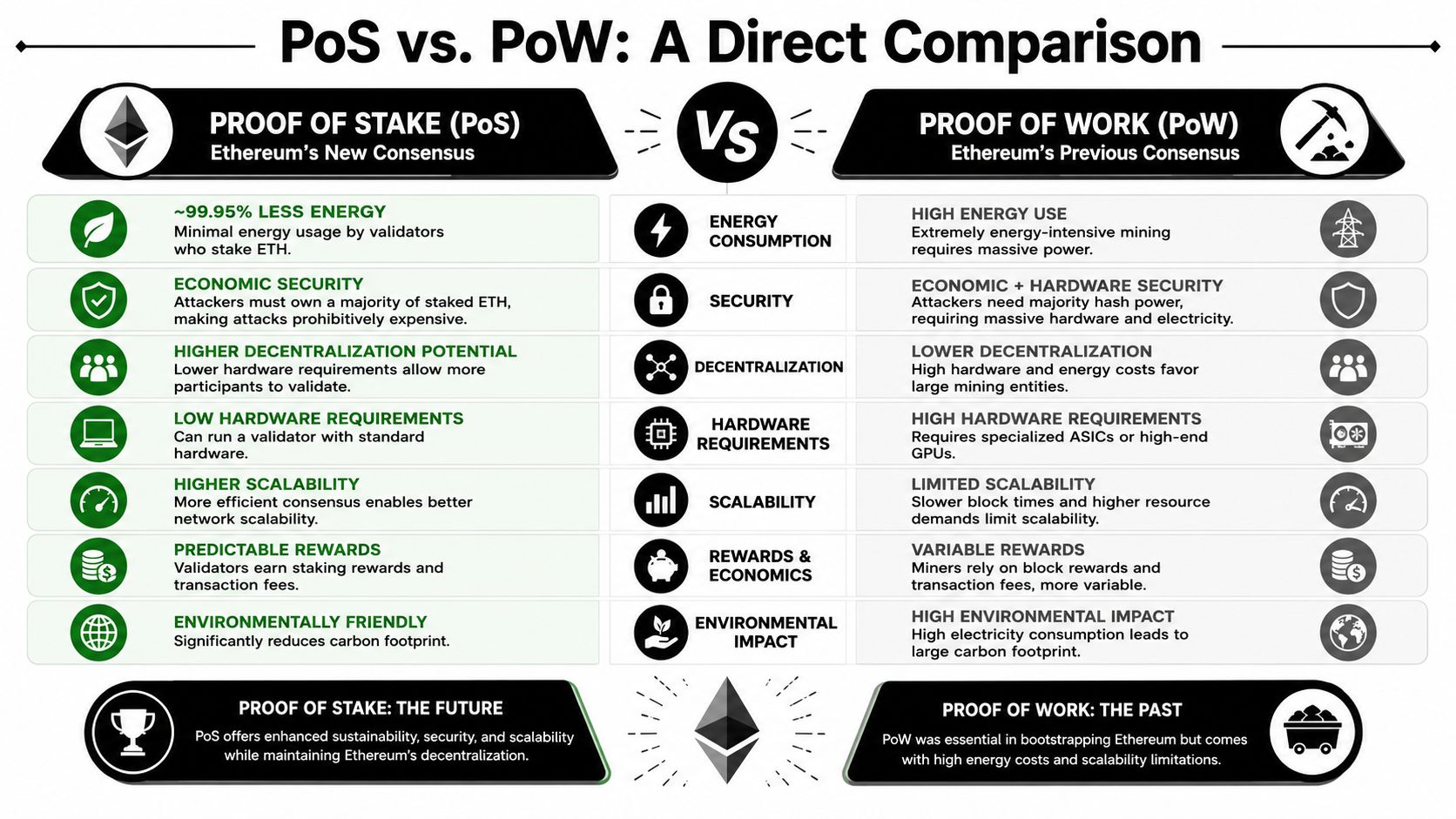
Ethereum Proof of Stake makes more sense when you stop thinking about “staking rewards” and start thinking about a giant distributed committee.
Each validator joins that committee by locking collateral. The protocol then assigns work. Sometimes a validator gets to propose a block. More often, validators attest to whether a proposed block is valid. Consensus emerges because thousands of independent participants coordinate around the same rules and put capital at risk if they break them.
The validator model in plain English
To run a full validator node, a user must deposit exactly 32 ETH into Ethereum's official deposit contract. Ledger's Ethereum PoS explainer describes that deposit as a security stake that can be partially or fully slashed if the validator acts maliciously or fails to sign reliably.
Here's a way to understand it:
| Role | What it does | Why it matters |
|---|---|---|
| Validator | Locks ETH and runs validator software | Provides economic commitment |
| Block proposer | Suggests the next block | Moves the chain forward |
| Attester | Votes on block validity | Helps the network agree |
| Slashing rules | Penalize bad behavior | Discourages attacks and conflicting actions |
That's the core loop. Validators don't “mine” blocks. They're selected to perform duties based on stake.
How selection works
Ethereum uses stake-weighted probability. A validator with more staked ETH has a greater chance of being selected, though in practice the protocol treats this through validator units.
A useful way to think about it comes from a community explanation on Reddit: a validator with the minimum 32 ETH stake has roughly a 1 in 400,000 chance of proposing a block, while 64 ETH represented as two validators doubles that chance, as described in this Reddit discussion on how proof of staking works. That helps explain why many smaller holders choose pooled staking rather than trying to participate alone.
Why finality confuses people
Many readers assume a block is secure the moment it appears. That's not quite right.
Ethereum's PoS system reaches finality through a supermajority process. Chainstack's overview of Ethereum PoS explains that finality arrives in about 13 minutes, after two epochs, using a two-thirds vote threshold. Once finalized, reversing that history becomes radically harder because the attack would trigger economic penalties on the validators violating the rules.
Practical rule: Don't treat “a block was proposed” and “a block is finalized” as the same thing. For high-value transfers, the difference matters.
For everyday users, that mostly stays behind the scenes. For DeFi traders, bridge operators, infrastructure teams, and institutional staking desks, it's one of the most important properties of the chain.
Proof of Stake vs Proof of Work A Head to Head Comparison
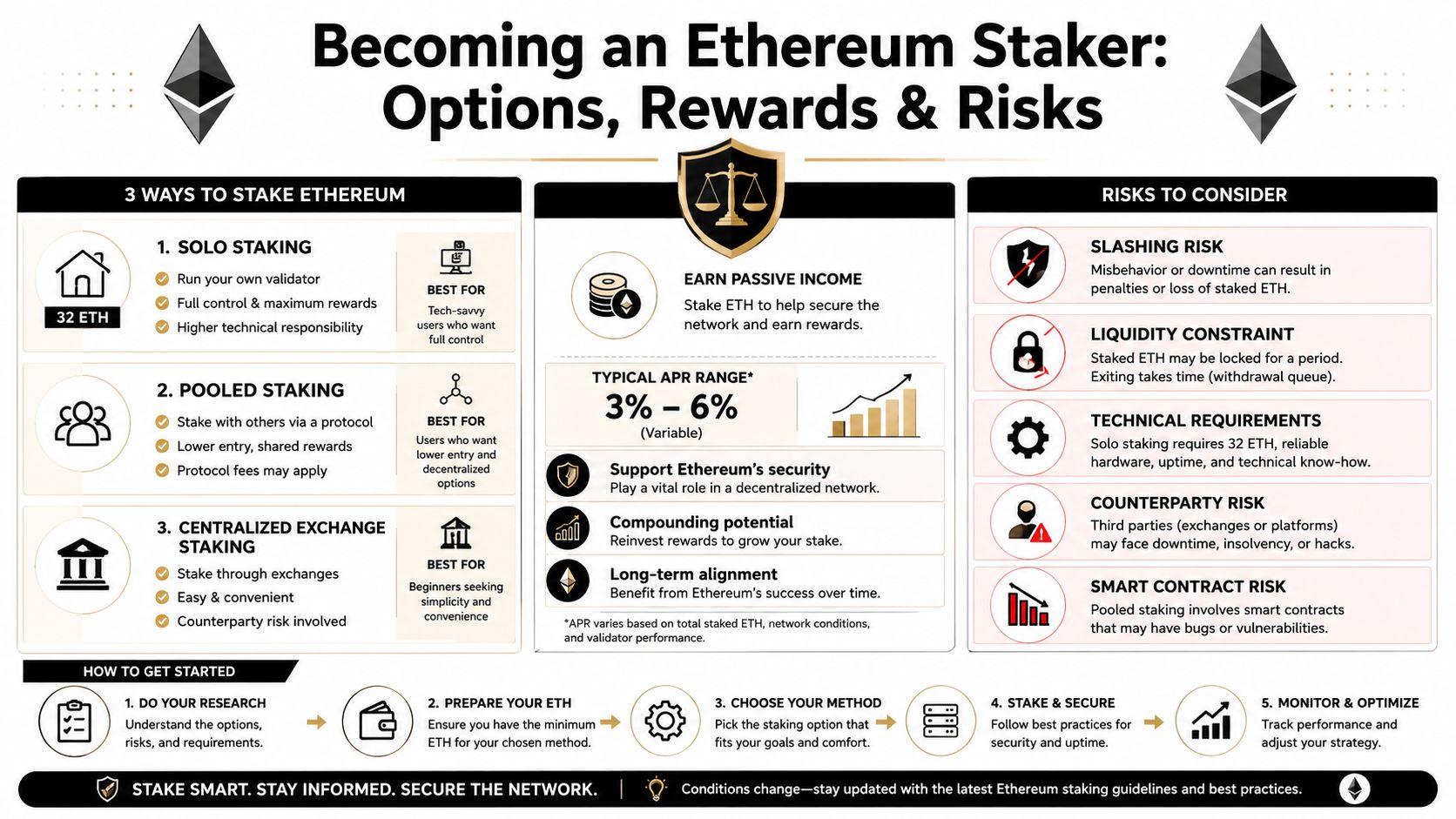
Ethereum's old and new consensus systems solve the same problem. They answer the question, “Who gets to add the next block, and why should everyone trust that result?” But they solve it in completely different ways.
Proof of Work uses computation. Proof of Stake uses capital at risk.
That distinction changes who can participate, what the network consumes, and how security gets enforced.
A direct comparison
| Dimension | Proof of Work | Proof of Stake |
|---|---|---|
| Security basis | Computational work | Economic stake |
| Participation model | Mining hardware | Validators staking ETH |
| Energy profile | High relative energy demand | Far lower after The Merge |
| Penalty model | Wasted electricity and hardware costs | On-chain slashing of stake |
| Accessibility | Harder for ordinary ETH holders | More accessible through pools and services |
The philosophical change is important. In PoW, attackers have to control computing power. In PoS, attackers have to put capital on the line and risk losing it under protocol rules.
Where PoS clearly wins
For Ethereum, PoS is the stronger fit for the network's current goals.
- Efficiency: The post-Merge chain runs without the old mining burden.
- Roadmap compatibility: PoS fits Ethereum's scaling direction, especially its relationship with Layer 2 rollups.
- Capital alignment: Validators have direct exposure to the health of the network.
- Broader participation: Pooled staking gives smaller ETH holders a path in.
Where the debate is still alive
PoS isn't free of tradeoffs. Critics often focus on concentration risk, governance influence, and whether large staking operators could gain too much control over ordering and rewards.
That's a serious debate, and it gets sharper once you bring MEV, liquid staking, and institutional staking concentration into the picture. So while PoS beats PoW on efficiency for Ethereum's needs, it also creates a different set of political and economic questions.
Proof of Work asked, “Who owns the machines?” Proof of Stake asks, “Who controls the capital and validator flow?”
That's the comparison that matters most in 2026 and beyond.
Becoming a Staker Options Rewards and Risks
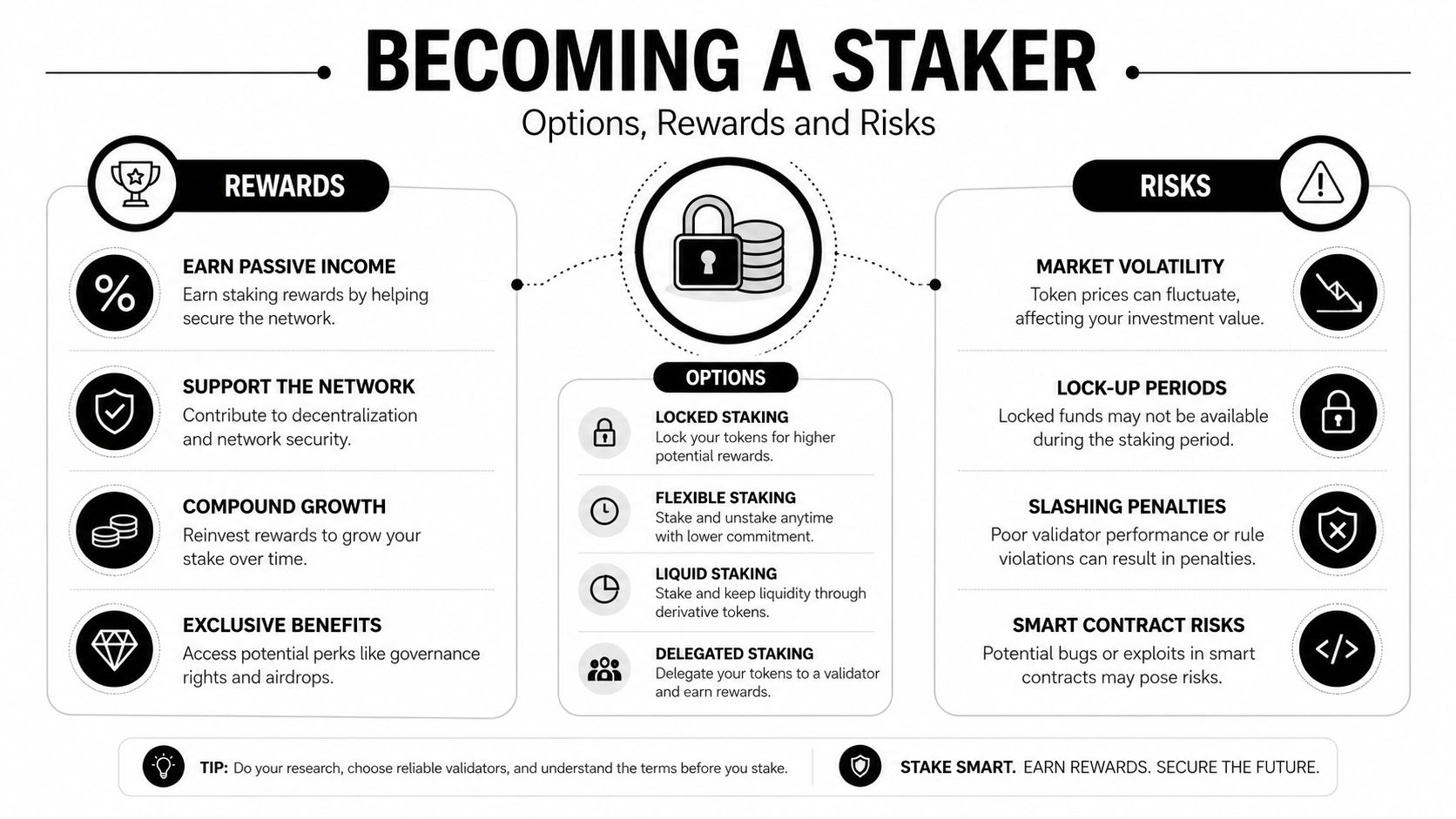
A staking decision is really a capital allocation decision. You are choosing how much control, liquidity, and operational responsibility you want in exchange for yield.
That matters because Ethereum staking rewards are not free money. They are payment for taking on specific jobs and specific risks, whether you run a validator yourself or hand that role to someone else.
Ethereum's base rule is simple. Running your own validator requires 32 ETH deposited into the Beacon Chain deposit contract. If you hold less than that, pooled staking is still an option. If you want a broader benchmark for how Ethereum compares with other networks, this guide to highest APY crypto staking options is a useful reference point, though headline yield should never be the only factor.
Option one is solo staking
Solo staking is the closest thing to owning and operating your own node in the civic sense. You keep the validator keys, choose the hardware, monitor uptime, and collect rewards without inserting an exchange or staking protocol between you and Ethereum.
That independence has real value.
- Maximum control: You keep authority over validator operations and key management.
- Direct participation: You are helping validate blocks and attest to chain history yourself.
- Lower counterparty exposure: Fewer middlemen means fewer outside entities that can freeze, mishandle, or rehypothecate your assets.
The tradeoff is work. You need the capital, a stable internet connection, reliable hardware, careful backups, and enough technical discipline to avoid mistakes. Solo staking is often the best fit for long-term ETH holders who want alignment with the network and are comfortable treating staking like infrastructure, not like a savings app.
Option two is pooled staking
Pooled staking lowers the entry barrier by combining deposits from many users. For someone with less than 32 ETH, it is the practical path.
But "pooled staking" covers several very different trust models. Some services are custodial, which means a company controls the validator and often the withdrawal process. Some are non-custodial or closer to staking marketplaces. Others issue liquid staking tokens that can be used across DeFi.
That distinction matters more than the marketing.
A useful way to compare them is to ask one question first: Who holds power if something goes wrong? If the answer is an exchange, you have company risk. If the answer is a smart contract system, you have contract and governance risk. If the answer is a decentralized operator set, you still need to ask how decentralized it really is in practice.
Common names in this category include Lido and Rocket Pool. They solve different problems and come with different trust assumptions, fee structures, and decentralization profiles.
| If you care most about… | The option usually fits best |
|---|---|
| Full control over keys and setup | Solo staking |
| Joining with less than 32 ETH | Pooled staking |
| Keeping a token you can use in DeFi | Liquid staking |
| Convenience inside an exchange account | Centralized exchange staking |
Option three is liquid staking
Liquid staking works like getting a receipt that can trade. You stake ETH, receive a tokenized claim on that position, and can often use that token elsewhere.
That extra flexibility is attractive, especially for DeFi users. It can also create a false sense of safety.
Now you are evaluating more than Ethereum validator performance. You are also evaluating token peg stability, liquidity in secondary markets, smart contract security, oracle design, governance decisions, and how that staking token behaves during market stress. A liquid staking token can look stable for months, then trade below its expected value when traders rush for the exit at the same time.
There is also a bigger network-level issue here. Large liquid staking providers can accumulate influence over validator flow, governance conversations, and block production economics. Add MEV to that picture and the question is no longer just "What is my yield?" It becomes "Am I reinforcing concentration in a system that is supposed to stay credibly neutral?"
Choose a staking method based on the failure mode you can actually tolerate, not the interface that looks easiest on day one.
The rewards and risks that actually matter
New stakers often focus on APR and stop there. That is like choosing a bank only by the interest rate without asking who holds the keys, what the withdrawal rules are, or what happens in a crisis.
The main risks are more concrete:
- Slashing risk: Serious validator misconduct can lead to lost stake.
- Operational risk: Downtime, poor maintenance, and misconfiguration reduce performance and can create penalties.
- Custody risk: Exchanges and custodians add business, legal, and withdrawal risk.
- Smart contract risk: Liquid staking adds code dependencies that Ethereum itself does not control.
- Liquidity risk: A tokenized staking position may not trade at the value you expect during stress.
- Centralization risk: Concentrated staking providers and MEV infrastructure can push influence toward a smaller group of operators.
For a long-term holder who plans to keep ETH idle, staking can be rational. For an active trader, someone who may need immediate liquidity, or anyone unclear on the tradeoffs, waiting is also a rational choice.
The practical rule is simple. If you want maximum sovereignty, solo stake and treat it like running a small piece of internet infrastructure. If you want access with less capital, pooled staking can work, but read the custody and smart contract risks closely. If you want DeFi flexibility, liquid staking offers it, but you are accepting a wider blast radius if markets or protocols break.
The Billion Dollar Moat Ethereum's PoS Security
Most explanations of Ethereum security stay too abstract. They say validators stake ETH, bad actors get slashed, and the network is secure. That's directionally right, but it doesn't tell you what an actual attack would cost.
The clearer way to think about Ethereum Proof of Stake is this: the protocol makes rewriting finalized history financially brutal.
According to Ethereum.org's PoS FAQ, the crypto-economic finality threshold means an attacker would need to control over 33% of the roughly $30B in staked ETH to attempt a history rewrite, putting roughly $10B of their own capital at risk of automatic slashing. This is the primary moat.
What slashing does
Slashing is Ethereum's built-in punishment system for serious validator misconduct.
It matters because PoS security isn't based on trying harder than an attacker with more machines. It's based on making dishonesty self-destructive. A validator that proposes conflicting blocks or issues contradictory attestations risks losing the stake that gave it influence in the first place.
Why finality is economic, not just technical
Traditional readers often look for a cyber-security analogy. Ethereum's model is better understood as a financial defense system.
To attack finalized history, the attacker doesn't just need software and coordination. They need a huge amount of ETH, they need to break protocol rules visibly, and they need to accept that the protocol can destroy that stake. That's why the term crypto-economic finality is so useful. The chain becomes secure because cheating is ruinously expensive.
A finalized Ethereum block isn't just “hard to reverse.” Reversal attempts come with a built-in financial self-destruct mechanism for the attacker.
The practical investor takeaway
If you stake ETH, use DeFi, bridge assets, or hold long-term positions on Ethereum, this security model should matter to you more than slogans about decentralization.
A few points are worth keeping in mind:
- Capital is the shield: Security comes from stake at risk.
- Rules are enforced on-chain: Penalties don't rely on a human referee.
- Large attacks are visible: Breaking finality requires coordinated misconduct.
- Security has a market dimension: ETH's value and staking participation both affect the deterrent effect.
MEV complicates this picture because it can concentrate incentives and influence. If that topic is new to you, this explainer on what MEV means in crypto markets is worth reading before evaluating staking providers or validator economics.
The Ripple Effect of PoS on DeFi NFTs and Web3
Ethereum Proof of Stake reshaped more than validator income. It changed the economic ground that DeFi apps, NFT platforms, Layer 2 networks, and consumer Web3 products stand on.
A useful analogy is the difference between building a city on a dirt road versus building on a reinforced highway. Applications still need their own design, liquidity, and users, but the base layer now offers a settlement model that fits Ethereum's long-term scaling plan far better. That matters because more of Ethereum's activity is shifting to rollups, while Ethereum itself remains the place where value is anchored and disputes are settled.
Why DeFi and Layer 2 builders care
For DeFi builders, PoS matters because predictable settlement and validator incentives shape how capital moves through the stack. Lending protocols, perpetuals, stablecoin systems, and DEXs all depend on users believing that state updates will settle reliably. If you want a concrete entry point into that part of the ecosystem, start with how automated market makers power DeFi trading.
For Layer 2 teams, the appeal is even more direct. Their model depends on posting data, proving state transitions, and inheriting Ethereum's settlement credibility. PoS did not solve scaling by itself, but it made Ethereum easier to pair with a rollup-centered future instead of tying the chain's evolution to mining economics.
That ripple spreads outward.
- NFT infrastructure: Marketplaces, games, and tokenized media benefit from a base layer designed around long-term settlement rather than mining-era assumptions.
- Real-world asset tokenization: Institutions care less about crypto slogans and more about whether a network offers credible settlement, visible rules, and attack costs that scale into the billions.
- AI and on-chain automation: Autonomous agents need a chain where execution is dependable enough for recurring payments, treasury actions, and machine-driven coordination.
- Web3 product design: Teams can spend more time improving onboarding, identity, and ownership flows, and less time designing around the constraints of an older consensus model.
For founders thinking about how protocol design meets user trust, it also helps to compare top Web3 creative studios. In Web3, weak UX can waste strong infrastructure.
The overlooked MEV problem
PoS also changed where centralization pressure shows up.
One of the biggest pressure points is MEV, or Maximal Extractable Value. MEV is the extra profit available from controlling transaction ordering inside blocks. A simple way to picture it is a tollbooth operator who can choose which cars pass first, then charge based on urgency. On Ethereum, that value can come from arbitrage, liquidations, sandwich attacks, and priority access to block space.
That matters for DeFi because transaction ordering is not a side issue. It affects who captures value from trades, who gets liquidated first, and which validators or block builders earn more than the posted staking yield suggests. If MEV rewards concentrate in a relatively small group of operators, the network can look decentralized on paper while becoming more economically concentrated in practice.
The concern is not just fairness. It is power. Validators, relays, builders, and large staking intermediaries can gain an outsized role in how value gets extracted from users and distributed across the stack.
PoS gave Ethereum a cleaner settlement system and a clearer security model. It did not make validator economics evenly distributed.
That is the conversation for 2026. The next phase of Ethereum's growth will depend not only on whether the chain stays secure, but on whether staking, MEV, and application-layer profits remain open enough that ordinary ETH holders, smaller validators, and new builders can still compete.
If you want more grounded crypto analysis without hype, follow Coiner Blog for practical guides on Ethereum, DeFi, NFTs, tokenomics, Web3 infrastructure, and the risks that matter.