
The 8 Best Solo Mining Opportunities for 2026
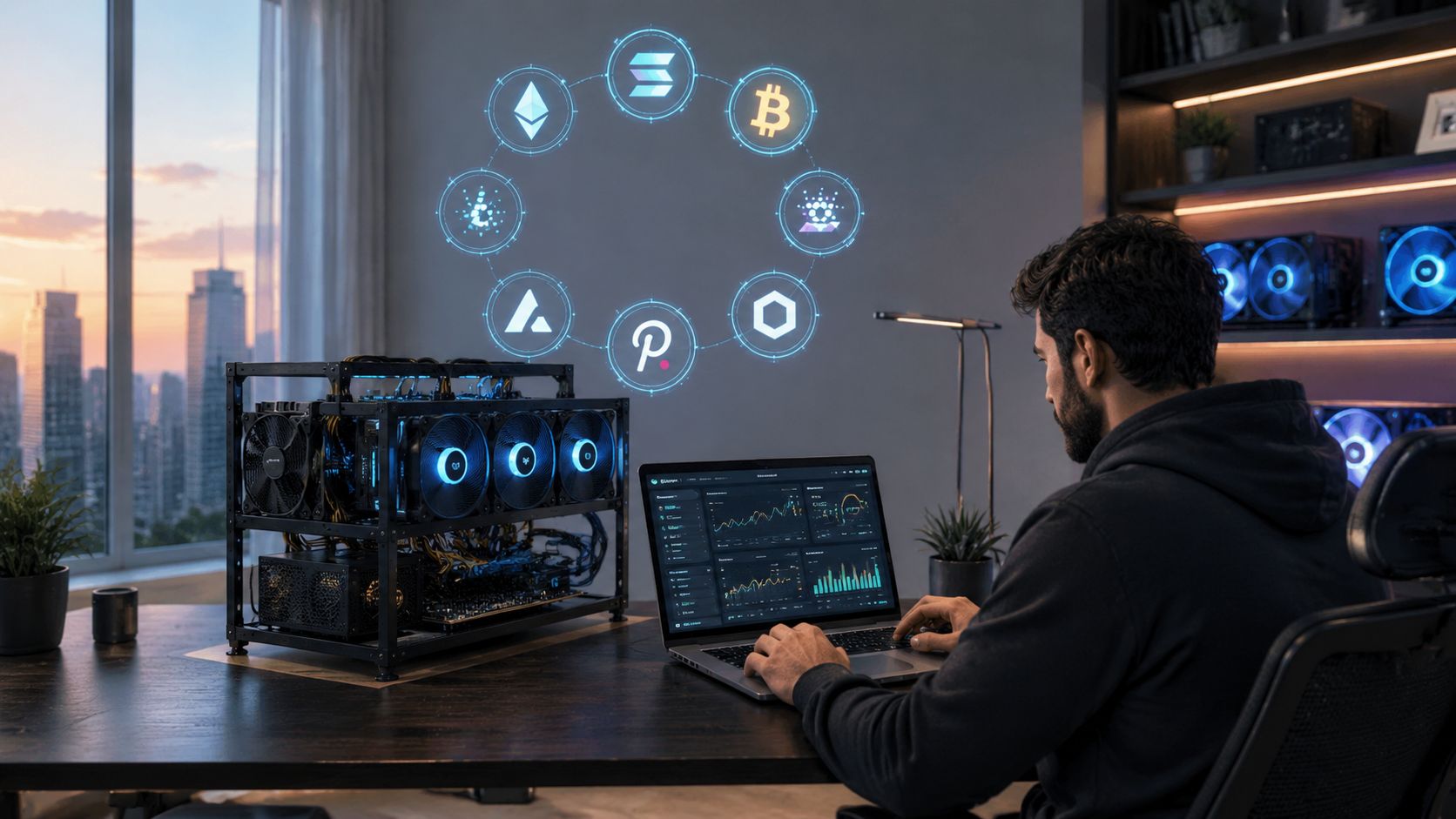
Tired of sharing rewards while someone else smooths out the variance and takes a cut? That question sits at the center of best solo mining discussions, and most guides still miss the core issue. They talk about coins as if solo mining is only about block rewards, when the harder decision is how much risk, complexity, and control you want.
Dreaming of hitting a full block reward on your own is understandable. Keeping the entire payout instead of splitting it with a pool is one of the strongest incentives in crypto mining. But solo mining isn't just a bigger-risk version of pool mining. It's a different operating model with different hardware demands, different cash flow realities, and different psychological pressure.
That matters more in 2026 because miners aren't just choosing between Bitcoin and altcoins anymore. They're balancing ASICs, GPU rigs, CPU mining, firmware, cooling, wallet security, and whether they want true sovereignty or a simpler solo-pool setup. Those choices connect to bigger crypto themes too, including Web3 infrastructure, tokenomics, decentralized network security, and the constant push for better efficiency across blockchain systems.
This guide gets to the practical side fast. You'll see where solo mining still makes sense, where it doesn't, and which combinations of hardware, software, and strategy give you the best shot of making the experience worthwhile. That includes Bitcoin, Monero, Litecoin, Ethereum Classic, the Antminer S19 Pro, HiveOS, hybrid mining, and immersion cooling.
Table of Contents
- 1. Bitcoin (BTC) Solo Mining
- 2. Monero (XMR) Solo Mining
- 3. Litecoin (LTC) Solo Mining with Scrypt ASICs
- 4. Ethereum Classic (ETC) Solo Mining with GPU
- 5. Antminer S19 Pro ASIC Hardware
- 6. HiveOS Mining Operating System
- 7. Solo Mining Strategy Hybrid Approach with Multiple Small Coins
- 8. Cooling Infrastructure Immersion Cooling Systems
- Solo Mining: Top 8 Comparison
- Final Verdict Is Solo Mining Your Winning Ticket
1. Bitcoin (BTC) Solo Mining
Bitcoin is still the headline act in any best solo mining conversation. It's the chain most miners dream about because a successful block means full ownership of the reward and transaction fees, with no reward splitting. That upside is real. So is the pain.
The numbers make the trade-off brutally clear. In 2026, with the Bitcoin network hashrate near 950 EH/s, a solo miner running one Antminer S21 XP at 270 TH/s faces an average wait time of about 67 years per block, and the per-block odds are roughly 1 in 833 million according to Solo Satoshi's breakdown of solo miner odds. For most operators below industrial scale, that's not a business model. It's statistical gambling.
The reality behind the dream
Many miners often confuse solo mining with sovereignty. You can mine alone in two very different ways. You can run a fully independent node-and-stratum stack, or you can use a solo pool setup through services such as ckpool or Braiins Hashpower, a distinction highlighted in recent discussion on solo mining versus solo pool mining.
That difference matters because home miners usually care about more than ideology. They care about reliability, latency, share quality, and how much infrastructure they want to manage themselves.
Practical rule: If you want the Bitcoin solo experience without building a full backend stack from scratch, solo-pool mining is usually the cleaner on-ramp.
Who should still consider it
Bitcoin solo mining still fits a narrow group of miners:
- Sovereignty-first operators: They want direct control over their mining workflow and often run their own node.
- High-risk hobbyists: They understand the variance and treat it like a long-shot asymmetric bet.
- Hybrid operators: They direct most hashrate to a pool while sending a small slice toward solo attempts.
The halving cycle also shapes expectations. If you're building around BTC, it's smart to understand how reward compression affects miner economics over time through this guide to Bitcoin halving mechanics.
For everyone else, Bitcoin solo mining is best treated as a specialist path, not a default plan.
2. Monero (XMR) Solo Mining
Monero earns a spot on this list for one simple reason. It remains one of the few major proof-of-work coins where an individual miner can still participate without entering an ASIC arms race.
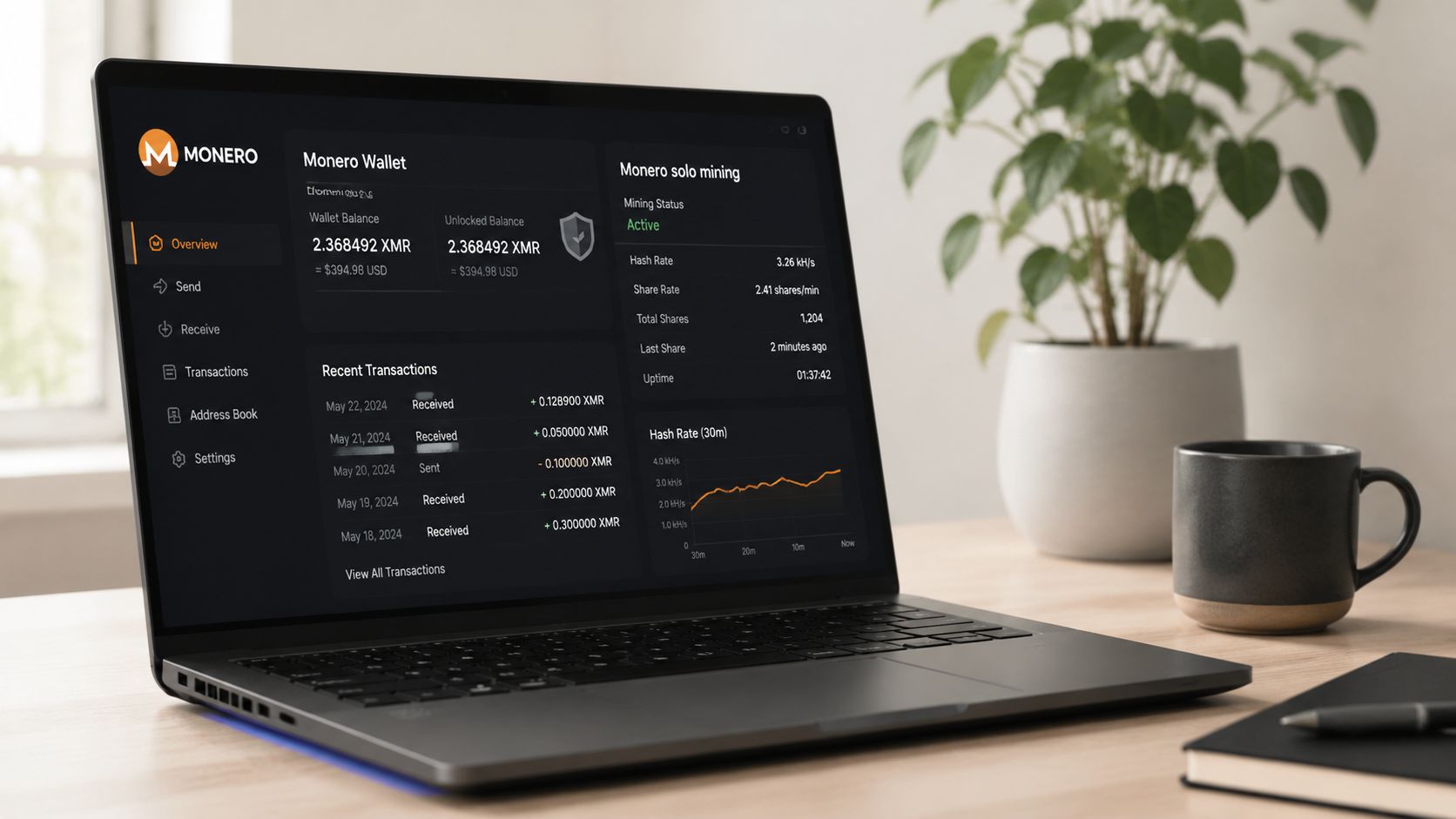
That changes the feel of solo mining completely. With XMR, the appeal isn't a giant industrial setup. It's the ability to mine with common hardware, preserve privacy, and stay close to the original spirit of decentralized participation.
Why XMR stays on the list
Monero's RandomX design makes CPU mining the center of gravity. That's why developers, privacy advocates, and home lab builders keep coming back to it. A modern desktop can contribute without looking absurd next to industrial hardware, and that makes XMR one of the more realistic places to learn solo mining discipline.
There's also a practical Web3 angle here. Privacy tooling still matters across decentralized finance, smart contracts, and on-chain identity debates, even if Monero itself sits apart from many mainstream DeFi stacks. Mining XMR gives you direct exposure to a network built around financial privacy rather than yield farming narratives.
What actually works
For most home setups, XMRig remains the software miners mention first because it's widely used and well understood. The best results usually come from tuning memory, thread allocation, and system stability instead of chasing flashy tweaks.
A workable approach looks like this:
- Use a dedicated wallet: Keep mining rewards separate from spending balances, and store them in one of the best crypto wallets for beginners if you're still building your security habits.
- Prioritize system stability: A stable CPU at sane temperatures beats an unstable overclock every time.
- Mine around real usage: Many solo miners run Monero in the background on workstations, home servers, or secondary machines.
- Stay plugged into community tuning: Monero miners often improve results by sharing configs, processor-specific settings, and power-management tricks.
Monero is where solo mining feels less like a lottery ticket and more like a technical craft.
If you want a coin that rewards careful setup more than brute-force capital, Monero still deserves attention.
3. Litecoin (LTC) Solo Mining with Scrypt ASICs
Litecoin sits in an interesting middle ground. It isn't the pure moonshot fantasy of Bitcoin solo mining, and it isn't as accessible as CPU-focused mining. What it does offer is a mature network, a familiar proof-of-work model, and a cleaner path for miners who already understand ASIC operations.
That makes LTC a serious option for operators who like Scrypt mining and want something more established than chasing obscure small-cap coins with fragile tokenomics.
Where Litecoin fits
Solo mining Litecoin is mostly a hardware and operating-cost game. If you're using older or inefficient Scrypt gear, you're already behind. If you're using capable ASICs, have solid ventilation, and can manage noise and heat, LTC becomes a more disciplined niche rather than a pure gamble.
In practice, solo Litecoin miners tend to fall into two camps. The first group already owns Scrypt ASICs and wants occasional high-upside block attempts. The second group treats Litecoin as part of a broader mining stack that may also include Bitcoin exposure, altcoin speculation, or even DeFi rotation once mined coins are converted.
Common mistakes
Miners usually get LTC solo mining wrong in predictable ways:
- Buying hardware before modeling the environment: Scrypt ASICs need power, airflow, and predictable uptime.
- Ignoring resale dynamics: ASIC value shifts quickly when newer models alter the efficiency situation.
- Running home setups without a noise plan: A machine that's unbearable to live with won't stay online long.
- Treating Litecoin as “easy Bitcoin”: It isn't. It's its own operational category with different hardware economics.
A lot of newcomers should start with the broader capital-allocation question first. This beginner guide on how to invest in cryptocurrency is a useful reminder that mining hardware is only one way to gain crypto exposure.
For the right miner, Litecoin can work well. For the wrong setup, it becomes a loud and expensive lesson.
4. Ethereum Classic (ETC) Solo Mining with GPU
Ethereum Classic remains one of the most practical names in best solo mining for people who prefer GPUs over ASICs. That's why former Ethereum miners, gamers with spare hardware, and rig tinkerers still circle back to ETC. It keeps the door open to a style of mining that's more flexible, more modular, and easier to repurpose.
That flexibility matters in a market where GPU owners often shift between mining, AI workloads, rendering, and resale. A GPU rig doesn't lock you into one path the way a single-purpose ASIC does.
Why ETC still matters
ETC benefits from being familiar to miners who learned on the old Ethereum stack. Tools such as HiveOS, lolMiner, and NBMiner fit naturally into the workflow, and the hardware ecosystem is broad enough that you can build around NVIDIA or AMD without reinventing the wheel.
There is also a useful crossover with broader blockchain education. ETC mining forces miners to understand wallets, nodes, confirmations, and proof-of-work security at a hands-on level, which makes it a better learning environment than buying tokens on an exchange. If you need a refresher on those foundations, this overview of blockchain technology basics is a good companion.
A practical rig mindset
GPU solo mining works best when you think like an operator, not a collector. That means paying attention to airflow, memory tuning, fan curves, driver stability, and the condition of each card.
A few habits separate sustainable ETC miners from frustrated ones:
- Tune memory before core: ETC-focused GPU optimization usually rewards memory-side adjustments more than brute-force core pushes.
- Keep thermal headroom: Cards that run cooler stay more stable and age better.
- Use existing hardware intelligently: A gaming rig that mines during idle hours is often a smarter start than buying a large stack immediately.
- Plan an exit route: GPUs can move into AI experimentation, content work, or resale more easily than ASICs.
ETC isn't the flashiest choice, but it remains one of the most practical solo mining playgrounds for hands-on builders.
5. Antminer S19 Pro ASIC Hardware
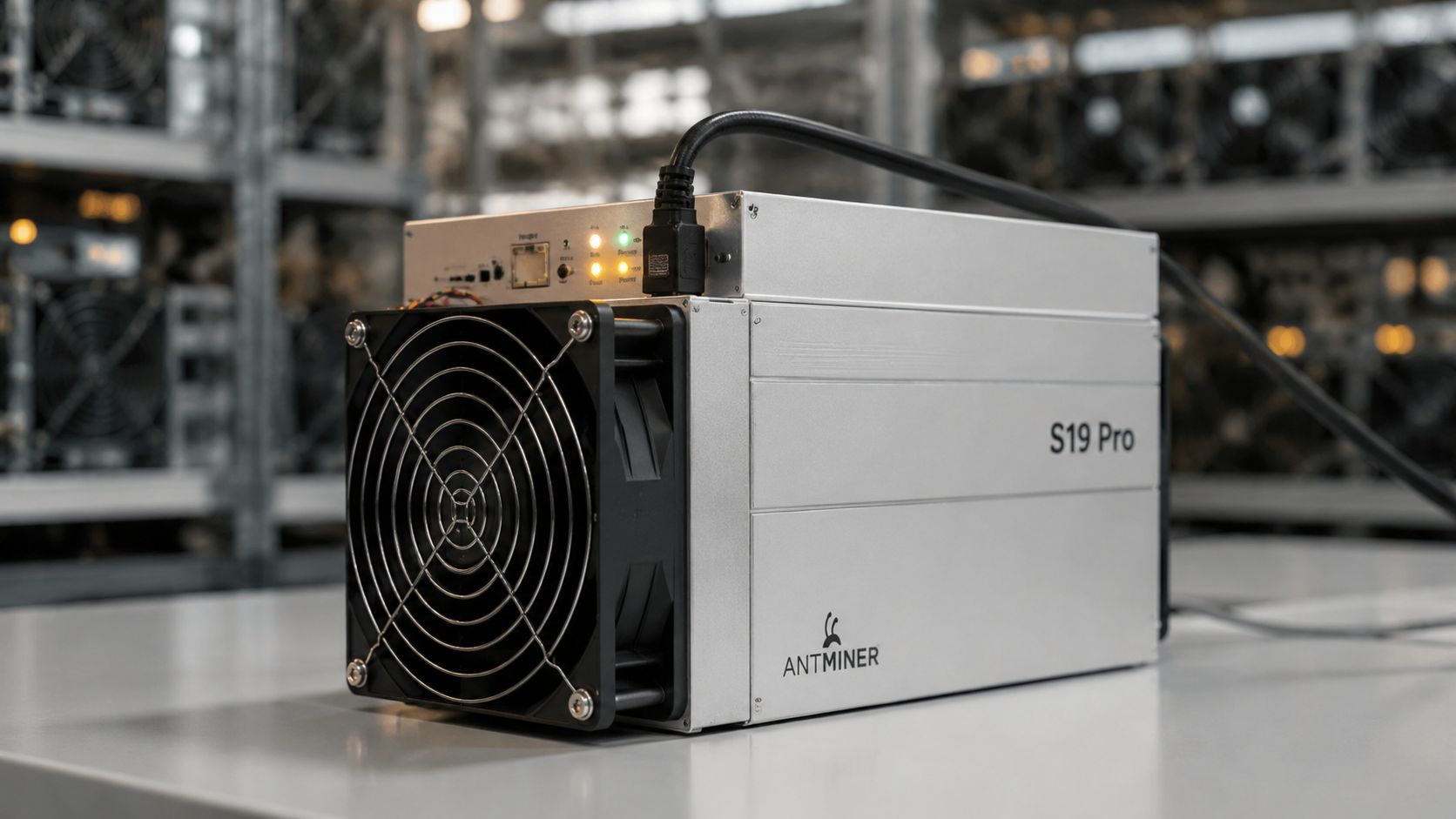
If you're serious about Bitcoin-style mining, the Antminer S19 Pro still deserves respect. It has been a workhorse across farms, small professional operations, and experienced home setups because it combines known behavior, familiar maintenance patterns, and a large knowledge base.
That last point matters more than people admit. Proven hardware is easier to troubleshoot, easier to resell, and easier to integrate into existing mining infrastructure.
Why miners still buy it
The S19 Pro hits a practical sweet spot for many operators who want SHA-256 exposure without jumping straight into the newest premium gear. It's widely understood, commonly supported by hosting providers and firmware tools, and still relevant for miners who prioritize dependable operation over chasing every last edge.
For solo mining, that makes it useful in two ways. First, it can serve as a learning machine for understanding ASIC management. Second, it can be part of a hybrid setup where you test solo strategies while still directing most of your hashrate toward steadier pool income.
Field note: A miner you can maintain consistently is more valuable than a faster machine you don't fully understand.
What to pair it with
The S19 Pro needs an environment that matches its purpose. Don't think of it as a device you plug in and forget. Think of it as a heat source, a noise source, and a networked industrial appliance that happens to mine Bitcoin.
The strongest pairings are usually operational, not flashy:
- Reliable airflow or ducting: Air handling makes or breaks ASIC uptime.
- Clean power delivery: Stable electrical infrastructure protects both hardware and profitability.
- Monitoring software: You need visibility into uptime, temperature, hashboard behavior, and rejected shares.
- A realistic mining mode: Many miners should begin with pool mining, then experiment with solo endpoints later.
As a platform for learning serious mining discipline, the S19 Pro is still one of the best tools available.
6. HiveOS Mining Operating System
HiveOS solves a problem that trips up a lot of solo miners. Hardware is only half the battle. The other half is keeping machines stable, visible, and recoverable when something breaks at the worst possible time.
That's why HiveOS has become a standard part of many mining setups. It gives miners a central control layer for rigs and ASICs, which matters whether you're chasing ETC blocks, managing mixed hardware, or testing different strategies across multiple wallets.
Why HiveOS earns its place
A good mining OS reduces operational chaos. With HiveOS, miners can handle overclock profiles, monitor temperatures, reboot crashed rigs, and manage machines remotely instead of babysitting every device in person. For anyone running more than one machine, that convenience quickly turns into necessity.
This is also where solo mining starts to resemble other crypto infrastructure work. Just as DeFi users rely on dashboards and smart contract tooling, miners need a control plane. HiveOS fills that role for proof-of-work operations.
Best use cases
HiveOS shines in setups where you need consistency across different rigs or locations.
Some of the best use cases include:
- Mixed GPU fleets: Different card models can still live under one dashboard.
- Remote management: You don't need to stand next to a noisy rig to troubleshoot it.
- Solo and pool testing: It's easier to compare endpoints and swap strategies without rebuilding the system.
- Alert-driven maintenance: Temperature spikes, crashes, and instability are easier to catch early.
A lot of miners underuse HiveOS by treating it as a basic launcher. The better approach is to use flight sheets carefully, document your stable settings, and track changes like an operator. Solo mining punishes sloppy configuration, and HiveOS helps remove that weakness.
7. Solo Mining Strategy Hybrid Approach with Multiple Small Coins
The best solo mining strategy for many people isn't pure solo at all. It's hybrid mining.
This is the approach I recommend most often because it respects reality. Instead of putting every watt behind one all-or-nothing bet, miners split roles across hardware. They might run Monero on CPUs, Ethereum Classic on GPUs, and keep ASICs pointed toward either a solo target or a pool depending on mood, market conditions, and operating goals.
Why hybrid beats all-in thinking
Hybrid mining smooths out the emotional side of solo mining. You still get the upside of block-hunting on one lane, but you avoid the dead feeling that comes from watching every machine run for long stretches with nothing to show for it.
It also gives you better optionality. If one network becomes less attractive, you can rotate part of your stack instead of overhauling the whole operation. That matters in crypto, where token narratives shift fast across DeFi, Layer 2 ecosystems, AI-linked infrastructure plays, and newer forms of on-chain utility.
How miners actually run it
A practical hybrid setup usually follows a few principles:
- Separate roles by hardware type: CPUs mine CPU-friendly coins, GPUs mine GPU-friendly chains, and ASICs do specialized work.
- Track profitability by wallet and machine: If you don't isolate results, you won't know what's carrying the operation.
- Use solo selectively: One lane can chase a full block while other lanes maintain steadier output.
- Rebalance when conditions change: Hardware should follow opportunity, not habit.
For miners comparing alternatives, it's also useful to understand how this differs from hosted products and passive promises. Coiner Blog's guide to best cloud mining options highlights why direct control and hybrid setups can appeal to miners who don't want to outsource everything.
Hybrid mining isn't about doing everything at once. It's about assigning each machine the job it does best.
For most retail-scale operators, that's a smarter path than trying to force one giant solo narrative onto every device you own.
8. Cooling Infrastructure Immersion Cooling Systems
Cooling is where ambitious solo miners either become operators or stay hobbyists. Once you run multiple machines, heat stops being a side issue. It becomes the system around the system.
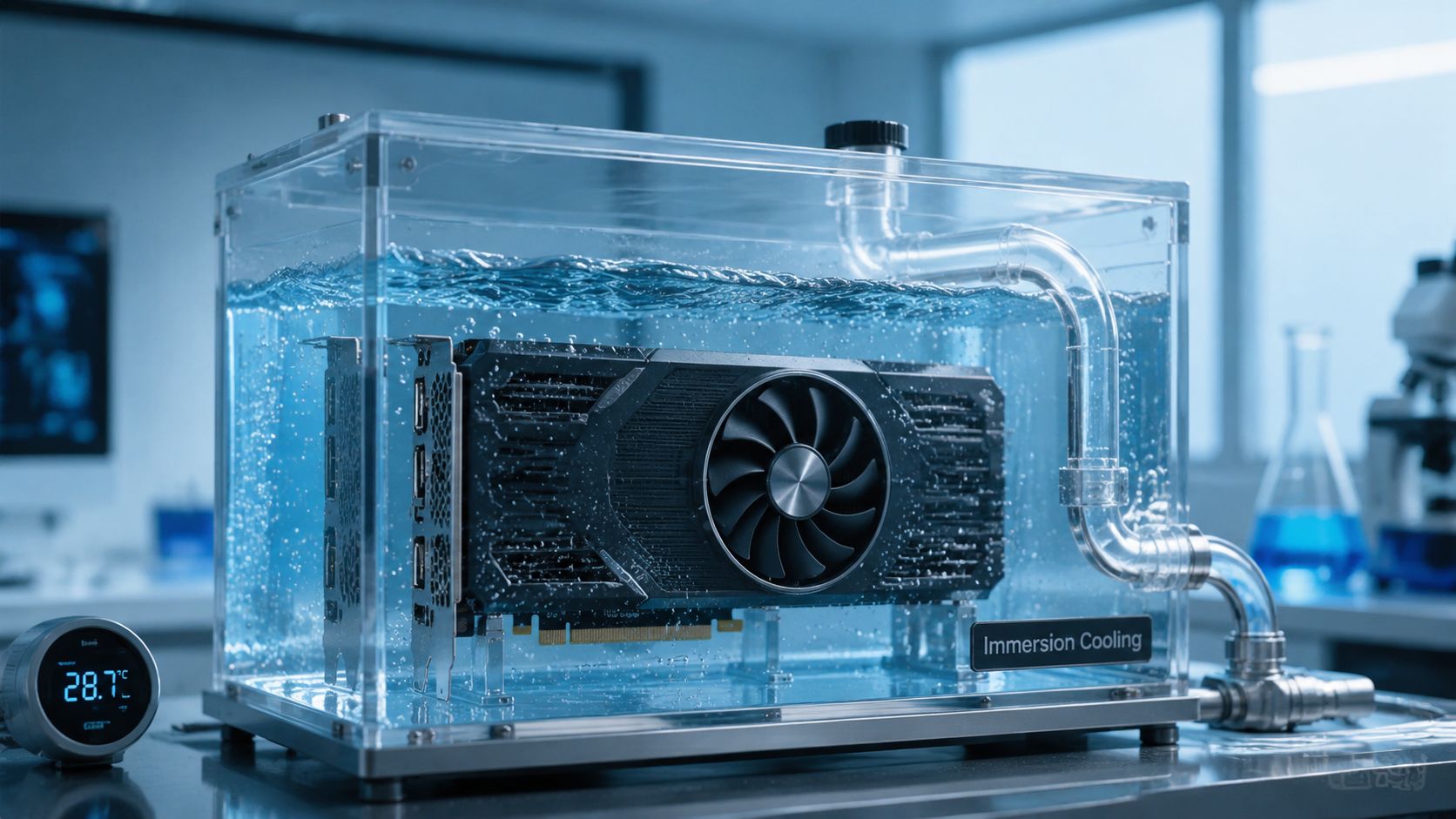
Immersion cooling is one of the clearest signs that a miner has moved beyond casual experimentation. Instead of fighting heat with louder fans and more ducting, immersion setups place hardware in non-conductive fluid to manage thermals more directly.
When immersion makes sense
Immersion isn't for every miner. If you're running a small setup with acceptable temperatures and manageable noise, simple air cooling may be enough. But when heat, density, noise, or hardware stress becomes the limiting factor, immersion starts to look less like a luxury and more like infrastructure.
It's especially attractive for miners who want cleaner acoustics, steadier thermals, and a more controlled environment for ASICs or dense GPU deployments. In that sense, it plays a similar role to Layer 2 scaling in blockchain. It doesn't replace the base activity. It makes the base activity easier to run at scale.
What it changes operationally
Immersion changes more than temperature. It changes maintenance habits, physical layout, and the kind of discipline your setup requires.
The biggest shifts are usually these:
- Lower acoustic stress: Fan noise stops dominating the room.
- More consistent thermals: Stable temperatures help hardware run more predictably.
- Different maintenance routines: Pumps, fluid handling, and filtration become part of the job.
- More intentional system design: You stop improvising and start engineering.
For a visual look at the concept in action, this walkthrough is a helpful reference before you plan a build:
Immersion cooling doesn't magically make bad mining economics good. What it does is give serious miners a better operating envelope, and sometimes that's the difference between a machine that survives and one that burns you out.
Solo Mining: Top 8 Comparison
| Item | Implementation Complexity 🔄 | Resource Requirements ⚡ | Expected Outcomes ⭐📊 | Ideal Use Cases 💡 | Key Advantages ⭐ |
|---|---|---|---|---|---|
| Bitcoin (BTC) Solo Mining | High 🔄, requires deep technical/operational setup and competitive hashrate | Very high ⚡, purpose-built ASICs, large power and cooling needs | Low probability of block but very high reward per block; income is irregular | Large-scale operators with cheap power or long-term investors seeking full-reward capture | 100% block rewards, highest liquidity, strongest network security |
| Monero (XMR) Solo Mining | Low–Medium 🔄, simple CPU setup and lighter tuning | Low ⚡, consumer CPUs, modest electricity and cooling | Moderate frequency (≈2 min blocks), steadier small rewards for solo CPU miners | Privacy-focused hobbyists, CPU-based miners, low-capex participants | ASIC-resistant RandomX, low barrier to entry, strong privacy features |
| Litecoin (LTC) Solo Mining (Scrypt ASICs) | Medium–High 🔄, ASIC deployment and maintenance required | High ⚡, Scrypt ASICs ($500–$2k+), significant power and cooling | Moderate outcomes with faster block times (~2.5 min); profitability depends on electricity and hardware efficiency | Small operations with efficient ASICs and cheap electricity | Faster confirmations than BTC, established network, available efficient ASICs |
| Ethereum Classic (ETC) Solo Mining (GPU) | Medium 🔄, GPU rig setup, driver and miner tuning | Medium ⚡, multiple GPUs ($300–$1k+ each), higher per-GPU power draw | Regular smaller rewards (13–14s blocks); reliable income with multi-GPU rigs | GPU owners, gamers repurposing hardware, small GPU farms | GPU flexibility (alternative uses), accessible mining for individuals |
| Antminer S19 Pro (ASIC) | Medium 🔄, relatively plug-and-play but demands infrastructure planning | Very high ⚡, high upfront cost ($8k–$15k), 1,450W per unit, advanced cooling | High and predictable BTC production if power cost is low; strong ROI in favorable market | Professional miners, small-to-mid farms, high-efficiency BTC operations | Industry-leading efficiency, strong resale value, proven reliability |
| HiveOS (Mining OS) | Low–Medium 🔄, modest learning curve; simplifies complex operations | Low ⚡, software cost minimal (free tier/premium per GPU); requires internet | Improves uptime and management; faster deployment and easier optimization | Multi-rig managers, remote operators, miners scaling from hobby to small farm | Centralized monitoring, one-click configs, community-shared profiles |
| Hybrid Solo Mining Strategy (Multiple Small Coins) | High 🔄, multi-chain tracking, frequent rebalancing and optimization | Mixed ⚡, uses CPUs, GPUs, and possibly ASICs; more administrative overhead | Increased block-find frequency and more consistent cash flow; diversified returns | Miners seeking steady income and risk diversification across hardware types | Reduced income variance, better hardware utilization, exposure spread across coins |
| Immersion Cooling Systems | High 🔄, complex installation, maintenance and regulatory considerations | Very high ⚡, large CAPEX ($5k–$50k+), dielectric fluids, specialized support | Significant thermal reduction (≈30–40°C), higher hashrates, longer hardware life and uptime | High-density ASIC farms, operations in warm climates, sites needing noise reduction | Major efficiency gains, higher overclock headroom, quieter and more reliable operation |
Final Verdict Is Solo Mining Your Winning Ticket
Solo mining still has a magnetic pull because the upside is clean and easy to understand. Find a block, keep the whole reward, and prove you didn't need a pool to get there. That appeal isn't going away. In fact, the rare success stories keep it alive. In 2025 alone, more than 22 solo Bitcoin blocks were reportedly found, and one miner beat odds of roughly 1 in 100,000 per day to claim the full reward plus fees, worth about $222,000 at the time according to Bitcoin Magazine's report on that solo miner win. That's exactly why people keep trying.
But good solo mining decisions start with honesty. Most miners don't need more fantasy. They need a realistic match between hardware, electricity, software competence, cooling, and personal risk tolerance. If you need steady cash flow, pool mining is still the practical answer. If you want to learn extensively, control your stack, and accept long dry spells for a shot at a full reward, solo mining can still make sense.
The strongest setups usually come from matching the method to the machine. Bitcoin solo mining makes the most sense for miners who understand variance and want sovereignty or lottery-style upside. Monero fits CPU-first operators who want a more accessible network. Ethereum Classic remains a good GPU playground for miners who value flexibility. Litecoin can work for Scrypt specialists. The Antminer S19 Pro remains a dependable ASIC platform, while HiveOS reduces operational friction across the board. Hybrid mining is often the most rational compromise, and immersion cooling becomes relevant once heat and noise start limiting uptime.
This also connects to where crypto is heading more broadly. As AI and crypto converge, more hardware owners are thinking about alternate uses for GPUs. As tokenization and DeFi evolve, miners are also becoming capital allocators, deciding whether to hold mined coins, rotate them into other assets, or deploy them across Web3 ecosystems. Even Layer 2 adoption influences how people think about blockchain infrastructure and efficiency. Mining no longer sits in a silo.
So is solo mining your winning ticket? Maybe. But it isn't a shortcut, and it isn't passive income just because a dashboard says you're hashing. The best solo mining setups come from operators who respect variance, build carefully, and know exactly why they're mining alone in the first place.
Coiner Blog is a strong place to keep sharpening that edge. If you want more practical crypto guides on mining, Bitcoin, altcoins, DeFi, Web3 trends, tokenomics, Layer 2 infrastructure, NFTs, AI and blockchain, and trade-offs behind new opportunities, explore Coiner Blog and follow along as the site expands its coverage.
2 Comments